
Walking dogs, for many, is a joyous ritual – a chance to bond, explore, and enjoy the outdoors. However, for an Electric Dog Walker (a dog owner or professional navigating the urban and suburban landscape with their canine companions), it can often feel like a high-stakes game of “chicken.” Imagine strolling down a street, your dog happily trotting beside you, when suddenly a dog from a seemingly open yard charges directly towards you. Is there an invisible barrier? Will it hold? The uncertainty can transform a peaceful walk into a moment of pure anxiety, raising questions about safety and the effectiveness of modern containment solutions.
This isn’t just about personal stress; it’s about the very real implications for dog safety, human peace of mind, and the effectiveness of certain containment systems. As experts at Dog Care Story, we often hear about or experience firsthand the challenges presented by “invisible” or “electric” fences. While seemingly convenient, these systems present a complex array of problems that every responsible dog owner, and certainly every electric dog walker, should understand. Our goal is to shed light on these issues, drawing from extensive experience and emphasizing the paramount importance of secure, humane containment.
The Invisible Threat: A Dog Walker’s Risky Encounters
For years, many dog walkers, including myself, have navigated the unspoken challenge of invisible fences. It’s a constant mental calculation: “Are those white flags just for decoration, or do they mark an invisible boundary? If so, will it actually stop the charging dog?” The stakes are high, not just for the dog walker but for the dogs in their care and the dogs contained (or not contained) by these systems. This daily dance with uncertainty can be incredibly stressful, turning what should be a pleasant outing into a gauntlet of potential encounters. For anyone looking to understand mastering dog behavior and training, these uncontrolled scenarios highlight critical gaps in containment and owner responsibility.
A recent incident brought the seriousness of this issue into sharp focus. A client was walking her dog when they passed a home where a large dog was playing in the yard. Without warning, the large dog darted towards them, slamming into my client’s dog and grabbing a mouthful of fur. The aggressor was, in fact, behind an invisible fence. Yet, driven by instinct or high motivation, he willingly endured the shock to breach the boundary and engage. My client’s dog suffered a swollen shoulder and pain, but beyond the physical injury, there was a significant setback in her reactivity training. What had been a manageable challenge with certain dogs now became a heightened concern, undoing weeks or months of diligent work. This wasn’t a freak accident; it was a predictable outcome of a system that promises containment but often fails in critical moments.
Why Invisible Fences Fall Short: A Professional’s Perspective
It’s crucial to state unequivocally: invisible fences are not real fences. Traditional, physical fences are designed with clear purposes: to keep your dog safely within your property, to prevent other animals or people from entering your yard, and to provide a visible deterrent that communicates containment to passersby. Invisible fences, on the other hand, lack these fundamental attributes, creating an environment of ambiguity and potential danger.
We understand that many dog owners choose these systems with the best intentions. They are often seen as an economical or aesthetically pleasing alternative to physical barriers. However, based on years of observing these systems in action – both as a dog walker encountering them daily and through experience as a shelter worker reuniting stray dogs with their owners after their invisible fences failed – the drawbacks are profound and numerous.
The Critical Failures of Electronic Containment Systems
While no containment option is absolutely perfect, electric fences present several significant points of failure for the average dog owner:
Failure to Keep Dogs In:
- Motivation Over Shock: Many dogs, when sufficiently motivated by a squirrel, another dog, a person, or even just curiosity, will happily “take the hit” from the shock to cross the boundary. The allure of the outside world often outweighs the temporary discomfort.
- The One-Way Trip: A common scenario is a dog bolting through the fence line, enduring the shock, only to find themselves unwilling to take another shock to return into the yard. They are then loose, unsupervised, and potentially in danger.
- Equipment Malfunctions: Dead batteries in collars, collars that are too loose, or system failures can render the “fence” entirely ineffective, allowing dogs to wander freely without any warning.
- Environmental Factors: Snowdrifts, for instance, can elevate the ground level enough for dogs to simply walk over the invisible boundary line, completely bypassing the system.
- Fear-Driven Escapes: During thunderstorms, fireworks displays, or other frightening events, a panicked dog may bolt, ignoring the shock in their desperate attempt to escape perceived danger.
Failure to Keep Others Out:
- A significant oversight of invisible fences is their inability to deter external threats. They offer no protection against wild animals, unwelcome individuals, or aggressive dogs that might wander onto your property. Your dog, confined by the electronic barrier, might then be shocked if they try to flee an intruder that the fence did nothing to prevent. This leaves your pet vulnerable within their own designated “safe” space.
Potential for Behavioral Issues:
- Learned Fear: The negative association with the shock can cause profound psychological trauma. Some dogs become so frightened by the system that they develop a strong aversion to going outside at all.
- Aggression and Reactivity: When a dog repeatedly receives a shock while charging towards an external stimulus (another dog, a cyclist, a child), they can begin to associate the pain with that stimulus. This misdirected association can lead to increased aggression or reactivity towards innocent passersby, creating dangerous situations for the community and reinforcing negative behaviors in the dog. This is a primary concern for any electric dog walker who frequently encounters dogs behind these systems.
- Boundary Anxiety: Some dogs develop such an intense fear of the boundary that they refuse to cross it even when their collar is removed, requiring owners to transport them beyond the “fence” line just for a leashed walk.
- Auditory Phobias: The warning beep emitted by collars before a shock can lead to generalized fear of similar sounds. Dogs might become anxious or fearful whenever they hear a microwave beep or a smoke detector alarm.
The Human Element: Fear and Uncertainty for Passersby
Beyond the direct impact on the dogs themselves, invisible fences sow seeds of fear and uncertainty in the community. The “dog walker chicken” scenario is just one iteration. Imagine delivery drivers, young children, senior citizens, or joggers encountering a large dog charging towards them, unsure if an unseen barrier will actually intervene. The lack of a clear, visual boundary creates a highly stressful environment for everyone interacting with your property. There are no clear indicators like traditional fences or “Beware of Dog” signs; only the unpredictable behavior of a dog and the hope that an unseen technology will hold. This constant state of vigilance takes a toll on the nerves of anyone who routinely passes these properties.
When (and How) Invisible Fences Might Be Considered
While our stance at Dog Care Story leans heavily against the widespread use of invisible fences due to their inherent limitations, we acknowledge that in very specific, carefully managed circumstances, they might serve as a component of a larger containment strategy. These are not standalone solutions but potential backups:
- As a Secondary Containment for Escape Artists: For dogs that are exceptionally skilled at scaling or digging under traditional fences, an electric fence system could be explored as an additional layer of security, used in conjunction with a robust physical fence.
- For Rural Properties with Extensive Acreage: In cases where property spans many acres, making traditional fencing economically or practically unfeasible for the entire perimeter, an electric fence might define far boundaries.
However, these considerations come with absolute non-negotiables: The owners must implement proper, positive boundary training, ensure their dog has an impeccable recall, and critically, never leave their dogs unattended in the yard. Without constant supervision, these systems are simply unreliable.
Overcoming Common Barriers: Cost and HOAs
We understand that cost and homeowners’ association (HOA) rules are often cited as primary reasons for choosing invisible fences. Let’s address these directly:
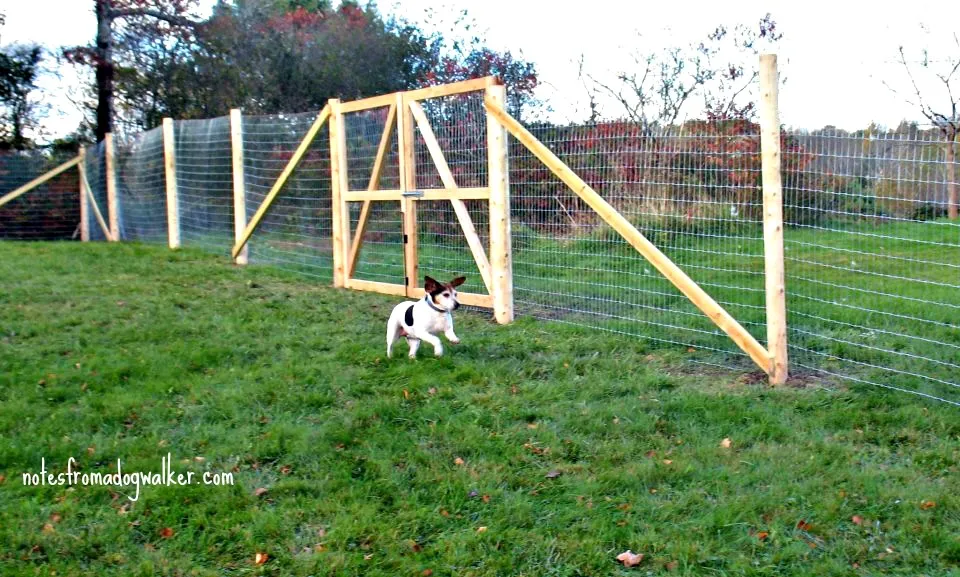
Cost: While DIY invisible fence kits can start around $100 and professional installations can reach a couple of thousand dollars, affordable and sturdy physical fence alternatives exist. Farm fencing, for instance, offers a durable and secure solution. It’s comparable in price to a professionally installed electric fence, can be built 4-8 feet high, and can even be buried below ground to deter diggers. Furthermore, it doesn’t obstruct views and allows for fencing in only a portion of a large yard. This approach ensures robust containment, providing peace of mind for both owners and the local electric dog walker.
 Birdie the dog enjoying her first run in a physically fenced yard, emphasizing safe containment alternatives for every electric dog walker.At Dog Care Story, we advocate for investing in secure, physical containment. Like the example above, where a family saved for years to install a robust fence, the long-term benefits for dog safety and community harmony far outweigh the initial investment. Until then, supervised leash walks and tie-outs offer safe alternatives.
Housing Associations (HOAs): Don’t assume change is impossible. Engage with your HOA. Inquire about rules regarding partial property fencing, particularly in backyards. Discuss different types of fencing options – perhaps a low-profile physical fence supplemented by an invisible fence as a backup if jumping is a concern, or non-privacy fencing that meets aesthetic guidelines. Challenging existing rules, even if seemingly difficult, is the only way to advocate for better, safer solutions for pets and people.
Responsible Use: If You Must Choose an Electric Dog Fence
If, after careful consideration, an electric fence is deemed absolutely necessary within your unique circumstances, Dog Care Story strongly advises the following:
- Professional Installation: Opt for a professionally installed product, preferably from a reputable brand. DIY kits, while cheaper, often lack the reliability and consistent training support of a professional service.
- Positive Boundary Training: Invest significant time in slow, positive-reinforcement based boundary training. Your dog needs to understand the boundaries clearly and confidently, without fear. This type of training is crucial for ensuring your dog’s safety and well-being.
- Excellent Recall: Ensure your dog has a consistently reliable recall. This is your ultimate safety net if the system fails or if your dog breaches the boundary. A strong recall is an essential part of responsible dog ownership and can be fostered through consistent dog training guide.
- NEVER Leave Your Dog Unattended: This cannot be stressed enough. You must always be present and attentive. You need to be aware if your dog leaves the yard, and equally important, if another animal or person enters your property. Unsupervised dogs behind invisible fences are a primary source of stress and danger for the electric dog walker and the wider community.
- Know Your Dog: These systems are not suitable for every dog. They are particularly ill-advised for dogs with a history of reactivity, fear, phobias, or aggression. The negative stimulus of a shock can exacerbate these issues, creating more severe behavioral problems.
A Call for Attentive Ownership
For the sake of our dogs, our neighbors, and the peace of mind of every electric dog walker, the practice of leaving dogs unsupervised in yards with invisible fences must cease. The terrifying sight of a dog charging at top speed, with no visible barrier or clear indication of containment, is unacceptable. Even if you believe your “friendly” dog would never pose a threat, a hidden camera might reveal a different story, showing them engaging in their own version of “dog walker chicken” when you’re not around.
At Dog Care Story, we believe in proactive, responsible pet ownership that prioritizes safety, well-being, and community harmony. Let’s work together to ensure our dogs are securely contained and our neighborhoods are safe for everyone.
