
The world of feline companions is incredibly diverse, with breeds ranging from the sleek and fluffy shorthair cat to the uniquely charming hairless varieties. While popular for their aesthetically pleasing coats, some owners are drawn to the distinct minimalist appeal of hairless cats. These striking felines can range from having a soft, downy fuzz to being completely devoid of hair.
Despite their seemingly low-maintenance appearance, hairless cats require specific grooming routines and diligent protection from environmental extremes like the sun, heat, and cold. For those captivated by these distinctive pets, the extra care is often considered a small price to pay for the unique companionship they offer. This guide explores six notable hairless cat breeds.
Exploring Hairless Cat Breeds
1. Sphynx
The Sphynx, often appearing nude, is actually covered in a fine layer of downy fur. This unique coat gives them a texture akin to chamois, making them pleasantly warm to the touch and ideal for snuggle sessions on cooler days. While some Sphynx cats sport whiskers and eyebrows, others do not, but all share captivating wrinkles and long toes. It’s worth noting that Sphynx cats are known for being quite vocal and have a lot to say about their needs and feelings.
2. Bambino
A relatively new entrant to the hairless cat scene, the Bambino breed was established in 2005. Currently recognized as an “experimental breed” by the Cat Fanciers Association, Bambinos are a cross between the Sphynx and the short-legged Munchkin. These cats are known for their strong desire for interaction and attention from their human families. Welcoming a Bambino into your home, or better yet, two for companionship as some breeders suggest, requires a commitment to daily playtime and engagement. Prospective owners should be aware that Bambinos come with a significant price tag, typically ranging from $2,000 to $2,800. Furthermore, despite their undeniable charm, Bambinos are prone to joint issues due to their distinctively short legs.
3. Peterbald
The Peterbald breed is characterized by its striking large ears, which often seem disproportionately sized for its wedge-shaped head. While rare outside of Russia, Peterbalds are known for their friendly and energetic personalities. They often enjoy games like fetch and have a tendency to follow their humans closely, much like a shadow they want to be where you are. It’s important to note that not all Peterbalds are entirely hairless; the breed exhibits a spectrum of coat types, including fuzzy, curly, or wiry fur of varying lengths. Some Peterbalds may even possess a full coat comparable to other cat breeds.
4. Donskoy
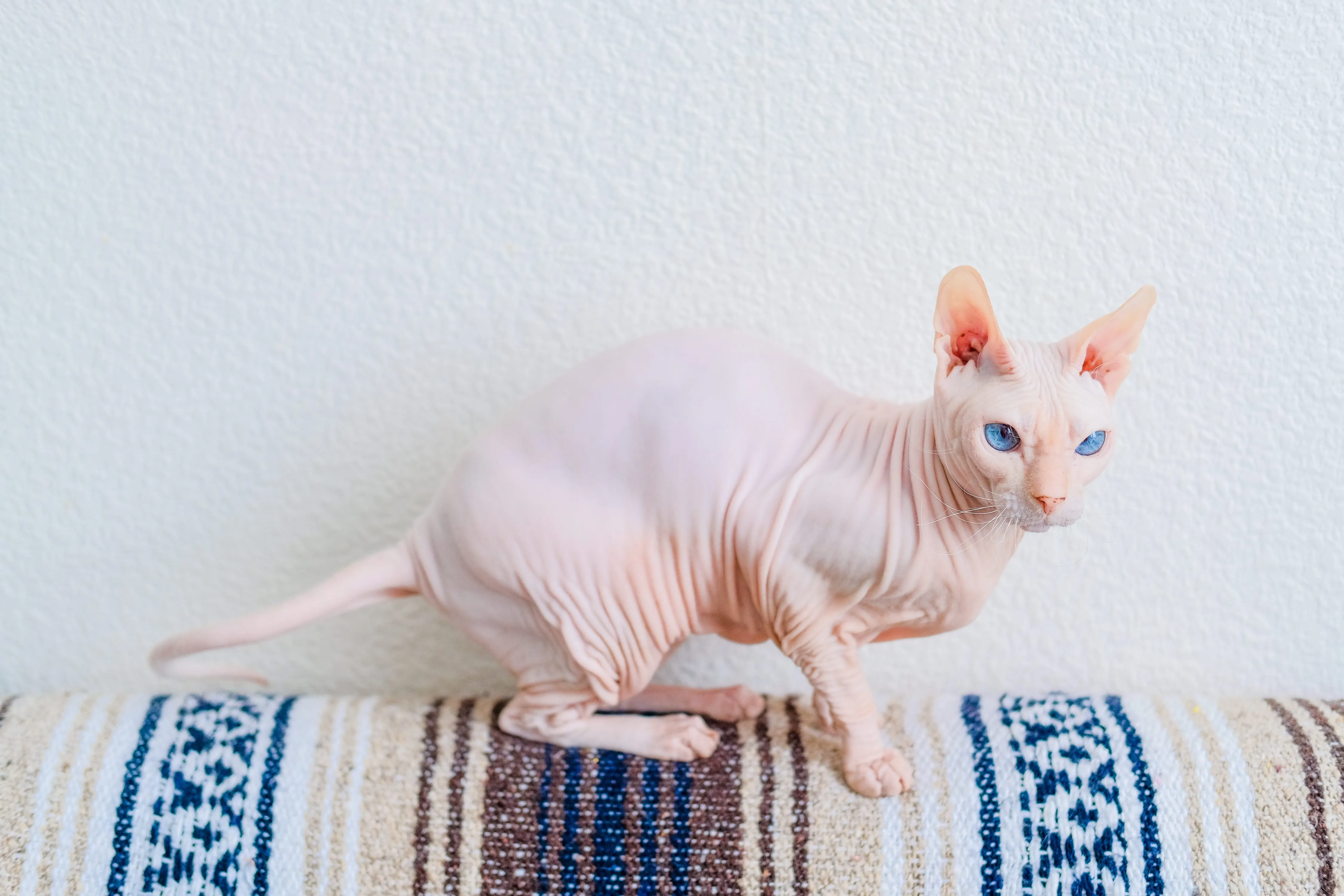 pink hairless cat with blue eyes perched on the back of a couchDonskoy cats present a fascinating variety in their coat characteristics, with four distinct types:
* **Rubber bald:** These cats are born bald and remain so throughout their lives.
* **Flocked:** Born with a soft, downy coat resembling peach fuzz, some flocked Donskoy cats may shed this fuzz over time, becoming bald.
* **Velour:** This variety typically starts with a bald spot on the head, with the rest of the body covered in a downy coat.
* **Brush:** These cats feature bald patches interspersed with a wiry coat.
Known for their sweet disposition and intelligence, Donskoys can be wonderful family companions, coexisting well with children and other pets in a home environment. They are considered one of the friendliest cat breeds.
5. Lykoi
Affectionately known as the “werewolf cat,” the Lykoi possesses a unique sparse coat that undergoes periodic molting, a process termed “wolfing out.” When they do have fur, it is exceptionally soft, enhancing their appeal for frequent cuddles. Owning such a distinctive pet does come at a cost, with Lykoi kittens typically priced around $1,000.
6. Ukrainian Levkoy
The folded ears of the Ukrainian Levkoy might remind observers of the Scottish Fold, as they share a close genetic relationship. Established relatively recently in 2004, the long-term health implications for this new breed are still being studied. However, given the Scottish Fold’s known predisposition to joint and cartilage issues, similar health concerns might arise in Ukrainian Levkoy cats. While the folded ear trait is highly desirable and can add significantly to the cost, reaching up to $2,000 per kitten, not all Ukrainian Levkoys express this gene. Regardless of ear type, they are generally stoic cats, often content with quiet companionship.
Special Care Considerations for Hairless Cats
Introducing a hairless cat into your household involves understanding their unique needs. Their lack of dense fur makes them particularly susceptible to sunburn and less efficient at regulating their body temperature. Providing adequate protection is crucial, which may include using pet-safe sunscreen, applying UV filters to windows, offering cooling mats during warmer months, and ensuring they have access to cozy sweaters in colder weather.
Although they can develop a slight greasiness, frequent bathing can strip their skin of essential oils. Consulting with your veterinarian is recommended to establish a suitable skincare routine, which might involve regular wipe-downs or occasional baths using specialized shampoos designed to replenish natural oils. Due to increased wax and oil buildup, their ears and nails also require more frequent attention.
While hairless cat breeds may necessitate a bit more dedicated care, their unique charm and affectionate nature make them exceptionally rewarding companions for those willing to meet their specific needs. These cats offer a glimpse into the diverse world of pet cat breeds.
Frequently Asked Questions About Hairless Cats
Are hairless cats hypoallergenic?
No cat breed is entirely hypoallergenic, as the allergens responsible for triggering reactions are present in a cat’s saliva, urine, and dander, irrespective of their coat length. However, hairless cats are often considered among the best options for individuals with allergies due to the reduction in airborne dander. It is always advisable to discuss allergy management strategies with your doctor before bringing any cat into your home.
What is the cost of hairless cats?
Given their rarity, expect to pay between $1,000 and $2,000 for a hairless kitten. While finding them in general shelters is uncommon, specialized rescue organizations may have adoptable hairless cats available in your area. You can explore resources like purebred cat rescue organizations to find potential matches.
Are hairless cats friendly?
A hairless cat’s temperament, like that of any feline, is significantly influenced by their socialization during kittenhood. Early and positive exposure to people, other animals, and new environments helps them develop into adaptable and friendly companions. Combined with positive reinforcement training, hairless cats can be as loving and affectionate as any other breed.
