
Egypt, often hailed as the cradle of civilization, also holds a significant place in the history of domestic cats. It is believed to be the birthplace of many modern cat breeds, and their ancient ancestors were revered as deities. This article delves into the fascinating world of Egyptian Cat Breeds, exploring their unique characteristics, historical significance, and enduring appeal. While some of these breeds may be rare to find outside their native land, their lineage is deeply intertwined with the cats we cherish today.
The Majestic Egyptian Mau
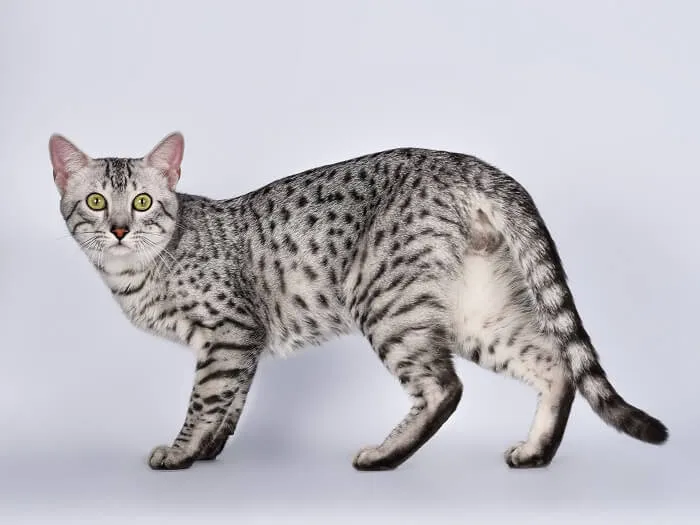 Egyptian MauMDavidova / Shutterstock.com
The Egyptian Mau is perhaps the most iconic feline associated with ancient Egypt. Evidence suggests that cats resembling this spotted breed were worshipped as early as 1550 BC, as depicted in ancient Egyptian texts and artwork. The very name “Mau” is derived from the Egyptian word for cat, echoing the sound they make. A distinctive “M” marking on their forehead, often referred to as the “mark of the scarab,” further connects them to this ancient heritage. These devoted companions express affection through meows, tail swishes, and “making muffins” with their paws. Their active nature means they often seek out high vantage points, like the top of a cabinet or refrigerator, to survey their domain. The Egyptian Mau is a breed known for its loyalty and can be found at prices ranging from $500 to $3,500.
The Intelligent Abyssinian
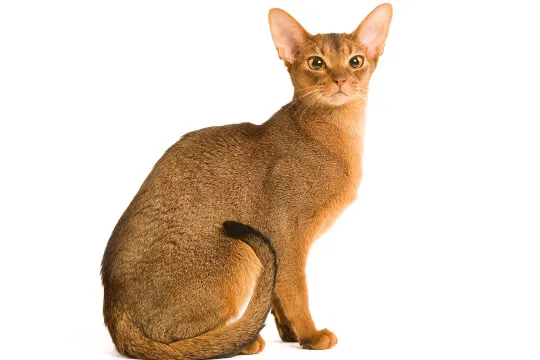 Abyssinian catKateryna Polischuk / Shutterstock.com
Originating from Abyssinia (modern-day Ethiopia), the Abyssinian first gained public attention at the Crystal Palace cat show in 1871. Although their precise origin remains somewhat mysterious, genetic studies suggest a lineage tracing back to the coastal regions of Southeast Asia and the Indian Ocean, potentially introduced to Europe by traders. Abyssinians are renowned for their high intelligence and insatiable curiosity. They have earned the nickname “Aby-grabbys” due to their tendency to playfully “borrow” interesting objects. These agile cats love to jump, climb, and engage with puzzle toys that challenge their sharp minds. An Abyssinian typically ranges in price from $1,000 to $2,000.
The Unique Sphynx
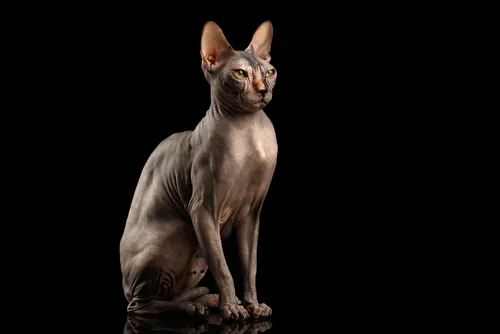 SphynxSeregraff / Shutterstock.com
While often associated with Egypt due to their ancient lineage, the Sphynx, sometimes called the Canadian Hairless cat, actually originated in Toronto, Canada, in the 1960s. The appearance of the first naturally hairless kittens marked the beginning of this distinctive breed. Early development faced challenges due to a limited gene pool and a lack of understanding of the hairless gene. However, dedicated breeders persevered, and the Sphynx eventually became recognized. For those captivated by the unique charm of hairless cats, the Sphynx stands out as a remarkable example.
The Elegant Shirazi
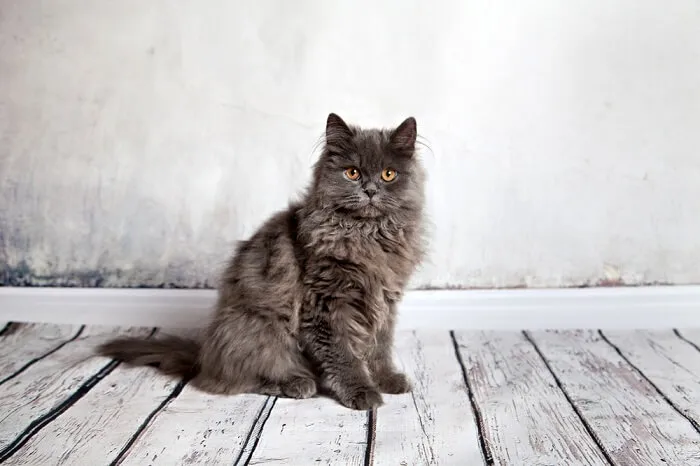 Shirazi catAlena Stalmashonak / Shutterstock.com
The Shirazi cat, while not currently a formally registered breed, is a familiar sight in Egypt, with origins tracing back to ancient Persia. According to folklore, these long-haired felines were introduced to Egypt during the Persian reign and are believed to be the result of crossing the long-haired Persian cat with the athletic Egyptian Mau. This mix has resulted in a breed that is both beautiful and adaptable, often found in urban Egyptian environments. Shirazi cats are known for their friendly, affectionate, and easy-going nature. They form strong bonds with their families, often showing a particular attachment to one member, and are known to be very playful and good with children. Their price can range from $500 to $5,000.
The Striking Savannah
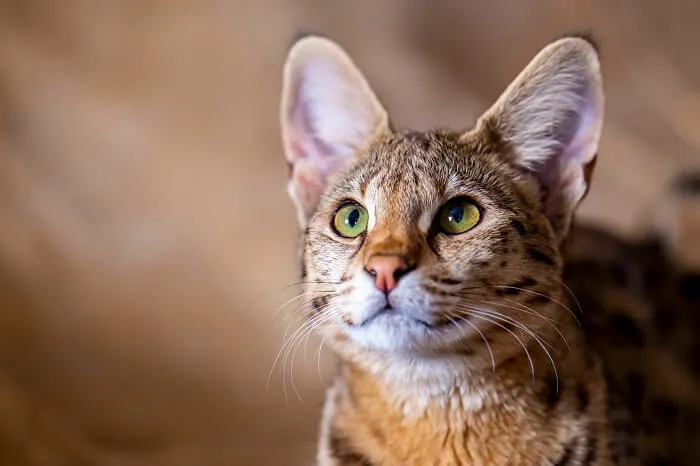 Savannah catKolomenskaya Kseniya / Shutterstock.com
Though not originating in Egypt, the Savannah cat bears a striking resemblance to ancient Egyptian breeds. This hybrid breed is a cross between a Siamese cat and a wild serval. The Savannah inherits the large ears, long legs, and spotted coat characteristic of its African wildcat ancestry, while maintaining the friendly demeanor of a domestic cat. First appearing in the late 20th century, early generation Savannahs are larger and possess captivating spotted coats in shades of brown, tan, and black. These majestic cats, once a symbol of prestige among ancient elites, are known for their high energy levels and need for significant attention. They form strong bonds with other pets and children and are often described as very talkative. The price of a Savannah cat can range dramatically from $1,500 to $25,000, depending on the generation.
The Resilient Arabian Mau
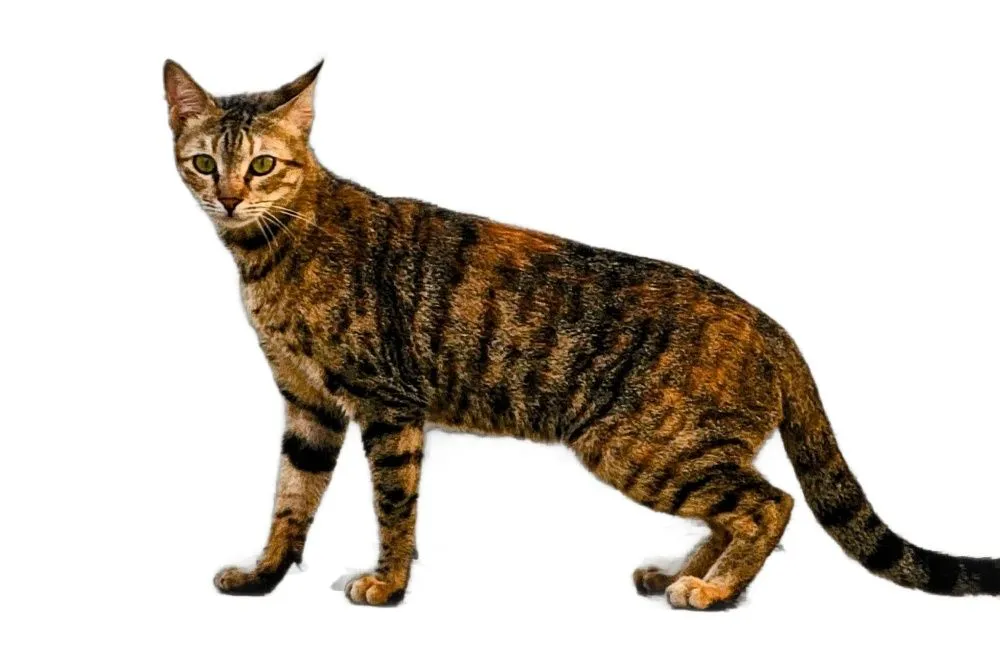 The Arabian Mau is a cat breed native to the desert regions of the Arabian PeninsulaAnumoud / Shutterstock.com
The Arabian Mau is a natural breed that has thrived in the desert regions of the Middle East, including areas around Egypt, for thousands of years. Their adaptation to extreme heat has resulted in a lean, athletic build and a distinctive wedge-shaped face. These cats are loyal, confident, and highly energetic, forming close bonds with their families and enjoying interactive play. Despite their somewhat wild appearance, Arabian Maus are affectionate and flourish in homes that provide ample attention and stimulation. Their price typically ranges from $400 to $1,200.
The Ancient Nile Valley Egyptian Cat
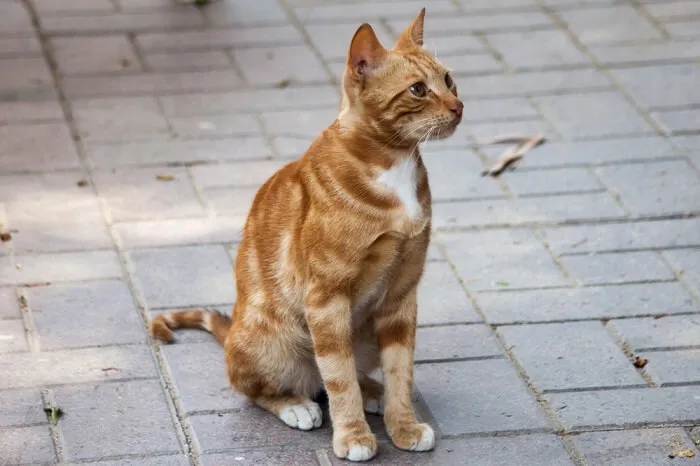 Nile Valley Egyptian CatRodrigo Munoz Sanchez / Shutterstock.com
While the exact timeline of cat domestication in Egypt is debated, it’s clear that by 4,000 years ago, cats held a significant place in Egyptian culture, often treated as cherished family members. The Nile Valley Egyptian cat is a feral breed discovered in Egypt, with some considering them akin to Egyptian Maus. Recognized as an experimental breed by The International Cat Association, efforts are underway to rescue and rehome these cats, as Egyptian authorities have attempted to eliminate the breed. These cats possess a dog-like personality, often greeting their owners and shadowing them. While they can be territorial, they generally socialize well with children and other pets when introduced early. Their price can range from $500 to $1,500.
The Agile Chausie
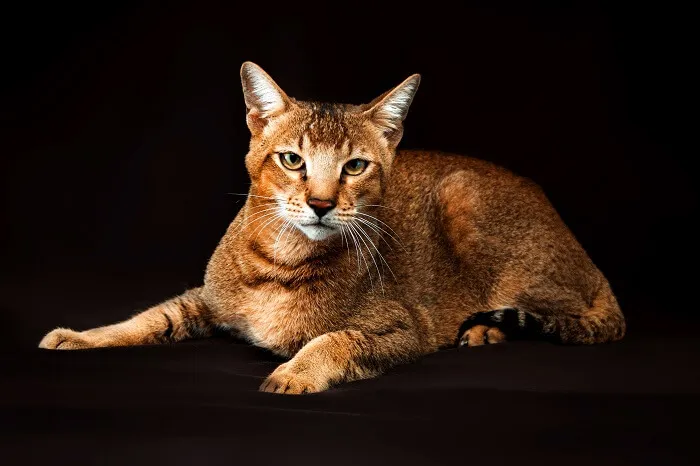 Chausie catTania__Wild / Shutterstock.com
Dating back to ancient Egyptian times, the Chausie cat was domesticated for its agreeable temperament and exceptional hunting skills. These jungle cats were so revered that they were sometimes mummified alongside their owners to accompany them in the afterlife. Statues of the Goddess Bastet are thought to be inspired by the Jungle Cat, sharing its long, slender body, graceful appearance, and large ears. The Chausie’s heritage contributes to its status as one of the world’s largest cat breeds. While retaining some wild hunting instincts, they form strong bonds with humans and are known for their playful nature, even enjoying playing fetch and walking on a leash. Chausie cats require significant interaction and stimulation, as they can become bored if left alone for extended periods. Their price typically falls between $500 and $2,500.
Final Thoughts
The enduring connection between Egyptians and cats is undeniable, from their deification to their mummification as esteemed companions. The domestic cat as we know it today evolved from these ancient Egyptian and African wildcat populations, meaning all modern cat breeds owe a debt to their Egyptian ancestors.
Frequently Asked Questions
What breed are Egyptian cats?
Scientists believe cats were first domesticated in Egypt. All modern domestic cats are thought to have originated from the Near Eastern wildcat found in the Middle East and Africa.
What cats live in Egypt?
Prominent Egyptian cat breeds include the Egyptian Mau, Chausie, Shirazi, Nile Valley Egyptian Cat, Savannah Cat, and Abyssinian.
What is the most popular cat in Egypt?
The Egyptian Mau is widely considered the most popular Egyptian cat breed, distinguished by its naturally occurring spots.
