
In the world of personal development and mental health, a unique and powerful modality is gaining recognition for its profound impact: Eagala Horse Training. It moves beyond traditional talk therapy, inviting clients into a dynamic space where horses become mirrors to our inner world. This isn’t about learning to ride; it’s about learning to understand ourselves through the honest, unfiltered feedback of these magnificent animals. It’s a journey of discovery, facilitated by a specialized team, that unlocks new pathways to healing and growth.
What Exactly is the Eagala Model?
Eagala stands for the Equine Assisted Growth and Learning Association, a global organization setting the standard for equine-assisted psychotherapy and personal development. The Eagala model is built on a foundational belief that humans have the innate ability to solve their own problems. The facilitators and horses are there to provide a safe space for that discovery to happen.
There are a few key principles that make the Eagala approach distinct:
- Ground-Based: All interactions happen on the ground. There is no riding involved. This creates a more level playing field, where clients can engage with the horses as equals, focusing on relationship-building and observation rather than horsemanship skills.
- Team Approach: Every session is conducted by a team of at least two certified professionals: a Mental Health Professional and an Equine Specialist. This ensures both the emotional safety of the client and the physical and emotional well-being of the horses.
- Client-Centered and Solution-Oriented: The team does not interpret the horses’ behaviors for the client. Instead, clients are encouraged to observe, feel, and find their own meaning in the interactions. The focus is on the client’s experience and their own solutions.
This approach fundamentally differs from therapeutic riding, where the primary goal is often physical therapy or learning horsemanship skills. In Eagala horse training, the horses are not tools; they are active participants in the therapeutic process.
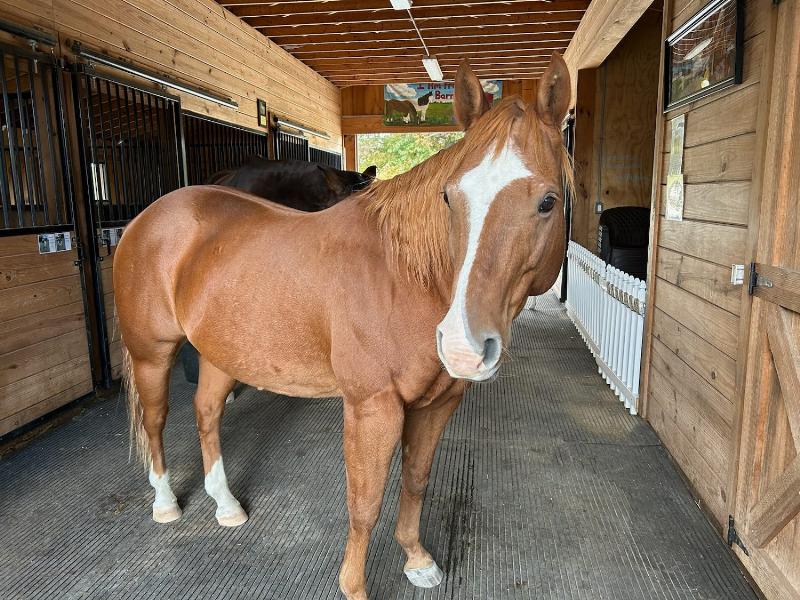 An Eagala horse training session with a client observing a horse in a round pen, fostering a connection without riding.
The Unspoken Language: How Eagala Horse Training Works
So, what actually happens in a session? Imagine an individual struggling with anxiety. In a traditional setting, they might talk about their feelings. In an Eagala session, they might be invited into an arena with a herd of horses and simply asked to observe.
As prey animals, horses are masters of non-verbal communication and are acutely sensitive to their environment and the energy of those around them. They react honestly and instantly to a person’s body language, emotional state, and behavior, providing clear, unbiased feedback.
A horse doesn’t care about your past or what you say. It reacts to your truth in the present moment. This unfiltered honesty is where the real work begins.
The client might notice one horse that seems to mirror their own anxiety, pacing nervously at the edge of the arena. Another might approach calmly, inviting a connection. The client’s interaction—or lack thereof—with the horses becomes a powerful metaphor for their life outside the arena. They might see their own patterns of avoidance, their desire for control, or their fear of connection played out right in front of them. The facilitation team is there to ask powerful questions, but the insights and “aha” moments belong entirely to the client.
The A-Team: The Roles within an Eagala Session
The success of the Eagala model hinges on its unique team structure. Each member has a distinct and vital role that works in concert with the others to create a safe and effective therapeutic environment.
The Mental Health Professional (MH)
The MH is a licensed and credentialed professional responsible for the client’s emotional well-being. They are trained to observe the therapeutic process, guide the client with thoughtful questions, and help them connect the events in the arena to their own life challenges and treatment goals. They ensure the session remains therapeutically sound.
The Equine Specialist (ES)
The ES is an expert in horse behavior and safety. Their primary role is to monitor the horses, ensuring their welfare and interpreting their behavior through the lens of horse psychology. They select the horses for sessions and can provide insights into why a horse might be behaving a certain way, always ensuring a safe environment for both the horses and the client.
The Horses: The True Teachers
The horses are not simply props; they are equal partners in the process. Their role is to be themselves. By reacting naturally to the client, they provide immediate, honest feedback. They might mirror a client’s fear, challenge their boundaries, or offer a moment of quiet acceptance. It is through these authentic interactions that clients gain self-awareness and can practice new ways of being.
Who Can Benefit from Eagala Horse Training?
The applications of the Eagala model are incredibly broad because it focuses on universal human patterns and behaviors. It has proven effective for a wide range of individuals and groups facing various challenges.
Beneficiaries often include those dealing with:
- Post-Traumatic Stress Disorder (PTSD), particularly veterans and first responders
- Anxiety and depression
- Addiction and recovery
- Trauma and abuse
- Eating disorders
- Relationship and family issues
- Grief and loss
Beyond therapy, the model is also a powerful tool for personal and professional growth. Corporations use Eagala for leadership development and team-building exercises, as the arena quickly reveals group dynamics, communication styles, and problem-solving abilities in a way no boardroom ever could.
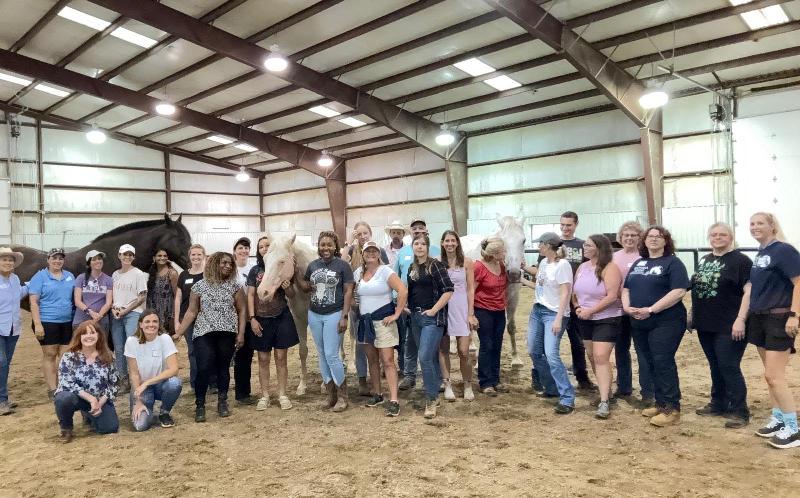 A corporate team participating in an Eagala horse training exercise, working together to guide a horse through an obstacle.
Embarking on the Path: Becoming Eagala Certified
For those inspired by this work, pursuing Eagala certification is a rigorous and rewarding process. It is designed to ensure that practitioners are highly skilled and adhere to a strict code of ethics, prioritizing client and horse welfare above all else. The journey typically involves completing the Eagala Fundamentals Training, a hands-on, multi-day course. Following the training, candidates must complete a period of mentorship and professional development before submitting their portfolio for review to become certified members of the global Eagala community. This commitment to high standards ensures the integrity and efficacy of the Eagala horse training model worldwide.
Frequently Asked Questions about Eagala Horse Training
Do I need to have horse experience to participate?
Absolutely not. The Eagala model is not about horsemanship. All activities are on the ground, and the Equine Specialist ensures safety at all times. In fact, having no prior experience can be an advantage, as you come with no preconceived notions about how horses “should” behave.
Is Eagala horse training safe?
Yes. Safety is the top priority. Every session is facilitated by a certified team, including an Equine Specialist whose main job is to understand horse behavior and manage the environment to ensure the physical safety of everyone involved.
What makes Eagala different from other horse therapies?
The key differentiators are the strict adherence to a ground-based model, the mandatory team approach of a Mental Health Professional and an Equine Specialist, and the focus on client-led discovery without interpretation from the facilitators.
Is there research to support the effectiveness of the Eagala model?
Yes, a growing body of research supports the efficacy of the Eagala model for various populations, especially in the treatment of PTSD and trauma. The model is evidence-based and continues to be a subject of study in the mental health community.
The Final Word
Eagala horse training offers a unique path to self-discovery that is difficult to replicate in a traditional office setting. It is an experiential journey that taps into the power of non-verbal communication and the profound wisdom of horses. By providing a space for clients to see their internal struggles reflected in an external reality, it empowers them to find their own solutions, build resilience, and move forward in their lives with greater awareness and authenticity. It is a testament to the fact that sometimes, the most profound healing comes not from talking, but from doing, feeling, and connecting.
