
Fables are the quiet storytellers of history, passing down profound wisdom through simple tales of talking animals and everyday events. Among these timeless classics is the Donkey And The Horse Story, a short but powerful narrative attributed to Aesop that speaks volumes about selfishness, consequences, and the simple act of helping one another. It’s a story that, despite its ancient origins, feels just as relevant in our modern world of shared responsibilities and interconnected lives. Whether you’re hearing it for the first time or revisiting a childhood lesson, its message is a stark reminder of a fundamental truth: a burden shared is a burden halved, but a burden ignored can double in weight.
This tale is more than just a simple narrative; it serves as a practical guide to understanding empathy and teamwork. For those interested in exploring similar themes, you might find parallels in the narrative of whether is war horse based on a true story, which also delves into the relationship between humans and animals in times of hardship.
The Fable of the Horse and the Donkey
The story begins with a man who owned both a fine-looking horse and a sturdy, hard-working donkey. One day, they set out on a long journey to a distant market. The man placed a light, comfortable saddle on the horse, while he loaded the donkey with heavy bags of grain and goods, a burden that was almost too much for the small creature to bear.
The horse, proud of its magnificent appearance and light load, trotted along merrily. The poor donkey, however, struggled under the immense weight. The sun beat down, and the road was long and dusty. After some time, the exhausted donkey turned to the horse, his voice weak and pleading.
“My friend,” the donkey said, “this load is killing me. Could you please help me by taking just one of these bags? It would be nothing to you, but it would save my life.”
The horse flicked its ears and snorted disdainfully. “That is not my concern,” it replied haughtily. “You were assigned your burden, and I was assigned mine. Carry your own load and don’t bother me with your troubles.”
The donkey sighed and plodded on, his legs trembling with the effort. He stumbled a few more steps, but his strength finally gave out. With a great groan, he collapsed onto the road and died.
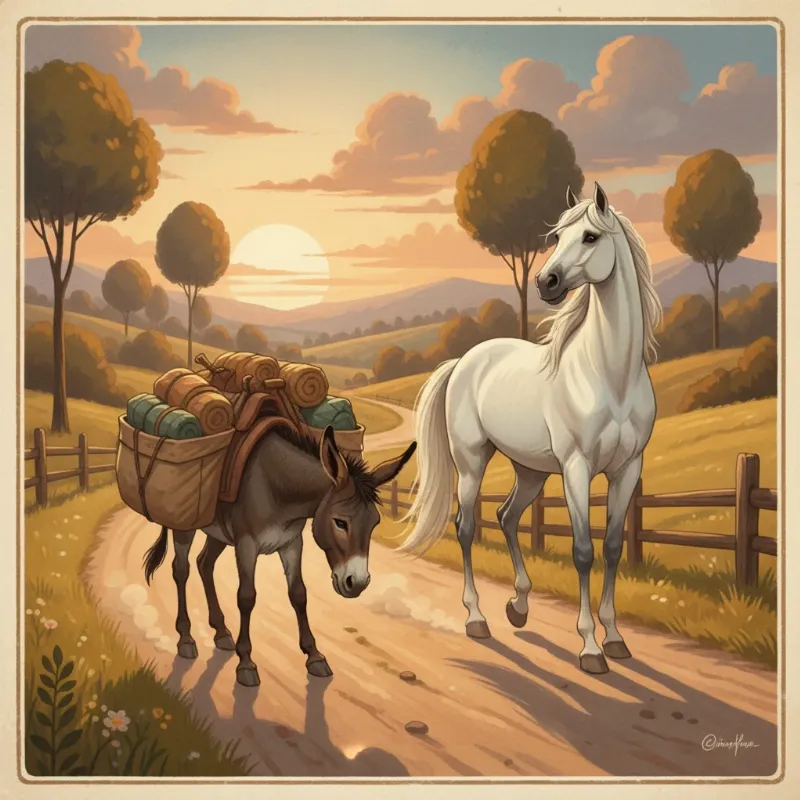 An illustration for the donkey and the horse story, showing the overburdened donkey pleading with the proud horse.
The owner, seeing what had happened, was distressed. He quickly came over and realized there was nothing he could do for the donkey. To continue his journey, he had to figure out what to do with the cargo. He untied all the heavy bags from the donkey and loaded every single one of them onto the proud horse’s back. But that wasn’t all. He also skinned the poor donkey and added its hide to the horse’s load as well.
The horse, now groaning under the crushing weight of the entire cargo plus the donkey’s skin, finally understood its grave mistake. “How foolish I was!” it lamented to itself. “By refusing to carry just one small bag to lighten my companion’s load, I am now forced to carry it all—and his hide, too.”
What Is the Moral of the Donkey and the Horse Story?
The primary moral of this fable is both simple and profound: If you do not help a friend with their burden, you may end up having to carry it all yourself. This central lesson is a powerful commentary on selfishness and the lack of foresight. The horse saw the donkey’s struggle as a separate issue, failing to recognize that their fates on this journey were intertwined. Its refusal to offer minimal assistance led to a far greater burden for itself in the end.
This fable teaches us about the importance of compassion, teamwork, and mutual support. It highlights that in any partnership—whether in work, family, or friendship—the well-being of one individual often affects the well-being of the entire group. Ignoring a colleague’s overload or a friend’s cry for help isn’t just unkind; it’s often impractical and can lead to negative consequences for everyone.
Exploring the Deeper Themes
Beyond the main moral, the donkey and the horse story touches upon several other important themes that resonate deeply in human interactions.
1. Selfishness and its Consequences
The horse is the embodiment of selfishness and pride. It valued its own comfort and appearance above the life of its companion. This shortsightedness was its ultimate undoing. The story serves as a cautionary tale that acting purely out of self-interest, without regard for others, often leads to a worse outcome for the selfish individual. It’s a reminder that a little generosity can prevent a lot of future hardship.
2. The Illusion of Independence
The horse believed its burden was separate from the donkey’s. It operated under an illusion of independence, thinking, “That’s their problem, not mine.” This is a common fallacy in life. We are often more connected than we think. In a team project, if one person fails because they were overwhelmed and no one helped, the whole project can fail. The story elegantly demonstrates that what happens to one member of a community inevitably impacts the others. For a deeper look at animal stories, a the horse and the donkey story pdf can provide more context.
3. Empathy and Shared Humanity (or Animality)
Empathy is the ability to understand and share the feelings of another. The horse showed a complete lack of it. It couldn’t, or wouldn’t, put itself in the donkey’s position. True wisdom involves recognizing the struggles of others and offering help not just out of charity, but out of a shared sense of community. The fable encourages us to look beyond our own immediate comfort and consider the needs of those around us.
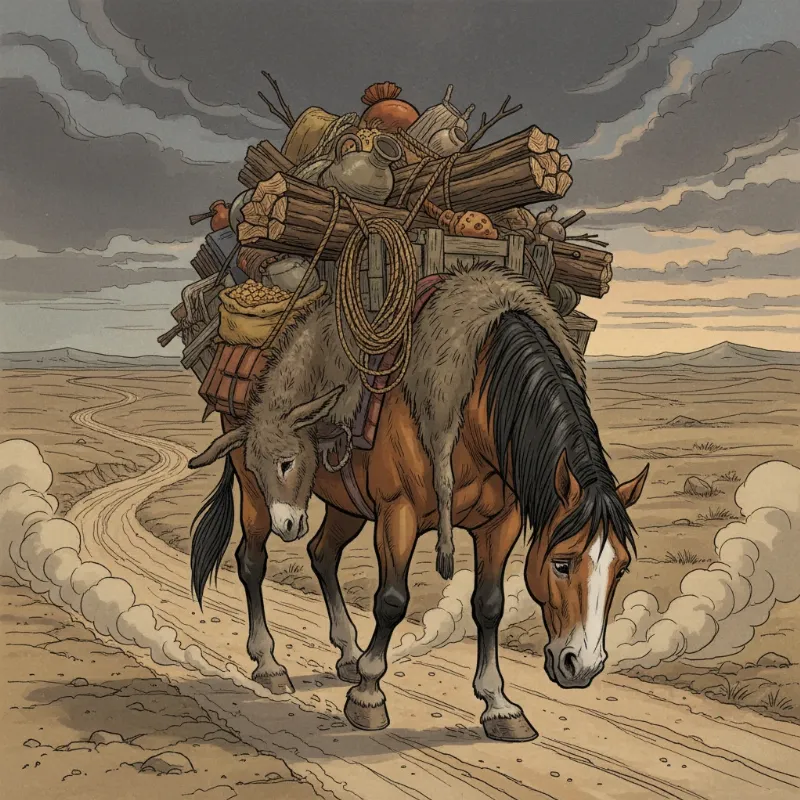 The horse from the donkey and the horse story now carrying all the loads, including the donkey's hide.
Applying the Fable’s Lesson in the Modern World
It’s easy to dismiss fables as simple children’s stories, but the wisdom of the donkey and the horse story is incredibly relevant today. Think about it in a modern workplace. An employee is struggling to meet a deadline and asks a colleague for a small amount of help. The colleague, busy with their own “light” tasks, refuses. Eventually, the struggling employee burns out and quits. Now, who has to pick up their entire workload? The colleague who refused to help in the first place.
This principle applies everywhere:
- In Families: When one family member is shouldering all the housework or emotional labor, and others refuse to pitch in, it can lead to burnout and resentment, ultimately straining the entire family unit.
- In Communities: When we ignore problems like poverty or environmental issues because they don’t affect us “directly,” these problems often grow until they become crises that impact everyone.
- In Friendships: A friendship is a partnership. Refusing to support a friend through a tough time can lead to the loss of that friendship, leaving a void that is heavier than the original request for help.
The story teaches a proactive approach to life. It’s wiser to offer a helping hand to lift a small part of a burden now than to be forced to carry the entire weight of a disaster later. It is a lesson in shared responsibility that is foundational to any successful society or relationship. The dynamic between the two animals is a core element, and for those who enjoy such narratives, the question of is the movie war horse based on a true story explores a similar human-animal bond in a different context.
Conclusion: The Enduring Wisdom of a Simple Tale
The donkey and the horse story is a masterpiece of narrative efficiency. In just a few short paragraphs, it delivers a lesson that has remained relevant for centuries. It reminds us that pride, selfishness, and a lack of empathy are not just moral failings; they are practical ones. By choosing to ignore the struggles of others, we often set ourselves up for a heavier burden in the future.
The ultimate takeaway is a call for kindness, cooperation, and foresight. We should strive to be the kind of person who helps with one small bag, not the one who ends up carrying the entire load plus the hide. By sharing the burdens of those we journey with, we not only lighten their load but ensure our own path remains easier to travel.
Frequently Asked Questions (FAQ)
Who wrote the donkey and the horse story?
The story is attributed to Aesop, a storyteller believed to have lived in ancient Greece between 620 and 564 BCE. His tales, known as Aesop’s Fables, are a collection of short stories that typically feature animals and convey a moral lesson.
What does the horse symbolize in the story?
The horse symbolizes pride, arrogance, and selfishness. It represents individuals who are so focused on their own comfort and status that they fail to show compassion or offer help to those in need, ultimately leading to their own downfall.
What does the donkey symbolize?
The donkey symbolizes the hardworking, overburdened, and humble individual. It represents those who quietly bear heavy responsibilities and are often overlooked until their struggle becomes a crisis that affects everyone around them.
How is this story relevant in a business context?
In business, the story is a powerful metaphor for teamwork and shared responsibility. It warns against a silo mentality where employees or departments refuse to help each other. A team that collaborates and supports its members is far more resilient and successful than one where individuals act only in their own self-interest.
What is the difference between this fable and “The Tortoise and the Hare”?
While both are famous fables by Aesop, they teach different morals. “The Tortoise and the Hare” teaches that “slow and steady wins the race,” focusing on the virtues of perseverance and consistency over arrogance and speed. The donkey and the horse story focuses on the theme of mutual support and the consequences of selfishness.
