
Dealing with food aggression in dogs can be challenging, but with the right approach, you can help your canine companion overcome this behavior and foster a more harmonious environment. This guide will walk you through understanding the root causes of food aggression and implementing effective training strategies.
Food aggression, often referred to as resource guarding, is a natural instinct for many dogs. It stems from a deep-seated need to protect what they perceive as valuable – in this case, their food. This behavior isn’t about malice; it’s about a dog’s primal drive to ensure its survival and access to resources. Recognizing the signs is the first step. These can include growling, baring teeth, snapping, or even outright biting when another dog, person, or even another pet approaches their food bowl. Understanding the nuances of Food Aggression Dog Training is crucial for any dog owner.
Understanding the Roots of Food Aggression
Before diving into training, it’s essential to understand why dogs exhibit food aggression. Several factors can contribute to this behavior:
- Instinct and Genetics: As mentioned, resource guarding is a natural instinct. Some breeds may be more prone to it than others due to their historical roles.
- Past Experiences: Dogs who have experienced food scarcity, lived in shelters, or competed for resources with other animals may develop strong guarding tendencies.
- Fear and Insecurity: A dog might guard its food out of fear that it will be taken away, especially if they’ve had negative experiences in the past.
- Learned Behavior: If a dog successfully guards its food and doesn’t face any negative consequences, the behavior can be reinforced.
- Medical Conditions: In rare cases, underlying medical issues could contribute to behavioral changes, though this is less common for food aggression specifically.
It’s important to differentiate between true food aggression and a dog simply being protective of its space while eating. True aggression involves escalating behaviors when a resource is threatened.
Identifying Signs of Food Aggression
Observing your dog’s behavior around food is key. Look for these indicators:
- Stiffening of the body when someone approaches the food bowl.
- A low growl originating from the chest.
- Freezing in place with a hard stare.
- Snapping or lunging towards the perceived threat.
- Rapid eating, almost as if trying to “inhale” the food before it can be taken.
- Moving the food bowl to a more secure location.
If you notice any of these, it’s time to implement a training plan. For more severe cases, consider seeking professional help, as trainers experienced in aggressive dog training Charlotte or similar areas can provide tailored guidance.
The Foundation: Building Trust and Positive Associations
Effective food aggression dog training relies heavily on building trust and creating positive associations with your presence around their food. The goal is to teach your dog that you are not a threat, but rather a source of good things.
Desensitization and Counter-Conditioning
This is a two-part process that helps change your dog’s emotional response to someone approaching their food.
- Desensitization: Gradually exposing your dog to the trigger (you approaching their food) at a distance and intensity that doesn’t elicit a fearful or aggressive response.
- Counter-Conditioning: Pairing the presence of the trigger with something positive, like high-value treats.
Here’s how to implement it:
- Start from afar: With your dog eating from their bowl, stand at a significant distance where they are comfortable. Toss a few high-value treats (small pieces of chicken, cheese, or liver) towards their bowl.
- Gradually reduce distance: Over several sessions, slowly decrease the distance. If your dog shows any signs of unease (stiffening, growling), you’ve moved too close, too fast. Increase the distance again and proceed more slowly.
- The “Trade-Up” Game: This is a crucial part of how to train a dog to stop biting related to food guarding. When your dog is eating, approach them calmly. Before they can react, drop a much higher-value treat into their bowl. The idea is that your approach leads to something better than what they currently have. Crucially, never try to forcibly take the food away. This will only increase their anxiety and aggression.
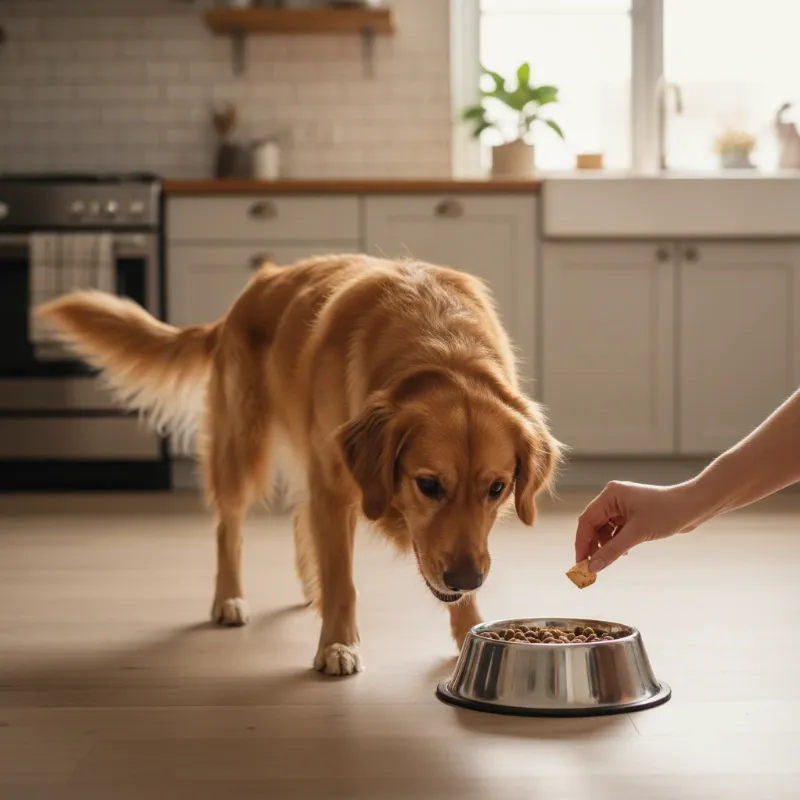 Positive reinforcement training to stop food aggression in dogs, showing a person dropping a treat into a dog's bowl from a safe distance.
Basic Obedience and Impulse Control
A dog that has a solid foundation in basic obedience is generally easier to train. Commands like “sit,” “stay,” and “leave it” are invaluable.
- “Leave It”: This command teaches your dog to disengage from something they want, which is directly applicable to food guarding. Practice with less valuable items first, rewarding them heavily when they disengage.
- “Stay” or “Wait”: Teaching your dog to wait patiently before eating can help reduce the urgency and anxiety associated with their meal.
When practicing these commands, always ensure you are not perceived as a threat. Train in a relaxed environment, and always end on a positive note. Skills learned here can also be a part of smart dog trainer petsafe methods, ensuring the dog’s well-being during training.
Advanced Training Techniques
Once your dog is showing improvement with the basic desensitization and positive association techniques, you can introduce more advanced methods.
Feeding from Your Hand
Periodically, instead of letting your dog eat from their bowl, hand-feed them their entire meal, one kibble at a time. This reinforces the idea that food comes from you. If your dog shows any signs of guarding even their kibble in your hand, revert to a safer distance.
The “Who’s a Good Dog?” Game
This involves approaching your dog while they are eating and calmly and cheerfully asking, “Who’s a good dog?” While they are distracted by your voice (not yet by your physical presence), drop a treat into their bowl. The goal is to associate your happy voice with positive reinforcement around their food.
Feeding Around Other Dogs (with caution)
If the food aggression is directed towards other dogs in the household, it requires careful management and often professional intervention. Never leave dogs with a history of food aggression unsupervised around each other during meals. Separate feeding is usually the safest option. If you are considering introducing dogs and are worried about resource guarding, consult with a professional on aggressive dog training Charlotte or your local area.
Important Considerations and Safety
- Never Punish Aggression: Punishing a growl or snap will not solve the problem. It will likely teach the dog not to warn you before biting, making the situation more dangerous.
- Management is Key: Until your dog is fully trained, manage their environment to prevent incidents. This might mean feeding them in a separate room or crate, or removing other pets and children during meal times.
- High-Value Treats: Use treats that your dog absolutely loves and only receives during training sessions. This makes the positive association stronger.
- Consistency is Crucial: Everyone in the household must be on the same page with the training plan. Inconsistent cues or reactions can confuse the dog and hinder progress.
- Know When to Seek Professional Help: If you are dealing with severe aggression, or if your attempts at training are not yielding results or are escalating the problem, do not hesitate to contact a certified professional dog trainer or a veterinary behaviorist. They can provide personalized strategies and ensure safety. For instance, learning about dog training food aggression strategies from an expert like Jeff Gellman dog trainer can be invaluable.
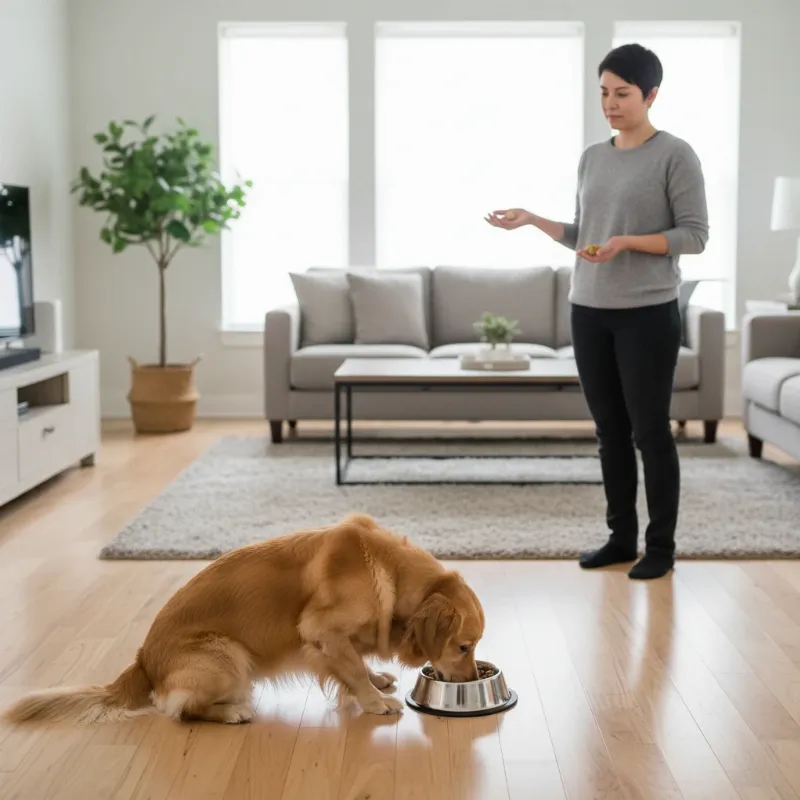 A visual representation of safe distance training for dogs with food aggression, with a dog calmly eating while a person is at a safe, non-threatening distance.
Conclusion: Building a Stronger Bond Through Training
Overcoming food aggression in dogs is a journey that requires patience, consistency, and a deep understanding of canine behavior. By employing positive reinforcement techniques, building trust, and managing the environment, you can successfully address this issue. Remember, the goal isn’t just to stop the aggression, but to build a stronger, more trusting relationship with your dog. With the right food aggression dog training, you can ensure that meal times are a peaceful and positive experience for everyone involved.
