
Walking your dog should be a joy, a bonding experience that you both look forward to. But for many owners, it’s a frustrating, arm-yanking ordeal. If your daily walks feel more like a tug-of-war match, you’ve likely considered a Dog Walk Training Collar. This isn’t just a piece of equipment; it’s a communication tool designed to bridge the gap between your guidance and your dog’s enthusiasm. Used correctly, it can transform chaotic pulling into a calm, controlled heel, making your time together safer and far more enjoyable.
But with so many options and opinions out there, choosing and using one can be daunting. This guide will walk you through everything you need to know, from the different types available to the essential safety rules that ensure a positive experience for you and your furry best friend. Understanding these tools is the first step toward reclaiming the peaceful walk you’ve always wanted. Exploring options like dog training walking collars can provide further insight into specialized equipment.
What Exactly Is a Dog Walk Training Collar?
First, let’s clear up a common misconception. A dog walk training collar is not meant to be your dog’s everyday, all-day collar where their ID tags hang. It is a specific piece of equipment used during training sessions and walks to help teach leash manners. Unlike a standard flat collar, which offers no leverage and can even encourage pulling, a training collar is designed to provide a specific, gentle correction or cue that gets your dog’s attention and communicates what you want them to do—namely, walk politely by your side.
The core principle behind most training collars is to create a momentary, uncomfortable (but not painful) sensation when the dog pulls, which is immediately relieved when they return to the desired position. This simple cause-and-effect helps the dog learn that loose-leash walking is more pleasant than pulling. However, the success of this tool is 100% dependent on the human at the other end of the leash.
The Main Types of Dog Training Collars Explained
The market is filled with various collars, each operating on a different principle. Understanding the mechanics, pros, and cons of each is crucial for making an informed decision for your unique dog.
The Martingale Collar
Often called a “limited-slip” or “no-slip” collar, the Martingale is one of the gentlest training options. It’s constructed with two loops. The larger loop slips onto the dog’s neck, and the leash is clipped to a D-ring on the smaller loop. When the dog pulls, the smaller loop tightens the larger loop just enough to prevent the dog from backing out of it.
- Best for: Dogs with narrow heads, like Greyhounds or Whippets, who can easily slip out of regular collars. It’s also a great starting point for gentle pullers.
- Pros: Prevents escape, provides gentle correction, and is less harsh than other options.
- Cons: May not provide a strong enough correction for determined, powerful pullers.
The Prong Collar (or Pinch Collar)
This is perhaps the most controversial and misunderstood training tool. A prong collar is made of interlocking metal links with blunted points that face inward. When the dog pulls, the links tighten and apply even pressure around the dog’s neck.
According to Dr. Sarah Miller, a seasoned veterinary behaviorist, “The key to a prong collar is proper fitting and use. It’s designed to mimic the corrective nip a mother dog gives her puppies. It’s about a quick, clear pressure-and-release communication, not sustained pain. Unfortunately, misuse has given them a bad reputation.”
- Best for: Large, powerful dogs with serious pulling issues, where other methods have failed. It requires education or professional guidance to use safely.
- Pros: Highly effective for immediate correction, requires less physical strength from the handler, and can prevent a dog from pulling into dangerous situations (like traffic).
- Cons: Looks intimidating, has a high potential for misuse that can cause injury or fear, and is banned in some countries. It must be fitted high and snug on the neck, right behind the ears.
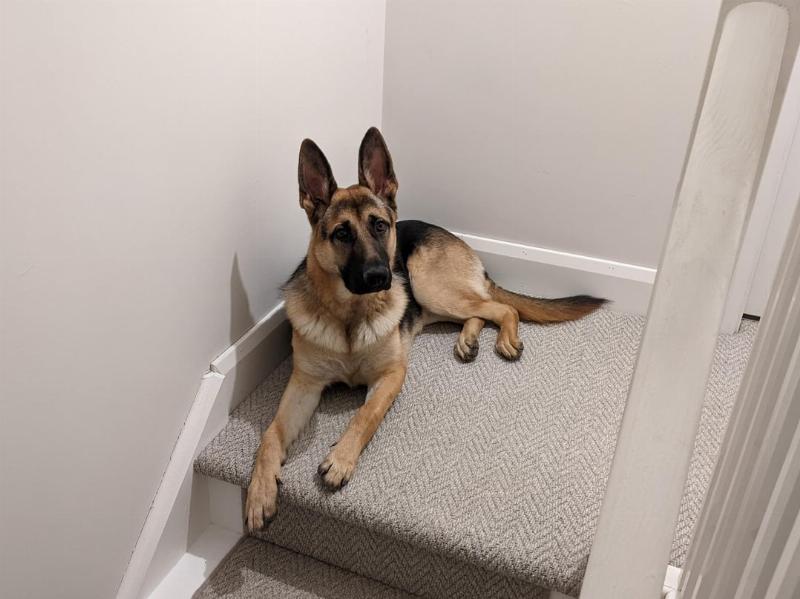 A close-up of a properly fitted dog walk training collar, a prong collar, sitting high on the neck of a German Shepherd during a focused training walk.
The Choke Chain (or Slip Collar)
The choke chain is a simple chain with a ring on each end. It’s looped to form a noose that tightens indefinitely as the dog pulls. For decades, this was the standard training collar, but most modern, science-based trainers now advise against it.
- Best for: Honestly, it’s rarely the best choice in today’s training landscape.
- Pros: Inexpensive and widely available.
- Cons: Carries a very high risk of injury to the trachea, esophagus, and neck. It provides no limit to how much it can tighten, making it easy to accidentally choke the dog. The correction it gives can be unclear and often leads to fear and anxiety.
Head Halters
A head halter, like a Gentle Leader or Halti, works on a different principle. It consists of two straps: one fits high around the dog’s neck, and the other loops around the muzzle. The leash attaches to the loop under the chin. It doesn’t put pressure on the throat; instead, it works on the principle that where the head goes, the body will follow. When the dog pulls, the halter gently guides their head back toward you, making it impossible to continue lunging forward.
- Best for: Very strong pullers, reactive dogs, or owners who lack the physical strength to control a large dog.
- –Pros: Offers excellent control with minimal physical effort, non-painful, and prevents pulling very effectively.
- Cons: Many dogs require a gradual and positive conditioning period to accept wearing it. It can be mistaken for a muzzle, leading to unwanted public perception.
How to Choose the Right Dog Walk Training Collar
There is no one-size-fits-all answer. The right choice depends on a combination of factors:
- Your Dog’s Size and Breed: A Great Dane has different needs than a Beagle.
- Your Dog’s Temperament: Is your dog sensitive and anxious, or confident and stubborn? A sensitive dog may shut down with a harsh correction.
- The Specific Behavior: Are you dealing with simple pulling, or more complex issues like lunging and reactivity?
- Your Skill Level: Are you an experienced handler, or a first-time dog owner? Some tools, like prong collars, require more skill to use correctly.
When in doubt, seek professional help. A certified dog trainer can assess your dog and recommend the most appropriate tool. Many professional services, like those found in dog training in utah, offer consultations to help you choose and properly use training equipment.
The Golden Rules: Using a Training Collar Safely and Effectively
Simply buying a dog walk training collar is not the solution. Your success and your dog’s safety depend entirely on how you use it.
Proper Fitting is Non-Negotiable
An ill-fitting collar is dangerous and ineffective. A martingale should be snug enough that it won’t slip over the head when tightened. A prong collar must be high and snug, right behind the ears, not hanging loosely down by the shoulders. Always follow the manufacturer’s instructions or have a professional show you how to fit it.
Introduction and Conditioning
Never just slap a new collar on your dog and head out for a walk. Let them wear it around the house for short periods while doing fun things, like eating dinner or playing. This creates a positive association. For head halters, this step is especially critical and may involve lots of high-value treats to get them comfortable.
It’s a Tool, Not a Magic Wand
The collar is meant to provide a quick, clear correction or cue—a “pop” or “bump” on the leash, not a constant pull. The instant your dog responds and the leash loosens, the pressure should be gone. This correction must be paired with positive reinforcement. When your dog walks nicely by your side, praise them, give them a treat, and be an encouraging partner. You’re teaching them what to do, not just punishing them for what not to do. Many owners find pairing equipment with structured lessons, similar to those offered at dog training classes san diego ca, yields the best results.
Never Leave a Training Collar on an Unattended Dog
This is a critical safety rule. Prong collars and choke chains can easily get snagged on things like furniture or a crate, leading to a strangulation hazard. These collars are for active training sessions only. Once the walk is over, take it off and put on their regular flat collar.
Are There Humane Alternatives to Training Collars?
Absolutely. For many dogs, a training collar may not be necessary. The most popular and effective alternative is the front-clip harness. Unlike a traditional harness where the leash clips on the back (which can actually encourage pulling, like a sled dog), a front-clip harness has the leash attachment point on the dog’s chest.
When the dog pulls, the harness creates a gentle pressure that turns them back toward you, redirecting their forward momentum without putting any pressure on their neck. This can be an incredibly effective and humane tool for managing pulling.
Ultimately, the most important “tool” is the training itself. Techniques like the “Be a Tree” method (stopping every time the dog pulls) or rewarding your dog heavily for staying in the heel position can teach loose-leash walking with any equipment. The collar or harness simply helps manage the dog while you’re teaching these new skills. Proper equipment, such as a variety of dog collars training walking, can support these training efforts.
Frequently Asked Questions (FAQ)
Can a dog walk training collar hurt my dog?
Yes, any training collar can hurt a dog if it is misused, ill-fitting, or the wrong type for the dog. Choke chains carry the highest risk of injury to the neck and trachea. Even Martingales or head halters can cause chafing if not fitted correctly. Safety is entirely in the hands of the handler.
At what age can I start using a training collar?
It is generally not recommended to use pressure-based training collars on very young puppies. Their necks are still developing, and the focus should be on positive reinforcement. Most trainers recommend starting with a harness and focusing on foundational loose-leash skills. Consult a veterinarian or trainer for advice specific to your puppy’s age and breed.
How long does it take to see results?
This varies wildly depending on the dog, the consistency of the training, and the handler’s skill. Some dogs show improvement on the very first walk with a new tool like a head halter or prong collar. However, lasting results that become ingrained habit require weeks or months of consistent training sessions.
Should I use a training collar for a small dog?
While small dogs can be strong pullers, their necks are more delicate. Harsh tools like choke or prong collars are often too much for them. Lighter options like a thin Martingale collar or a well-fitted front-clip harness are much safer and more appropriate choices for smaller breeds.
Can I use a retractable leash with a training collar?
No, absolutely not. Retractable leashes teach dogs the exact opposite of what you want: they learn that pulling extends the leash. They provide no way to give a quick, clear correction and create a dangerous combination of constant tension with a tool that requires pressure-and-release. Always use a standard 4-6 foot leash for training.
Your Journey to Better Walks Starts Now
Choosing to use a dog walk training collar is a step towards taking control of your walks and building a better relationship with your dog. It’s not a shortcut or a magic fix, but a tool that, when used with knowledge, patience, and fairness, can open up a new world of communication. Remember to prioritize your dog’s safety and well-being, always pair corrections with positive reinforcement, and never hesitate to seek the guidance of a professional. With the right approach, you can transform your dreaded daily drag into the peaceful, enjoyable walk you both deserve.
