
Welcoming a new dog into your home is an incredibly exciting time, filled with cuddles, playtime, and the promise of a lifelong friend. However, that excitement can quickly turn to frustration when you discover a puddle on your favorite rug. This is a universal experience for new dog owners, and it’s where effective Dog Training Tips For Housebreaking become essential. The journey to a fully house-trained dog isn’t about magic; it’s about understanding your dog’s needs, establishing clear communication, and practicing a great deal of patience. Think of it as teaching your dog the house rules in a language they can understand. With the right approach, you can turn a stressful process into a powerful bonding experience, strengthening the trust between you and your furry companion for years to come. Some are known as easy to house train dog breeds, but every dog can succeed with the right guidance.
Understanding the Canine Point of View
Before diving into the “how-to,” it’s crucial to understand the “why.” Dogs are naturally clean animals. Their ancestors lived in dens and instinctively knew not to soil their living and sleeping areas. This instinct is the foundation of housebreaking. Your goal isn’t to teach them something unnatural but to help them understand that your entire house is their “den.”
A puppy’s bladder control is limited, and they don’t arrive knowing the difference between carpet and grass. Accidents aren’t acts of rebellion or spite; they are simply a lack of understanding. Punishing a dog for an accident, especially after the fact, only creates fear and anxiety. This can lead them to hide when they need to relieve themselves, making the training process much more difficult. Effective housebreaking is about management, prevention, and positive reinforcement, not punishment.
Essential Supplies for Success
Setting yourself up with the right tools from the start can make a world of difference. You don’t need a lot of fancy gadgets, but a few key items are non-negotiable for a smooth and effective housebreaking journey.
- A Crate: This is arguably the most important tool. When introduced properly, a crate becomes your dog’s personal den—a safe, secure space. Because of their natural instinct to keep their den clean, a crate is an invaluable aid in preventing accidents when you can’t supervise them directly.
- High-Quality Enzymatic Cleaner: Standard household cleaners won’t cut it. The smell of urine contains pheromones that signal to your dog, “This is an acceptable potty spot!” An enzymatic cleaner contains special proteins that break down and eliminate these organic molecules entirely, removing the scent marker and preventing repeat offenses in the same spot.
- High-Value Treats: You’ll need something special to reward your dog with the moment they successfully go potty outside. These shouldn’t be their everyday kibble. Think small, tasty morsels like freeze-dried liver, bits of chicken, or soft training treats that get them excited.
- A Leash and Collar/Harness: Potty breaks should be focused. Keeping your dog on a leash prevents them from getting distracted by a squirrel or a particularly interesting smell, reminding them of the task at hand.
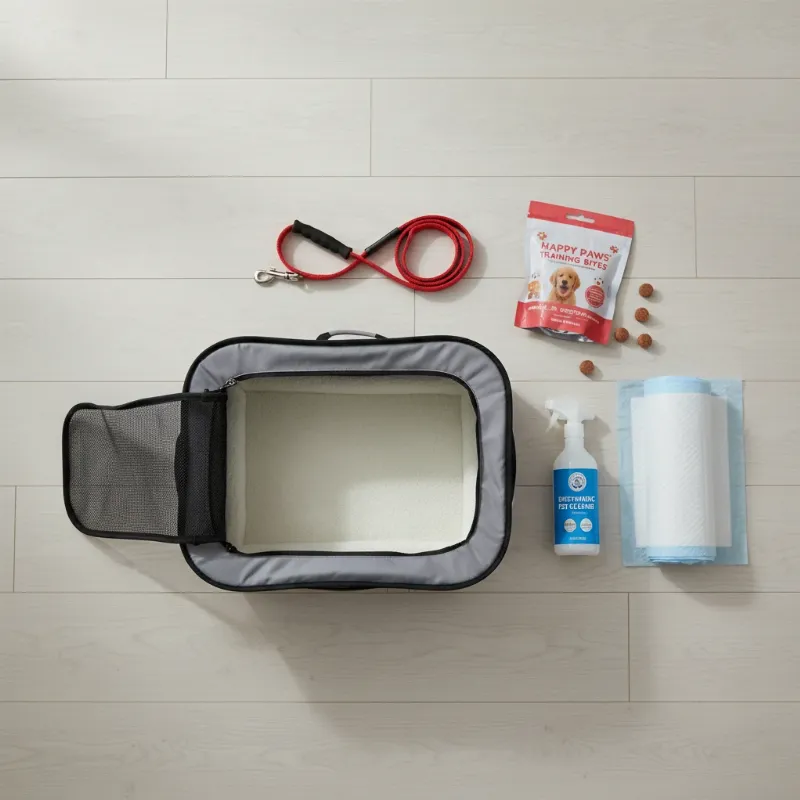 A collection of essential dog training tips for housebreaking supplies including a crate, enzymatic cleaner, and treats.
The Ultimate Dog Training Tips for Housebreaking Plan
Success in housebreaking boils down to a single word: consistency. Every member of the household needs to be on the same page, following the same rules. This creates a predictable environment where your dog can learn and thrive.
Establish a Rock-Solid Routine
Dogs are creatures of habit. A predictable schedule helps regulate their bodily functions and teaches them when to expect potty breaks. A puppy, in particular, needs to go out frequently.
A good rule of thumb is that a puppy can hold their bladder for about one hour for every month of age (e.g., a 3-month-old can hold it for about 3 hours). However, to be safe, you should take them out:
- First thing in the morning
- Last thing at night
- After waking up from a nap
- After playing
- After eating or drinking
- Before being left alone
- At least once every two hours initially
When you take your dog out, go to the same designated potty spot every single time. Use a specific verbal cue like “Go potty” or “Do your business.” Stand still and be boring. This is not playtime. Once they eliminate, the real magic happens.
Positive Reinforcement is Your Superpower
The moment your dog finishes peeing or pooping outside, you need to throw a party. Lavish them with enthusiastic praise like “Yes! Good dog!” and immediately give them one of those high-value treats you prepared. This immediate reward creates a powerful positive association. Your dog quickly learns: “When I go potty on the grass, I get praise and a delicious treat!” This is far more effective than any form of punishment. If you’re struggling with the specifics, watching some dog training videos for puppies can provide excellent visual guidance.
Learn to Spot the Signs
Your dog will almost always tell you when they need to go. You just need to learn their language. Common signs that a potty break is imminent include:
- Circling
- Sniffing the ground intently
- Whining or looking restless
- Pacing near the door
- Sudden changes in behavior during play
When you see any of these signs, don’t wait. Immediately leash your dog and take them straight to their designated potty spot.
How to Handle Accidents (Because They Will Happen)
No matter how vigilant you are, accidents are a part of the process. How you react is critical.
- If you catch them in the act: Make a sharp, sudden noise to interrupt them—a clap or a firm “Ah-ah!” The goal is to startle, not scare. Immediately rush them outside to their potty spot. If they finish outside, praise and reward them.
- If you find the accident later: Do nothing to the dog. It’s too late for them to connect your reaction with their past action. Rubbing their nose in it or scolding them will only teach them that you are unpredictable and scary. Simply clean the area thoroughly with your enzymatic cleaner to prevent a repeat performance. A key question many owners have is not just about peeing, but also about the other business; understanding how can i get my puppy to poop outside follows these exact same principles of timing and reward.
Common Housebreaking Hurdles
Sometimes, you might feel like you’re doing everything right, but challenges still pop up. Don’t despair; most issues are common and solvable.
“My Adult Dog is Suddenly Having Accidents!”
If a previously house-trained adult dog starts soiling in the house, your first call should be to the veterinarian. This behavior change, known as regression, can often be the first sign of a medical issue like a urinary tract infection (UTI), kidney disease, or diabetes. Once medical causes are ruled out, consider any recent changes in the home environment. A new baby, a move, or a change in your work schedule can all cause stress that may manifest as house soiling. In this case, go back to housebreaking basics: more frequent potty breaks, rewards for success, and managing their environment.
Submissive or Excitement Urination
Some dogs, particularly young ones, may urinate when they are excited (like when you come home) or as a submissive gesture (when being greeted or scolded). This is an involuntary reflex, not a housebreaking issue. To manage it, keep greetings low-key. Avoid direct eye contact and towering over the dog. Try to greet them outside if possible. This is a behavior that most dogs outgrow with confidence and age.
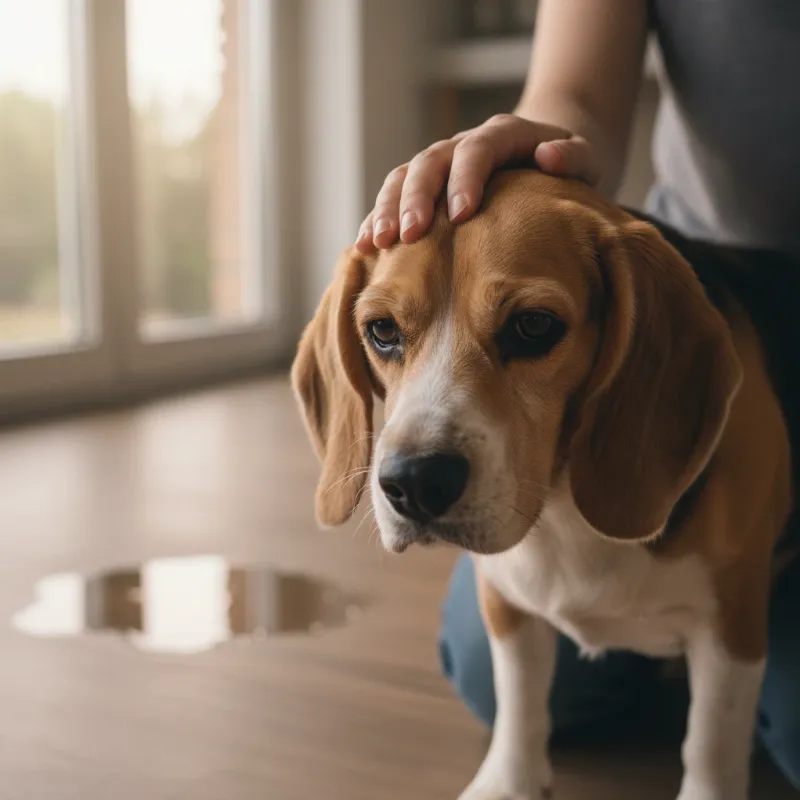 A dog owner calmly comforting their dog, demonstrating positive dog training tips for housebreaking after an accident.
Frequently Asked Questions (FAQ)
How long does it take to housebreak a puppy?
There is no set timeline, as every dog is an individual. On average, it can take anywhere from 4 to 6 months for a puppy to be fully reliable. However, for some dogs, it might take up to a year. Consistency is the key factor that determines the speed of the process.
Can you house train an older dog?
Absolutely! The principles are exactly the same: establish a routine, supervise closely, and reward success. An older dog from a shelter may have never learned the rules, or they may be confused by their new environment. Patience and positive reinforcement work just as well for adults as they do for puppies.
Why is my house-trained dog suddenly having accidents?
The first step is always a vet check to rule out any underlying medical conditions. If they get a clean bill of health, consider environmental stressors. Has your schedule changed? Have you moved? Is there a new pet or person in the home? Revisit the basics of house training to reinforce the correct behavior.
Should I use puppy pads?
Puppy pads can be a useful tool for those living in apartments or for people with mobility issues. However, they can sometimes confuse the dog, teaching them that it’s acceptable to go potty inside on a specific surface. If you use them, be consistent, and if your goal is for the dog to eliminate exclusively outside, it’s best to phase them out as soon as possible.
What’s the best way to clean up a pet accident?
First, absorb as much of the urine as possible with paper towels. Then, saturate the area with an enzymatic cleaner. Do not just spray and wipe; it needs to soak deep into the carpet fibers or floorboards to break down the odor-causing molecules. Let it air dry. Avoid using ammonia-based cleaners, as their smell can mimic that of urine to a dog.
The Final Word on Housebreaking
Housebreaking is a marathon, not a sprint. It tests your patience and your consistency, but it’s one of the first and most important ways you build a foundation of trust and communication with your new dog. By using these dog training tips for housebreaking, you’re not just teaching your dog where to go potty; you’re teaching them how to live successfully in a human world. Celebrate the small victories, be forgiving of the setbacks, and remember that behind every accident is a dog who is trying their best to understand. With consistency, positive reinforcement, and a loving approach, you’ll soon have a well-behaved and fully integrated member of your family.
