
Embarking on the journey of dog ownership is incredibly rewarding, but it also comes with the responsibility of raising a well-behaved furry friend. Effective dog training is the cornerstone of a harmonious relationship between you and your canine companion, ensuring they are a joy to be around both at home and in public. This comprehensive guide dives deep into essential Dog Training Tips And Tricks that cater to various needs, from basic obedience to addressing common behavioral challenges. Whether you’re a first-time dog parent or looking to refine your skills, these insights are designed to help you foster a deeper bond and achieve remarkable results with your dog.
Understanding the Fundamentals of Dog Training
Before diving into specific techniques, it’s crucial to grasp the core principles that underpin successful dog training. Understanding your dog’s perspective and employing a consistent, positive approach are paramount.
The Importance of Positive Reinforcement
Positive reinforcement is the most effective and humane method for training dogs. This approach focuses on rewarding desired behaviors, making them more likely to occur again. Rewards can include treats, praise, toys, or anything else your dog finds motivating.
- How it works: When your dog performs a desired action (e.g., sits when you say “sit”), you immediately reward them. This creates a positive association between the action and the reward.
- Why it’s effective: It builds trust and strengthens the bond between you and your dog, making training a fun and engaging experience rather than a chore. It avoids the fear and anxiety associated with punishment-based methods.
Consistency is Key
Inconsistent training can confuse your dog. Ensure that all members of the household are on the same page regarding commands, rules, and rewards. This consistency helps your dog understand expectations clearly and learn more rapidly.
- Unified Commands: Use the same word for each command every time. For example, always use “sit,” not sometimes “sit” and sometimes “sit down.”
- Clear Rules: Decide on house rules – like whether dogs are allowed on furniture – and enforce them consistently.
Timing and Pacing
The timing of your reward is critical. Rewards must be delivered immediately after the desired behavior occurs so your dog can connect the reward with the action. Pacing your training sessions is also important; keep them short, frequent, and engaging to prevent your dog from becoming bored or overwhelmed.
- Immediate Rewards: Aim to reward within one to two seconds of the desired behavior.
- Short Sessions: Five to ten minutes of training, several times a day, is often more effective than one long session.
Essential Dog Training Commands and Techniques
Mastering basic obedience commands is fundamental for safety and good manners. Here are some core commands and how to teach them.
Sit
This is often the first command taught and is relatively easy for most dogs to learn.
- Hold a treat near your dog’s nose.
- Move the treat upwards and slightly back over their head. As their nose follows the treat, their rear end will naturally lower into a sit.
- As soon as their rear touches the ground, say “Sit” and give them the treat and praise.
- Repeat this several times in short sessions.
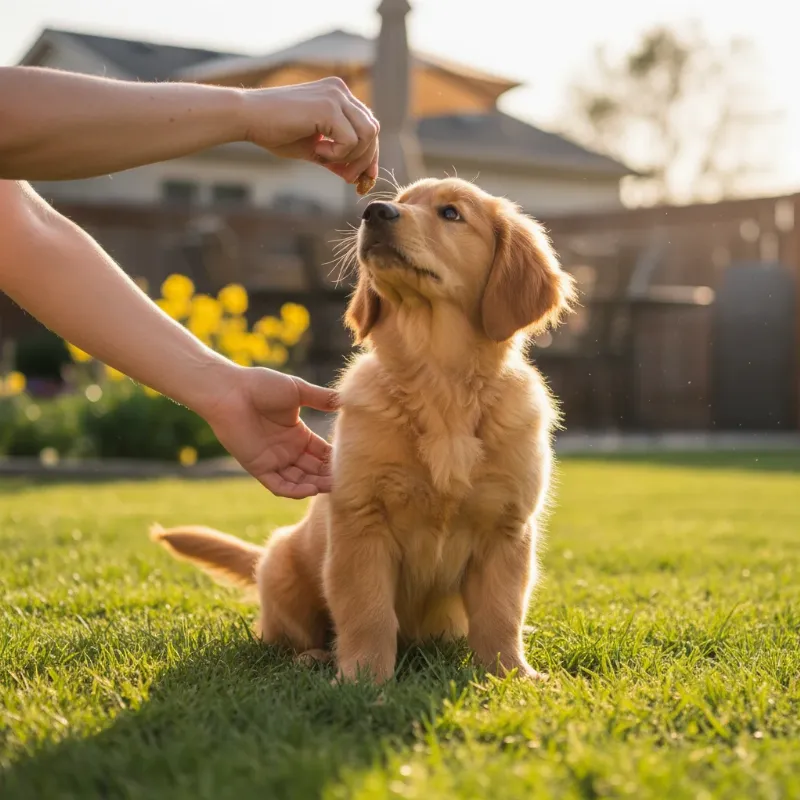 Effective visual demonstration of teaching a dog the 'sit' command using a treat lure and positive reinforcement, focusing on clear steps.
Stay
Once your dog masters “sit,” you can introduce “stay.” This command requires patience and gradual progression.
- Ask your dog to “Sit.”
- Hold your hand up in a “stop” signal and say “Stay.”
- Take just one step back. If your dog remains seated, return, reward, and praise.
- Gradually increase the distance and duration you ask them to stay. If they move, gently guide them back to the original spot and try again with a shorter distance or duration.
Come (Recall)
A reliable recall is perhaps the most critical command for your dog’s safety.
- Start in a quiet area with few distractions.
- Get down on your dog’s level, smile, and use an excited tone to say their name followed by “Come!”
- As they approach, offer enthusiastic praise and a high-value treat.
- Never punish your dog if they eventually come to you, even if it took a while. This will only make them hesitant to come in the future. Mismatched training environments can sometimes lead to confusion; understanding dog training washington dc can offer localized insights if you are in that area.
Down
Teaching the “down” command can be beneficial for calming your dog.
- Ask your dog to “Sit.”
- Hold a treat near their nose and lower it straight down between their front paws.
- Slowly drag the treat along the floor away from them. Most dogs will follow the treat into a down position.
- As soon as they are in the down position, say “Down” and give them the treat and praise.
Addressing Common Behavioral Issues
Beyond basic obedience, many owners face specific behavioral challenges. Here’s how to approach some common ones.
Barking
Excessive barking can be a nuisance. Identifying the cause is the first step to resolving it.
- Alert Barking: If your dog barks at sights or sounds, manage their environment by closing curtains or playing calming music. Reward quiet behavior.
- Boredom Barking: Ensure your dog gets enough physical and mental stimulation through walks, playtime, and puzzle toys.
- Attention-Seeking Barking: Ignore the barking. Only give attention when they are quiet.
Chewing
Chewing is a natural behavior for dogs, especially puppies. The key is to redirect this chewing to appropriate items.
- Provide appropriate chew toys: Offer a variety of safe and engaging chew toys.
- Supervise and redirect: If you catch your dog chewing something inappropriate, interrupt them with a sound and immediately offer them an acceptable chew toy.
- Puppy-specific training: For younger dogs, understanding woofz dog training cost might lead you to specific puppy programs that cover these early challenges.
Leash Pulling
Pulling on the leash can make walks unenjoyable and even dangerous.
- Stop walking the moment your dog pulls. Only resume when the leash slackens.
- Reward your dog when they walk nicely beside you on a loose leash.
- Consider a front-clip harness or a head halter, which can provide more control without causing pain.
“A well-trained dog is a happy dog, and a happy dog makes for a happy owner. It’s a win-win situation built on communication and trust.” – Dr. Emily Carter, Canine Behaviorist
Advanced Training and Enrichment
Once your dog has mastered the basics, you can explore more advanced training and enrichment activities.
Trick Training
Teaching tricks is a fantastic way to mentally stimulate your dog and further strengthen your bond. Tricks like “shake paw,” “roll over,” or “play dead” can be taught using similar positive reinforcement principles.
Agility and Nose Work
These activities engage your dog’s natural instincts and provide excellent physical and mental exercise. Agility courses challenge dogs to navigate obstacles, while nose work activities tap into their incredible sense of smell. Exploring options like dog training western ma might reveal local classes for these activities.
Socialization
Proper socialization, especially during puppyhood, is crucial. Exposing your dog to various people, places, sounds, and other animals in a positive and controlled manner helps them grow into well-adjusted adults. For specific concerns, understanding dog training malverne park oaks could highlight resources for localized socialization events.
The Role of Nutrition and Health in Training
A healthy dog is a trainable dog. Ensure your dog is on a balanced diet and receives regular veterinary care.
- High-Value Treats: Use small, extra-tasty treats during training sessions to keep your dog motivated.
- Dietary Needs: Consult your veterinarian about the best diet for your dog’s age, breed, and activity level. A well-fed dog has more energy for training.
Conclusion: Building a Lifelong Partnership
Training your dog is an ongoing process, not a one-time event. It requires patience, consistency, and a deep understanding of your dog’s needs and motivations. By employing positive reinforcement techniques, addressing behavioral issues proactively, and continuously engaging your dog in enriching activities, you can build an unbreakable bond. Remember, every training session is an opportunity to strengthen your partnership and create a happy, well-behaved companion for life. For persistent issues, seeking professional guidance is always a wise choice; exploring resources on dog training for behavior can provide direction.
