
It is one of the most frustrating moments for any dog owner. You thought you had conquered potty training, but you come home to an unwelcome surprise on your favorite rug. You’re not alone, and it doesn’t mean you’ve failed as a trainer. Experiencing Dog Training Housebreaking Problems is a common hurdle, often referred to as regression. It can happen with puppies entering adolescence or even adult dogs facing new circumstances. The key to solving it is understanding the root cause and approaching the situation with patience and a clear strategy. This guide will walk you through why your dog might be having accidents and provide a step-by-step plan to get back on track. For those just starting, exploring resources like dog training videos for puppies can provide a foundational understanding.
Why Is My Potty-Trained Dog Having Accidents?
Before you can fix the problem, you need to play detective. House soiling is a symptom, not the problem itself. Dogs don’t have accidents out of spite or to get revenge; there is always an underlying reason for the behavior. These reasons typically fall into three main categories: medical, behavioral, or environmental.
Underlying Medical Issues
The very first possibility to rule out is a medical condition. Many health issues can cause a dog to lose control of their bladder or bowels, making it impossible for them to wait. If the accidents are sudden and out of character, a trip to the veterinarian is your first and most important step.
Common medical culprits include:
- Urinary Tract Infections (UTIs): A UTI can cause a sudden and frequent urge to urinate, leading to accidents.
- Bladder Stones or Crystals: These can cause inflammation and make urination painful and difficult to control.
- Kidney Disease: This can lead to increased thirst and urination.
- Gastrointestinal Upset: Issues like food allergies, parasites, or inflammatory bowel disease can lead to diarrhea that your dog simply can’t hold.
- Age-Related Incontinence: Older dogs can develop weaker bladder muscles, leading to leaks.
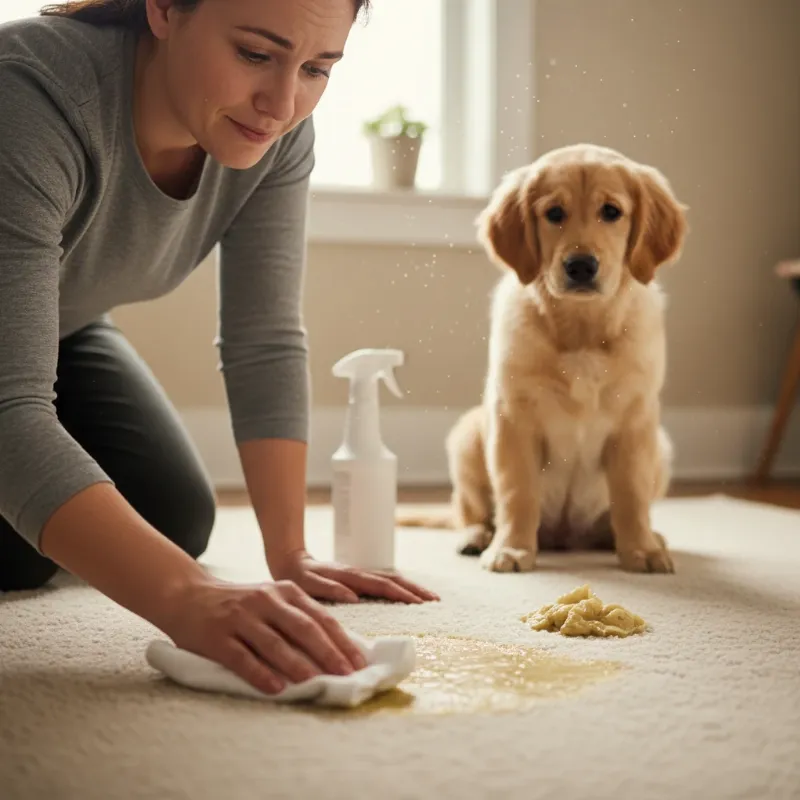 A frustrated but gentle dog owner cleaning up a potty accident on a living room rug, illustrating the challenge of dog training housebreaking problems.
Behavioral and Environmental Triggers
If your vet gives your dog a clean bill of health, the cause is likely behavioral or related to a change in their environment. Dogs thrive on routine, and disruptions can manifest as house soiling.
- Stress and Anxiety: This is a major cause of housebreaking regression. Think about any recent changes in your household. A new baby, a new pet, a move to a new house, or even a change in your work schedule can create stress. Separation anxiety is another significant trigger, where dogs may eliminate indoors when left alone for long periods.
- Incomplete House Training: Sometimes, we celebrate success too early. A puppy might have a good streak for a few weeks, leading us to believe they are fully trained. However, true housebreaking can take several months to become a deeply ingrained habit. Giving a young dog too much freedom too soon is a common mistake that leads to setbacks.
- Changes in Routine: Did you recently change your dog’s feeding schedule? Are you taking them out less frequently? A dog’s internal clock is finely tuned, and disruptions to their meal and potty break schedule can lead to confusion and accidents.
- Marking Territory: This is more common in intact male dogs but can occur in females as well. The arrival of a new pet or even the scent of another dog from outside can trigger a dog’s instinct to mark their territory with urine.
As Dr. Eleanor Vance, a certified veterinary behaviorist, states, “When a house-trained dog suddenly starts soiling the house, it’s a cry for help. They are communicating that something is wrong, either with their body or their emotional state. Punishment only adds fear to the equation; understanding is the first step toward a solution.”
The Action Plan: Solving Housebreaking Problems
Once you’ve ruled out medical issues, it’s time to go back to basics. This plan focuses on management, positive reinforcement, and re-establishing clear expectations for your dog. It’s about rebuilding good habits, not punishing bad ones. For those in specific areas, finding local help like sit means sit dog training new jersey can offer hands-on guidance.
Step 1: Go Back to a Strict Routine
Consistency is your most powerful tool. A predictable schedule helps your dog understand when and where they are expected to eliminate.
- Frequent Potty Breaks: Take your dog out first thing in the morning, last thing at night, and after every meal, nap, and playtime. For a puppy or a dog in retraining, this might mean going out every 1-2 hours.
- Scheduled Feedings: Ditch the free-feeding bowl. Feed your dog at the same times each day. This regulates their digestive system, making their need to “go” much more predictable. A dog will typically need to eliminate 15-30 minutes after eating.
- Choose a Designated Spot: Always take your dog to the same spot in the yard on a leash. Stand still and be “boring.” This is a business trip, not playtime.
- Use a Verbal Cue: As your dog starts to go, use a calm, consistent verbal cue like “Go potty” or “Get busy.” This helps them associate the word with the action.
Step 2: Supervise, Supervise, Supervise
An accident that happens when you’re not looking is a missed training opportunity. To prevent this, you must manage your dog’s freedom inside the house.
- Tethering: Use a leash to keep your dog tethered to you when you are home. If they can’t wander off, they can’t have a secret accident in another room.
- Crate Training: A crate is an invaluable management tool. It provides your dog with a safe, den-like space and plays on their natural instinct not to soil where they sleep. Use the crate for short periods when you can’t supervise them directly.
- Watch for Cues: Learn your dog’s signals. Circling, sniffing the ground intently, or whining are all common signs that they need to go out. When you see these, act immediately.
Step 3: Clean Accidents Like a Pro
If an accident does happen, how you clean it is critical. Do not use ammonia-based cleaners, as their smell is similar to urine and can attract your dog back to the same spot.
- Use an Enzymatic Cleaner: You must use an enzymatic cleaner specifically designed to break down pet stains. These cleaners destroy the odor-causing proteins completely, so your dog’s powerful nose won’t be drawn back to the scene of the crime.
- Avoid Punishment: Never punish your dog for an accident. Rubbing their nose in it or scolding them after the fact is ineffective and damaging. They will not connect the punishment to the act of peeing on the floor; they will only learn to fear you and may start hiding to eliminate. If you catch them in the act, make a sharp but not terrifying noise (like a clap) to interrupt them, and immediately take them outside.
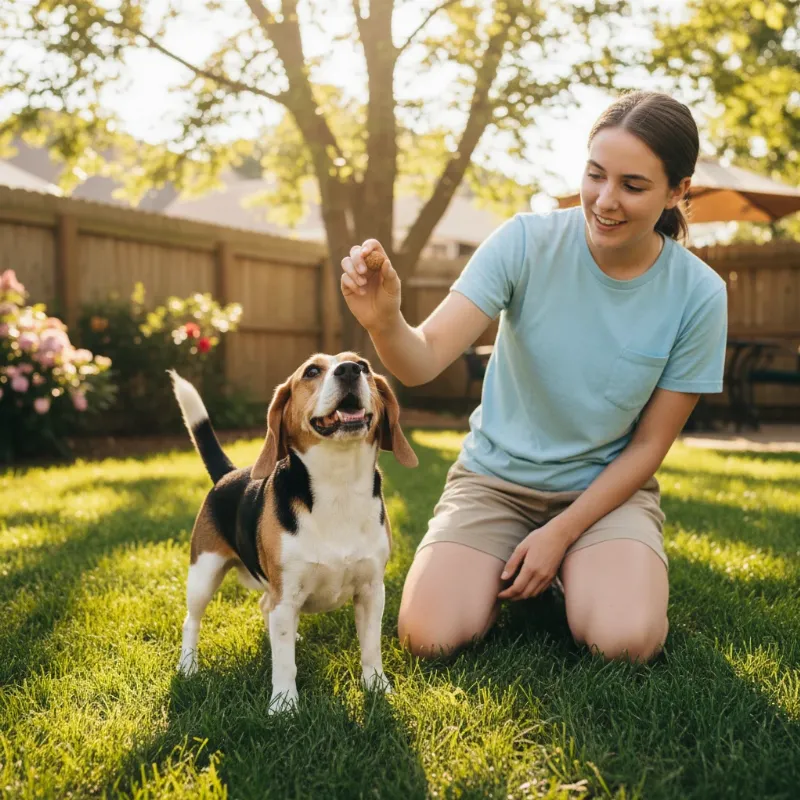 A dog being rewarded with a treat for successfully going potty outside, reinforcing positive dog training for housebreaking problems.
Step 4: Embrace Positive Reinforcement
Make going potty outside the best thing that happens all day. When your dog successfully eliminates in their designated spot, throw a party.
- High-Value Treats: Reward them immediately—within one second of them finishing—with a very special treat they don’t get at any other time.
- Enthusiastic Praise: Shower them with verbal praise like “Good dog! Yes! Good potty!”
- Immediate Play: After the treat, engage in a fun game of fetch or a short, happy walk as a life reward. This teaches them that good things happen when they potty outside.
When to Seek Professional Help
If you’ve followed these steps consistently for several weeks and are still facing dog training housebreaking problems, it may be time to call in a professional. A certified professional dog trainer or a veterinary behaviorist can help identify subtle triggers you might be missing. They can create a customized plan tailored to your dog’s specific needs. Exploring options such as dog training schools in florida can provide structured programs to address persistent issues.
Frequently Asked Questions (FAQ)
1. Why did my 1-year-old dog start peeing in the house?
A one-year-old dog is in its adolescent phase. This is a common time for regression due to hormonal changes, testing boundaries, or increased stress. It’s also critical to rule out medical issues like a UTI that may have developed. Go back to a strict potty training routine and supervision.
2. Can stress cause a dog to have accidents?
Absolutely. Stress is one of the leading causes of house soiling in already-trained dogs. Changes in the home environment, routine, or family dynamic can trigger anxiety that manifests as inappropriate elimination.
3. How long does it take to retrain a dog?
The timeline varies depending on the dog’s age, the underlying cause, and your consistency. It could take a few weeks or a few months. The key is patience and celebrating small victories. Don’t get discouraged by an occasional setback.
4. Does punishing a dog for an accident work?
No. Punishment is counterproductive. It creates fear and anxiety, which can worsen the problem. Your dog may become afraid to eliminate in front of you at all, even outside, and will likely just find better places to hide and do it inside.
5. How do I know if it’s a medical problem or a behavioral one?
The only way to know for sure is to visit your veterinarian. A sudden change in potty habits, especially when accompanied by other symptoms like lethargy, increased drinking, or straining to urinate, always warrants a medical check-up first.
A Fresh Start for You and Your Dog
Dealing with dog training housebreaking problems requires patience, consistency, and a detective’s mindset. By ruling out medical causes, re-establishing a solid routine, managing your dog’s environment, and using positive reinforcement, you can overcome this challenge. Remember that your dog is not trying to be “bad.” They are communicating a need. By addressing that need with understanding and clear guidance, you will not only solve the problem but also strengthen the bond you share with your canine companion.
