
Providing your dog with consistent training is one of the most loving and responsible actions a pet owner can take. Effective dog training ensures your canine companion is safe, well-behaved in various environments, and a pleasure to live with. When embarking on obedience training, it’s crucial to understand key principles – the dos and don’ts – and to start with fundamental exercises like “Sit” and “Down.” Commands such as “Come” and “Sit-Stay” are also invaluable for building a strong foundation. This guide will explore essential training guidelines and practical methods for teaching crucial commands.
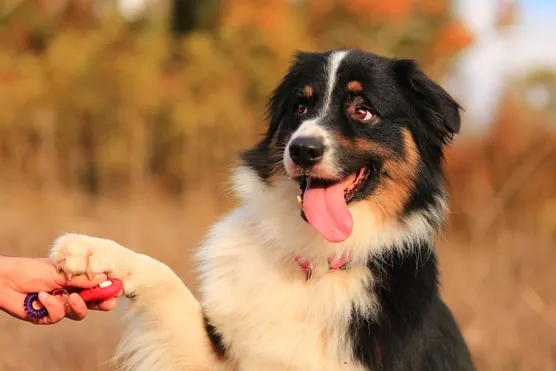 A dog eagerly participating in a training session
©Melounix/Shutterstock.com
Essential Dos and Don’ts of Dog Training
Successful dog training hinges on common sense, but adhering to specific guidelines can significantly foster a positive and healthy relationship with your dog. These dos and don’ts are fundamental to building trust and ensuring effective communication.
Key Dos in Dog Training:
- Do always approach your dog positively, especially when they return to you, even if it’s after an unexpected detour.
- Do establish a habit of giving commands only once. If your dog doesn’t respond to a previously taught command, gently guide them to perform the action correctly.
- Do use your dog’s name to capture their attention before issuing a command.
- Do reserve the word “no” for rare, critical situations, as overuse renders it meaningless.
- Do use a normal, calm tone of voice when giving commands; loudness does not equate to understanding.
- Do maintain consistency in your actions and expectations.
- Do provide adequate outlets for your dog’s energy.
- Do keep your dog mentally stimulated through training exercises.
- Do recognize your dog as a social animal and train them to be an integrated part of the family.
- Do actively socialize your dog with both people and other dogs.
- Do embrace the role of your dog’s teacher.
- Do make the learning process enjoyable for your dog.
- Do consistently reward correct behaviors with praise.
- Do dedicate ample time to your dog, ensuring they receive plenty of exercise.
- Do persevere through challenges; your dog’s learning is a reward in itself.
- Do seek professional help if you encounter significant training hurdles.
Key Don’ts in Dog Training:
- Don’t engage in any action that your dog perceives as unpleasant when they approach you.
- Don’t nag your dog by repeating commands; this teaches them to ignore you.
- Don’t use your dog’s name and then expect them to guess your intentions; always follow their name with a specific command.
- Don’t assume your dog understands the word “no” without explicit training.
- Don’t yell at your dog; they can hear you perfectly well, and yelling does not improve comprehension.
- Don’t confuse your dog with unrealistic expectations.
- Don’t attempt to suppress behaviors that require a proper outlet.
- Don’t allow your dog to become mentally stagnant.
- Don’t confine your dog out of frustration due to a lack of training.
- Don’t isolate your dog; remember they are social creatures.
- Don’t expect obedience to commands you haven’t effectively taught them.
- Don’t become overly serious during training sessions; keep the atmosphere light and fun.
- Don’t inadvertently reward undesirable behaviors.
- Don’t create anxiety in your dog through neglect.
- Don’t give up when training becomes difficult; persistence is key.
- Don’t blame the dog; remember that you are their primary teacher.
Mastering the Sit and Down Commands
When considering dog obedience, the “Sit” and “Down” commands are foundational. Mastering these is crucial for cultivating a well-behaved dog. Aim to practice a 30-minute “Down” session and a 10-minute “Sit” session on alternate days for about four weeks to solidify these behaviors.
When issuing commands, maintain a calm yet encouraging tone. Avoid posing commands as questions, as this can lead to a lack of obedience. Ensure you use only one command at a time and say it just once. If your dog doesn’t respond, gently assist them in performing the action correctly and then offer praise for their effort.
Teaching the Sit Command:
This method uses treats and gentle guidance to teach your dog to sit:
- Lure the Sit: Hold a treat slightly in front of your dog’s nose. As you say “Sit,” move the treat in an arc slightly above and over their head. Their natural inclination to follow the treat should cause them to sit. Reward them with the treat immediately upon sitting.
- Introduce Gentle Pressure: For the next attempt, use a treat in one hand. With your other hand, apply gentle upward pressure on your dog’s collar as you say “Sit.” This helps guide them into position. Offer abundant praise when they sit.
- Command Without Lure: Once your dog reliably sits with the lure and gentle pressure, you can begin phasing them out. Without showing a treat or touching your dog, simply say, “Sit.” Reward them with a treat and praise for a correct response. If they hesitate, revert to Step 2 for a refresher.
Teaching the Down Command:
This technique uses a treat and subtle leash pressure to guide your dog into a down position:
- Lure the Down: With your dog sitting beside you, show them a treat. Say “Down” and lower the treat to the ground between their front paws, then slowly slide it forward. This encourages them to lie down to reach the treat.
- Introduce Gentle Pressure: For the next attempt, hold the treat in one hand. With your other hand, apply gentle downward pressure on their collar, near their chest, as you say “Down.” Simultaneously, guide the treat away from them as described in Step 1. Offer the treat and praise generously when they lie down.
- Command Without Physical Cue: Once your dog understands the “Down” position with guidance, you can start issuing the command independently. Without touching your dog or showing them a treat, say, “Down.”
- Reward Correct Response: If your dog lies down correctly, reward them with a treat and praise. If they don’t respond as expected, review Step 2 to reinforce the motion.
The Recall Game: Ensuring Your Dog Comes When Called
Teaching your dog reliable recall is paramount for their safety. The Recall Game is an engaging method that can be played with a partner, a leash, and plenty of small, high-value treats. Begin practicing indoors, progressing to various environments with increasing distractions as your dog’s responsiveness improves. Crucially, always touch your dog’s collar before giving a treat and praise, reinforcing their connection to you.
Follow these steps to play the Recall Game effectively:
- Initial Setup: Find a partner and sit about 6 feet apart, facing each other. Have your partner gently hold your dog’s collar while you hold the leash handle.
- The Call: Say your dog’s name followed by “Come” (e.g., “Buddy, Come!”). Use the leash to gently guide them towards you as your partner releases their hold.
- Reward and Praise: When your dog reaches you, gently put your finger through their collar, offer a high-value treat, and provide enthusiastic praise.
- Partner’s Turn: Hold onto your dog’s collar and pass the leash handle to your partner. Your partner then calls the dog, guides them, secures their collar, and rewards them.
Continue this process until your dog reliably comes to you without needing the leash for guidance. Gradually increase the distance between you and your partner (up to 12 feet) and practice moving between rooms in your house. Ensure your dog performs well indoors before transitioning to outdoor practice. Always start outdoor sessions on leash, confirming a correct response before removing it. If your dog struggles, revert to using the leash. These structured games, combined with positive reinforcement, are key to developing a strong recall.
