
Training a dog to assist someone with a disability is a profound journey, transforming a canine companion into an invaluable support system. This process requires patience, consistency, and a deep understanding of both dog behavior and the specific needs of the individual. When done correctly, it opens up a world of independence and enhanced quality of life for people with disabilities. The bond forged through this training is exceptionally strong, built on trust, communication, and mutual respect.
Understanding the Role of Service Dogs
Service dogs are specifically trained to perform tasks that directly assist individuals with disabilities. Unlike emotional support animals or therapy dogs, service dogs have public access rights under laws like the Americans with Disabilities Act (ADA). Their training is rigorous and task-oriented, focusing on actions that mitigate the challenges posed by a person’s disability. This can range from retrieving dropped items for someone with mobility issues to alerting a deaf individual to sounds, or even providing deep pressure therapy for someone with anxiety. Understanding the distinct roles and legal standing of service dogs is the first step in appreciating the complexity and significance of their training.
Types of Disabilities Service Dogs Can Assist With
Service dogs are trained to support individuals across a wide spectrum of disabilities, including but not limited to:
- Mobility Impairments: Dogs can be trained to retrieve objects, open and close doors, turn lights on and off, fetch medication, and provide balance support.
- Hearing Impairments: These dogs are trained to alert their handlers to important sounds such as doorbells, smoke alarms, telephones, and crying babies.
- Visual Impairments: While guide dogs are a well-known category, other service dogs can assist with tasks like identifying obstacles or providing spatial awareness.
- Seizure Disorders: Seizure alert dogs can often sense an oncoming seizure and alert their handler, while seizure response dogs can assist after a seizure has occurred.
- Psychiatric Disabilities: These dogs can be trained to perform tasks such as interrupting obsessive or repetitive behaviors, providing tactile stimulation, guiding their handler through a panic attack, or retrieving medication.
- Medical Alert Conditions: Dogs can be trained to detect changes in a person’s body chemistry, such as those associated with low blood sugar for diabetics or impending allergic reactions.
The Training Process: A Step-by-Step Approach
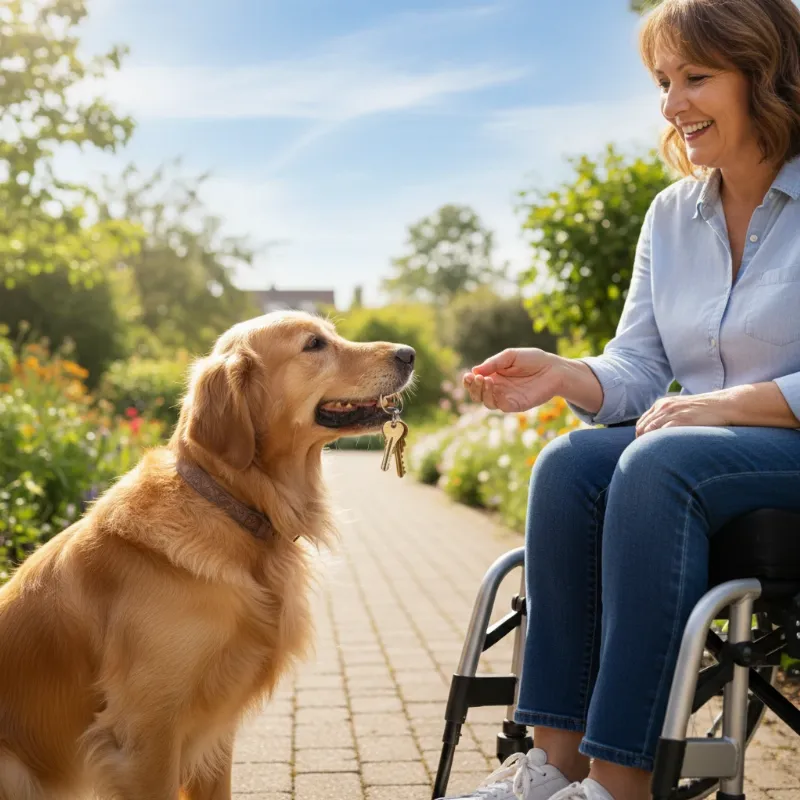 Diverse service dog performing tasks for handler with mobility aid, emphasizing expert training and bond.
The journey of training a service dog is a marathon, not a sprint, often taking 1-2 years of dedicated work. It’s a multi-stage process that builds upon fundamental obedience and progresses to highly specialized tasks.
1. Foundation Obedience and Socialization
Before any specialized task training begins, a dog must have a solid foundation in basic obedience. This includes commands like sit, stay, come, down, and leave it. Crucially, the dog must be impeccably behaved in public settings. This means being comfortable and calm around crowds, loud noises, other animals, and various environments. Early and consistent socialization is key to ensuring the dog can handle the diverse situations they will encounter as a service animal. This phase is critical for Dog Training For Disabled People, as it establishes the groundwork for reliability.
2. Task-Specific Training
This is where the training becomes tailored to the individual’s needs. Based on the specific disability, the dog is taught a set of tasks. For example:
- Retrieving: Teaching the dog to pick up and deliver specific items. This involves scent association and understanding handler cues.
- Alerting: Training the dog to nudge, paw, or bark to signal a specific event, like a medical alert or a sound.
- Balance Support: For dogs providing physical support, this involves building strength and learning to stand steady while the handler uses them for stability.
- Interruption: Teaching the dog to disrupt unwanted behaviors or provide a calming presence during distress.
3. Public Access Training
Once the dog has mastered its tasks, it must demonstrate the ability to perform them reliably in public. This includes navigating busy streets, shopping centers, restaurants, and public transportation without being a nuisance or posing a safety risk. The dog must remain focused on its handler and its tasks, ignoring distractions. This advanced stage is vital for service dog training schools to ensure their graduates are ready for the real world.
4. Handler Training
Training is a two-way street. The individual with the disability must also learn how to work with and manage their service dog. This includes understanding the dog’s cues, reinforcing trained behaviors, and knowing how to advocate for their rights as a service dog handler. Effective handler training ensures the partnership is harmonious and successful long-term. This aspect is particularly important in where can I get my dog service trained, as programs often include extensive handler instruction.
Choosing the Right Dog for Service Work
Not every dog is suited for service work. Several factors contribute to a dog’s potential success:
- Temperament: A calm, confident, and biddable temperament is paramount. The dog should be eager to please, resilient to stress, and not prone to fearfulness or aggression. Breeds like Labrador Retrievers, Golden Retrievers, and Standard Poodles are often favored for their stable temperaments and trainability.
- Health: Service dogs must be in excellent health to withstand the rigular demands of their work. A thorough veterinary check-up and genetic testing for common breed-specific issues are essential.
- Age: While puppies can be socialized early, specialized task training typically begins around 6-12 months of age. Many programs prefer dogs that are at least a year old before beginning intensive task training.
- Motivation: The dog should be motivated by working with its handler, whether through praise, play, or a combination of rewards.
For those considering acquiring a trained service dog, exploring where can I get a trained service dog or investigating service dog training schools can provide valuable resources and options.
Challenges and Considerations
The path to a successfully trained service dog is not without its hurdles.
- Cost: Training a service dog is expensive, with costs potentially ranging from thousands to tens of thousands of dollars. This is due to the extensive time, expertise, and resources involved.
- Time Commitment: The training process demands a significant time investment from both the dog and the handler.
- Public Access Issues: While laws protect service dog handlers, misunderstandings and discrimination can still occur. Handlers need to be prepared to educate others and advocate for their rights.
- Dog’s Well-being: It’s crucial to ensure the service dog is not overworked and receives adequate rest, play, and veterinary care. The dog’s well-being is as important as the assistance it provides.
The Lifelong Bond: Beyond Training
A trained service dog is more than just a helper; they become an integral part of their handler’s life, offering unwavering companionship, emotional support, and a sense of security. The unique partnership forged through dog training job opportunities for trainers and the intensive work with the handler creates a bond that enriches lives in immeasurable ways. The journey of training a dog to this level is a testament to the incredible capabilities of dogs and the deep connection they share with humans.
Frequently Asked Questions
Q1: How long does it take to train a service dog?
A1: Typically, it takes one to two years to fully train a service dog, depending on the dog’s aptitude and the complexity of the tasks required.
Q2: Can I train my own dog to be a service dog?
A2: Yes, it is possible to train your own dog, but it requires significant knowledge, time, and consistency. Many individuals find it beneficial to work with professional trainers, especially for specialized tasks. Exploring resources on where can I get my dog service trained can be helpful.
Q3: What are the legal rights of a service dog handler?
A3: In many countries, including the U.S. under the ADA, service dogs are allowed in public places where pets are typically prohibited. Handlers generally only need to answer two questions: (1) Is the dog a service animal required because of a disability? and (2) What work or task has the dog been trained to perform?
Q4: How do I choose the right dog breed for service work?
A4: While certain breeds like Labrador Retrievers and Golden Retrievers are popular due to their temperaments, the individual dog’s temperament, health, and trainability are more important than breed alone.
Q5: What is the difference between a service dog and a therapy dog?
A5: Service dogs are trained to perform specific tasks for an individual with a disability and have public access rights. Therapy dogs provide comfort and support to multiple people in settings like hospitals or nursing homes but do not have the same public access rights as service dogs.
Q6: What are some advanced training techniques?
A6: Advanced techniques include scent detection for medical alerts, complex retrieval tasks involving multiple steps, and sophisticated interruption behaviors for psychiatric support. Mastering 100 tricks to teach your dog can build a strong foundation for advanced service tasks.
In conclusion, the process of training dogs for disabled individuals is a specialized and rewarding field. It demands dedication, expertise, and a compassionate approach, ultimately leading to enhanced independence and a stronger human-animal bond.
