
The Belgian Malinois is a breed of remarkable intelligence, unwavering loyalty, and boundless energy. Often mistaken for a German Shepherd, this distinct breed possesses an intense drive and a powerful work ethic that sets it apart. But this incredible potential comes with a crucial caveat: it must be channeled correctly. Proper Dog Training For Belgian Malinois is not just a recommendation; it is an absolute necessity for a harmonious life with this athletic and brilliant canine. Without structure, purpose, and clear guidance, their intelligence can lead to destructive behaviors, and their energy can become overwhelming.
This comprehensive guide is designed to walk you through the essential principles and techniques for training your Belgian Malinois. Whether you have a new puppy or an adult dog, understanding their unique psychology is the first step toward unlocking their potential as a devoted companion and a disciplined partner.
Understanding the Belgian Malinois Mindset
Before you can effectively train a Belgian Malinois, you must understand what makes them tick. This is not your average house pet; this is a high-performance working dog bred for generations to be active, alert, and engaged.
A Legacy of Work
Originally bred in the Malines region of Belgium as herding dogs, the Malinois was prized for its tenacity and trainability. This ingrained work ethic means they are happiest when they have a job to do. A bored Malinois is a recipe for disaster. Their “job” can be anything from advanced obedience and dog sports to simple, structured daily tasks.
Intelligence and Sensitivity
The breed’s sharp intelligence is a double-edged sword. They learn commands with astonishing speed, but they also learn bad habits just as quickly. They are sensitive souls who respond poorly to harsh or inconsistent training methods. They thrive on positive reinforcement but require firm, fair, and unwavering leadership.
As canine behaviorist Dr. Alistair Finch states:
“The Belgian Malinois is like a finely-tuned sports car. It has incredible capabilities, but it requires a skilled driver. An owner must provide consistent, clear communication and positive motivation. With this breed, you don’t command respect; you earn it through leadership and mutual understanding.”
Boundless Energy Levels
A short walk around the block will not suffice for a Belgian Malinois. These dogs require significant physical exercise and, just as importantly, mental stimulation. A lack of either can lead to anxiety, hyperactivity, and destructive behaviors like chewing, digging, and excessive barking. Your training program must be integrated with a robust exercise routine.
The Foundations: Starting Your Puppy Right
The most critical period for dog training for Belgian Malinois puppies is between 8 and 16 weeks of age. This is when they are most impressionable.
Early Socialization
Proper socialization is non-negotiable. It means exposing your puppy to a wide variety of sights, sounds, people, and other animals in a positive and controlled manner. This helps prevent fear, anxiety, and aggression later in life.
- Introduce them to different surfaces: grass, pavement, carpet, and wood.
- Let them hear various sounds: vacuum cleaners, traffic, and doorbells.
- Arrange supervised playdates with calm, vaccinated adult dogs.
- Expose them to different people: men, women, children, and people in hats or uniforms.
Foundational Obedience
Start with the basics from day one. Keep training sessions short, fun, and positive (5-10 minutes several times a day).
- Sit: The cornerstone of all training.
- Stay: Teach impulse control early on.
- Come: Potentially a life-saving command.
- Leave It: Essential for a curious and often mouthy puppy.
Using clear verbal cues is key. Some handlers even find success using less common commands to ensure the dog is responding to the word itself, not just a common sound. This is an area where exploring something like french dog training commands can provide a unique and effective vocabulary for your dog.
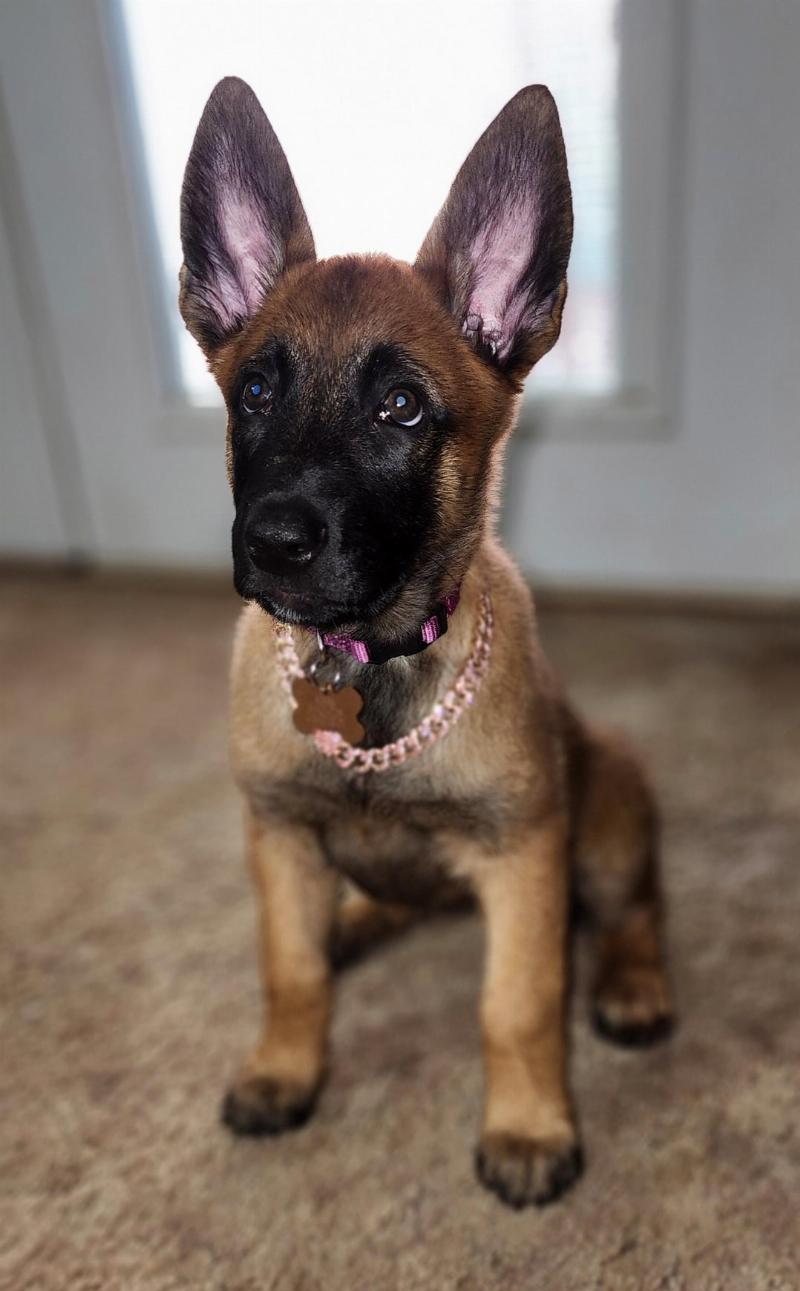 A focused Belgian Malinois puppy sitting attentively during a dog training for Belgian Malinois session, looking up at its owner with a treat in hand.
Core Principles of Belgian Malinois Training
As your dog matures, your training approach must be built on a solid framework. Consistency, clarity, and positive reinforcement are the pillars of success.
How Do You Establish Leadership?
Establishing leadership is not about dominance or punishment; it’s about being a reliable and trustworthy guide. You achieve this by setting clear boundaries and being consistent with rules. Your Malinois needs to know that you are in control of resources like food, toys, and affection. This structure provides them with a sense of security.
Positive Reinforcement is Key
The Belgian Malinois is eager to please the person they respect. Use this to your advantage. Reward desired behaviors with high-value treats, enthusiastic praise, or a favorite toy. This method builds a strong bond based on trust and cooperation, making your dog want to work with you. Aversive methods can damage their sensitive nature and lead to fear or aggression.
The Importance of Mental Stimulation
Physical exercise will tire their bodies, but mental stimulation will tire their minds. A mentally satisfied Malinois is a calm and well-behaved one.
- Puzzle Toys: Food-dispensing toys challenge their problem-solving skills.
- Scent Work Games: Hide treats around the house and encourage them to “find it.”
- Learning New Tricks: Teaching complex tricks keeps their minds engaged.
Advanced Training and Canine Sports
Once your Malinois has mastered the basics, it’s time to give their brain and body the challenge they were bred for. This is where the breed truly shines. Exploring advanced training is a fantastic way to deepen your bond.
Agility and Flyball
These high-energy sports are perfect for the Malinois’s athletic build and speed. They provide a fantastic outlet for physical energy while also requiring the dog to listen and follow precise commands.
Protection Sports (Schutzhund/IPO)
Many Malinois excel in protection sports, which test tracking, obedience, and protection skills. This is a highly demanding discipline that requires professional guidance. It’s a significant commitment, and it’s wise to understand the investment involved. Learning about how much is protection dog training is a crucial first step for anyone considering this path.
Search and Rescue Work
The breed’s incredible sense of smell and drive make them ideal candidates for search and rescue (SAR) operations. This provides the ultimate “job” for a Malinois, channeling their skills into life-saving work. If this interests you, looking into search and rescue dog training near me can connect you with local organizations.
Addressing Common Behavioral Challenges
Even with the best training, the intensity of the Belgian Malinois can lead to specific behavioral issues. Early intervention is critical.
Managing High Prey Drive
The Malinois was bred to herd, which is a modified form of prey drive. This can manifest as an intense desire to chase cars, squirrels, or cats. A rock-solid “Leave It” and “Come” command are essential. Never trust a Malinois off-leash in an unsecured area.
Separation Anxiety
Because they form such strong bonds with their owners, Malinois can be prone to separation anxiety. To prevent this, crate training should be introduced positively from a young age. Teach your dog that being alone is okay by starting with short departures and gradually increasing the time.
Potential for Reactivity
Their protective nature and alertness can sometimes develop into reactivity or aggression towards strangers or other dogs if not properly socialized. If you see signs of reactivity (barking, lunging, growling), seek help from a professional trainer or behaviorist immediately. Finding a local expert, such as those providing k9 dog training miami, can offer the specialized guidance this breed requires.
For those who may not have the time or experience to raise a Malinois from a puppy, there are options. Some people explore acquiring an older, already-trained dog. While this path has its own challenges, resources like trained dogs for sale houston show that avenues exist for finding professionally prepared canines.
Frequently Asked Questions (FAQ)
1. Are Belgian Malinois good for first-time dog owners?
Generally, no. The Belgian Malinois requires an experienced owner who understands the demands of a high-drive working breed. Their intelligence, energy, and intensity can be overwhelming for someone new to dog ownership.
2. How much exercise does a Belgian Malinois need daily?
A minimum of 90 minutes to two hours of vigorous exercise is recommended per day. This should be a mix of physical activity, like running or fetching, and mental stimulation, such as training or puzzle toys.
3. When should I start dog training for a Belgian Malinois?
Training should begin the day you bring your puppy home, around 8 weeks old. Focus on socialization, house training, and basic commands through short, positive sessions.
4. Do Belgian Malinois bark a lot?
They are naturally alert and can be prone to barking if they are not sufficiently exercised and mentally stimulated. Barking can also be a sign of boredom or anxiety. Proper training helps manage this tendency.
5. Can a Belgian Malinois live in an apartment?
While it is possible, it is not ideal. They thrive in homes with a securely fenced yard where they can safely expend energy. An apartment-dwelling Malinois would require an extremely dedicated owner to provide several hours of outdoor exercise and enrichment every single day.
Your Journey with the Belgian Malinois
Owning and training a Belgian Malinois is a lifestyle, not a hobby. It demands commitment, consistency, and a deep understanding of the breed’s unique needs. The rewards, however, are immeasurable. A well-trained Malinois is more than a pet; it is a loyal partner, a brilliant athlete, and a devoted member of the family. The effort you invest in dog training for your Belgian Malinois will be returned tenfold in the form of an unbreakable bond built on mutual respect and a shared love for challenge and adventure.
