
Navigating the world of canine training tools can feel overwhelming. You’ve likely found yourself searching for a “Dog Training Collar Nearby,” hoping for a quick solution to pulling, barking, or recall issues. But the truth is, a training collar isn’t just an item you pick up from a local store; it’s a piece of communication equipment that requires understanding, proper fitting, and humane application. This guide will walk you through the different types of training collars, how to choose the right one for your dog, and where to find them, ensuring you make an informed decision that strengthens the bond with your furry best friend. For those looking to take their skills to the next level, understanding the principles behind these tools is a great first step toward advanced obedience training for dogs.
Understanding the Different Types of Dog Training Collars
Before you can find the best collar, you need to know what your options are. Not all collars are created equal, and each is designed for a specific purpose and type of dog. Using the wrong one can be ineffective at best and harmful at worst.
Martingale Collars
Sometimes called “limited-slip” or “greyhound” collars, Martingales are designed for dogs with slender necks, like Greyhounds and Whippets. They consist of a main loop with a smaller control loop. When the dog pulls, the control loop tightens the larger loop just enough to prevent the dog from backing out of the collar, but without choking them. It provides gentle control and is a popular choice for many breeds.
Head Halters
Often referred to by brand names like Gentle Leader or Halti, a head halter looks like a muzzle but functions very differently. It has a strap that goes around the dog’s nose and another around its neck. When the dog pulls, the halter gently guides its head, redirecting its attention back to you. The principle is simple: where the head goes, the body will follow. It’s an excellent tool for strong pullers but requires a proper introduction to get the dog comfortable with the sensation.
Prong Collars
Prong collars, or pinch collars, are perhaps the most controversial. They are made of interlocking metal links with blunted points that pinch the dog’s neck when pressure is applied. Proponents argue that when used correctly, they mimic the correction a mother dog gives her puppies, providing a quick and clear signal. However, they can cause physical and psychological damage if used improperly. Their use should be strictly reserved for specific situations under the guidance of a certified professional trainer.
Electronic Collars (E-collars)
Modern e-collars are a far cry from the “shock collars” of the past. Today, they deliver stimulation through vibration, tone, or a static pulse (similar to a TENS unit for humans). They are primarily used for off-leash training and recall over long distances. Like prong collars, their effectiveness and humaneness depend entirely on the user. Proper training and an understanding of conditioning are essential to use them as a communication tool rather than a punishment device.
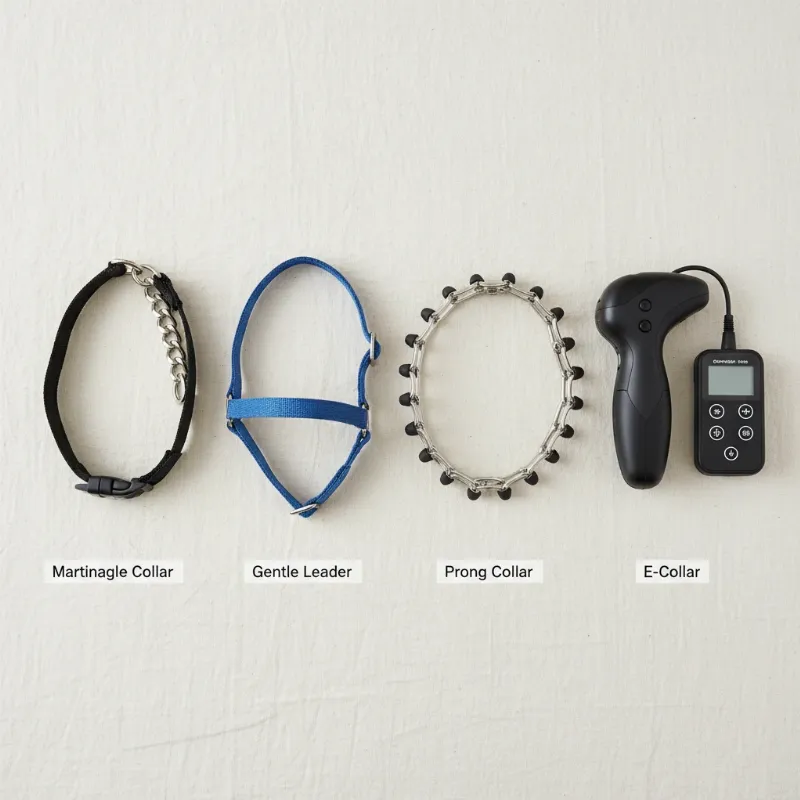 A display showing various types of dog training collars, including a martingale, a head halter, and an e-collar, illustrating the options for finding a dog training collar nearby.
How to Choose the Right Dog Training Collar
With the options laid out, how do you decide which is best? The answer depends on a few key factors specific to you and your dog.
Consider Your Dog’s Breed, Size, and Temperament
A sensitive Border Collie will likely need a much lighter touch than a powerful, determined Rottweiler. A small dog could be injured by a tool designed for a large one. Consider your dog’s physical build, energy level, and personality. Are they timid and anxious or bold and confident? The tool must match the dog.
What is Your Training Goal?
Your objective will heavily influence your choice.
- For loose-leash walking: A head halter or a front-clip harness might be the most effective and humane option.
- For basic obedience: A Martingale collar combined with positive reinforcement is often sufficient.
- For off-leash reliability: An e-collar might be considered, but only after foundational obedience is solid and with professional guidance. For focused local programs, looking into something like dog training elite springfield can provide the structured environment needed for such advanced goals.
The Importance of a Proper Fit
An ill-fitting collar is not only ineffective but also dangerous. A collar that is too loose can slip off, while one that is too tight can cause chafing, pain, or even restrict breathing. Always follow the manufacturer’s instructions for measuring and fitting. A general rule for most collars is that you should be able to fit two fingers snugly between the collar and your dog’s neck.
Where to Find a Dog Training Collar Nearby
Once you have an idea of what you need, your search for a “dog training collar nearby” can begin in earnest.
Local Pet Stores
Independent and small-chain pet stores are often a great resource. The staff may have more specialized knowledge and can offer personalized advice. They can help you fit the collar on your dog right there in the store to ensure it’s the correct size.
Big Box Retailers
Large retailers like PetSmart or Petco offer a wide variety of brands and types of collars. While the selection is vast, you may need to do your own research beforehand, as staff knowledge can vary.
Online Retailers
Websites like Amazon, Chewy, and specialized dog supply sites offer the widest selection and competitive pricing. The downside is that you can’t try the collar on your dog before buying. Be sure to measure your dog carefully and check the return policy before you order.
Consulting a Professional Trainer
This is often the best first step. A qualified dog trainer can assess your dog and your goals, recommend the most appropriate tool, and—most importantly—teach you how to use it correctly and humanely. They can provide a level of expertise that a retail employee simply cannot. Seeking out professional help, for instance through services like dog training in conway sc, can make all the difference.
Using a Training Collar Safely and Humanely
Owning a training collar comes with a great responsibility. It’s a tool, not a magic wand.
Dr. Eleanor Vance, a certified canine behaviorist, often says, “A training collar is a line of communication, not a tool for correction. The goal is to whisper cues to your dog, not to shout. The right tool, used with knowledge and patience, can strengthen your bond.”
The Golden Rule: Never Use a Collar for Punishment
A training collar should be used to provide a cue or redirect unwanted behavior, not to punish the dog after the fact. The timing must be precise for the dog to associate the sensation with its action. Using it in anger or frustration will only create fear and anxiety, damaging your relationship with your dog.
Introducing the Collar to Your Dog
Never just strap a new collar on your dog and start yanking. The introduction should be positive. Let your dog sniff it. Give them treats. Put it on for short periods around the house without the leash attached. Let them associate this new object with positive things before you ever use it for training.
Combining Collars with Positive Reinforcement
The most effective training plans use tools to prevent unwanted behavior while simultaneously teaching the dog what you want them to do. Use praise, treats, and toys to reward your dog for good choices. The collar’s job is to make the wrong choice unpleasant, while positive reinforcement makes the right choice rewarding.
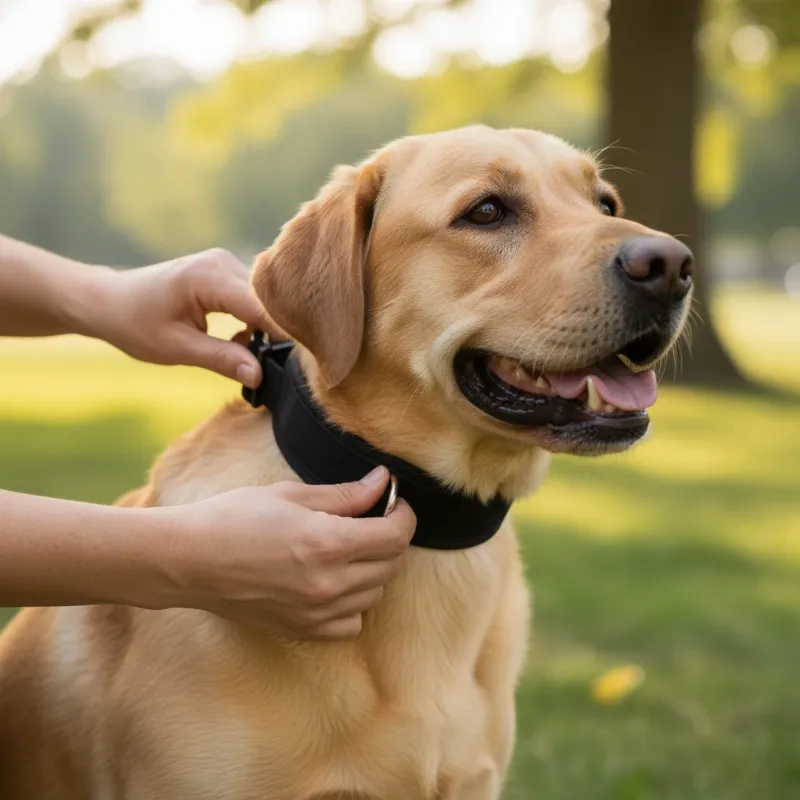 A dog trainer carefully fitting a martingale training collar on a calm Golden Retriever to ensure a safe and effective fit, an important step when using a dog training collar nearby.
Are There Alternatives to Training Collars?
Absolutely. For many dogs and owners, other tools and methods are just as, if not more, effective.
Positive Reinforcement Training
This method focuses entirely on rewarding desired behaviors and managing the environment to prevent undesired ones. It builds a strong, trust-based relationship, though it may require more patience and consistency to see results for challenging behaviors.
Harnesses as a Management Tool
While not technically “training” tools, harnesses are excellent for management. A front-clip harness, for example, can significantly reduce pulling by redirecting the dog’s momentum, similar to a head halter but without anything on the face. It’s a great choice for dogs who don’t need intensive correction but can be strong pullers.
Frequently Asked Questions (FAQ)
Are training collars cruel?
A training collar is only as humane as the person using it. When fitted and used correctly under professional guidance, tools like Martingales, head halters, and modern e-collars can be effective and humane. However, any collar can be cruel if used improperly or for punishment.
How do I know if the collar is fitted correctly?
For most collars, you should be able to comfortably slip two fingers between the collar and the dog’s neck. It should be snug enough that it can’t slip over their head but loose enough that it doesn’t restrict breathing or cause chafing. Always consult the manufacturer’s specific fitting instructions.
Can I leave a training collar on my dog all day?
No. Training collars, especially prong collars and head halters, are not meant for continuous wear. They should only be put on for training sessions and removed afterward. Leaving them on can cause skin irritation and is a safety hazard if the dog gets caught on something.
What’s the best training collar for pulling?
For most dogs that pull on the leash, a head halter or a front-clip harness is the most recommended starting point. These tools offer control without causing pain or discomfort.
When should I consult a professional dog trainer?
You should consult a professional before you even purchase a corrective collar like a prong or e-collar. A trainer can help you determine if such a tool is necessary and teach you the correct, humane way to use it. They can save you and your dog a lot of frustration and potential harm.
Conclusion
Your search for a “dog training collar nearby” is about more than finding a product on a shelf; it’s about finding the right communication tool for your unique partnership with your dog. By understanding the different types, considering your dog’s specific needs, and committing to safe and humane use, you can turn a simple collar into a powerful instrument for building a better-behaved companion and a deeper, more trusting relationship. Remember that the tool is only one part of the equation—patience, consistency, and positive reinforcement are the true keys to success.
