
Have you ever dreamed of having that perfectly behaved dog? The one who walks calmly on a leash, comes when called every time, and greets guests politely without jumping? For many dog owners, this feels like a distant fantasy. The daily grind of work, family, and life often leaves little time for the consistent, dedicated training that builds a well-mannered canine companion. This is where a Dog Training Boarding School can be a game-changing solution, offering an immersive experience that accelerates learning and addresses behavioral challenges head-on.
This concept, often called “board and train,” is more than just a place for your dog to stay. It’s an intensive, structured program where professional trainers work with your dog daily to build a strong foundation of obedience and good behavior. To understand the specifics, it’s helpful to explore what is board and train for dogs, as it provides a deep dive into this unique training model. It’s a partnership designed to transform your relationship with your dog for the better.
What Exactly is a Dog Training Boarding School?
Think of a dog training boarding school as a boot camp for your pup, but with plenty of positive reinforcement, expert guidance, and playtime. Unlike standard doggy daycare or boarding where the primary focus is care and supervision, a board and train program is centered around education. Your dog lives at a training facility for a set period, typically ranging from two to six weeks, and is immersed in a consistent learning environment.
During their stay, professional trainers work with your dog multiple times a day. This consistency is the secret sauce. While you might only have 30 minutes a day to practice commands, a professional can integrate training into every aspect of your dog’s day—from feeding time to potty breaks and social play. This constant reinforcement helps new skills and behaviors stick much more effectively than intermittent training at home. It’s a structured curriculum designed to achieve specific goals, whether that’s basic puppy manners or complex behavior modification.
The Core Benefits: Why Choose a Board and Train Program?
Sending your furry family member away can be a tough decision, but the benefits of a professional board and train program are significant. It’s an investment that can pay dividends for years to come.
Consistent, Professional Training
The single biggest advantage is consistency. Dogs learn best through repetition, and at a dog training boarding school, training isn’t just a scheduled session—it’s a way of life. Professionals ensure every interaction is a learning opportunity, reinforcing good behavior and correcting unwanted actions correctly and immediately. They have the expertise to read a dog’s body language and adjust techniques for optimal results, a skill that can take owners years to develop.
A Controlled Environment for Lasting Change
For dogs with specific behavioral issues like leash reactivity, resource guarding, or anxiety, a controlled environment is crucial. A boarding school removes the dog from the triggers and routines at home that may be reinforcing the negative behavior. This fresh start allows trainers to build a new foundation of desired behaviors from the ground up without the usual distractions.
Vital Socialization Opportunities
Proper socialization is about more than just letting your dog run wild at the park. At a reputable school, socialization is structured and supervised. Your dog will learn how to interact appropriately with other dogs of various sizes and temperaments, and also with different people. This builds confidence and helps prevent fear-based aggression down the line.
“We create a balanced daily routine of structured training, supervised play, and adequate rest,” explains Dr. Ethan Riley, a certified canine behaviorist. “This immersive structure helps dogs understand expectations and builds their confidence much faster than weekly classes can. They learn how to be calm and focused even around distractions.”
Is a Dog Training Boarding School Right for Your Dog?
While an intensive program sounds great, it isn’t the perfect fit for every dog or every situation. Understanding if your dog is a good candidate is the first step.
Good Candidates for Board and Train
- New Puppies: Give your puppy the best possible start with foundational obedience, crate training, and socialization.
- Dogs with Specific Behavioral Issues: For challenges like leash pulling, reactivity, or mild anxiety, an immersive program can provide the focus needed for a breakthrough.
- Busy Owners: If your schedule makes it impossible to provide consistent daily training, a board and train can establish a strong foundation for you to build upon.
- Pre-Vacation Training: Instead of just boarding your dog while you’re away, you can return to a better-behaved companion. Many facilities offering services like dog boarding and training houston are popular for this reason.
When to Reconsider
- Severe Separation Anxiety: For dogs with extreme anxiety when separated from their owners, being sent away could worsen the problem. These cases often require a specialized plan that heavily involves the owner.
- Serious Aggression: While many schools handle aggression, severe cases may require a one-on-one behavioral veterinarian before being placed in a group environment.
- Medical Issues: If your dog has complex health problems, ensure the facility has the veterinary support and expertise to manage their care properly.
What to Look For in a Reputable Program
Choosing the right dog training boarding school is critical. This is not a decision to be taken lightly. You are entrusting a facility with a member of your family.
Training Methods and Philosophy
The most important factor is the training methodology. Look for programs that use positive reinforcement techniques. This means they reward desired behaviors with treats, praise, or toys, rather than using fear, pain, or intimidation (aversive methods) to punish unwanted behaviors. Ask them directly about their methods and what tools they use.
Transparency and Communication
A good facility will be transparent about their process. They should offer regular updates, including photos and videos of your dog’s progress. You should feel like a partner in the process, not an outsider. Ask them how they handle communication and how often you can expect to hear from them.
Staff Qualifications and Experience
Who exactly will be training your dog? Look for certified trainers with recognized credentials (like CCPDT-KA, KPA, etc.). Experience is key, especially with behavioral issues. Finding a reputable service dog trainer often involves a similar vetting process, focusing on credentials and proven success. Ask about the staff-to-dog ratio to ensure your dog will get enough individual attention.
Facility Tour and Conditions
Always tour the facility in person if possible. Is it clean? Does it smell fresh? Are the dogs housed in safe, comfortable enclosures? Is there a secure area for outdoor play? The environment should be safe, sanitary, and designed for the well-being of the dogs.
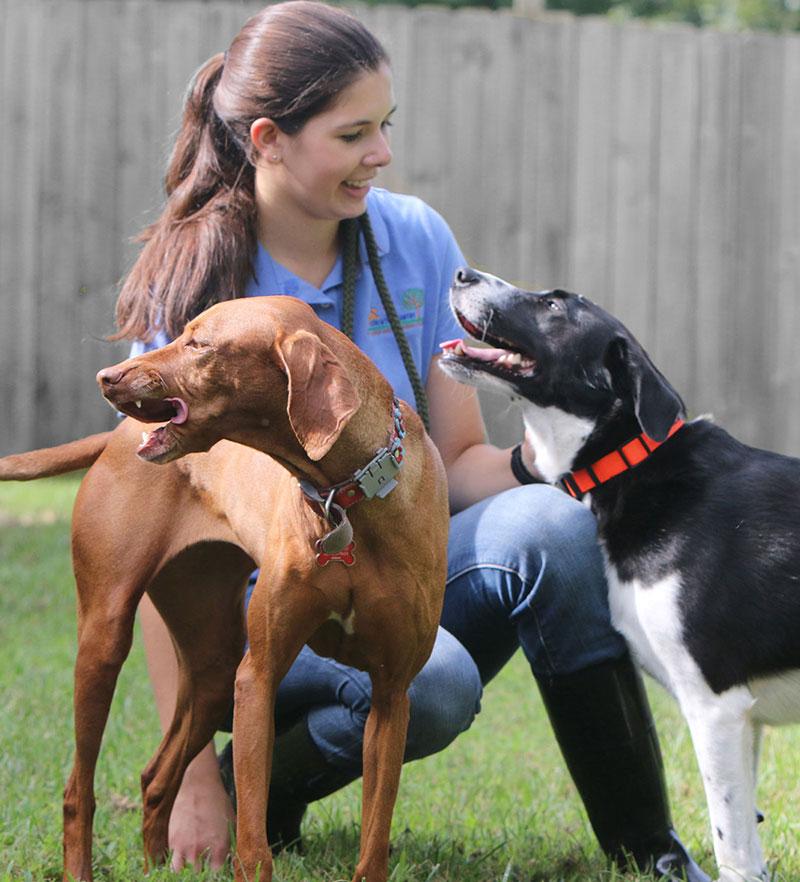 Several dogs of different breeds playing together happily in a secure, grassy outdoor area at a dog training boarding school, with a staff member watching attentively.
Types of Training Offered at Boarding Schools
Board and train programs are not one-size-fits-all. Most offer a variety of programs tailored to different needs, from basic manners to intensive behavioral work. This is a core feature of most boarding and training for dogs facilities.
Basic Obedience
This is the foundation for all other training. Programs will cover essential commands such as Sit, Stay, Come, Down, and walking politely on a leash (loose-leash walking). This is perfect for puppies or adult dogs who never received formal training.
Advanced Skills & Off-Leash Training
For dogs that have already mastered the basics, advanced programs can take their skills to the next level. This often includes off-leash reliability, advanced heel work, and proofing commands against major distractions in public settings.
Behavior Modification
This is a more intensive track for dogs exhibiting specific unwanted behaviors like leash reactivity, resource guarding, jumping, excessive barking, or anxiety. Trainers will design a specific plan to address the root cause of the issue and teach the dog alternative, more acceptable behaviors. Highly specialized facilities, sometimes exemplified by dedicated businesses like kasten’s dog training inc, often excel in this area.
The Crucial Handoff: Transitioning Your Dog Back Home
The training doesn’t end when you pick your dog up. In fact, the most critical part of the process is the transition back home. A reputable dog training boarding school will include several “handoff” sessions with you.
During these sessions, the trainer will teach you everything your dog has learned. They will show you the commands, the techniques, and the strategies they used. Your role is to become the new leader and maintain the structure and consistency your dog learned at school. You must be prepared to continue the work at home. The school gives you the tools and the foundation, but it’s up to you to maintain the training long-term.
Frequently Asked Questions (FAQ)
How much does dog training boarding school cost?
The cost varies widely based on location, the trainer’s reputation, and the length of the program. You can expect to pay anywhere from $1,000 to $2,500 per week. While it’s a significant investment, it’s often more effective and can be cheaper in the long run than years of less effective weekly classes.
How long do dogs typically stay?
The length depends on the training goals. A basic obedience or puppy program might be two to three weeks. More complex behavior modification could require four to six weeks or longer to achieve reliable, lasting results.
Will my dog forget me?
Absolutely not! This is a common worry, but your bond with your dog is strong. While they will form positive relationships with their trainers, they will be overjoyed to see you when you return. A few weeks is not long enough for a dog to forget their beloved family.
Is the training guaranteed to work?
Be wary of any trainer who offers a 100% guarantee. Dogs are living beings, not machines. The success of the training depends heavily on the owner’s commitment to continuing the work at home. A good program will guarantee they will provide support and follow-up training to ensure the transition is successful.
What should I pack for my dog’s stay?
The school will provide a list, but it typically includes enough of your dog’s regular food to last their entire stay (to avoid digestive upset), any necessary medications, and perhaps a comfort item like a t-shirt that smells like you. The facility will provide bedding, bowls, and toys.
Your Partner in Raising a Great Dog
A dog training boarding school can be a powerful tool for creating a happy, well-behaved canine companion and a more peaceful home. By providing an immersive, professional, and consistent environment, these programs can achieve results in weeks that might take owners years to accomplish on their own. By doing your research, choosing a reputable facility with a positive training philosophy, and committing to the follow-up work, you are not just training your dog—you are investing in a lifetime of better communication and a stronger bond.
