
Searching for the right person to help guide you and your furry best friend can feel overwhelming. You type “Dog Trainer In My Area” into a search bar, and suddenly you’re flooded with options, each promising a perfectly behaved companion. But what do these different philosophies, certifications, and methods really mean? Choosing a trainer is more than just teaching your dog to sit or stay; it’s about investing in a healthy, happy, and trusting relationship that will last a lifetime. This guide is here to help you navigate the process, ask the right questions, and find a professional who aligns with your values and your dog’s unique personality.
The journey to a well-behaved dog is a partnership, and finding the right professional trainer is the first crucial step. Much like the specific programs offered in dog obedience training fort worth, a local expert can provide tailored guidance that online videos simply can’t match. They can read your dog’s body language in real-time and give you the hands-on coaching you need to become a confident and effective leader for your pup.
Why a Local Trainer is a Game-Changer
While the internet offers a world of information, there’s no substitute for in-person, professional guidance. A local dog trainer offers distinct advantages that can significantly accelerate your progress and deepen your bond with your dog.
First, they provide personalized feedback. A local trainer can observe the subtle interactions between you and your dog, identifying communication breakdowns you might not even notice. They can correct your timing, adjust your technique, and tailor exercises specifically to your dog’s temperament, breed characteristics, and your home environment.
Second, group classes with a local trainer offer invaluable socialization opportunities in a controlled setting. Your dog learns how to interact politely with other dogs and people, a critical skill for a well-adjusted canine citizen. You also get to connect with other dog owners in your community, sharing struggles and celebrating successes together.
Finally, a trainer in your area is familiar with local resources. They can recommend the best dog-friendly parks, veterinary behaviorists, groomers, and pet supply stores. This local network is an incredible resource that helps you provide the best possible life for your companion.
Understanding Dog Training Philosophies
Before you hire a trainer, it’s essential to understand their core philosophy. This guiding principle dictates the methods and tools they’ll use with your dog. The two most prevalent approaches are positive reinforcement and balanced training.
Positive Reinforcement: The Science-Backed Approach
Positive reinforcement training is the method overwhelmingly endorsed by veterinary associations and humane organizations. The concept is simple: you reward the behaviors you want to see more of. This is typically done with something the dog values, like a tasty treat, a favorite toy, or enthusiastic praise. By making training a fun and rewarding game, you build a strong, positive association with learning.
This method avoids the use of fear, pain, or intimidation. Instead of correcting a dog for jumping, a positive reinforcement trainer would teach the dog an alternative behavior, like sitting, and reward them for that choice. It’s about teaching the dog what to do rather than constantly punishing them for what not to do.
According to Dr. Evelyn Reed, a certified applied animal behaviorist, “Choosing a trainer is one of the most important decisions you’ll make for your dog. Look for someone who prioritizes communication and builds a relationship based on trust, not fear. The goal isn’t just an obedient dog, but a happy and confident companion.”
Balanced Training: A Mix of Methods
Balanced trainers use a combination of rewards (positive reinforcement) and aversive corrections (positive punishment or negative reinforcement). For example, they might praise a dog for walking nicely on a leash but also use a corrective leash pop if the dog pulls. The tools used in balanced training can range from verbal reprimands to tools like prong collars or e-collars.
Proponents argue that this method provides clearer boundaries for the dog. However, critics express concern that using aversives can create anxiety, fear, and even aggression if not used with perfect timing and skill. It’s crucial for any owner considering this path to do extensive research and understand the potential fallout of using pain or fear in training.
Red Flags to Watch For
Regardless of the stated philosophy, certain practices are widely considered outdated and harmful. Be cautious of any trainer who:
- Guarantees results: Every dog is an individual, and behavior is never 100% predictable. Guarantees are a sales tactic, not a professional promise.
- Uses “dominance” or “alpha” theory: The idea that you must be the “alpha” and dominate your dog has been largely debunked by modern animal behaviorists. This approach can damage your relationship and lead to conflict.
- Relies heavily on aversive tools: If the first suggestion for a puppy pulling on the leash is a prong collar, that’s a major red flag. The focus should be on teaching, not punishing.
- Is not transparent: A good trainer should be happy to let you observe a class and openly discuss their methods and qualifications.
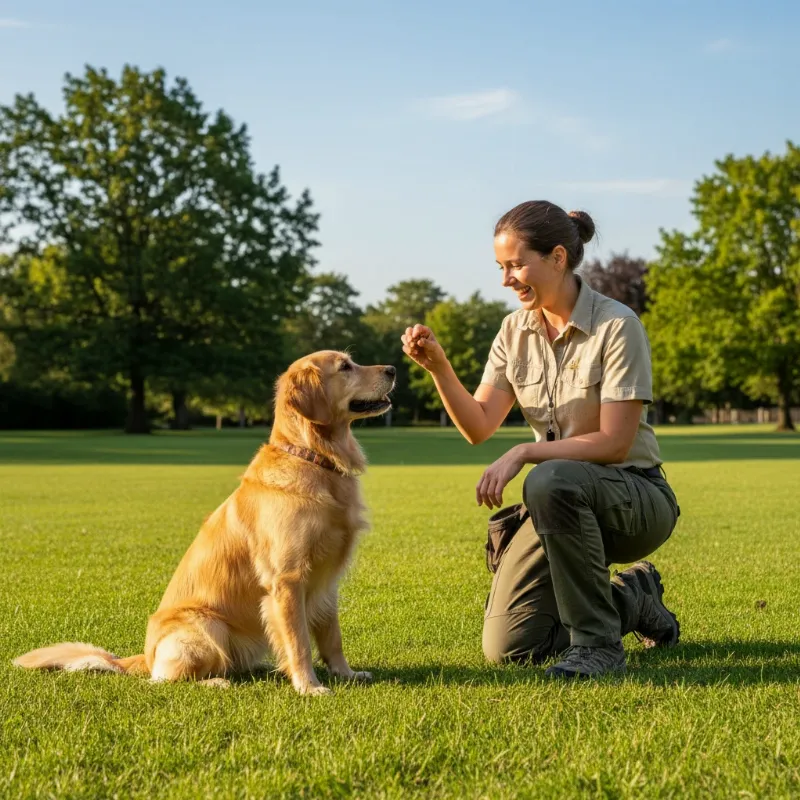 A friendly dog trainer giving a treat to a happy golden retriever in a park setting, demonstrating a positive training method.
How to Find a Reputable Dog Trainer in My Area
Now that you know what to look for, where do you actually find these professionals? A multi-pronged approach usually works best.
Start with a Search and Vet Your Options
Your initial “dog trainer in my area” search is a great starting point. Look at the websites of trainers who appear in the top results. Do their websites clearly state their training philosophy? Do they list their certifications and credentials? A professional website is often a good sign of a professional business. Look for testimonials and videos of their training in action. Directories like Yelp, Google Maps, and dedicated pet service sites can also be helpful, but always take individual reviews with a grain of salt and look for overall patterns. Places like the esteemed day hill dog training often have a strong online presence that reflects their professionalism.
The Power of Referrals
One of the best ways to find a trusted trainer is to ask for a referral.
- Your Veterinarian: Vets are on the front lines of animal care and often have a list of trainers they know and trust, especially those who use humane, science-based methods.
- Local Animal Shelters or Rescues: These organizations work with trainers regularly to help dogs become more adoptable. They will only recommend people who are effective and kind.
- Friends and Neighbors: Ask other dog owners in your community who they’ve used. They can give you firsthand accounts of their experiences, both good and bad.
Your Ultimate Checklist: 10 Questions to Ask
Once you have a shortlist of potential trainers, it’s time to interview them. Don’t be shy about asking detailed questions. You are your dog’s advocate. Here are ten essential questions to ask:
- What are your qualifications and certifications? Look for trainers who have invested in their education through organizations like the Certification Council for Professional Dog Trainers (CCPDT) or the Karen Pryor Academy (KPA).
- What is your primary training method or philosophy? Listen for keywords. Do they talk about positive reinforcement, rewards, and building relationships, or do they focus on correction, dominance, and being the “pack leader”?
- What specific equipment do you use or recommend? If they immediately recommend choke chains, prong collars, or shock collars, especially for basic manners, you should be cautious.
- Can I observe one of your classes before I sign up? A confident, professional trainer will welcome this. Observe how the dogs and people in the class are treated. Are they happy and engaged or stressed and fearful?
- How would you handle a specific issue, like my dog’s jumping or barking? Their answer will tell you a lot about their approach. Do they suggest punishing the behavior or managing the environment and teaching an alternative?
- What is your experience with my dog’s breed or specific behavioral issue? While a good trainer can work with any dog, someone with experience in a particular area, like fear, reactivity, or even specialized work such as that required for service dog training new jersey, can be invaluable.
- How do you involve the owner in the training process? The goal is for the trainer to teach you how to train and communicate with your dog. You should be an active participant.
- What are your rates, and what is included? Get a clear understanding of the costs for group classes, private sessions, and package deals.
- Are you insured and bonded? This is a basic requirement for any professional working with the public and their pets. It protects you, the trainer, and your dog.
- What is your policy if I’m not satisfied or my dog isn’t a good fit for a group class? A professional will have a clear policy for refunds or transferring to a different service, like private coaching.
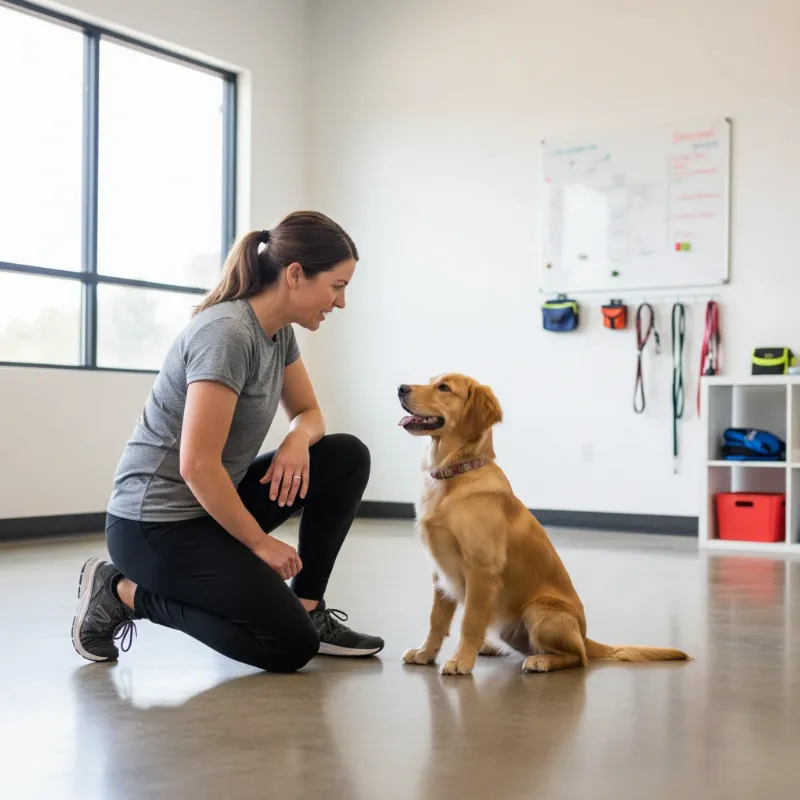 A dog owner thoughtfully listening to a dog trainer during an outdoor training session with a puppy.
What Do Dog Training Certifications Mean?
You’ll see a lot of acronyms after trainers’ names. While the industry is unregulated, these certifications indicate a commitment to education and ethical standards. They mean the trainer has passed comprehensive exams on topics like learning theory, animal husbandry, and teaching skills.
- CPDT-KA/KSA: Certified Professional Dog Trainer – Knowledge Assessed/Skills Assessed. This is a highly respected, independent certification from the CCPDT.
- KPA CTP: Karen Pryor Academy Certified Training Partner. This certification involves an intensive educational program focused on positive reinforcement and clicker training.
Seeing these credentials provides a level of assurance that the trainer is dedicated to their craft and adheres to a humane code of ethics, similar to what you would expect from dedicated dog training schools in florida that pride themselves on qualified staff.
Frequently Asked Questions (FAQ)
How much does dog training cost?
Costs vary widely by location and the trainer’s experience. Group classes can range from $150 to $300 for a six-week session. Private, one-on-one training is more expensive, often costing $75 to $150 per hour or more.
What age should I start training my puppy?
Training begins the moment you bring your puppy home! You can start with basic house rules and potty training immediately. Formal puppy socialization classes can typically be started as early as 8-10 weeks of age, once they’ve had their first round of vaccinations.
How long does it take to train a dog?
Training is a lifelong process of communication and relationship-building. While your dog might master basic cues like “sit” and “stay” in a few weeks, continuing to practice and manage their behavior is an ongoing commitment.
Can you teach an old dog new tricks?
Absolutely! Adult and senior dogs are perfectly capable of learning new things. In fact, training can be a wonderful way to keep an older dog’s mind sharp and strengthen your bond. The process might take a bit more patience, but it’s always possible.
What’s the difference between group classes and private training?
Group classes are excellent for socialization and learning basic manners in a distracting environment. Private training is ideal for addressing specific behavioral issues like fear, anxiety, or reactivity, as it allows the trainer to focus entirely on you and your dog’s unique needs. You may also want to explore more specific training topics like the one discussed in our article, are female dogs harder to potty train.
Your Partner in a Lifelong Journey
Finding the right dog trainer in your area is a decision that will shape your entire experience as a dog owner. Take your time, do your research, and trust your instincts. The goal isn’t to find the cheapest or the closest option, but to find a true partner who will help you build a foundation of trust, communication, and mutual respect with your canine companion. By investing in quality training, you’re not just solving a behavioral problem—you’re nurturing a bond that will bring you both joy for years to come.
