
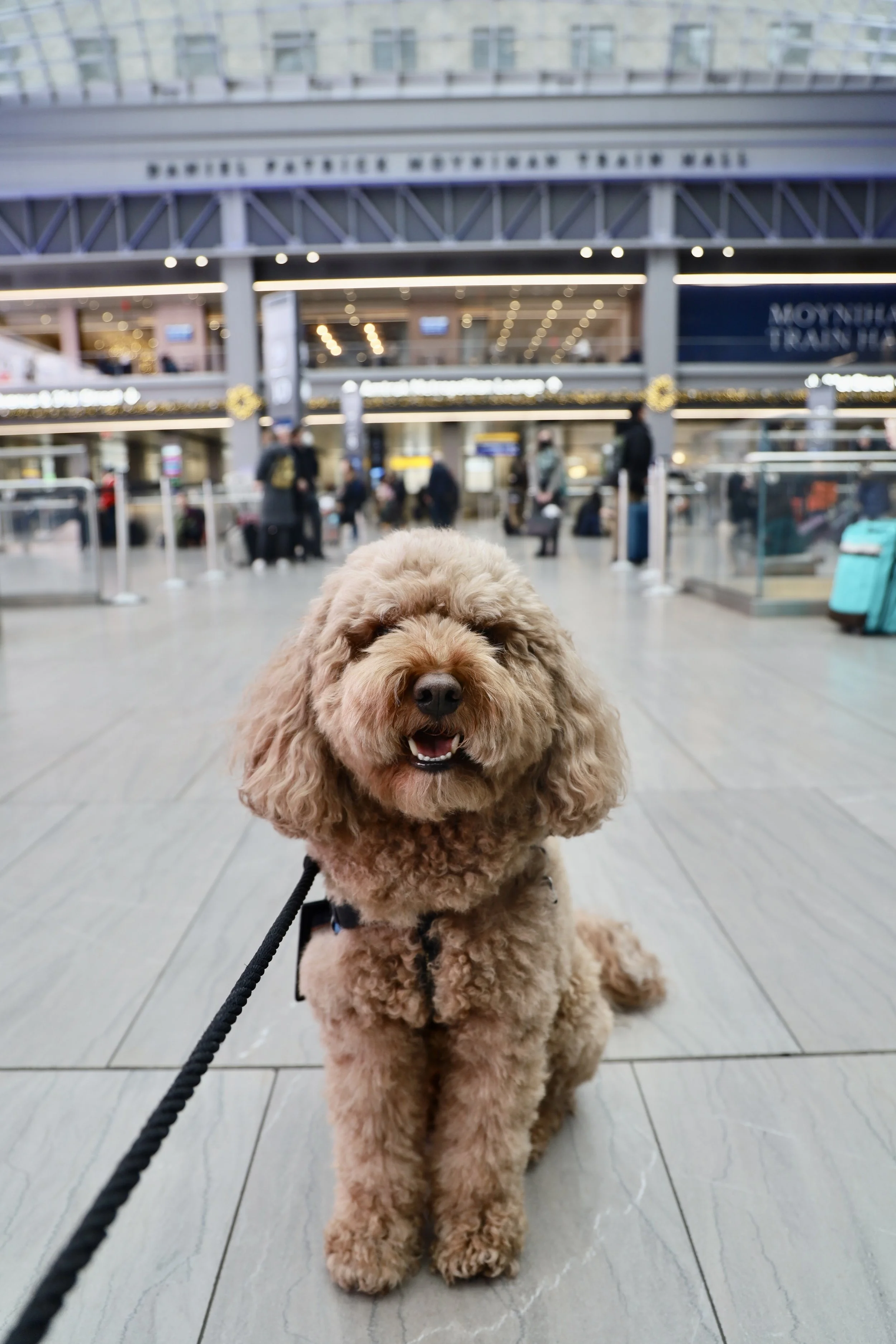
Embarking on a train journey with your canine companion can be a rewarding experience, offering a unique way to explore new places together. This guide is designed to navigate the intricacies of bringing your Dog On A Train, ensuring a smooth and enjoyable trip for both of you. From understanding carrier requirements to knowing basic etiquette, we’ll cover everything you need to know to make your train adventure with your dog a success.
Understanding Train Pet Policies
Navigating the diverse policies of train operators regarding pets is the first crucial step. While some companies are very accommodating, others have strict limitations. It’s essential to research the specific rules of the train service you plan to use well in advance.
General Guidelines for Dogs on Trains
Most train services that allow dogs have a few common requirements. These often include:
- Leash and Muzzle: Dogs are typically required to be on a leash at all times and may need to wear a muzzle, especially in crowded carriages. This is a safety measure for both the dog and other passengers.
- Designated Areas: Some trains have specific areas for passengers with pets, often away from dining cars or quieter zones.
- Carrier Requirements: Smaller dogs may need to travel in a secure, well-ventilated carrier that can fit under the seat or on your lap. Larger dogs might travel beside you, but always ensure they are not obstructing aisles or other passengers.
- Behavioral Standards: Dogs must be well-behaved, house-trained, and not disruptive to other passengers. Excessive barking or aggressive behavior can lead to removal from the train.
- Ticket Purchase: Some services require a separate ticket for your dog, often at a reduced fare.
Researching Specific Train Operators
When planning your trip, always visit the official website of the train company. Look for sections on “Traveling with Pets,” “Accessibility,” or “Passenger Information.” Here, you’ll find detailed regulations, including size and breed restrictions, the number of pets allowed per passenger, and any necessary documentation like vaccination records. For example, if you’re wondering, can you bring a dog on a train, the operator’s policy will provide the definitive answer.
Preparing Your Dog for Train Travel
A well-prepared dog is a happy traveler. Preparation involves acclimatizing your dog to the travel environment and ensuring they are comfortable and safe.
Acclimatization and Training
- Carrier Training: If your dog needs to travel in a carrier, start this process early. Make the carrier a positive space by feeding your dog in it and offering treats. Gradually increase the time spent inside.
- Leash and Muzzle Familiarization: Ensure your dog is comfortable wearing a leash and, if required, a muzzle. Practice walking with the leash and introduce the muzzle in short, positive sessions.
- Simulated Travel: If possible, take your dog on short practice trips to familiarize them with the sounds and sensations of travel. This could be a walk in a busy park or a short car ride to simulate movement and new environments.
Essential Supplies for the Journey
Pack a dedicated bag for your dog with the following essentials:
- Food and Water: Bring enough food for the journey, plus a little extra. Portable water bowls and a water bottle are crucial.
- Medications: If your dog requires medication, ensure you have an adequate supply and a clear dosage schedule.
- Waste Bags: Plenty of waste bags are non-negotiable for cleanliness.
- Comfort Items: A favorite toy, blanket, or chew can provide comfort and reduce stress.
- Leash and Harness/Collar: Always have a secure leash and a properly fitting collar or harness.
- Muzzle: If required by the train operator, ensure it fits comfortably.
- Identification: Your dog should wear a collar with an ID tag that includes your name and phone number. Consider a temporary tag with your travel contact information as well.
- Grooming Supplies: Wet wipes or a small towel can be useful for quick clean-ups.
During the Train Journey: Etiquette and Safety
Once on board, maintaining good etiquette and prioritizing your dog’s safety are paramount.
Ensuring a Calm and Respectful Environment
- Designated Spot: Keep your dog in the designated area or by your side, ensuring they are not a nuisance to others. For larger dogs, can i take my dog on train often means they sit by your feet, or in a space that doesn’t block the aisle.
- Minimize Disturbance: Keep your dog calm and quiet. Avoid letting them bark excessively or interact boisterously with other passengers unless invited.
- Hygiene: Clean up after your dog immediately. Use the provided waste bins or take waste with you to dispose of properly.
- Hydration and Potty Breaks: Offer water periodically, especially on longer journeys. If possible, ask the conductor about designated stops where your dog can relieve themselves.
Safety Considerations
- Secure Your Dog: Always keep your dog on a leash, even within the carrier. Ensure carriers are securely fastened if required.
- Temperature: Be mindful of the temperature in the carriage. Dogs can be sensitive to extreme heat or cold. Ensure good ventilation.
- Interactions: Supervise all interactions between your dog and other passengers or pets. Not everyone is comfortable around dogs, and some dogs may not be comfortable with strangers.
- Emergencies: Know who to contact in case of a pet-related emergency. This could be the train conductor or staff, and having your veterinarian’s contact information readily available is wise.
Specific Scenarios and Tips
- Long-Distance Travel: For extended journeys, plan for more frequent breaks. Pack extra food, water, and comfort items. Consider if your dog has any special needs, such as anxiety or mobility issues. If you are contemplating can u take a dog on a train for a very long trip, ensure your dog can handle extended periods of confinement.
- High-Speed Trains: These often have stricter policies due to speed and passenger density. Always double-check the rules for high-speed services.
- International Travel: If crossing borders, research customs regulations, import permits, and specific health requirements for your destination country. This is far more complex than a domestic trip.
- Service Animals: Most train operators have specific policies for service animals, which often differ from those for pets. Ensure you understand these distinctions and have any required documentation. Training a service animal requires specialized knowledge, and if you’re looking into training a blind dog, it’s a commitment that may have different travel implications.
Frequently Asked Questions (FAQ)
Q1: Do I need to buy a ticket for my dog?
A: Policies vary by train operator. Some require a ticket, often at a reduced fare, while others allow dogs to travel free of charge under certain conditions. Always check the specific operator’s policy.
Q2: Are there size or breed restrictions for dogs on trains?
A: Yes, many train companies have restrictions on the size and sometimes the breed of dogs allowed. Smaller dogs in carriers are often permitted, while larger breeds may have limitations or require specific seating arrangements.
Q3: Can my dog travel in the dining car?
A: Generally, dogs are not permitted in dining cars due to hygiene regulations. They are usually required to stay in their designated area or with their owner at their seat.
Q4: What should I do if my dog gets anxious during the train journey?
A: Ensure your dog is comfortable with the carrier and familiar with the leash and muzzle beforehand. Bring comfort items like a favorite blanket or toy. Speak calmly to your dog and offer praise. Consult your veterinarian about calming aids if your dog has severe travel anxiety.
Q5: How do I handle potty breaks for my dog during a long train journey?
A: Inquire with the conductor about scheduled stops where you can safely take your dog off the train for a short break. Always be prepared with waste bags to clean up immediately.
Conclusion: A Rewarding Travel Experience
Traveling by train with your dog can be an incredibly enriching experience, opening up new possibilities for adventures together. By understanding and adhering to train policies, preparing your dog thoroughly, and practicing good travel etiquette, you can ensure a safe, comfortable, and enjoyable journey for everyone. Remember that a well-behaved and well-prepared dog makes for a pleasant experience not just for you, but for all passengers. So, plan ahead, pack smart, and get ready to explore the world with your furry best friend by your side on the rails.
