
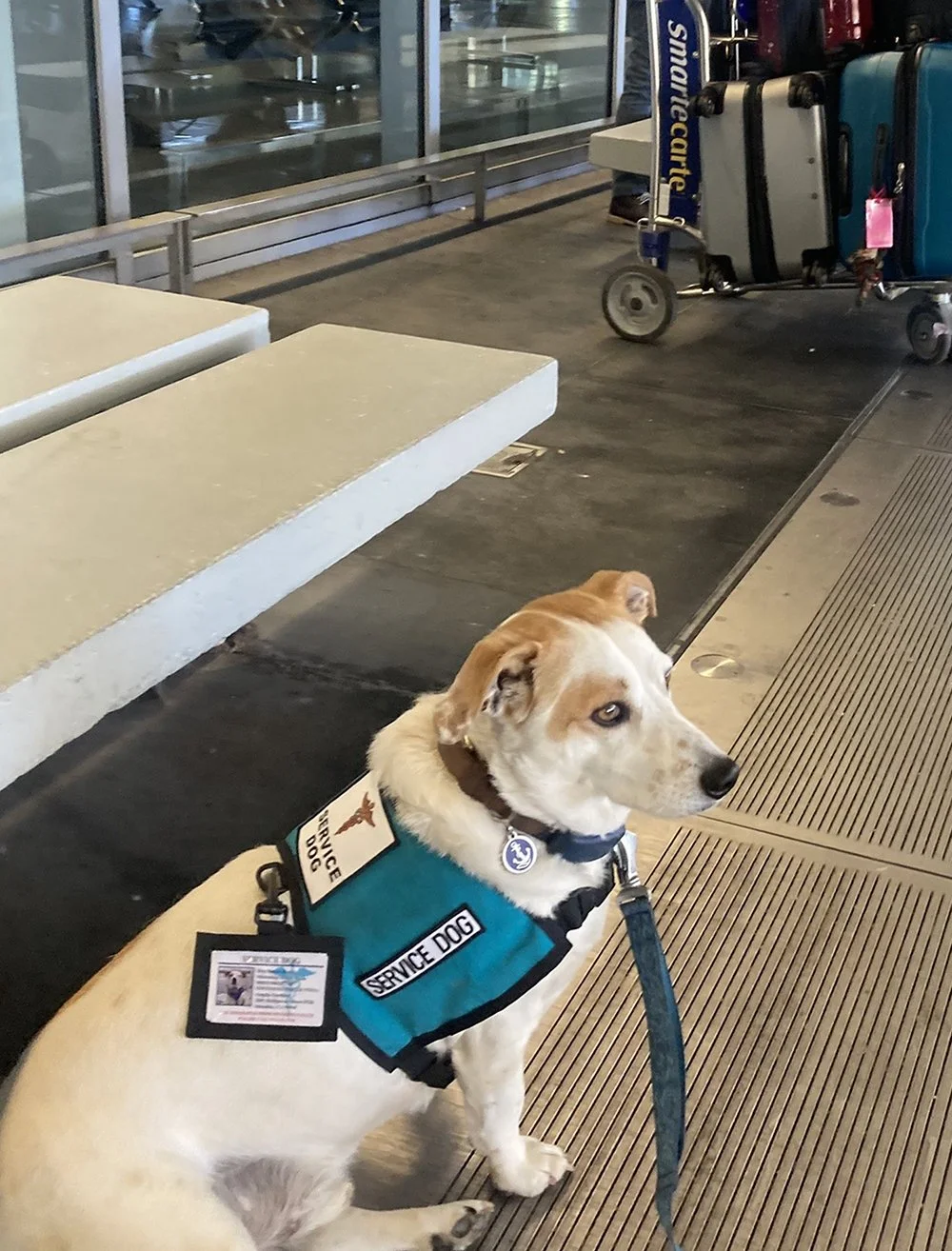
You’re walking through a store, and you spot a beautiful Labrador Retriever walking calmly beside its owner. It’s not just any dog, though. It’s wearing a brightly colored vest with the words “In Training” printed in bold letters. Your first instinct might be to smile, make a friendly sound, or even reach out to pet it. But you hesitate. What does that vest really mean? What are you supposed to do?
Seeing a Dog In Training Vest is an increasingly common experience, yet public understanding of what it signifies—and the proper etiquette around it—can be fuzzy. This vest is more than just an accessory; it’s a crucial communication tool, a “student driver” sign for a canine learning a vital job. Understanding its purpose is key to being a respectful and responsible member of the community, ensuring these special dogs can become the skilled partners their handlers need them to be.
What Does ‘In Training’ Really Mean?
At its core, an “In Training” vest signals that the dog is in the process of learning. It is not a pet out for a casual stroll; it is a dedicated student learning the intricate skills required to become a future service animal, therapy dog, or other type of working canine. This training period is intense and requires immense focus from both the dog and its handler.
Think of it as a canine apprenticeship. The dog is learning to navigate busy public spaces, ignore tantalizing sights and smells, and remain completely focused on its handler, ready to perform specific tasks. The vest serves two primary functions in this process:
- Public Communication: It clearly tells people, “Please do not disturb me. I am working.” This minimizes distractions that can disrupt a crucial learning moment.
- Mental Conditioning: For the dog, putting on the vest becomes a powerful psychological cue. It’s like a doctor putting on a lab coat or a firefighter putting on their gear. The vest means it’s time for work, prompting a shift in mindset from playful pet to focused professional. When the vest comes off, the dog knows it’s free to relax and just be a dog.
Not All Vests are Created Equal: Types of Working Dogs
The phrase “working dog” is a broad term. While service dogs are the most common type you’ll see training in public, it’s helpful to understand the distinctions, as their roles and rights differ significantly.
Service Dogs in Training
These are the dogs most frequently seen wearing “in training” vests in places like grocery stores, restaurants, and malls. A service dog is individually trained to do work or perform specific tasks for a person with a disability. According to the Americans with Disabilities Act (ADA), these tasks must be directly related to the person’s disability.
Examples of these tasks include:
- Guiding a person who is visually impaired.
- Alerting a person who is deaf to sounds.
- Pulling a wheelchair or providing balance support.
- Alerting and protecting a person who is having a seizure.
- Reminding a person with mental illness to take prescribed medications.
Training a service dog is a long and expensive process, requiring hundreds of hours of work to master public access skills and specific tasks. This is why it’s so important for them to practice in real-world environments without being disturbed.
Therapy Dogs
A therapy dog is trained to provide affection, comfort, and support to people in various facilities such as hospitals, nursing homes, schools, and disaster areas. They have a calm temperament and are incredibly social. While they undergo training to be well-behaved and comfortable in different environments, they do not have the same public access rights as service dogs. A therapy dog in training vest is often used during their training visits to help them get accustomed to their gear and to signal their role to people in the facility.
Emotional Support Animals (ESAs) and Pets
Emotional support animals provide comfort and companionship to their owners, but they are not trained to perform specific tasks related to a disability. Under the ADA, ESAs are not considered service animals and do not have the right to accompany their owners into public places where pets are not allowed. It’s crucial to recognize that simply putting a vest on a pet does not make it a service animal. Misrepresenting a pet as a service animal is unethical and illegal in many states.
The Golden Rules: Public Etiquette Around a Dog in a Training Vest
Interacting with a dog in a training vest, even with the best intentions, can jeopardize the handler’s safety and undo months of hard work. The single most important rule is to ignore the dog. Think of the dog as a piece of essential medical equipment, like a wheelchair or an oxygen tank. Here’s a simple guide of do’s and don’ts.
### What You SHOULD Do:
- Speak to the Handler, Not the Dog: If you have a question, address the person. Treat them with the same courtesy you would anyone else.
- Give Them Space: Don’t crowd the team. Give them a clear path to walk and maneuver, especially in tight spaces.
- Keep Your Pet Away: If you have your own dog with you, keep it at a distance. An interaction between a pet dog and a working dog can be a major distraction and potentially dangerous.
### What You SHOULD NOT Do:
- Do Not Touch or Pet the Dog: This is the most critical rule. Petting a working dog is a major distraction.
- Do Not Talk to the Dog: Don’t use a high-pitched voice, make kissy noises, or call out to the dog. Your voice can pull their focus away from their handler.
- Do Not Make Eye Contact: Staring can be interpreted as a challenge or invitation to interact by a dog, so it’s best to avert your gaze.
- Do Not Offer Food: Working dogs are on a strict diet and schedule. Offering them treats can interfere with their health and training.
Every interaction matters. The complexity of this training, which involves conditioning, behavior shaping, and task learning, is immense. It’s similar to understanding the cost for dog training, which involves many hidden variables beyond just paying a trainer. A single distracting encounter can set a dog’s progress back significantly.
The Vest from the Dog’s and Handler’s Perspective
To fully appreciate the vest, it helps to see it from both sides of the leash.
For the Dog: It’s a Uniform
Dogs are creatures of habit and thrive on routine. The vest acts as a powerful signal. When the handler puts the dog in training vest on, the dog learns that the rules are different now. It’s time to be attentive, calm, and focused. This conditioning helps the dog reliably distinguish between work and play, ensuring it’s ready to perform its duties when needed but can also enjoy its downtime as a regular dog.
For the Handler: A Tool for Communication and Advocacy
For the handler, the vest is a request for public cooperation. It’s a silent, constant message: “My dog is working, and my well-being depends on its focus.” It saves them from having to verbally explain their situation to every person they encounter. However, a vest can also be a double-edged sword, sometimes attracting more attention from people who are curious. This is why public education is so important. Handlers also need their own specialized gear, and an item like a ladies dog training vest can be invaluable for carrying rewards, tools, and personal items efficiently during training sessions.
“When the public respects a dog in a training vest, they are doing more than just being polite,” notes Dr. Emily Carter, a canine behaviorist. “They are actively participating in that dog’s education. By ignoring the dog, you allow it to build the focus and confidence it needs to one day become a lifeline for its handler. You are giving the gift of your respectful distance.”
Is a Vest Legally Required for a Dog in Training?
This is a common point of confusion. Under the federal Americans with Disabilities Act (ADA), fully trained service animals are not required to wear a vest, harness, or any form of identification. The public can only ask two questions: (1) Is the dog a service animal required because of a disability? and (2) What work or task has the dog been trained to perform?
However, the laws regarding service dogs in training are not federally mandated and vary by state. Some states grant service dogs in training the same public access rights as fully trained service dogs, while others do not. The vest, while not a federal legal requirement, becomes an essential tool for handlers to navigate these gray areas and signal their legitimacy. It’s a widely accepted best practice. It is important to note that training for specialized roles, such as seeking livestock guardian dog training near me, operates under completely different guidelines and purposes, typically focused on outdoor, rural environments rather than public access.
Frequently Asked Questions (FAQ)
1. What should I do if a dog in a training vest approaches me?
You should stand still and quietly ignore the dog. Do not respond to it. The handler will notice and give a correction to redirect their dog’s attention back to them.
2. Can I ask the handler questions about their dog?
It’s best to be respectful of their time and privacy. While some handlers are open to educating the public, others may be in a hurry or focused on a difficult training task. Always speak to the person, not the dog, and be prepared for them to politely decline a conversation.
3. Are “in training” dogs allowed in all public places?
This depends on state and local laws. Many, but not all, states provide public access rights to service dogs in training. The handler is responsible for knowing the laws in their area.
4. Why can’t I even make eye contact with the dog?
In the canine world, direct eye contact can be a form of communication—an invitation to engage or a sign of a challenge. To avoid sending mixed signals and creating a distraction, it’s best to simply look away.
5. Where can people get an in training vest for dogs?
Many online retailers and specialty pet stores sell vests. You can find a variety of styles, from simple patches to more elaborate harnesses, in the form of an in training vest for dogs. However, it’s the dog’s training, not its vest, that makes it a service animal.
6. Is it okay to let my pet dog meet a dog in a training vest?
No. You should never allow your pet to approach a working dog team. Keep your dog on a short leash and move to the side to give them plenty of room to pass. An interaction could be a dangerous distraction for the working dog and its handler.
Conclusion
The humble dog in training vest is a symbol of a remarkable partnership and a journey of dedication. It represents countless hours of work, patience, and commitment from both a dog and its human handler. By understanding what the vest means and adhering to the simple rules of respectful etiquette, you become an important ally to these teams.
The next time you see one of these dedicated canine students, give the handler a respectful nod and smile, and then simply go on your way. Your simple act of ignoring the dog is one of the most helpful things you can do, allowing them to focus on their important work and empowering them on their path to becoming a life-changing partner.
