
Embarking on the journey of training a hunting dog is one of the most rewarding experiences a dog owner can have. It’s a process that builds an unbreakable bond, rooted in communication, trust, and shared purpose. But before you can shape your eager pup into a seasoned field companion, you need the right tools. The world of Dog Hunting Training Supplies can seem vast and overwhelming, but fear not. This guide will break down the essentials, explaining what you need, why you need it, and how it contributes to creating a skilled and confident gun dog.
The foundation of any successful training program starts long before you ever enter the field. It begins with basic obedience and building a strong connection, which is a universal principle no matter the breed. Understanding how to train your puppy dog from an early age sets the stage for more complex, sport-specific commands later on. With that foundation in place, let’s gear up.
The Unbreakable Foundation: Core Training Essentials
Before diving into specialized equipment, every aspiring hunting dog needs a solid foundation in obedience. These core items are non-negotiable for control, safety, and effective communication during the early stages of training.
Check Cords and Leads
A check cord is essentially a long, durable rope or leash, typically 20 to 50 feet long, without a handle. Why no handle? To prevent it from snagging on brush, branches, or other obstacles in the field. This tool is your lifeline during initial training, allowing you to guide your dog and reinforce commands like “come” or “whoa” from a distance without sacrificing control. It helps bridge the gap between on-leash obedience and off-leash reliability.
Training Collars
While your dog’s everyday collar is fine for walks, a dedicated training collar offers better control. A simple, sturdy flat collar is often sufficient to start. Some trainers prefer slip leads for their ease of use and gentle correction. The key is to have a secure, well-fitted collar that your dog can’t slip out of when they get excited by a scent or a sight.
The All-Important Whistle
A whistle is one of the most crucial pieces of dog hunting training supplies. Your voice can only carry so far and can convey unintended emotions like frustration or excitement. A whistle, however, delivers a sharp, consistent, and emotionless command that cuts through wind, rain, and distance. You’ll use specific patterns for commands: one short blast for “sit” or “stay,” a series of pips to turn, and a long trill for the recall. Start associating these sounds with their corresponding commands in a controlled environment, and soon your dog will respond instantly in the field.
Building the Retrieve: Dummies and Bumpers
For retrievers, flushing dogs, and even versatile pointers, the retrieve is a cornerstone skill. Training dummies, also known as bumpers, are designed to simulate the size, weight, and feel of real game, allowing you to practice retrieves without using actual birds.
Canvas and Plastic Dummies
Dummies come in various materials, sizes, and colors.
- Canvas Dummies: These are the classic choice. They hold scent well, are durable, and float, making them suitable for both land and water training. They are perfect for teaching a soft mouth, as their texture is less forgiving to hard biting than plastic.
- Plastic Dummies: These are excellent for water work as they are highly buoyant and easy to clean. Many have a knobby texture that encourages a proper grip and discourages chomping.
- Color Choice: White or black-and-white dummies are highly visible for the dog, making them great for initial training. As your dog advances, switch to less visible colors like orange or camouflage to encourage them to use their nose more than their eyes.
To make training sessions more efficient, having a way to carry your gear is essential. While many vests have pockets, dedicated dog training pouches for treats and dummies keep your hands free and your equipment organized.
Scent and Launchers
To make the simulation more realistic, you can apply commercial bird scents to your dummies. This helps your dog associate the retrieve with the specific scent of the game you’ll be hunting, whether it’s pheasant, duck, or grouse.
For advanced training, dummy launchers are an invaluable tool. These devices use a .22 blank to propel a dummy hundreds of feet into the air, simulating the arc of a falling bird and desensitizing your dog to the sound of gunfire. This is a critical step in creating a steady gun dog that doesn’t break or become gun-shy.
As simulated expert Dr. Samuel Finch, a renowned gun dog training specialist, states, “The goal of using dummies and launchers isn’t just to practice fetching. It’s about building a sequence: the mark, the shot, the retrieve. We are conditioning a calm, steady response to the very stimuli that will be present in a real hunt.”
Advanced Control: The E-Collar Explained
Perhaps no piece of dog hunting training supplies is more debated than the electronic collar, or e-collar. When used correctly, it is not a punishment device but a sophisticated communication tool. Modern e-collars offer multiple functions: tone, vibration, and momentary or continuous stimulation at very low levels.
Why Use an E-Collar?
An e-collar provides a way to reinforce known commands at a distance, ensuring reliability when the dog is off-leash and far away. It’s the final step in proofing your dog’s obedience against the ultimate distractions of the hunt. For example, if your dog is chasing a non-game animal or heading toward a dangerous area, a well-timed, low-level stimulation can instantly recall their attention back to you.
Responsible Use is Key
The key to e-collar success is proper introduction and use. The collar should be introduced only after the dog has mastered commands with the check cord. The stimulation level should be just enough for the dog to notice it—often called the “working level”—not to cause pain. It’s about creating a subtle tap on the shoulder to say, “Hey, listen to me.” Misusing an e-collar can create fear and anxiety, so if you’re unsure, seek guidance from a professional trainer.
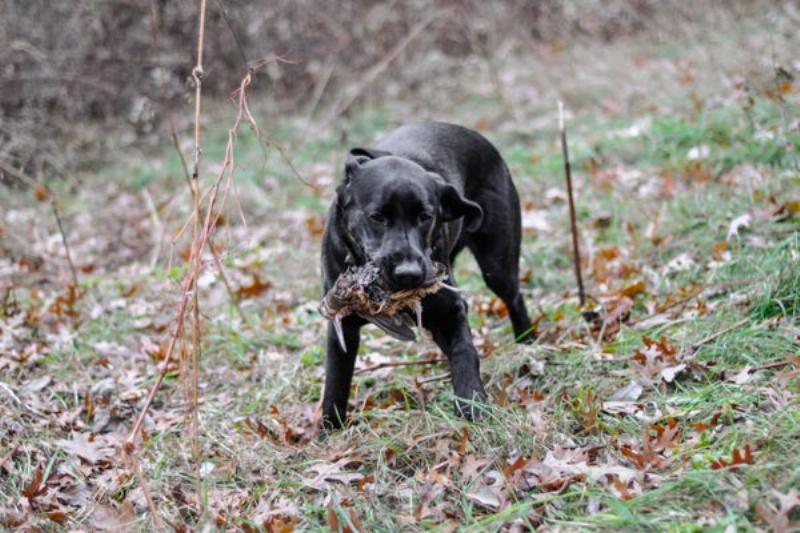 A Labrador retriever in mid-stride, leaping through tall grass to retrieve a bright orange training dummy during a field training session.
Specialized Gear for Your Game
While the tools above are nearly universal, certain types of hunting require specific supplies. Whether you’re after waterfowl, upland birds, or raccoons, tailoring your kit is essential.
For the Waterfowl Hunter
- Neoprene Vest: A dog’s neoprene vest is like a wetsuit. It provides insulation against cold water, adds buoyancy, and protects the dog’s chest and belly from unseen underwater obstacles.
- Dog Blind/Stand: For hunting out of a boat or in flooded timber, a dog stand keeps your partner out of the frigid water until it’s time to retrieve. A portable dog blind helps conceal them from wary ducks and geese.
For the Upland Hunter
- Beeper or Bell Collar: In dense cover where you might lose sight of your pointing or flushing dog, a beeper collar can be set to sound off when the dog is on point or to beep at regular intervals so you can track its location. A simple bell works for closer-ranging dogs.
- Protective Vests: Upland hunting often involves navigating thorny thickets and barbed-wire fences. A tough skid plate or field vest protects your dog’s underside from cuts and scrapes.
For the Night Hunter
Hunting raccoons or other nocturnal game presents unique challenges. This is where specialized dog hunting training supplies become critical. You’ll need powerful tracking collars with GPS to monitor your dogs’ location in the dark over vast distances. Outfitting your dog and yourself with the right coon dog training supplies is non-negotiable for both success and safety. The training principles are similar, focusing on scent work and recall, but the gear is adapted for the environment.
Safety and Tracking: Always Be Prepared
No matter what or where you hunt, your dog’s safety is the number one priority. A well-stocked canine first-aid kit should always be in your vehicle or pack. It should include items like antiseptic wipes, gauze, self-adhering bandages, tweezers for thorns or ticks, and styptic powder to stop bleeding.
In the modern era, GPS tracking collars have become a game-changer. They provide real-time location updates on a handheld device, giving you peace of mind that you can find your dog if they get lost or injured. While they can be a significant investment, their value in preventing a lost dog is immeasurable. The applications are wide-ranging, from tracking far-running hounds to locating a lost bird dog, and are even used in activities like shed hunting dog training to find where your dog has located a dropped antler.
Frequently Asked Questions (FAQ)
What are the absolute must-have supplies to start training a hunting dog?
At a minimum, you need a good-quality flat collar, a long check cord (20-30 feet), a whistle, and a few training dummies or bumpers. These core items will allow you to teach all foundational obedience and retrieving skills necessary for hunting.
At what age should I start using specialized hunting training supplies?
You can start basic obedience with a collar and leash as soon as you get your puppy. Introduce the whistle and simple dummy retrieves in a fun way around 3-4 months old. More advanced tools like e-collars and dummy launchers should wait until the dog is more mature, typically around 6-8 months, and has a solid grasp of the commands.
How do I choose the right e-collar for my dog?
Look for a reputable brand known for reliability and durability. Choose a model with a wide range of stimulation levels, including vibration and tone options. Ensure it’s waterproof and has a range suitable for the type of hunting you do. Most importantly, learn how to use it properly from an expert.
Are scent launchers necessary for training?
They are not strictly necessary, but they are incredibly effective. A launcher helps simulate a real hunting scenario by getting the dummy high in the air and far away, teaching the dog to mark a fall. It also safely acclimates the dog to the sound of a shot associated with a fun retrieve.
Do I need different dummies for land and water training?
Not necessarily. Most canvas and plastic dummies float and can be used for both. However, plastic dummies are often preferred for water work because they don’t get waterlogged and are easier to see and grip when wet. It’s good to have a mix of both.
How can I train a small dog breed for hunting?
The principles are the same regardless of breed, but the equipment should be scaled appropriately. For example, when figuring out how to train a sausage dog for something like rabbit tracking, you would use smaller, lighter dummies and a less powerful beeper collar. The key is adapting the tools to the dog’s size and the specific type of game they will pursue.
Conclusion: Gearing Up for Success
Building a proficient hunting dog is a marathon, not a sprint. It requires patience, consistency, and a deep understanding of your canine partner. Having the right dog hunting training supplies doesn’t guarantee a champion, but it equips you with the tools to communicate clearly, build skills progressively, and keep your dog safe in the process. From the simple check cord to the advanced GPS collar, each item serves a purpose in shaping raw instinct into reliable performance. Invest in quality gear, learn how to use it effectively, and you’ll be well on your way to forging a hunting partnership that will create a lifetime of memories in the field.
