
Bringing a new dog into your home is an incredibly exciting experience, filled with moments of joy, laughter, and companionship. However, this new chapter also comes with the foundational challenge of house training. Puddles on the carpet and unexpected messes can be frustrating, but with the right Dog House Training Tips, you can guide your new friend to success. This process is about much more than just preventing accidents; it’s about building communication, trust, and a strong bond between you and your canine companion. Forget harsh methods and confusion; this guide is built on patience, consistency, and positive reinforcement. For a deeper dive into different methods, you might find some valuable perspectives in resources offering free dog training online.
The Foundation: Patience and a Positive Mindset
Before you lay out a single pee pad or schedule a potty break, the most important tool you have is your mindset. Dogs do not have accidents out of spite or to purposefully annoy you. They do so because they haven’t yet learned the rules of their new environment, can’t physically hold it, or their signals for needing to go out have been missed.
Punishing a dog for an accident is one of the most counterproductive things you can do. Scolding, yelling, or the outdated practice of rubbing a dog’s nose in their mess will only create fear and anxiety. This fear can lead a dog to hide when they need to relieve themselves, making it even harder for you to teach them the right spot. Instead, approach house training as a teaching opportunity. Every success is a reason to celebrate, and every accident is simply a learning moment—for both of you.
“The cornerstone of successful house training isn’t control, it’s communication and consistency,” states Dr. Sarah Miller, a veterinary behaviorist. “Your dog is trying to learn a foreign language—your language. Patience and positive rewards are the keys to unlocking that understanding.”
Step 1: Create a Rock-Solid Potty Routine
Dogs are creatures of habit. They thrive on predictability, and a consistent schedule is the single most effective strategy for house training. A routine helps regulate their bodily functions and teaches them when they can expect an opportunity to go outside.
Your schedule should be built around key moments in their day. A puppy or adult dog should always be taken out:
- First thing in the morning: As soon as they wake up, their bladder will be full. Don’t wait; carry a small puppy straight outside to avoid an accident on the way.
- Last thing at night: A final potty break right before everyone goes to sleep will help them make it through the night.
- After every meal: Eating stimulates the digestive system. Most dogs, especially puppies, will need to relieve themselves within 15-30 minutes of a meal.
- After waking up from a nap: Just like in the morning, waking up often triggers the need to go.
- After a play session: Excitement and physical activity can speed things up. A post-playtime potty break is essential.
- Before being left alone: Even for short periods, a pre-departure trip outside is a must.
For young puppies, a general rule is that they can hold their bladder for their age in months plus one. So, a three-month-old puppy can at most hold it for four hours. However, during active training, you should be taking them out far more frequently, sometimes every hour.
Step 2: Master the Art of Supervision
A new dog that isn’t fully house-trained should not have unsupervised freedom in your home. This is the second biggest mistake owners make, right after using punishment. Constant supervision allows you to prevent accidents before they happen by recognizing your dog’s signals.
When you cannot watch your dog with your full attention, you have two excellent options:
- Crate Training: A crate or kennel is an invaluable tool.
- Tethering: Use a leash to keep your dog tethered to you as you move around the house. This keeps them in your line of sight and helps you quickly notice if they start sniffing or circling.
- Gated Areas: Use baby gates to confine your dog to the room you’re in, preferably one with easy-to-clean floors like a kitchen.
This intensive supervision phase is temporary. As your dog demonstrates reliability and has fewer accidents, you can gradually grant them more freedom.
Why Crate Training is Your Best Friend
A common misconception is that crates are a form of punishment. When introduced correctly, a crate becomes a dog’s personal den—a safe, comfortable space where they can relax. Dogs have a natural instinct to keep their sleeping area clean. This instinct makes the crate a powerful house training aid, as a dog will be highly motivated to avoid soiling their den. Make the crate a happy place with comfortable bedding and special toys. This tool is also fundamental when you need to figure out how can i train my dog to stay home alone without worrying about destructive behaviors or accidents.
Step 3: Learn Your Dog’s Unique Signals
As you spend time with your dog, you’ll start to recognize their specific “I have to go” signals. Catching these cues and acting on them immediately is how you turn a potential accident into a training success.
Common signs that your dog needs to go outside include:
- Circling
- Intense sniffing of the floor
- Whining or whimpering
- Pacing, especially near the door
- Becoming restless or distracted
- Suddenly stopping play and walking away
The moment you see any of these behaviors, calmly and quickly say “Outside!” and hustle your dog to their designated potty spot.
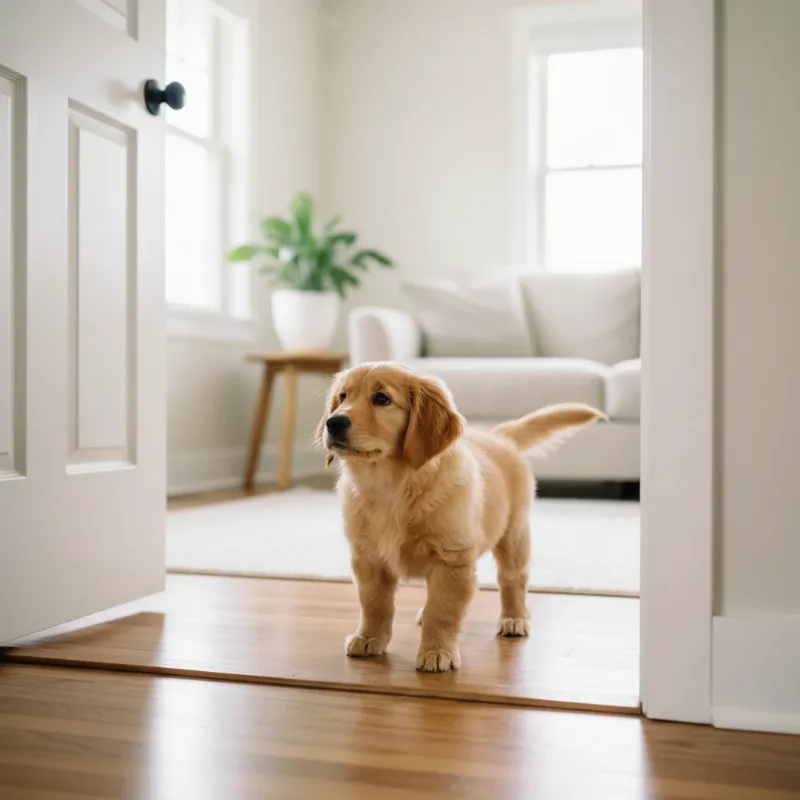 An owner observing their puppy sniffing the ground, a key part of dog house training tips
When you get to the spot, use a verbal cue like “Go potty.” The second they finish, reward them with enthusiastic praise (“Good dog!”) and a high-value treat. This immediate reward connects the act of eliminating outside with a very positive experience.
Step 4: Responding to Accidents Correctly
No matter how vigilant you are, accidents will happen. How you respond is critical.
If you catch your dog in the act:
Don’t yell. Make a short, surprising sound (like a sharp “Ah-ah!” or a clap) to interrupt them. The goal is to startle them enough to stop, not to scare them. Immediately lead them outside to their potty spot. If they finish outside, praise them lavishly.
If you find a mess after the fact:
Do nothing to the dog. At this point, they will not be able to connect any punishment with the accident that happened minutes or hours ago. Scolding them will only create confusion and fear. Your only job is to clean the mess thoroughly.
Use an enzymatic cleaner specifically designed for pet stains. Regular household cleaners won’t eliminate the underlying odors that are detectable by your dog’s powerful nose. If any scent remains, your dog will view that spot as an acceptable indoor bathroom, and they will return to it again and again. For a comprehensive look at solving these issues, our guide on dog training tips for housebreaking offers additional strategies.
Advanced Dog House Training Tips and Tricks
Once your dog has a good grasp of the basics, you can introduce more advanced concepts.
- Bell Training: Hang a bell on the door you use for potty breaks. Every time you take your dog out, gently guide their paw or nose to ring the bell. With consistency, they will learn to ring the bell themselves to signal they need to go out.
- Troubleshooting Regression: Sometimes a previously house-trained dog will start having accidents again. This can be caused by a medical issue (like a UTI), a change in routine, or stress. A trip to the vet is always the first step to rule out health problems. If it’s behavioral, go back to the basics of a strict routine and supervision for a week or two to get back on track.
- Training an Adult Dog: The process for an adult dog is exactly the same as for a puppy, but you may need extra patience. You are not just teaching a new habit; you may be overcoming an old, established one. Stick to the routine and positive reinforcement, and they will learn the new rules of your home.
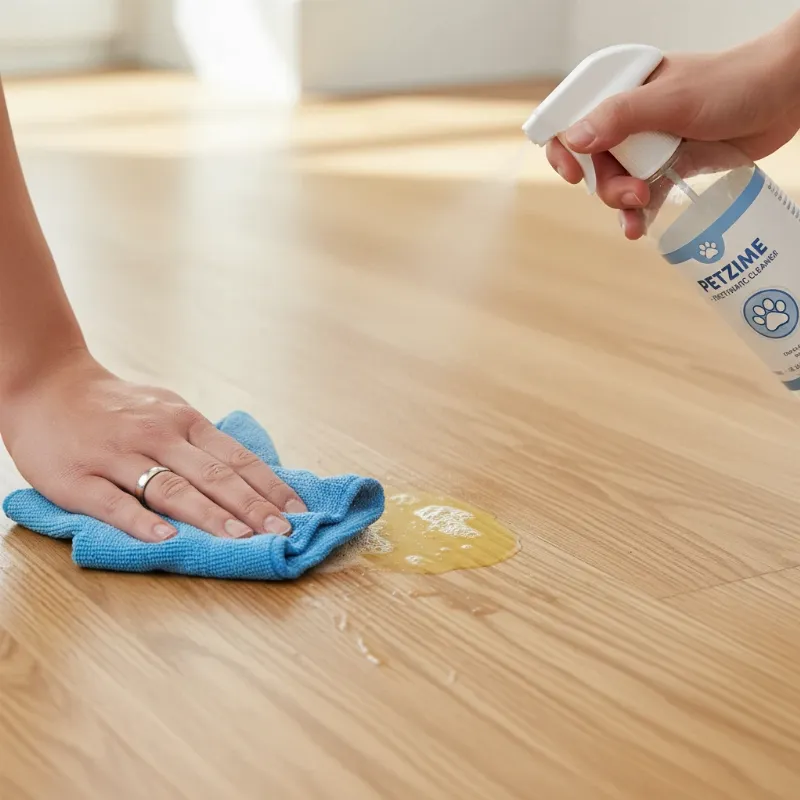 A person cleaning a pet stain on a wooden floor using a spray bottle and cloth, an essential aspect of dog house training tips
Frequently Asked Questions (FAQ)
1. How long does it take to house train a dog?
This varies greatly depending on the dog’s age, breed, and past experiences. A puppy might take several weeks to a few months to be completely reliable. An adult dog might learn in a matter of days or could also take a few months if they have to unlearn old habits. Consistency is the key to speeding up the process.
2. Should I use potty pads?
Potty pads can be a useful tool for very young puppies, small breeds, or for owners who live in high-rise apartments. However, they can also be confusing for some dogs, as you are essentially teaching them that it’s okay to go potty inside. If you use them, be sure to have a clear plan to transition the dog to eventually going outside exclusively.
3. Why does my dog pee when they get excited or scared?
This is known as submissive or excitement urination and is common in puppies and some rescue dogs. It’s an involuntary reaction, not a house training issue. Do not scold the dog for it. Instead, work on building their confidence and keep greetings low-key to manage excitement. Most dogs outgrow this behavior.
4. What if my dog only pees outside but poops inside?
This usually happens when the dog is not given enough time outside. They may pee quickly and then get distracted. After they pee, continue to walk them for another 5-10 minutes to give them a chance to poop as well. Ensure you are rewarding them specifically after they do both.
5. Why is my house-trained dog suddenly having accidents?
Sudden changes in toileting habits warrant an immediate visit to the veterinarian. It could be a sign of a urinary tract infection (UTI), bladder stones, kidney disease, or another medical condition. If medical causes are ruled out, consider any recent changes in the home that could be causing stress or anxiety.
Your Path to a Clean Home and a Happy Dog
House training is a journey, not a race. By implementing these dog house training tips, you are doing more than just protecting your floors; you are establishing a language of trust and understanding with your new best friend. Celebrate the small victories, be patient during the setbacks, and remember that every successful trip outside strengthens your bond. With a consistent routine, positive reinforcement, and a watchful eye, you will soon have a well-mannered and confident canine companion who knows exactly where to “do their business.”
