
Potty training a dog can be one of the most rewarding, yet challenging, aspects of dog ownership. While traditional methods have their place, the “dog doorbell” for potty training has emerged as a popular and effective tool for many owners. This innovative approach leverages a dog’s natural desire to communicate and a simple acoustic cue to significantly streamline the house-training process. If you’re looking for a way to reduce accidents, foster independence in your pup, and build a stronger communication bond, exploring dog doorbells for potty training might be your next best step.
The Science Behind the Bell: Why Doorbell Training Works
At its core, training a dog to use a doorbell for potty breaks is about establishing a clear, consistent communication system. Dogs, especially intelligent breeds, are eager to please and quick to learn when presented with a method that benefits them.
- Clear Communication: Instead of relying on subtle cues like pacing or whining, which can be easily missed, a doorbell provides a distinct, attention-grabbing signal. Your dog learns that ringing the bell is the only way to communicate their need to go outside.
- Positive Reinforcement: This method is built on positive reinforcement. When your dog rings the bell and is subsequently taken outside to relieve themselves, they receive praise and perhaps a small treat. This immediate reward system reinforces the desired behavior.
- Independence and Confidence: As your dog masters the doorbell cue, they gain a sense of independence and confidence. They are empowered to communicate their needs proactively, rather than waiting for you to notice their signals. This can reduce anxiety for both the dog and the owner.
- Consistency is Key: The effectiveness of any dog training method hinges on consistency, and doorbell training is no exception. Every time your dog signals, the response should be the same: a trip outside.
How Do Doorbell Systems for Dogs Actually Work?
Dog doorbells come in various forms, but they all operate on a similar principle: a button or chime that the dog can activate, which then alerts the owner.
- Button-Based Systems: These are the most common. A simple button, often placed near the door, is trained for the dog to press with their paw or nose. When pressed, it emits a sound or chime.
- Hanging Bells: Another popular option involves bells hung from the doorknob. The dog is trained to jingle these bells with their paw or nose as they go out.
- Smart Devices: More advanced systems might integrate with smart home technology, sending a notification to your phone when the bell is rung, offering greater flexibility for owners who aren’t always within earshot.
The crucial element is associating the sound of the bell with the action of going outside to potty.
Getting Started: A Step-by-Step Guide to Dog Potty Training with Bells
Implementing a Dog Doorbell For Potty Training requires patience, consistency, and a positive attitude. Here’s how to get started:
Step 1: Choose Your Bell System
Consider your dog’s size, personality, and your home environment. A paw-activated button might be easier for larger dogs, while hanging bells can be effective for smaller dogs or those who naturally nudge things. For a deeper dive into various training techniques, exploring resources on dairy dell dog training can offer a broader perspective on positive reinforcement methods.
Step 2: Introduce the Bell
The first phase is simply getting your dog familiar with the bell.
- Placement: Position the bell near the door you use for potty breaks.
- Association: When you take your dog out for a potty break, gently take their paw and ring the bell yourself, then immediately open the door. The goal is to create a strong association: Bell Ring = Go Outside.
- Luring (Optional): Some trainers use a small treat to lure the dog to touch or paw the bell. When they do, immediately reward them and proceed to the door.
Step 3: Encourage Paw/Nose Contact
This is where the actual training begins.
- Guided Interaction: Hold a treat near the bell and encourage your dog to interact with it. As soon as their paw or nose touches or presses the bell, praise them enthusiably and lead them outside.
- Immediate Reward: The moment they successfully ring the bell, open the door and take them out. If they eliminate, offer high praise and a reward. If they don’t, still praise them for ringing the bell, but don’t necessarily reward until they actually go potty outside. This ensures the reward is for the act of elimination outside, prompted by the bell.
- Consistency: Every single time you go outside for a potty break, ring the bell first. Even if you think they don’t need to go, make it part of the routine.
Step 4: Reinforce Independent Ringing
Once your dog starts to associate the bell with going outside, they’ll begin to ring it on their own.
- Respond Promptly: When you hear the bell, drop everything (safely, of course) and take your dog outside. Don’t make them wait. Delayed responses can confuse them or lead to accidents.
- Positive Reinforcement: Lavish praise and offer a high-value treat immediately after they relieve themselves outside. This reinforces that ringing the bell leads to a desirable outcome.
- Patience: There will be false alarms. Your dog might ring the bell out of excitement, boredom, or simply to get your attention. Treat these as opportunities to reinforce the correct use of the bell. If they ring it and don’t need to go, take them out, and if they don’t eliminate, bring them back inside calmly without fuss.
Step 5: Generalization and Maintenance
As your dog gets more reliable, you can start to fade the lures and treats, relying more on verbal praise and the satisfaction of getting to go outside.
- Vary Locations: If possible, practice with bells at different doors or even when visiting friends or family.
- Reduce Treats Gradually: Start rewarding only for successful potty trips after ringing the bell. Eventually, you can reward intermittently, ensuring they still understand the bell is the cue.
- Continue Praise: Even after your dog is a pro, continue to praise them for using the bell. Positive reinforcement builds long-term good habits. If you’re struggling with persistent accidents, consulting resources on how to train dog not pee in the house can provide additional strategies.
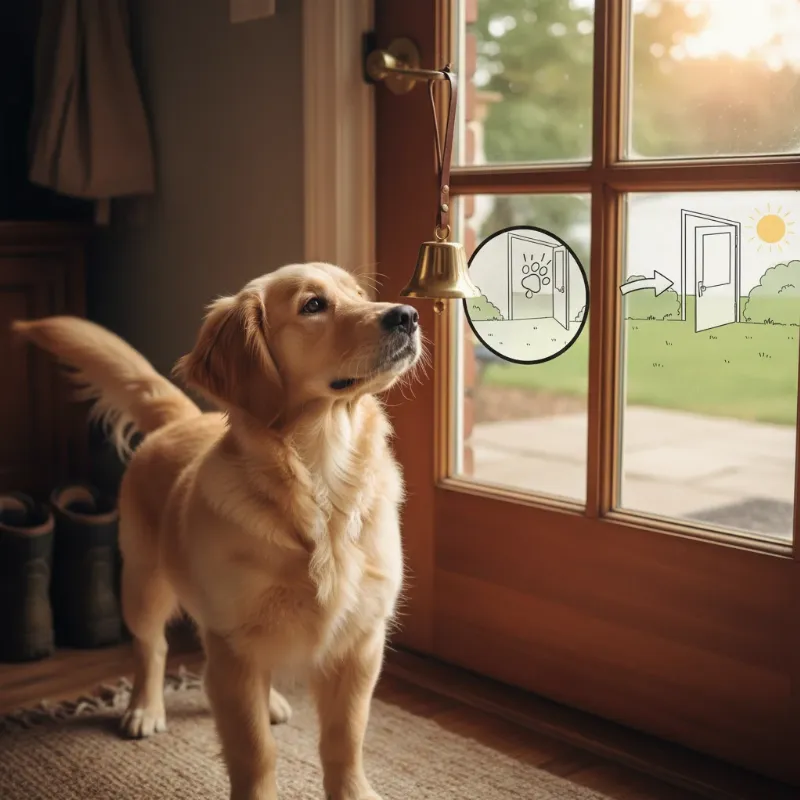 Effective steps for teaching your dog to use a doorbell for potty breaks, illustrating positive reinforcement techniques.
Troubleshooting Common Issues in Bell Training
Even with the best intentions, you might encounter a few bumps in the road. Here are some common issues and how to address them:
My dog rings the bell constantly but doesn’t go potty.
- Problem: The dog has learned that ringing the bell gets attention or leads to playtime, but not necessarily a potty break.
- Solution: Be very discerning with rewards. Only reward after successful elimination outside. If they ring the bell and don’t go, calmly bring them back inside. Don’t scold; just ignore the incorrect signal and wait for the next genuine need. You might need to go back a few steps and focus on rewarding only when they go potty. Addressing underlying boredom can also be crucial; consider more engaging activities or toys. For more advanced behavioral issues, dog training for behavior might offer insights.
My dog doesn’t seem interested in the bell.
- Problem: The dog hasn’t made the connection between the bell and going outside, or they are not food-motivated enough for treats.
- Solution: Ensure your association is crystal clear. Ring the bell every single time before going out. Use a higher-value treat or a favorite toy as a reward. Make the bell interaction more engaging by playing a game around it. Some dogs respond better to excited praise and a game of fetch outside than to food.
My dog rings the bell at night.
- Problem: This is common, especially with younger dogs or those still being house-trained. It can also be a sign of a medical issue.
- Solution: During the initial training phase, you may need to get up. Keep the nighttime routine consistent: bell ring, immediate trip outside, minimal interaction, and back to bed. If this persists, especially in an older dog, consult your veterinarian to rule out any health problems. For service dogs, specific training requirements for service dog ensure they can manage needs appropriately, but for pets, consistency is paramount.
My dog is too small/large to reach the bell.
- Problem: The chosen bell system is not ergonomically suited for your dog.
- Solution: Adjust the height of hanging bells or consider a different type of button. There are many adjustable options available. For very small dogs, you might initially need to lift them to the bell, rewarding any contact.
Beyond the Bell: Integrating with Other Training
While the doorbell is a powerful tool, it works best when integrated into a holistic approach to dog ownership and training.
- Routine is King: Bell training is most effective when paired with a consistent daily schedule for feeding, potty breaks, exercise, and playtime.
- Supervision: Especially in the early stages, close supervision is crucial to prevent accidents and to reinforce desired behaviors. Crate training can be a valuable aid during this period.
- Positive Reinforcement: Continue to use positive reinforcement for all aspects of training, from basic obedience to more complex behaviors.
- Understanding Dog Behavior: Educating yourself on canine body language and behavior can help you anticipate your dog’s needs and respond more effectively, even when the bell isn’t ringing.
The Role of Patience and Realistic Expectations
It’s important to remember that every dog learns at their own pace. Some dogs pick up doorbell training within days, while for others, it might take weeks or even a couple of months. Celebrate small victories, stay patient during setbacks, and maintain a positive outlook. The bond you build through consistent, positive training is as valuable as the end result of a reliably house-trained dog.
Conclusion: A Harmonious Home Through Clear Communication
The dog doorbell is more than just a training gadget; it’s a bridge for communication between you and your canine companion. By teaching your dog to signal their needs, you foster independence, reduce frustration, and build a stronger, more trusting relationship. Implementing a dog doorbell for potty training, combined with patience and consistency, can transform the house-training experience, leading to a more harmonious home for everyone involved. Mastering this simple tool is a significant step toward understanding and responding to your dog’s needs, paving the way for a lifetime of happy companionship.
