
Dogs are inherently social animals, yet their interactions are governed by a complex social hierarchy that is often misunderstood by humans. While the term “dominant dog” is frequently used, true genetic dominance is rare. More often, what appears as dominant behavior, particularly towards other dogs, is a result of a lack of clear leadership, inconsistent rules, poor socialization, or underlying fear and insecurity. Such behaviors, if left unaddressed, can escalate into dangerous aggression, posing risks to other animals and people. For dog owners, particularly those who regularly encounter other canines, understanding the nuances of inter-dog dynamics and how to effectively manage challenging behaviors is paramount for fostering a safe and harmonious environment.
This article delves into the specific challenges of Dog Dominance Behavior With Other Dogs, exploring its origins, identifying common mistakes handlers make, and outlining practical, humane strategies for prevention and management. Drawing on extensive experience in working dog training, we aim to provide insights that empower owners to establish themselves as consistent, respected leaders, thereby reducing conflict and promoting positive canine interactions.
The Nuances of Canine Social Structure and Dominance
Within a group of dogs, there are rarely true equals. Canine social groups naturally form a hierarchy, or “pecking order,” where members understand and largely respect each other’s positions. Higher-ranking members typically have priority access to resources like food, resting spots, and mating opportunities, and lower-ranking members instinctively defer to them. This rank is primarily communicated through subtle body language and behaviors, rather than constant overt aggression. When this social structure is clear and stable, conflict is minimized.
However, when humans enter this dynamic, they often inadvertently disrupt or fail to establish a clear leadership role. If a dog perceives a vacuum in leadership, or if its early social experiences were deficient, it may feel compelled to assert itself or, conversely, become fearful and reactive. For instance, dogs from backgrounds like puppy mill dog behavior problems often exhibit significant social deficits, fear, or anxiety, which can manifest as seemingly dominant or aggressive behaviors towards other dogs. These behaviors are often not true dominance but rather coping mechanisms born from insecurity or a lack of appropriate social learning.
Every dog needs a clear leader, and in a human-dog household, that leader must be the human. Dogs thrive when they understand the rules and boundaries set by their leader. Without this clarity, a dog may attempt to impose its own rules on other dogs, leading to conflicts over resources, space, or perceived challenges to its self-appointed status. Establishing yourself as a consistent, fair leader for your dog is the foundational step in preventing and managing dog dominance behavior with other dogs.
Identifying Signs of Dominance Towards Other Dogs
Recognizing the subtle and overt signs of dominant behavior in your dog towards other canines is crucial for early intervention. While some play can look rough, genuine dominance or aggression often involves specific body language and actions.
Common signs of a dog asserting dominance or showing inappropriate aggression towards another dog include:
- Stiff Body Posture: The dog may stand tall, with a rigid body, raised hackles, and a direct, unblinking stare.
- Growling and Snarling: While growling can be a warning, in a dominant context, it’s a challenge, especially if accompanied by other aggressive postures.
- Resource Guarding: Protecting food, toys, sleeping spots, or even their human from other dogs. This can range from subtle body blocking to direct aggression.
- Mounting: Repeatedly attempting to mount another dog, particularly in non-playful contexts, can be a dominant display.
- Blocking or Herding: Physically preventing another dog from moving or accessing certain areas.
- Direct Approach and Stare-Downs: A confident, direct approach, often with a fixed stare, can be an attempt to intimidate.
- Controlling Play: Always insisting on being on top during wrestling or dictating the terms of play.
It’s important to differentiate these from normal play behavior, which is typically fluid, reciprocal, and involves “play bows” or taking turns. A dog engaging in healthy play will show relaxed body language, a loose wagging tail, and will often self-handicap or allow the other dog to “win.” Owners must learn to accurately read their dog’s signals and intervene before situations escalate.
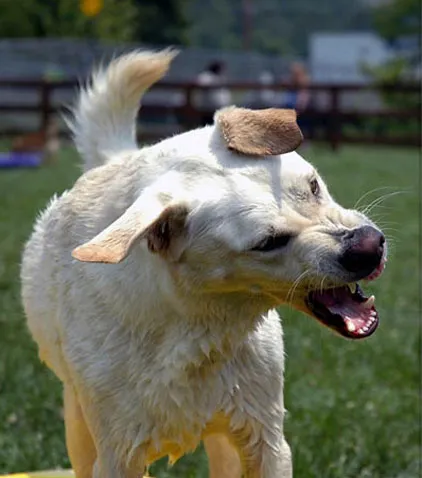 A dog showing clear signs of aggression with bared teeth and a snarling expression
Common Handler Mistakes That Foster Inter-Dog Dominance
Many instances of dog dominance behavior with other dogs stem from handler errors rather than an inherently “bad” dog. A lack of understanding regarding canine social dynamics and inconsistent application of rules can inadvertently empower a dog to believe it must take on a leadership role or resolve conflicts on its own.
One of the biggest mistakes is failing to establish and consistently enforce rules within the home. Dogs need a clear framework of what is acceptable and what is not. If a dog is allowed to stop a dog from chewing on shoes or indulge in behaviors like dog keeps licking and chewing paws without consequence, it learns that it can make its own decisions. While these specific behaviors may seem unrelated to inter-dog aggression, the underlying issue is the dog’s perception of human leadership. Any unmanaged behavior can lead to a dog believing it sets its own rules, which can then generalize to how it interacts with other dogs. A dog that doesn’t respect its owner’s authority is more likely to challenge other dogs or disregard social cues.
Other common handler mistakes include:
- Inconsistent Training: Applying rules sometimes but not others sends mixed signals, making the dog unsure of its position and what’s expected.
- Allowing Resource Guarding: Permitting a dog to guard toys, food, or even the owner from other dogs teaches the dog that this behavior is acceptable and effective.
- Failing to Control Interactions: Letting dogs “work it out” when a clear dominance display is happening, rather than intervening to guide appropriate behavior.
- Misinterpreting Signals: Not understanding subtle warnings or over-correcting natural canine communication (like growling as a warning sign), which can lead to dogs escalating to biting without warning.
- Lack of Early Socialization: Puppies need exposure to a variety of well-behaved dogs in a controlled manner to learn appropriate social etiquette.
By addressing these handler mistakes and adopting a proactive approach to leadership and training, owners can significantly reduce the likelihood of their dog developing problematic dominant behaviors towards other dogs.
When Dog-on-Dog Dominance Behavior Typically Emerges
It’s exceptionally rare for a puppy younger than 10 months of age to display genuine dominant aggression towards other dogs. What new puppy owners often mistake for dominance in young pups, such as nipping, growling during play, or boisterous wrestling, is almost always an exhibition of play or prey drive. Puppies learn social boundaries and bite inhibition through interactions with their littermates and dam. When they transition to a human family, they often continue to engage in these rough-and-tumble play styles, which owners must then redirect towards appropriate human-centric rules and interactions.
True dog dominance behavior with other dogs, especially the more serious forms of inter-dog aggression, typically begins to manifest as a dog enters maturity, usually between 15 and 36 months of age, with 18 months being a common timeframe. As dogs mature, their instincts prompt them to solidify their position within the social structure. If a dog has not received consistent training, if its natural drives have been mismanaged, or if it has been allowed to display “rank behaviors” (e.g., guarding resources, pushing other dogs around) without correction, this innate drive to establish a higher pack position can take over.
This period of maturity is critical. A dog that previously coexisted peacefully with other dogs might suddenly become reactive, guarded, or even aggressive. This shift is often a result of hormones influencing behavior, coupled with a history of inconsistent handling or a perceived lack of strong leadership from the human owner. Early and consistent training, combined with thoughtful socialization, is the best defense against these challenges.
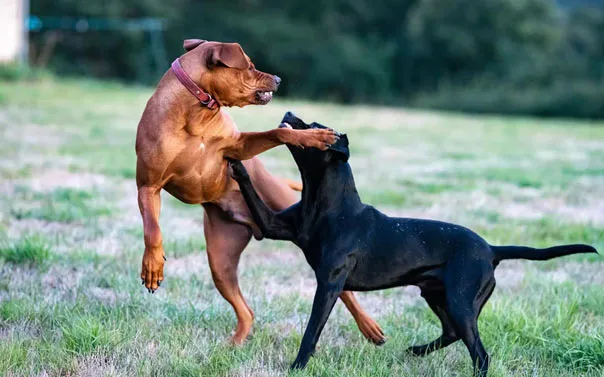 Two dogs engaged in a tense interaction, one growling at the other, showing dominant postures
The Role of Consistent Obedience and Environmental Management
Obedience training is a foundational element for every dog, regardless of its temperament. A dog that understands and reliably responds to commands like “sit,” “down,” “stay,” and “come” is inherently easier to manage in any situation, including interactions with other dogs. However, for a dog exhibiting serious dog dominance behavior with other dogs, basic obedience alone, while necessary, is often not sufficient. Such dogs require a more comprehensive approach that integrates consistent obedience with meticulous environmental management and a clear reinforcement of human leadership.
The training process for any dog, especially one with dominance tendencies, should involve several critical phases:
- Learning Phase: Teach the dog the meaning of commands in a distraction-free environment using positive reinforcement. This involves guiding the dog and rewarding desired behaviors with high-value treats or toys.
- Generalization Phase: Practice these learned behaviors in progressively more distracting environments, ensuring the dog understands the command applies everywhere.
- Correction Phase: Introduce consequences for not following a known command. For many dogs, this might simply mean withholding a reward or a verbal correction. For others, particularly mature dogs with strong temperaments, a physical correction (such as a leash correction) might be necessary, but always applied fairly and only after the dog fully understands the command. This phase is crucial for achieving 100% reliability, especially when safety around other dogs is a concern.
Many basic obedience classes excel at the learning phase but often neglect the correction phase, especially for adult dogs. This oversight can be a significant contributor to unresolved behavioral issues, including dominance. If a dog never learns that there are consequences for ignoring commands, it will choose when to obey, undermining the owner’s leadership and potentially exacerbating problematic behaviors with other dogs.
Beyond formal obedience, environmental management is paramount. If a dog is prone to aggression or dominance with other dogs, avoid situations that trigger these behaviors. This means:
- Avoiding Dog Parks: Dog parks, with their uncontrolled environments and varied temperaments, are often detrimental for dogs with dominance issues.
- Supervised Interactions: All interactions with other dogs should be carefully managed and supervised, preferably on leash initially.
- Separation at Meal Times/High-Value Resources: If resource guarding is an issue, feed dogs separately and remove high-value toys when other dogs are present.
- Managing Entryways: Ensure your dog does not rush through doors or downstairs ahead of you, as this can subtly reinforce a leadership role in their mind. Use commands like “wait” or “sit” at thresholds.
- Addressing Underlying Stress: Sometimes, seemingly dominant behavior is rooted in anxiety or physical discomfort. If your dog exhibits signs like my dog wont stop scratching himself or a compulsive licking disorder in dogs, these could indicate stress or health issues that exacerbate behavioral problems, making them more irritable and prone to reactive displays. Addressing these underlying issues, often with veterinary consultation, can be a part of a holistic management plan.
By consistently applying obedience training and diligently managing the dog’s environment, owners communicate clear leadership, reducing the dog’s perceived need to assert dominance over other canines.
 A person working with a puppy on a leash in a training exercise, emphasizing early intervention
Practical Strategies for Managing and Preventing Inter-Dog Conflict
Successfully managing dog dominance behavior with other dogs requires a multi-faceted approach focused on proactive prevention, clear communication, and consistent leadership. It’s about building a trusting relationship where your dog looks to you for guidance, rather than trying to take charge itself.
Controlling the Environment
This is the first and often most effective step. You should not place a dog with dominance issues in situations where it is likely to fail or cause conflict.
- Avoid Uncontrolled Interactions: Keep your dog away from dog parks, crowded dog events, or off-leash areas where interactions are unpredictable.
- Supervised and Structured Introductions: If introducing your dog to a new canine, do so in a neutral territory, on leashes, and with an experienced handler for each dog. Keep interactions brief and positive.
- Resource Management: Prevent any form of resource guarding. Feed dogs separately, ideally in their crates. Remove all high-value toys or chews when multiple dogs are together, especially if there has been any history of conflict. Your attitude should be that all toys are your toys, and you permit your dog to play with your toys under your supervision.
- Crate Training: A crate is an invaluable tool. It provides a safe, personal space for your dog and allows you to manage its presence in the household. During family meals, when guests visit, or during other potential high-stress situations involving other dogs, your dog can be calmly crated in another room.
Structured Interactions and Training
Every interaction is a training opportunity to reinforce your leadership.
- “Nothing in Life Is Free” Principle: Make your dog “earn” everything: food, praise, going outside, access to toys. Ask for a “sit” or “down” before giving anything. This constantly reinforces your authority.
- Leash Control: A dog with inter-dog aggression should always be on a leash, especially in public. If your dog reacts to other dogs on leash, you must implement specific protocols, often involving remote collars or other training tools, under the guidance of a professional. This is crucial for safety and effective rehabilitation.
- Walks: Structured walks where your dog focuses on you, rather than being allowed to pull or dictate the pace, are vital. Teach a “wait” command at doors, gates, and when encountering other dogs.
- Petting and Praise on Your Terms: A dog that demands attention is subtly asserting control. Make your dog perform a simple command (“sit,” “down”) before you offer affection. This teaches them that positive attention comes from your initiation, not their demand.
The Dangers of Alpha Rolls and Physical Confrontation
Never attempt an “alpha roll” or engage in direct physical confrontation with a dominant or aggressive dog. This is not only extremely dangerous but also highly counterproductive.
- Alpha Rolls: Forcing a dog onto its back is a highly confrontational act that can provoke a severe bite. Popularized by some TV trainers, this technique is risky and should never be attempted by an untrained individual. Professionals who employ such methods do so with extensive experience and risk assessment.
- Picking Fights You Can’t Win: If you instigate a physical confrontation with an aggressive dog and lose, you’ve not only reinforced its belief in its own dominance but also damaged your bond and increased the risk of future bites. Always choose to avoid or strategically manage situations rather than engaging in a power struggle you might lose.
Instead, focus on subtly communicating your leadership through consistent training, clear rules, and controlled environments. For imported working dogs with strong temperaments, a handler might initially adopt an “aloof” approach, demonstrating control over all resources (food, exercise, freedom) without seeking overt friendship or play, until the dog accepts the human’s authority. This systematic, fair, and consistent approach builds respect and trust, which is far more effective and safer than confrontation.
Ultimately, managing a dog with dominance issues towards other dogs is a long-term commitment. It requires patience, consistency, and often the guidance of an experienced professional trainer or behaviorist.
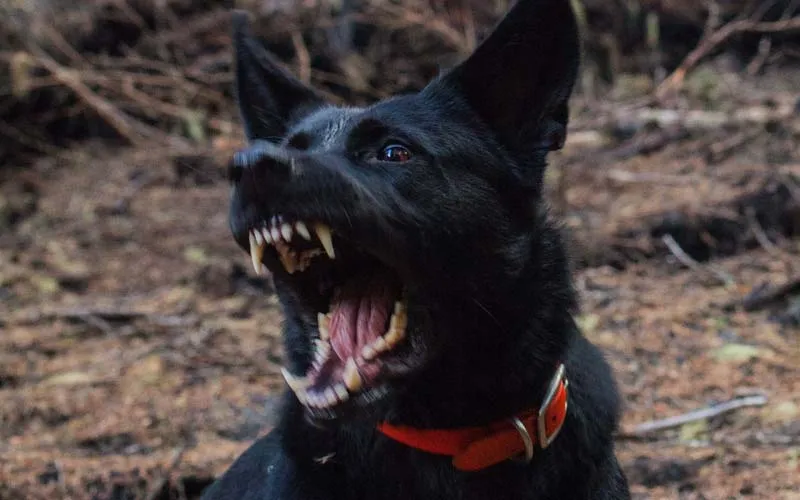 A close-up of a dog with an intense, possibly aggressive, facial expression, highlighting potential behavioral issues
Conclusion
Managing dog dominance behavior with other dogs is a complex but achievable goal for dedicated owners. The journey requires a deep understanding of canine social dynamics, an honest assessment of handler behaviors, and a commitment to consistent training and environmental management. While true dominance is less common than often perceived, inter-dog aggression stemming from a lack of clear leadership, inadequate socialization, or underlying insecurities can pose serious challenges.
The key to success lies in establishing yourself as your dog’s consistent, fair, and respected leader. This involves implementing clear rules, enforcing them reliably, and controlling your dog’s environment to prevent problematic interactions. By focusing on structured obedience, carefully managed social exposures, and avoiding confrontational techniques, you can guide your dog towards more appropriate and harmonious interactions with other canines.
Remember that a dog that accepts its human’s leadership and understands its place within the social structure is a happier, more secure dog. The burden of self-appointed leadership is lifted, allowing the dog to relax and thrive under your guidance. For severe cases of aggression, consulting with a certified professional dog trainer or veterinary behaviorist is highly recommended to ensure the safety and well-being of all involved. Through consistent effort and a clear understanding of your dog’s needs, you can transform challenging behaviors into a foundation for a calmer, more predictable, and ultimately more joyful life for your dog and for all dogs it encounters.
