
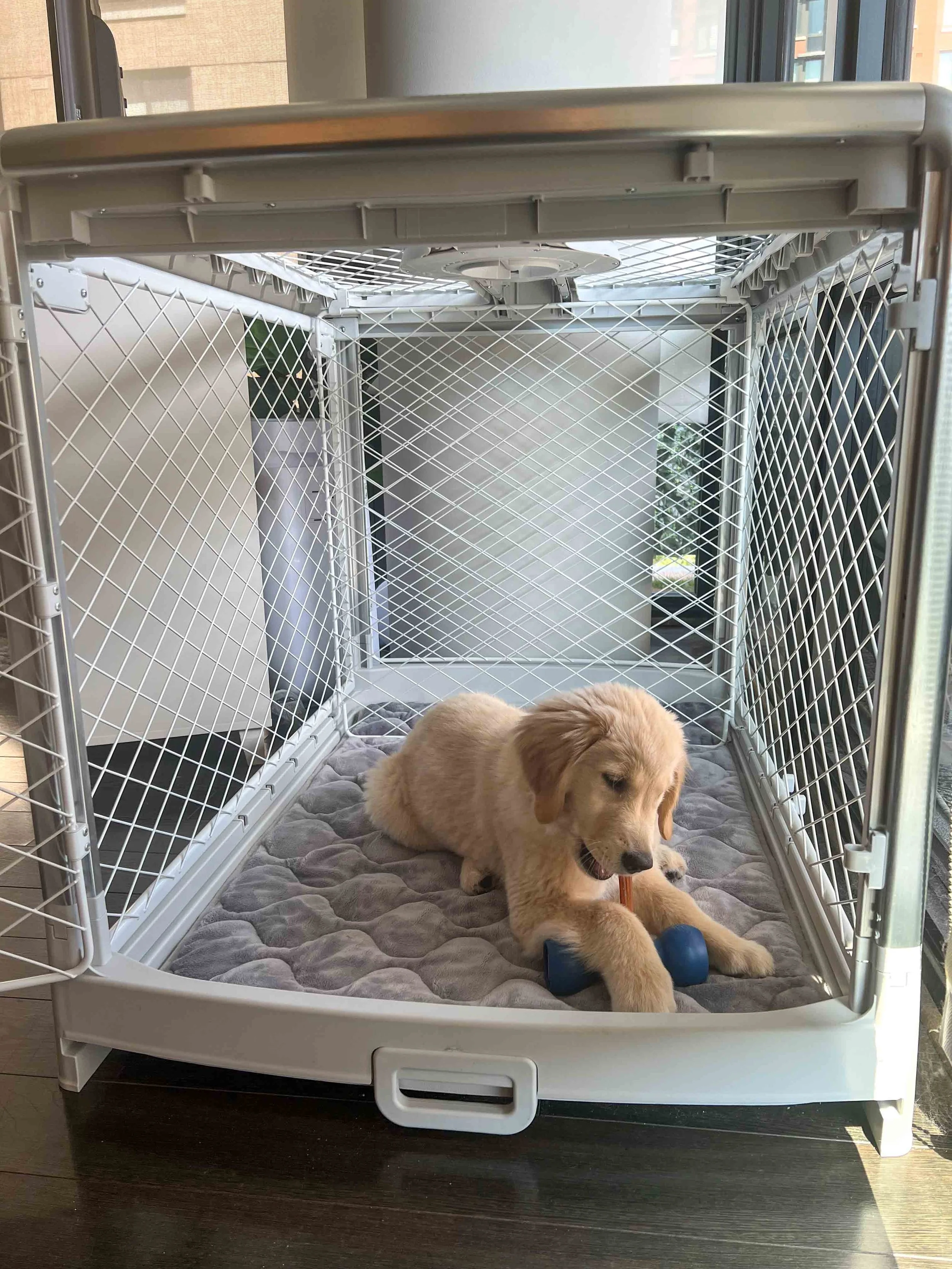
Welcome to the world of puppy parenthood! Bringing a new puppy home is an exciting time, filled with wagging tails and boundless energy. One of the most effective tools in your training arsenal is the dog crate, and mastering Dog Crate Puppy Training can set the stage for a well-behaved companion. This guide will walk you through everything you need to know to make crate training a positive and successful experience for both you and your furry friend.
The “Why” Behind Crate Training: More Than Just a Kennel
Crate training isn’t about confining your puppy; it’s about providing them with a safe, den-like space that fulfills their natural instincts. Think of it as their personal retreat, a secure haven where they can rest and feel protected. This understanding is crucial for effective dog crate puppy training.
- Natural Instincts: Dogs are naturally denning animals. A crate mimics a den, offering a sense of security and preventing anxiety.
- House Training Aid: Crate training is a cornerstone of successful house training. Puppies are less likely to soil their sleeping area, which encourages them to hold it until they are taken outside.
- Preventing Destructive Behavior: When unsupervised, puppies can chew, dig, and get into mischief. A crate provides a safe space, preventing destructive behaviors born out of boredom or anxiety.
- Travel Companion: A familiar crate can make travel less stressful for your puppy, offering them a sense of normalcy in new environments.
- Safety: It keeps your puppy safe from household hazards when you can’t directly supervise them.
Choosing the Right Crate: Size Matters
The first step in successful dog crate puppy training is selecting the appropriate crate. The size is paramount.
- Just Right: The crate should be large enough for your puppy to stand up, turn around, and lie down comfortably.
- Too Big? Not Ideal: If the crate is too large, your puppy might use one end as a bedroom and the other as a potty area, defeating the purpose of house training.
- Growth Potential: For puppies, consider a crate with a divider. This allows you to adjust the size as your puppy grows, ensuring it remains appropriately sized throughout their developmental stages.
Making the Crate a Happy Place: Positive Association is Key
The goal of dog crate puppy training is to make the crate a positive experience. Never use the crate as a form of punishment.
Step 1: Introduction and Positive Reinforcement
- Open Door Policy: Start by leaving the crate door open during the day. Place comfortable bedding, a few favorite toys, and maybe a chew toy inside. Let your puppy explore it at their own pace.
- Treats and Praise: Toss treats or small, high-value kibble into the crate. Encourage your puppy to go in and get them. Offer verbal praise and gentle petting when they enter.
- Meals in the Crate: Feed your puppy their meals inside the crate. This creates a strong positive association with the space. Start with the bowl near the entrance, then gradually move it further back as they become more comfortable.
Step 2: Short Durations
- First Encounters: Once your puppy is comfortable entering the crate for treats and meals, try closing the door for a few seconds while they are eating or chewing a toy.
- Gradual Increase: Gradually increase the duration the door is closed. Start with a minute or two, then extend to five, then ten, and so on. Always end the session before your puppy shows signs of distress.
- Withdrawal: When you release your puppy, do so calmly. Don’t make a huge fuss, as this can heighten their anxiety.
Step 3: Overnight Stays
- Bedtime Routine: Establish a consistent bedtime routine. Take your puppy out for a final potty break, give them a light meal a few hours before bed, and then guide them into their crate.
- Calm and Quiet: Make sure the room where the crate is located is quiet and dark.
- Handling Whining: It’s normal for puppies to whine a bit initially. Ignore brief whining, as giving attention can reinforce the behavior. If the whining becomes excessive or sounds like distress, briefly check on them, reassure them with a calm voice, and then leave again. Avoid taking them out unless you suspect they genuinely need to potty.
Common Challenges and Solutions in Dog Crate Puppy Training
Even with the best intentions, you might encounter a few bumps along the road. Here’s how to tackle them:
My puppy cries/barks/whines incessantly.
- Is it a potty need? Puppies have small bladders. If it’s been a while, they might need to go out.
- Too long? Are you leaving them in for too long, too soon? Re-evaluate the duration.
- Anxiety? If it’s separation anxiety, you might need to work on desensitization more gradually. Consult a professional trainer if anxiety is severe.
- Boredom? Ensure they have an appropriate chew toy inside the crate.
My puppy is having accidents in the crate.
- Crate too big? Revisit the crate size. Ensure there’s no extra space for elimination. Use dividers.
- Left too long? Puppies cannot hold it indefinitely. Ensure you’re not leaving them crated for longer than they can manage.
- Association with punishment? Never use the crate for punishment. This can lead to a negative association and accidents.
My puppy tries to escape or chew through the crate.
- Chew-proof crates: Invest in a sturdy, chew-proof metal crate if your puppy is a determined escape artist.
- Remove temptations: Ensure there are no items in or around the crate that they can grab and chew.
- Exercise and mental stimulation: A tired puppy is a good puppy. Ensure your puppy gets enough physical and mental exercise before crate time. Learn more about best training methods for dogs.
Integrating Crate Training with Other Training Methods
Dog crate puppy training is most effective when combined with other positive reinforcement techniques. Learning tricks to crate training a puppy is just one piece of the puzzle. Consistent potty training using methods like how to train your dog pee pad or how to train a dog to toilet outside will work hand-in-hand with crate training. Remember, patience and consistency are your greatest allies, especially during dog training education month.
Expert Tips for Success
- Patience is Key: Every puppy learns at their own pace. Don’t get discouraged if progress isn’t linear.
- Consistency: Stick to a routine and ensure all family members are on the same page with the crate training rules.
- Positive Vibes Only: Always associate the crate with good things. Treats, praise, special chew toys, and mealtime are your best friends here.
- Never Force: Don’t physically force your puppy into the crate. This will create fear and resistance.
- Observe Your Puppy: Pay attention to their body language. If they seem stressed or fearful, ease up and go back a step.
What if my puppy is already older?
Crate training isn’t just for puppies! Older dogs can also benefit from crate training, though it may take a bit more patience. For an older dog, the key is to overcome any pre-existing negative associations with crates and build new, positive ones. Take it slow, use plenty of high-value rewards, and make it a voluntary, rewarding experience.
Conclusion: Embracing the Journey of Dog Crate Puppy Training
Dog crate puppy training is a powerful tool that fosters independence, aids in house training, and provides your puppy with a secure personal space. By approaching it with patience, consistency, and a focus on positive reinforcement, you can transform the crate into your puppy’s favorite spot. Embrace the journey, celebrate the small victories, and enjoy the rewarding experience of raising a well-adjusted, happy canine companion.
