
For many prospective pet parents, the joy of bringing a dog into their home is often dampened by concerns about allergies. While no dog is entirely “hypoallergenic” or 100% allergen-free, certain dog breeds that don’t shed a lot can significantly reduce the amount of dander and hair in your living environment, making them a fantastic choice for individuals prone to allergic reactions. Understanding which breeds fall into this category can help you find a loving companion without the constant sniffles and sneezes. If you’re looking for a canine friend that is easier on your allergies, exploring these low-shedding options is a great place to start your journey into pet parenthood.
Understanding Low-Shedding Dogs
The term “hypoallergenic” in dogs often refers to breeds that produce fewer allergens, primarily due to their low-shedding coats. Dog allergens are not solely in the hair itself but are found in dander (dead skin cells), saliva, and urine. However, less shedding usually means less dander being distributed throughout the home, which can greatly minimize allergic responses like coughing, itching, or wheezing for sensitive individuals. It’s crucial to remember that while these dogs are a better fit for many, individual reactions can vary, and diligent care is still necessary to maintain an allergen-reduced home.
Top Dog Breeds That Don’t Shed A Lot
From playful small companions to robust working dogs, there’s a diverse range of dog breeds that don’t shed a lot, each with unique personalities and care requirements. These breeds offer the companionship of a dog with the added benefit of a cleaner living space and fewer allergy triggers. Finding a suitable low-shedding dog means considering their temperament, exercise needs, and grooming demands alongside their coat type.
Poodle
Poodles are renowned not only for their elegant appearance and high intelligence but also for being one of the most popular low-shedding breeds. Available in Standard, Miniature, and Toy sizes, they can adapt to various living situations, from spacious homes to smaller apartments, as long as they receive adequate mental and physical stimulation. Their curly, dense coat traps loose hair and dander, preventing it from spreading around your home. This beautiful coat, however, requires consistent grooming to prevent matting and tangles, meaning regular brushing and professional trims are essential for their well-being and to maintain their low-allergen qualities. A well-groomed Poodle can be a delightful and active companion for many years.
Shih Tzu
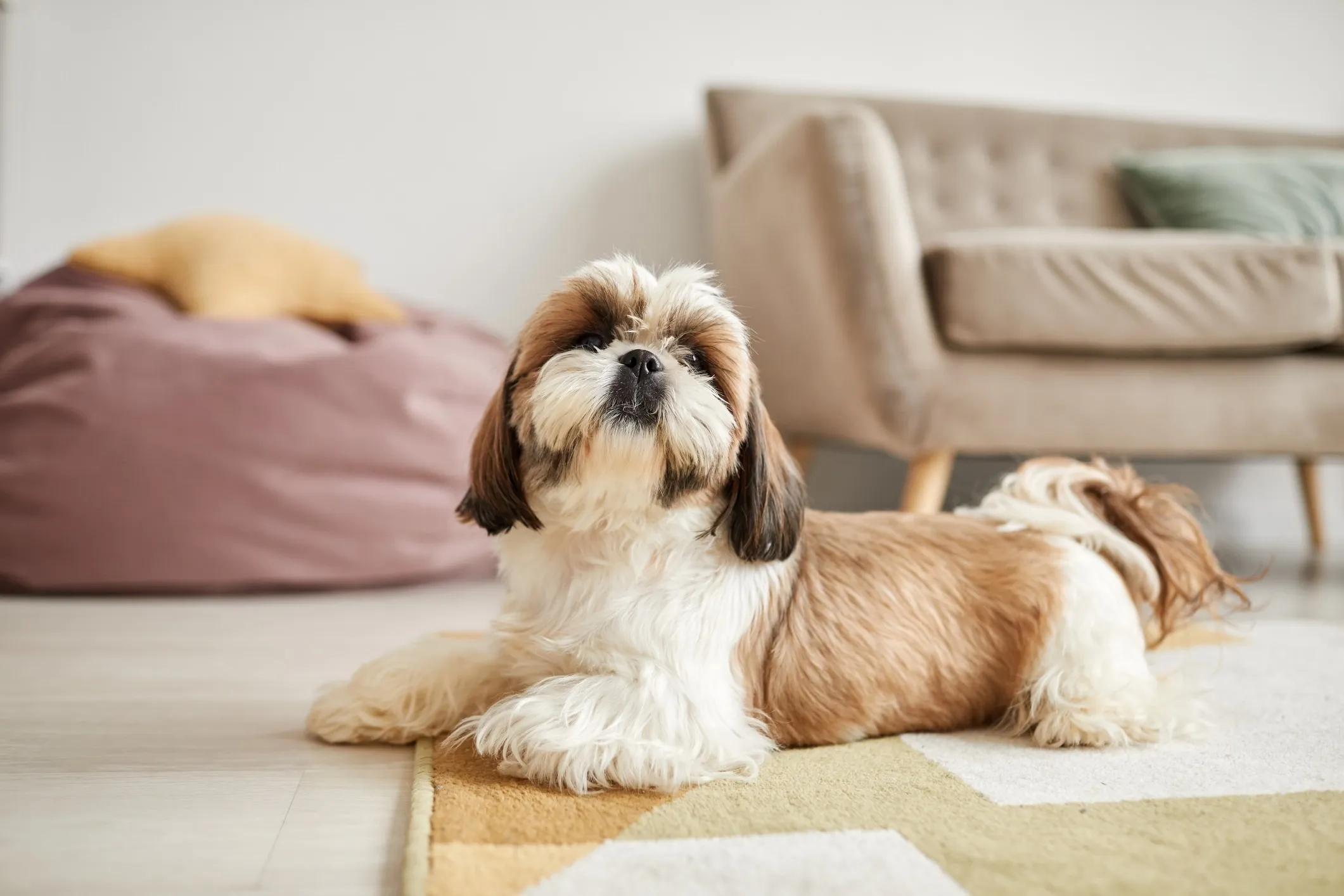 Brown and white Shih Tzu lying on a living room floor
The Shih Tzu is an ancient companion breed celebrated for its friendly temperament and luxurious, flowing coat that sheds minimally. These small dogs are known for their affectionate and outgoing personalities, making them wonderful lap dogs and family pets. Despite their thick coat, they are considered low-shedding because their hair grows continuously rather than shedding in cycles. Regular daily brushing is critical to keep their long hair from matting and to minimize any trapped dander. Due to their charming nature and manageable size, Shih Tzus can thrive in various homes, often becoming the pampered center of attention.
Miniature Schnauzer
The Miniature Schnauzer, the smallest of the three Schnauzer breeds, is a robust and intelligent dog with a distinctive wiry coat that sheds very little. These active and alert dogs make excellent watchdogs and loyal family members. Their compact size, typically weighing between 10-20 pounds and standing no more than 14 inches tall, allows them to fit comfortably into many different living environments, including city apartments. Despite their smaller stature, Miniature Schnauzers possess a spirited personality and require at least an hour of exercise daily to stay happy and well-behaved. Their low-shedding coat needs regular grooming, including brushing and occasional stripping or clipping, to maintain its texture and appearance.
Labradoodle
 Brown Standard Labradoodle walking in a park
The Labradoodle is a popular crossbreed resulting from a Labrador Retriever and a Poodle, originally bred to be a hypoallergenic service dog. Known for their intelligence, friendly demeanor, and playful nature, Labradoodles make excellent family pets. Their coat types can vary, but many inherit the Poodle’s low-shedding qualities, making them a favored choice for allergy sufferers. They are highly trainable and generally gentle, especially when properly socialized from a young age and given plenty of exercise. These energetic dogs thrive on activity and interaction, making them a joyful addition to active households. For those seeking [good family dog breeds that don’t shed], the Labradoodle often comes to mind.
Maltese
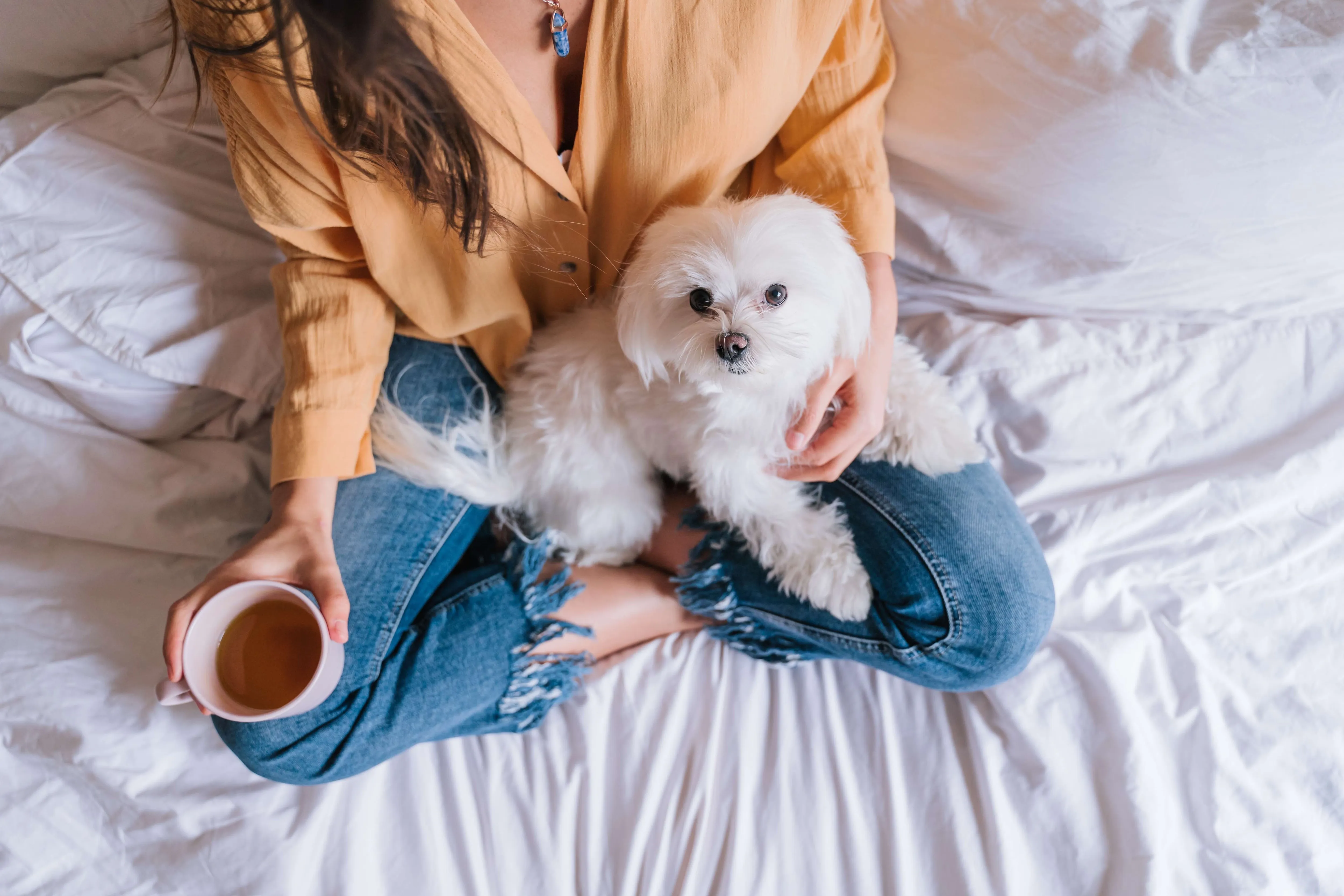 Woman holding a white Maltese dog on a bed
The Maltese is a small, aristocratic dog breed known for its stunning, long white coat and affectionate, playful personality. Despite their flowing hair, Maltese are considered low-shedding dogs, as their coat is more akin to human hair that grows continuously rather than shedding seasonally. This makes them an excellent choice for individuals seeking [best indoor dogs that don’t shed]. They thrive on close companionship and are devoted to their families. While they don’t shed much, their luxurious coats require significant grooming to prevent matting and to keep them looking their best. Many owners opt for a shorter “puppy cut” to manage their grooming needs more easily.
Xoloitzcuintli (Mexican Hairless Dog)
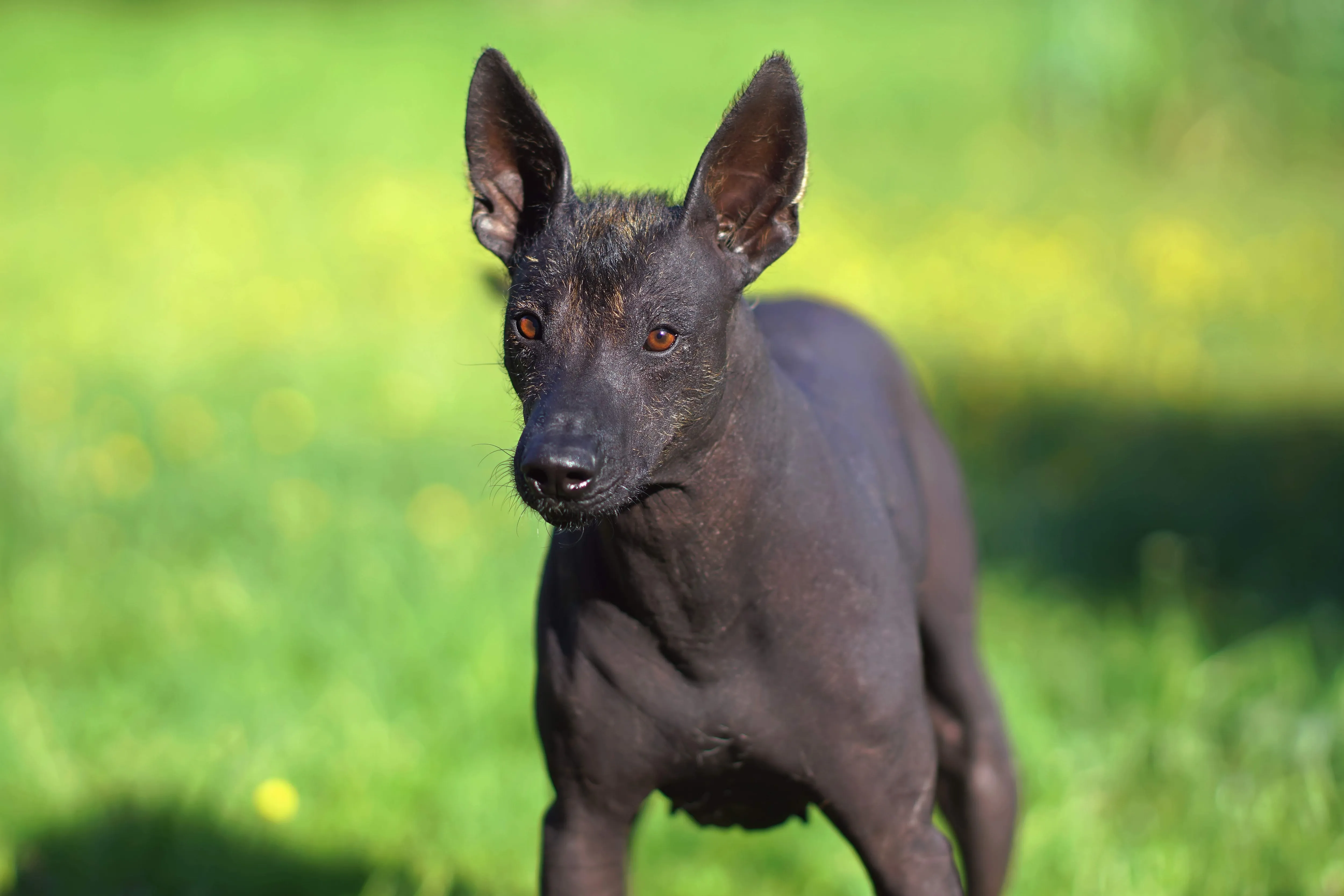 Black Mexican Hairless Dog standing in green grass
The Xoloitzcuintli, often referred to as the Mexican Hairless Dog, is one of the oldest and rarest dog breeds, available in three sizes: toy, miniature, and standard. As the name suggests, the hairless variety is an obvious choice for those concerned about shedding, but even the coated Xolos, which have a very short, dense coat, are considered low-shedding. Their unique appearance is matched by their calm, intelligent, and affectionate nature. Xolos are known for forming strong bonds with their families and can be excellent companions. The hairless variety requires special skincare, including sunscreen and moisturizing, to protect their sensitive skin from the elements, while the coated variety requires minimal grooming.
Giant Schnauzer
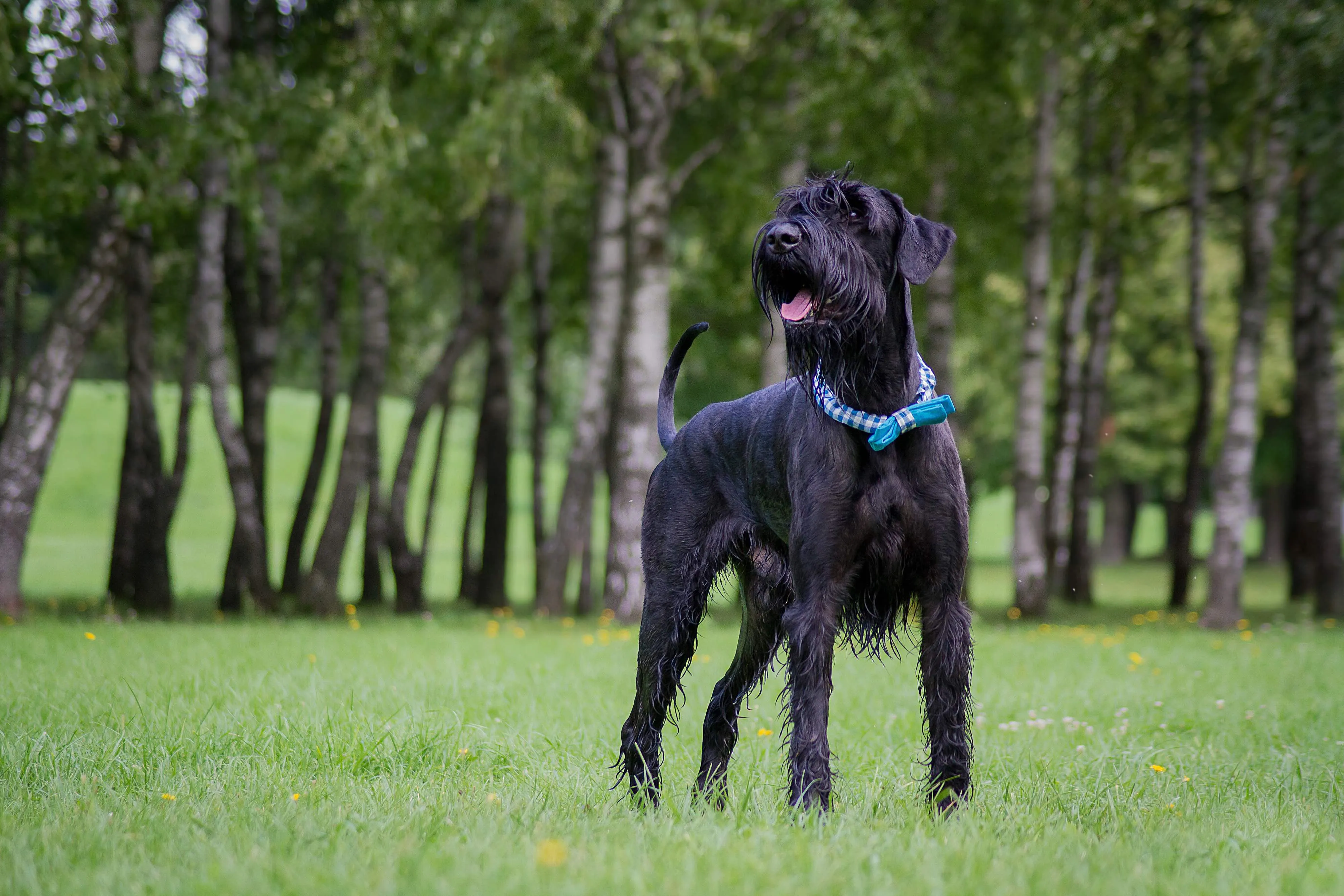 Black wet Giant Schnauzer wearing a blue bow collar in a park
For those who prefer a larger canine companion but still need a dog that doesn’t shed a lot, the Giant Schnauzer is an impressive option. Capable of weighing up to 85 pounds and standing over 27 inches tall, these dogs possess a commanding presence and a protective nature. Like their smaller Schnauzer relatives, Giant Schnauzers have a dense, wiry coat that sheds minimally, making them a suitable low-shedding breed. However, their size means they require significant exercise and mental stimulation to keep them happy and prevent destructive behaviors. Long walks, runs, and engaging play sessions are vital for this energetic breed. Their coat also needs regular grooming, including brushing and professional stripping or clipping, to maintain its condition and low-shedding quality.
Essential Tips for Living with a Low-Shedding Dog
Even with a breed that sheds minimally, managing allergens and ensuring a harmonious home environment requires ongoing effort. These tips will help you maximize the benefits of a low-shedding dog.
Consistent Grooming is Key
While these dogs shed less, their coats still require attention. Regular grooming is paramount to minimizing dander and keeping their coat healthy. This often involves weekly brushing, and some breeds may need professional trimming or hand-stripping every few weeks to months. Bathing your dog every four to six weeks with a gentle, pet-friendly shampoo can also help remove loose dander and keep their skin healthy. Investing in quality grooming tools or budgeting for professional grooming services will be beneficial.
Maintain a Clean Home Environment
Even the lowest-shedding dog will still introduce some allergens into your home. Regular cleaning is essential. Vacuum carpets and upholstery frequently with a HEPA filter vacuum. Dust surfaces weekly and wash your dog’s bedding, as well as your own, in hot water to eliminate allergens. Using air purifiers with HEPA filters can also help reduce airborne dander, and ensuring good ventilation by opening windows when possible can refresh your indoor air quality.
Consult Your Doctor
If you or a family member have allergies, it’s always wise to consult with a healthcare provider. They can help you develop a comprehensive allergy management plan, which might include medications, nasal sprays, or even allergy injections. It’s also important to remember that allergens are present in a dog’s saliva and urine, not just their fur. Therefore, avoiding close contact with your dog’s licks or ensuring prompt cleanup of any accidents can further reduce potential triggers.
Bringing a dog into your life, even with allergies, is entirely possible with the right breed and consistent care. By choosing one of these dog breeds that don’t shed a lot and implementing effective management strategies, you can enjoy the profound joy and companionship that a canine friend offers, minimizing allergic reactions and promoting a healthy, happy home. Find your perfect low-shedding companion today and experience the unconditional love a dog brings!
