
Stepping into the world of protection sports and advanced K9 training is an electrifying journey, but it’s one that demands respect, knowledge, and above all, the right gear. Using professional Dog Attack Training Equipment is not about aggression; it’s about control, safety, and channeling a dog’s natural drives into a highly disciplined skill set. This equipment forms the critical barrier that protects the trainer, or “decoy,” and allows the dog to learn how to bite confidently and effectively in a controlled environment. Without these specialized tools, this type of training would be impossible and incredibly dangerous. Understanding each piece of equipment’s purpose is the first step toward responsible and effective training. This is a far more involved process than basic obedience, and it’s essential to grasp the fundamentals before you even think about putting gear on a dog or person. For a broader view on foundational skills, understanding how to train a protection dog provides essential context for this advanced work.
Understanding the Purpose: Sport vs. Real-World Application
Before we dive into the specific tools of the trade, it’s crucial to distinguish between training for protection sports and training for real-world law enforcement or military applications. While there is overlap in the gear used, the goals are different.
- Protection Sports (Schutzhund/IPO, French Ring, Mondioring): These are highly structured canine sports that test a dog’s tracking, obedience, and protection abilities. The “attack” portion is a controlled exercise where the dog must engage a padded decoy on specific parts of the body (usually a sleeve) and release on command. The dog attack training equipment used here is standardized to ensure fairness and safety for all competitors.
- Real-World Scenarios (Police K9/Military): This training is geared towards practical application. The goal is to prepare a dog to apprehend a suspect in unpredictable situations. The training often involves hidden equipment and more realistic scenarios to ensure the dog is not just “sleeve-wise” and will engage a threat even without visible gear.
While the contexts differ, the foundational principle is the same: use high-quality, reliable equipment to keep both the decoy and the dog safe while building skills.
The Decoy’s Armor: Essential Protective Gear
The decoy (or helper) is the person who wears the protective equipment and “catches” the dog. Their role is incredibly physical and requires skill in reading dogs and presenting a proper bite target. Their safety is paramount, and it hinges entirely on their gear.
The Full Bite Suit
The bite suit is the most iconic piece of dog attack training equipment. It’s a full-body, heavily padded suit that allows a decoy to take bites on the torso, legs, and arms, enabling more realistic training scenarios.
- Materials: Most suits are made from jute, French linen (a synthetic material), or leather. Jute is a natural fiber that is great for younger dogs as it allows them to get a good grip. French linen is lighter and more durable, often preferred for experienced dogs and competition.
- Levels of Protection: Bite suits come in various weights and thicknesses. A training-weight suit is heavily padded for repetitive sessions and younger dogs. A competition-weight suit is lighter and offers more mobility, but less padding, requiring a highly skilled decoy and a well-trained dog.
A good bite suit allows for mobility while offering maximum protection. It’s a significant investment, but it’s the most critical piece of safety equipment for any serious decoy.
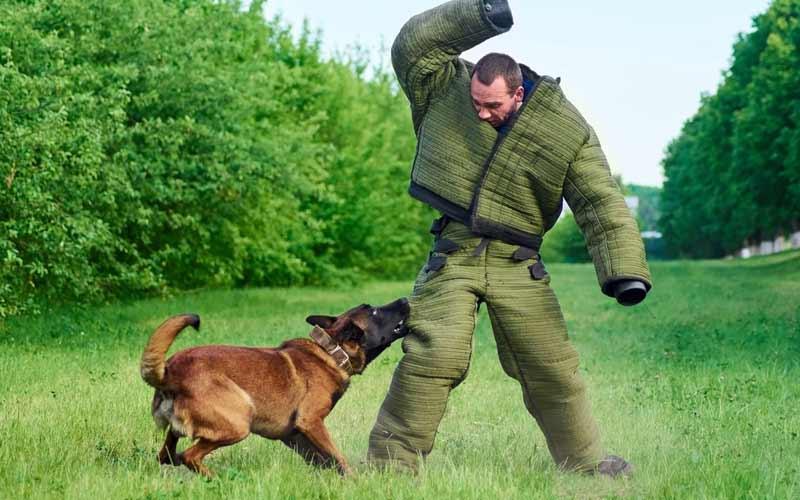 A professional decoy wearing full dog attack training equipment while a German Shepherd engages with a bite sleeve
Bite Sleeves and Cuffs
For more focused training, especially in the foundational stages, decoys use bite sleeves. These isolate the bite to one arm, allowing the decoy more freedom of movement and the ability to finely tune the dog’s targeting and grip.
- Puppy Sleeves: These are soft, jute-covered sleeves used to build drive and a proper grip in young dogs. They are all about positive reinforcement and making the “game” fun.
- Intermediate Sleeves: As the dog matures, they graduate to harder sleeves with less padding. These teach them to bite with more force and commitment.
- Advanced/Hard Sleeves: These are the sleeves used for adult dogs and in competition. They require the dog to have a full, strong grip to hold on.
- Hidden Sleeves: Used in police and personal protection training, these are worn under clothing to simulate a real-world encounter. They are extremely dangerous and should only be used by top-tier professionals in highly controlled scenarios.
Essential Gear for the Handler and Dog
The decoy isn’t the only one who needs specialized equipment. The handler and the dog require specific tools to ensure safety, control, and effective communication during high-arousal protection work.
Harnesses and Collars
A standard flat collar or pet-store harness will not cut it. During protection work, the dog is in a state of high drive, and the equipment must be able to withstand extreme force without breaking or injuring the dog.
- Agitation Harnesses: These are robust harnesses designed to distribute pressure across the dog’s chest and shoulders. This allows the dog to pull and lunge against the line safely without putting pressure on its trachea. Look for harnesses made from thick leather or military-grade nylon with reinforced stitching and heavy-duty hardware.
- Strong Collars: A wide, sturdy collar (at least 2 inches) made of high-quality leather or nylon is also essential. It serves as a primary tool for control, especially during obedience portions of the training.
Leashes and Lines
The connection between the handler and the dog is the leash. In protection training, this line manages distance and provides critical safety control.
- Agitation Lines: These are typically thick, long leashes (10-15 feet) made from leather or nylon webbing. They must be strong enough to hold a powerful dog working in high drive.
- Long Lines: Used for developing control at a distance, these can be 30 feet or longer, allowing the handler to manage the dog during send-outs and recalls.
As stated by Dr. Marcus Thorne, a veteran in canine working sports, “The leash is not just a restraint; it’s a line of communication. In protection work, the feel of the line tells the handler everything about the dog’s state of mind. A cheap leash is a broken conversation waiting to happen.”
Advanced and Specialized Training Aids
Once the foundations are solid, trainers introduce other tools to enhance the training’s realism and test the dog’s courage and stability. These tools are often called “stressors.”
Clatter Sticks and Whips
It is a common misconception that these tools are used to hit the dog. This is absolutely incorrect in legitimate training.
- Purpose: Clatter sticks (bamboo sticks split at the end) and padded whips are used for the noise and visual distraction they create. The goal is to test the dog’s nerve. Can the dog remain focused on the bite target (the sleeve or suit) even when there are loud noises and fast movements around it? A dog that spooks or bites at the stick instead of the decoy is showing a weakness in nerve.
- Safety: The stick or whip should only ever make contact with the padded equipment or be used in the air. Striking the dog is abusive and counterproductive, creating fear rather than confidence.
This is a critical distinction to make from other canine behavioral issues. Protection work builds confidence against a threat, which is a world away from the techniques used when looking for training for reactive dogs near me, where the goal is to reduce fear and anxiety.
How to Choose the Right Equipment
Investing in dog attack training equipment is a serious commitment. Choosing the wrong gear can result in injury to the decoy or the dog and set your training back significantly.
Match the Gear to Your Goals
Are you training for a specific sport like Schutzhund? If so, you’ll need regulation equipment. Are you focused on personal protection? Your gear selection will lean towards more realism. Your dog’s age and experience level are also major factors. A young dog needs softer equipment to build confidence, while a seasoned pro needs durable gear that can withstand immense power.
Prioritize Safety and Durability
This is not the place to cut corners. Look for equipment from reputable manufacturers known for their quality. Check the stitching, the hardware (D-rings, buckles), and the quality of the material. A failed piece of equipment during a session can have catastrophic consequences. This is also important when considering how to train a guard dog, as reliable equipment is key to consistent and safe training outcomes.
Find a Professional Mentor
The single most important piece of “equipment” is an experienced trainer or club. You cannot learn this discipline from books or videos. A good mentor will not only teach you the techniques but will also guide you in selecting the appropriate dog attack training equipment for each stage of your dog’s development. They will have the experience to see what works and what doesn’t, saving you money and preventing potential accidents.
Frequently Asked Questions (FAQ)
What breeds are suitable for attack training?
Typically, breeds with a history of protection work, such as German Shepherds, Belgian Malinois, Dutch Shepherds, and Rottweilers, are best suited. The most important factor is the individual dog’s temperament, which must include stable nerves, high drive, and a clear head.
Can I do this training myself in my backyard?
Absolutely not. This is one of the most dangerous forms of dog training if done incorrectly. It requires a skilled decoy, a knowledgeable handler, and a highly controlled environment. Attempting this on your own is a recipe for creating a dangerously unstable dog and risking severe injury.
Does this training make a dog aggressive towards people?
No, proper protection training does the opposite. It is built on a foundation of incredible obedience and control. The dog learns precisely when and where it is acceptable to bite (i.e., the training equipment on command) and, more importantly, when to stop. It’s about turning the bite on and off like a switch.
How much does dog attack training equipment cost?
High-quality equipment is a significant investment. A single bite sleeve can cost several hundred dollars, while a full bite suit can range from $1,500 to over $3,000. It’s expensive because it is specialized safety gear that must be incredibly durable.
At what age can you start protection training?
Foundation work, known as bite development, can start in puppyhood (around 8-12 weeks) using a soft rag or tug. This is all play-based to build drive and a desire to grip. The introduction of harder equipment and more formal scenarios happens gradually as the dog matures physically and mentally, typically after 12-18 months.
Conclusion: A Commitment to Safety and Excellence
The world of protection dog training is fascinating and rewarding, but it is not a casual hobby. It is a serious commitment to developing a canine athlete in a highly disciplined and controlled manner. The dog attack training equipment you use is the foundation of this entire process, ensuring the safety of everyone involved. By investing in high-quality gear, seeking out expert guidance, and always prioritizing the well-being of the dog, you can explore the upper echelons of canine performance safely and responsibly. Remember, the tools are only as good as the hands that wield them.
