
For anyone who grew up in the 80s, the question “Does The Horse Come Back In The Neverending Story?” is loaded with decades of childhood trauma. The scene is seared into our collective memory: Atreyu, the young warrior, screaming and pleading with his beloved horse and companion, Artax, as the noble creature succumbs to the Swamp of Sadness. It’s a moment of profound loss and despair. The answer to this haunting question, however, isn’t as straightforward as you might think. It entirely depends on which version of the story you’re talking about—Wolfgang Petersen’s iconic 1984 film or Michael Ende’s original, sprawling novel.
The bond between a warrior and his steed is a tale as old as time, a theme explored in many great narratives. This powerful connection, much like a love story horse of legend, is central to Atreyu’s identity and resolve. Artax isn’t just a mode of transport; he is Atreyu’s confidant, his friend, and a symbol of his own innocence and spirit. Their journey together is one of unity against an encroaching darkness, which makes their tragic separation in the swamp all the more devastating for both the hero and the audience.
The Heartbreaking Scene: Artax in the Swamp of Sadness
To understand Artax’s fate, we must first revisit the scene that caused so much heartache. Atreyu is tasked with a monumental quest to find a cure for the ailing Childlike Empress and, in doing so, save the world of Fantasia from a formless, destructive force called “The Nothing.” His journey leads him to the Swamp of Sadness, a desolate and murky landscape that is more than just a physical bog. The swamp is a manifestation of despair; it preys on the hearts of those who enter, and anyone who allows sadness and hopelessness to consume them will sink into the muck, lost forever.
Atreyu is protected from this spiritual death by the Auryn, the powerful amulet given to him by the Empress, which symbolizes his mission and connection to her. Artax, however, has no such protection. He is a creature of pure heart and spirit, but he is not immune to the crushing weight of sorrow that permeates the swamp. As they wade through the thick mud, Atreyu watches in horror as his companion begins to sink. He pulls, he screams, he begs Artax to fight, to not give up. But the horse, overcome by the swamp’s insidious influence, gives in to the sadness and is slowly submerged. It’s a brutal and unflinching depiction of loss, teaching a generation of children that sometimes, love and effort are not enough to save someone from their own despair.
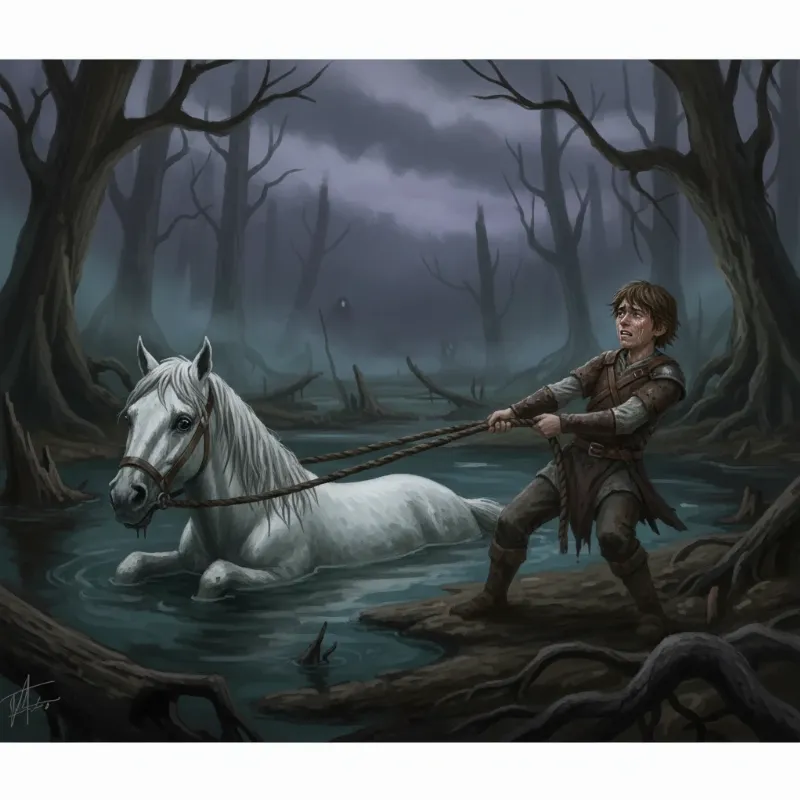 A depiction of the horse Artax in the Swamp of Sadness, addressing the question of does the horse come back in The Neverending Story.
The Film’s Verdict: A Final Farewell?
In the 1984 film directed by Wolfgang Petersen, the answer to the question is a firm and heartbreaking no. Artax does not come back. His death is a pivotal, permanent event in the movie’s narrative. It serves to strip Atreyu of his last connection to his home and his childhood, forcing him to confront the harsh reality of his quest alone. The loss of Artax is a rite of passage for the young hero, marking the moment he must truly grow up and face the encroaching Nothing without his most trusted friend.
This decision by the filmmakers was intentional. It raises the stakes of the story, making The Nothing a much more tangible and terrifying threat. It’s not just an abstract concept; it’s a force that can take away the ones you love in the most painful way imaginable. For Atreyu, continuing his quest after this loss requires immense courage and resolve. He is no longer just a boy on an adventure; he is a warrior forged by grief, determined to ensure his friend’s sacrifice was not in vain. The movie leaves the audience with this sense of finality. Artax is gone, and his memory serves as a painful motivator for the hero’s journey. While Fantasia is ultimately saved by Bastian, the film never shows Artax’s return, cementing his death as one of the most definitive and tragic moments in cinematic history.
A Different Fate: What Happens in the Book?
This is where the story takes a significant turn. Michael Ende’s novel, Die unendliche Geschichte (The Neverending Story), is a much richer and more complex narrative, and the film only covers roughly the first half of it. In the book, the answer to “does the horse come back in The Neverending Story?” is a resounding and joyful yes.
Like in the movie, Artax does perish in the Swamp of Sadness in a similarly traumatic scene. Atreyu is left alone and heartbroken to continue his quest. However, the book’s narrative extends far beyond Atreyu’s journey. The second half focuses on Bastian Balthazar Bux after he enters the world he was reading about, now called Fantastica. Using the power of the Auryn, which grants him wishes, Bastian becomes the new creator and restorer of this magical land that The Nothing had almost completely destroyed.
With his imagination, Bastian begins to rebuild Fantastica, bringing back its landscapes, creatures, and inhabitants. During this process of restoration, he and Atreyu travel together, and one of Bastian’s heartfelt wishes is to undo the sorrow that his friend carries. He uses his power to bring Artax back to life, whole and healthy once more. The reunion between Atreyu and Artax is a beautiful, poignant moment that offers closure and healing. The answer to what is the horse’s name in the neverending story is Artax, and in the book, his story ends not in tragedy, but in a joyful rebirth.
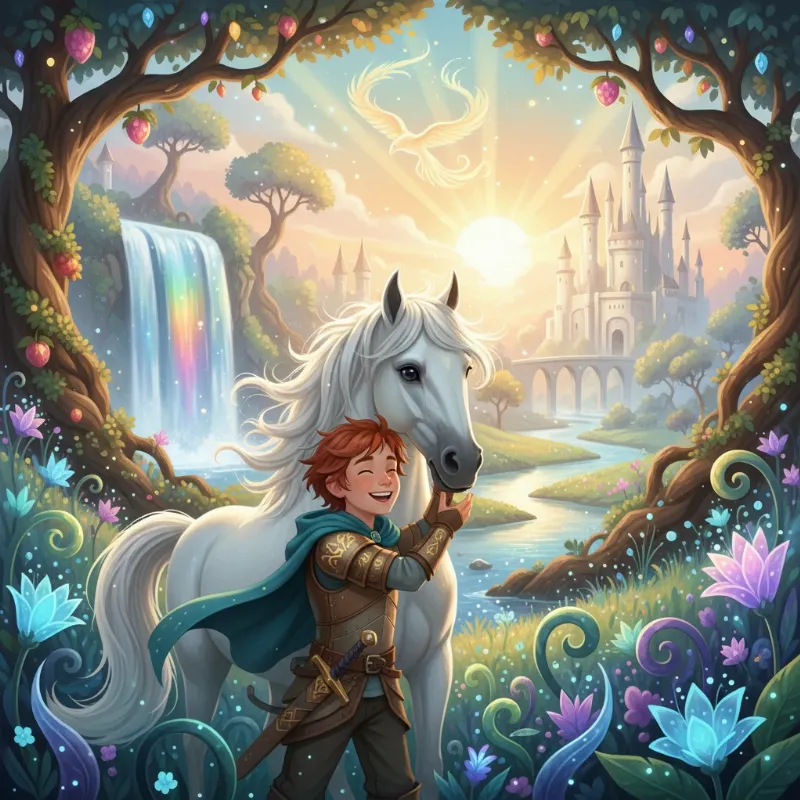 An image of Atreyu and a resurrected Artax, answering the question does the horse come back in The Neverending Story from the book's perspective.
Why the Change? Book vs. Movie Symbolism
The difference in Artax’s fate highlights the fundamental divergence in themes between the book and the film. The movie is a more streamlined adventure story focused on the hero’s journey in the face of overwhelming odds. Artax’s permanent death serves as a raw, emotional anchor. It grounds the fantasy in a grim reality and emphasizes the theme of sacrifice. The film teaches that loss is a part of life and that true strength is found in carrying on despite the pain. It’s a powerful, albeit somber, message about resilience.
Michael Ende’s novel, on the other hand, is a deeper, more philosophical exploration of the nature of reality, stories, and the power of human imagination. Artax’s resurrection is not a simple reversal of a sad event; it is a profound statement about the central theme of the book. It demonstrates that within the realm of stories and imagination (Fantastica), nothing is ever truly lost forever. Hope can be rebuilt, and what was destroyed by despair can be restored through creativity and belief. The book argues that imagination is the ultimate force of healing, capable of overcoming even death itself. While the film focuses on surviving loss, the book champions the power to create and restore what was lost.
The Enduring Legacy of Artax’s Story
Regardless of which version you adhere to, the story of Artax has left an indelible mark on popular culture. For those who only know the film, it remains a defining moment of cinematic tragedy. For those who have explored the book, it becomes a story of hope and redemption. This duality makes the narrative of the brave horse incredibly powerful. It forces us to confront difficult questions about loss, despair, hope, and recovery. The tale is more than just a simple adventure; it is a complex tapestry of emotion and philosophy, much like the greatest horses story ever told.
The question of whether the horse comes back reveals the different ways a story can be told and the impact those choices have on its message. One version offers a stark lesson in reality and resilience, while the other provides a comforting affirmation of the restorative power of imagination. Both are valid, and both contribute to the rich, layered, and truly never-ending story of Fantasia.
Frequently Asked Questions (FAQ)
1. So, does the horse Artax really die?
Yes, Artax dies in both the movie and the book in the Swamp of Sadness. However, in the book, he is later resurrected by Bastian when he rebuilds the world of Fantastica with his wishes.
2. Why did Artax sink in the Swamp of Sadness?
The Swamp of Sadness is a magical place that embodies despair and hopelessness. Artax, unlike Atreyu who was protected by the Auryn, was overcome by these feelings, causing him to give up and sink into the mire.
3. Is The NeverEnding Story movie faithful to the book?
The 1984 movie is only based on the first half of Michael Ende’s novel. It changes several key thematic elements and plot points, most notably the final fate of Artax and the entire second half of the book which focuses on Bastian’s journey within Fantastica.
4. What is the horse’s name in The NeverEnding Story?
The horse’s name is Artax. He is Atreyu’s loyal companion and a white horse who is both his steed and his closest friend on his quest.
5. Does Atreyu get a new horse in the movie?
The film does not show Atreyu getting a new horse. After Artax dies, Atreyu continues his quest alone on foot, and the film concludes without addressing a replacement for his lost companion.
