
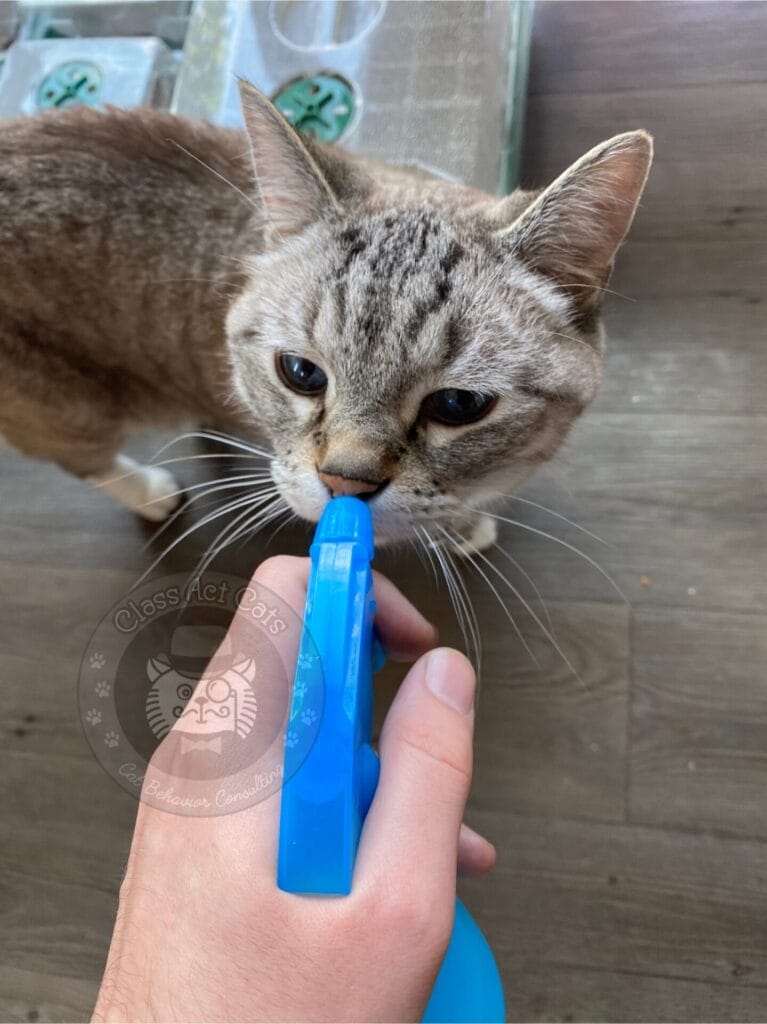
Have you ever found yourself in a frustrating situation with your feline friend, perhaps the temptation to scratch furniture or the dare to jump onto counters? Many cat owners have turned to the seemingly simple solution of a spray bottle filled with water, believing it to be an effective training tool. But does this common method truly work, or is it just a temporary fix that could lead to other issues? Let’s dive deep into the effectiveness, the science behind it, and explore more humane and effective alternatives for training your cat.
Understanding the “Spray Bottle” Method
The idea behind using a spray bottle is simple: when a cat exhibits undesirable behavior, a quick spray of water is intended to startle and deter them, creating a negative association with the action. This method is often employed for issues such as:
- Scratching furniture: Owners may spray their cat when they see them scratching the sofa.
- Jumping on counters: A spray is used to discourage the cat from climbing where they shouldn’t.
- Aggression or play-biting: Some attempt to curb rough play with a water spray.
- Interfering with plants: Cats digging in or eating houseplants might be deterred this way.
The immediate reaction from the cat is often a flinch or a hasty retreat, which owners interpret as the training “working.” However, this interpretation often overlooks the underlying emotional and behavioral responses of the cat.
The Science (and Psychology) of Cat Behavior
Cats, unlike dogs, do not generally respond well to punishment-based training. Their learning style is more nuanced and relies heavily on positive reinforcement, understanding, and building trust. When a cat is sprayed with water, their reaction is primarily driven by fear and surprise, not by an understanding that their behavior was wrong.
Here’s a breakdown of what’s likely happening from your cat’s perspective:
- Fear and Anxiety: The sudden, unexpected spray of water is inherently frightening. Cats are prey animals, and sudden, unpredictable threats trigger their survival instincts. This can lead to a general increase in anxiety.
- Association with You, Not the Act: Instead of associating the spray with the act of scratching or jumping, the cat is more likely to associate the unpleasant experience with you, the person holding the spray bottle. This can damage the bond you share and lead to avoidance behaviors.
- No Learning of Acceptable Behavior: The spray bottle stops the behavior in the moment, but it doesn’t teach the cat what they should be doing instead. They don’t understand that scratching the sofa is wrong; they only learn that when you are present and they scratch the sofa, a water attack might happen. If you’re not there, the behavior will likely continue.
- Secretive Behavior: A fearful cat may simply learn to perform the undesirable behavior when you are not around, leading to even more frustration for the owner.
- Potential for Aggression: In some cases, a cornered or frightened cat might lash out defensively, leading to scratches or bites.
Why Spray Bottles Aren’t Ideal for Long-Term Training
While a spray bottle might offer a temporary cessation of an unwanted behavior, it’s rarely a sustainable or humane solution. The core issue is that it addresses the symptom (the action) rather than the cause (why the cat is doing it) and relies on negative reinforcement, which is often counterproductive in the long run.
Consider this: if your cat is scratching furniture, it might be because they lack appropriate scratching posts, are experiencing stress, or are marking their territory. If they are jumping on counters, it could be curiosity, a search for food, or simply a high vantage point they desire. A spray bottle does nothing to address these underlying needs.
Effective Alternatives for Cat Training
The “Dog Care Story” philosophy centers on understanding, patience, and positive reinforcement. For cat training, this means focusing on rewarding good behavior and redirecting unwanted behavior.
1. Positive Reinforcement: Rewarding Good Choices
This is the cornerstone of effective cat training. When you see your cat doing something you like, reward them!
- Scratching posts: If your cat uses their designated scratching post, praise them enthusiastically and perhaps offer a small, high-value treat. Make the scratching post more appealing than the furniture.
- Litter box use: Always praise and reward your cat for using their litter box appropriately.
- Calm behavior: Reward your cat for quiet, calm behavior, especially during times they might usually be hyperactive.
2. Redirection: Guiding Towards Acceptable Actions
When you catch your cat in the act of doing something undesirable, the goal is to gently interrupt and redirect them to an appropriate alternative.
Furniture Scratching:
- Interrupt: Make a gentle noise (a soft clap or a short, calm vocalization) to interrupt the scratching.
- Redirect: Immediately lead or entice your cat to their scratching post. If they use it, offer praise and a treat.
- Enhance Scratching Posts: Ensure you have several scratching posts of varying materials (sisal, cardboard, carpet) and orientations (vertical, horizontal) in key areas of your home. You can even use catnip to make them more attractive.
Jumping on Counters:
- Interrupt: Gently remove your cat from the counter. Avoid yelling or startling them.
- Redirect: Offer them an alternative “high-up” spot, such as a cat tree or a shelf designed for cats, in a nearby location. Make this alternative appealing.
- Deterrents (Non-Punitive): Instead of a spray bottle, consider using methods that make the counter less appealing without associating it with you. This could include double-sided sticky tape (cats generally dislike sticky surfaces) or foil. These are temporary measures until your cat prefers their designated spots.
Counteracting Play-Biting:
- Interrupt: As soon as teeth touch skin, yelp loudly (mimicking another cat’s yelp) and immediately withdraw attention. This teaches them that biting makes the fun stop.
- Redirect: Offer an appropriate play toy, such as a wand toy or a kicker toy, that they can bite and scratch. Never use your hands or feet as toys.
3. Environmental Enrichment: Addressing the Root Cause
Often, unwanted behaviors stem from boredom, stress, or unmet needs. Enriching your cat’s environment can significantly reduce these issues.
- Playtime: Engage in daily interactive play sessions with your cat using toys like feather wands or laser pointers (used responsibly, ending with a tangible reward). This fulfills their predatory drive and provides exercise.
- Vertical Space: Cats love to climb and observe from high places. Provide cat trees, shelves, or window perches.
- Puzzle Feeders: Instead of just putting food in a bowl, use puzzle feeders that challenge your cat to “work” for their meals. This mimics natural foraging behavior.
- Safe Spaces: Ensure your cat has quiet, safe places to retreat to where they won’t be disturbed.
4. Understanding Cat Body Language
Learning to read your cat’s signals is crucial. If your cat is showing signs of stress, fear, or overstimulation (e.g., flattened ears, dilated pupils, twitching tail), it’s time to back off and reassess the situation, rather than attempting to correct behavior.
Expert Insights on Cat Training
Veterinarians and certified feline behaviorists overwhelmingly advise against punishment-based methods like spray bottles. Dr. Sarah Miller, a renowned feline behaviorist, states, “Punishment can erode trust and increase anxiety in cats, often leading to more complex behavioral issues down the line. Our focus should always be on understanding the cat’s needs and guiding them with positive, reward-based strategies.”
The goal isn’t to dominate your cat, but to build a partnership based on mutual respect and understanding. This involves creating an environment where they can thrive and learn what is expected of them in a way that makes sense to them.
Conclusion: Building a Better Bond
While the spray bottle might seem like a quick fix, it often creates more problems than it solves by fostering fear and damaging the human-animal bond. Instead, embracing positive reinforcement, redirection, and environmental enrichment offers a more humane, effective, and rewarding approach to training your cat.
By understanding your cat’s natural instincts and needs, and by consistently rewarding desired behaviors, you can shape their actions constructively. This journey of understanding and positive interaction is the heart of the “Dog Care Story” – or in this case, the “Cat Care Story” – building a deeper, more trusting relationship with your beloved feline companion. Remember, a well-trained cat is a happy cat, and a happy cat makes for a happy home.
