
For many who grew up in the 80s, a single cinematic moment is seared into their collective memory: a noble white horse succumbing to a swamp of pure despair. The question, “Did The Horse Die In Neverending Story?” is more than a point of trivia; it’s a shared childhood trauma that continues to resonate decades later. The answer is a heartbreaking yes. Artax, the faithful companion of the young hero Atreyu, does indeed die in a scene that has become iconic for its raw, unfiltered depiction of loss and hopelessness in a children’s film. This moment wasn’t just a plot point; it was a profound lesson in the face of overwhelming sadness, setting the stage for one of cinema’s most challenging quests.
The tragic event unfolds in a desolate area of Fantasia known as the Swamps of Sadness. Atreyu, tasked with finding a cure for the ailing Childlike Empress, must traverse this grim landscape. The swamp has a cruel, magical property: its waters cause anyone who gives in to the encroaching sadness to sink into the murky depths forever. It’s a physical manifestation of depression, a landscape that literally drowns you in sorrow. This narrative device creates an atmosphere of immense tension and dread, making the journey not just a physical one, but an emotional and psychological ordeal.
The Heartbreaking Scene: What Happened to Artax?
As Atreyu and Artax venture into the swamp, the weight of the world is on the young warrior’s shoulders. He is protected from the swamp’s power by the Auryn, a powerful amulet given to him by the Empress, which grants him guidance and protection. Artax, however, has no such shield. The oppressive atmosphere of the swamp begins to affect him, the sadness seeping into his very being.
Atreyu, focused on moving forward, initially doesn’t notice his loyal friend slowing down. When he turns back, he sees Artax standing still, the murky water rising around his legs. The horse is no longer fighting. Panic sets in as Atreyu realizes what is happening. He desperately pleads, yells, and pulls at Artax’s reins, trying to will his companion to move, to fight against the despair. “You have to fight! You have to care!” he screams, his voice cracking with anguish. But it’s too late. The sadness has taken hold, and Artax has given up. In a slow, agonizing sequence, the beautiful white horse sinks beneath the mud and water, leaving Atreyu utterly alone in the desolate swamp. The scene is devastating because it’s not a monster or a villain that takes Artax, but an intangible emotion. This devastating moment raises many questions, including how did the horse die in neverending story.
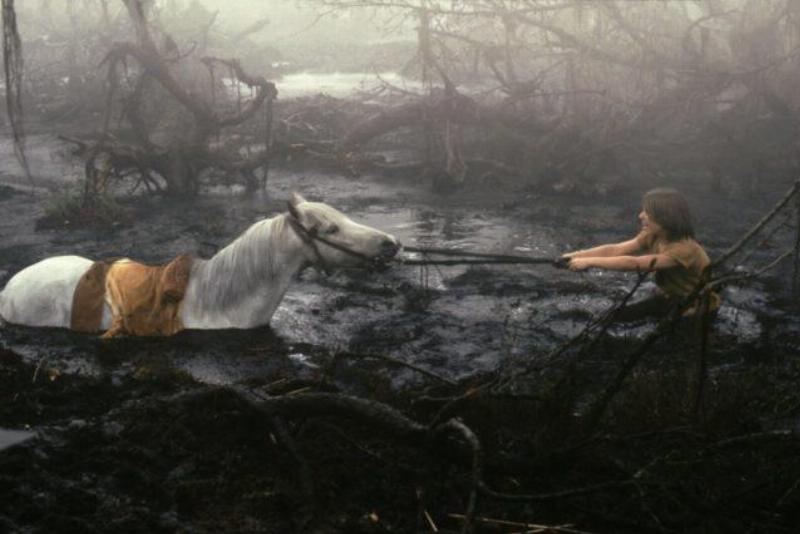 The tragic scene where the horse Artax dies in The Neverending Story, sinking into the Swamps of Sadness.
Why Did Artax Have to Die? The Symbolic Meaning
On the surface, Artax’s death is a tragedy. But from a storytelling perspective, it is a crucial and powerful narrative choice. The death of Artax serves several important symbolic purposes that elevate The Neverending Story from a simple fantasy adventure to a profound exploration of human emotion.
A Lesson in Helplessness and Grief
Artax’s death is Atreyu’s—and the audience’s—first true encounter with the power of the Nothing, the film’s antagonist. The Nothing is not a typical villain; it is the embodiment of despair, apathy, and the death of dreams. The Swamps of Sadness are a direct consequence of its growing influence over Fantasia. Artax doesn’t die from a physical wound, but because he loses hope. He is consumed by the very force Atreyu is fighting. This teaches a harsh lesson: sometimes, love and effort are not enough to save someone from their own despair. It forces Atreyu to confront the limits of his power and to experience profound grief, a necessary step in his journey toward becoming a true hero.
The Loss of Innocence
Artax is more than just a horse; he is Atreyu’s closest friend and a symbol of his innocence. In their journey together, they represent a pure, unbreakable bond. When Artax dies, a part of Atreyu’s childhood dies with him. He is violently thrust into a world where companionship is fragile and loss is real. To continue his quest, Atreyu must leave his innocence behind in the swamp and find a new kind of strength, one forged in sorrow and solitude. This transition is a classic element of the hero’s journey, where the protagonist must suffer a great loss to gain the wisdom and resilience needed to face their ultimate challenge.
“The scene is a powerful metaphor for depression,” notes Dr. Sarah Miller, a fictional expert in child psychology and media studies. “It visualizes how depression can feel like an unstoppable force, pulling you down despite the pleas of loved ones. For a child watching, it’s a safe, if painful, introduction to the idea that sadness is a powerful thing that must be actively fought.”
Behind the Scenes: Was the Real Horse Harmed?
The intensity and realism of Artax’s death scene led to persistent rumors and concerns that the horse actor was harmed during filming. This is a common question, and thankfully, the answer is no. The horse was not injured. The scene was meticulously planned and executed with the animal’s safety as the top priority.
The horse was placed on a submerged hydraulic platform that was slowly lowered into the muddy water. The crew worked with experienced animal trainers to ensure the horse remained calm throughout the process. While the scene was undoubtedly challenging to film for both the human and animal actors, director Wolfgang Petersen and his team took extensive precautions. The horse was cleaned and warmed up immediately after each take. The emotional distress portrayed on screen is a testament to the power of filmmaking and acting, not a reflection of any real harm done to the animal. Knowing this provides some relief, but it doesn’t diminish the emotional power of what unfolds on screen. The question of whether did the neverending story horse die in real life is a testament to the scene’s gut-wrenching effectiveness.
Does Artax Come Back? The Restoration of Fantasia
For those left devastated by his death, there is a glimmer of hope at the end of the film. After Bastian renames the Childlike Empress and uses the final grain of sand to begin rebuilding the world, Fantasia is reborn from his imagination. In the film’s joyful closing moments, Atreyu is seen reuniting with a very much alive Artax, galloping across the newly restored, vibrant fields of their homeland.
This revival doesn’t erase the trauma of his death but rather reinforces the central theme of the story: hope. It suggests that even after the most profound loss and despair, imagination and belief have the power to restore what was lost. The Nothing destroys, but the human heart can rebuild. Artax’s return is a reward, not just for Atreyu’s bravery, but for Bastian’s willingness to believe and dream again. His death was a necessary part of the journey, but his rebirth is the ultimate triumph of hope over despair. It shows that while sadness is a real and dangerous force, it does not have to be the end of the story.
 The triumphant reunion of Atreyu with his horse Artax in a vibrant, restored Fantasia, symbolizing hope.
The Enduring Legacy of a Heartbreaking Moment
Decades after its release, The Neverending Story remains a beloved classic, and the death of Artax is arguably its most famous and impactful scene. It’s a moment that stays with viewers long after the credits roll, a cinematic touchstone for an entire generation’s first brush with on-screen tragedy. The scene’s power lies in its honesty. It doesn’t shy away from the ugliness of despair or the pain of loss.
By showing a hero who is powerless to stop a tragedy, the film provides a complex and mature lesson for its young audience. It teaches that courage isn’t about never feeling sad or scared; it’s about continuing on even after your heart has been broken. The memory of Atreyu’s desperate cries and Artax’s slow descent is a poignant reminder of the film’s core message. While Fantasia is a world of luckdragons and talking turtles, its greatest struggles are deeply human. And the ultimate lesson from the tragedy in the Swamps of Sadness is that to fight the Nothing, you must first survive your own sorrow. And the question, “did the horse die in neverending story” serves as a key to unlocking this deep, emotional core.
Frequently Asked Questions (FAQ)
What was the horse’s name in The Neverending Story?
The horse’s name was Artax. He was the loyal companion and steed of Atreyu, the young hero chosen to find a cure for the Childlike Empress and save the world of Fantasia from the Nothing.
Does Artax come back to life?
Yes, Artax does come back to life at the end of the movie. After Bastian gives the Childlike Empress her new name and begins to wish Fantasia back into existence, Artax is seen alive and well, joyfully reuniting with Atreyu in the restored world.
Why couldn’t Atreyu save Artax in the Swamps of Sadness?
Atreyu was protected from the swamp’s magical despair by the Auryn, the amulet he wore. Artax had no such protection. The swamp’s power was not physical but emotional, and it overwhelmed Artax with a sadness so profound that he gave up the will to live, causing him to sink.
Was the real horse hurt during the filming of the scene?
No, the horse actor was not harmed. The scene was filmed using a special hydraulic lift that was submerged in the water. Animal safety experts and trainers were on set to ensure the horse was safe and comfortable throughout the entire process.
What do the Swamps of Sadness represent?
The Swamps of Sadness are a powerful metaphor for depression and despair. They are a physical manifestation of the Nothing’s influence, a force that consumes everything by draining it of hope and joy. The swamp’s danger is not in its mud, but in its ability to make its victims give up.
Who is the hero of The Neverending Story?
The story features two main heroes. Atreyu is the heroic warrior from the world of Fantasia who undertakes the quest to save it. Bastian Balthazar Bux is the young boy from the real world reading the story, who eventually becomes a key player in its outcome.
