
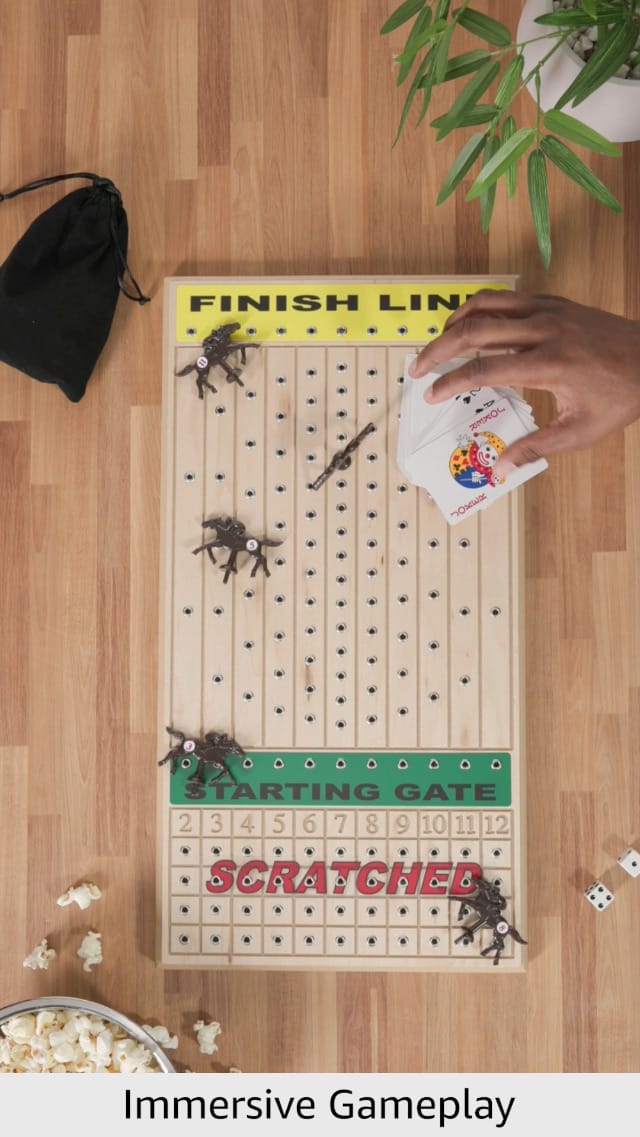
Have you ever felt the thunder of hooves and the roar of the crowd at a racetrack? The sheer excitement of watching powerful thoroughbreds vie for the finish line is a unique thrill. But what if you could bring that heart-pounding action right into your living room? The Dice Horse Racing Game offers exactly that—a perfect blend of chance, strategy, and social fun that has captivated players for generations. It’s a classic pastime that packs all the suspense of a real derby into a simple, accessible format. Whether you’re a seasoned equestrian enthusiast or just looking for a new game to share with family and friends, you’ve galloped to the right place. This guide will explore everything you need to know about this timeless tabletop classic.
The Enduring Appeal of a Day at the Races
So, what exactly is a dice horse racing game? At its core, it is a tabletop board game that simulates a horse race, with the movement of the horses determined by the roll of dice. Players typically “own” or bet on specific horses, cheering them on as the dice rolls advance them down the track. The first horse to cross the finish line wins, making its owner or bettor the champion. The beauty of the game lies in its simplicity. There are no complex rulebooks to memorize or intricate strategies to master, making it an ideal choice for players of all ages and skill levels. It’s a game of pure luck, which means anyone can win, creating a level playing field that guarantees excitement and unpredictability with every roll.
The game’s magic comes from the atmosphere it creates. As the dice tumble, a palpable tension builds around the table. Players shout encouragement for their chosen steeds, groan when their number doesn’t come up, and erupt in cheers as the horses near the finish line. It’s this shared experience, this collective journey of highs and lows, that transforms a simple board game into a memorable event. It captures the very essence of a day at the races: the thrill of the unknown, the hope of backing a winner, and the joy of friendly competition.
How Do You Play a Dice Horse Racing Game?
Getting started with a dice horse racing game is incredibly simple. While there are many variations, most follow a fundamental set of rules that you can learn in minutes. Here’s a step-by-step guide to get your race underway.
Setting Up the Track
First, you’ll need the game board, which typically features a racetrack with numbered lanes, one for each horse. Most standard sets have between 10 to 12 horses, numbered accordingly. Before the race begins, players need to “scratch” a few horses. To do this, you roll two dice and add them up. The horse with the corresponding number is eliminated from the race. For example, if you roll a 3 and a 4, you get 7, so horse number 7 is scratched. You repeat this process until a set number of horses (usually four) are removed, leaving the final field of competitors. This adds a layer of suspense before the race even starts. Once the field is set, players can place their bets or claim ownership of the remaining horses.
The Starting Gate Opens: Running the Race
The race itself is driven by the roll of two dice. Each horse is assigned a number from 2 to 12. However, the horses numbered 2 through 6 and 8 through 12 are the only ones that start at the gate. Horse number 7 is the “ghost horse” and its role is special. The race begins with the first player rolling the dice. The number rolled determines which horse moves forward one space. For instance, if you roll an 8, horse number 8 advances one spot. Players take turns rolling the dice, and the corresponding horses move down the track.
The tension mounts when a player rolls a 7. When this happens, the “ghost horse” advances. In most rule sets, this also means that the horse in last place is eliminated from the race, adding a dramatic twist to the competition. This process continues, with horses advancing on their number and being eliminated on a roll of 7, until a champion emerges.
Crossing the Finish Line
The winner is simply the first horse to cross the finish line. The player who bet on or owns that horse collects the pot or earns the bragging rights. The game’s conclusion is often a dramatic, down-to-the-wire affair. A horse that has been lagging at the back can suddenly surge forward with a few lucky rolls, while a front-runner can stall just short of victory. This element of chance is what keeps every race exciting and ensures that no two games are ever the same. The simplicity of the rules combined with the high-stakes drama makes the dice horse racing game a perennial favorite for social gatherings.
More Than a Game: The Social Glue of a Dice Race
While the mechanics are based on luck, the real value of the dice horse racing game is its power to bring people together. It’s not about deep strategic thinking; it’s about shared moments of excitement, laughter, and friendly rivalry. The game acts as a fantastic icebreaker at parties and a wonderful centerpiece for family game nights. Because the rules are so easy to grasp, new players can jump right in without feeling intimidated.
Dr. Sarah Miller, a specialist in recreational therapy, notes, “Tabletop games like the dice horse racing game are remarkable tools for social bonding. They create a structured environment for interaction where the focus is on shared fun rather than intense competition. The element of luck ensures everyone feels included and has a chance to win, which lowers social barriers and encourages communication.”
The game fosters a lively atmosphere. You’ll find yourself forging temporary alliances, playfully taunting your rivals, and collectively holding your breath with every roll of the dice. It’s these moments of shared emotion that build connections and create lasting memories. It is more than a game; it is a catalyst for connection.
From Polished Sets to DIY Tracks
The world of tabletop horse racing is wonderfully diverse. You can find beautifully crafted commercial versions of the game, often made from high-quality wood and featuring detailed metal horse figures. These sets make for a stunning addition to any game collection and can become cherished family heirlooms, passed down through generations. Some versions introduce slight variations to the rules, such as adding “payout” cards or special track spaces to add another layer of complexity and excitement. For those who appreciate craftsmanship and durability, investing in a high-quality wood horse racing game is an excellent choice.
However, one of the most charming aspects of the dice horse racing game is its accessibility. You don’t need a fancy set to enjoy it. Many families create their own DIY versions using a piece of cardboard for the track, bottle caps or coins for horses, and a standard pair of dice. This DIY spirit is a testament to the game’s enduring and universal appeal. Whether you’re playing on a polished mahogany board or a hand-drawn track, the core thrill of the race remains the same.
Frequently Asked Questions (FAQ)
What is the best number to bet on in a dice horse racing game?
Since the game uses two six-sided dice, the numbers 6, 7, and 8 are statistically the most likely to be rolled. However, because number 7 often serves a special function (like advancing a “ghost horse” or eliminating players), the horses numbered 6 and 8 are typically the strongest bets as they have the highest probability of being rolled and moving forward.
How can you make a dice horse racing game at home?
It’s easy! All you need is a large piece of paper or cardboard, a marker, a pair of dice, and some small items to serve as horses (like coins, buttons, or small toys). Draw a simple racetrack with a starting line, a finish line, and several spaces in between. Create numbered lanes for horses 2 through 12, and you’re ready to play!
Is the dice horse racing game suitable for children?
Absolutely. The game is based purely on luck and simple counting, making it perfect for kids. It’s a great way to teach young children about numbers and probability in a fun, engaging way. The excitement of the race is universally appealing, making it a fantastic choice for family game night.
Can you play the game with more than two dice?
While the classic version uses two dice, you could experiment with different variations. Using three dice would change the probability distribution, making numbers in the middle range (like 10 and 11) more common. This could be a fun way to alter the game’s dynamics for experienced players looking for a new challenge.
What is the origin of the dice horse racing game?
The exact origins are a bit murky, but versions of tabletop racing games have been around for over a century. They likely evolved from older parlour games and gained popularity as a simple, social form of entertainment, especially at gatherings and fundraisers, due to their easy-to-understand rules and exciting nature.
The Final Furlong
The dice horse racing game is more than just a roll of the dice; it’s a timeless source of joy, suspense, and connection. It’s a game that strips away complex strategies and focuses on the pure, unadulterated fun of friendly competition and shared luck. It has the unique ability to turn a quiet evening into a roaring racetrack, filled with laughter, cheers, and unforgettable moments. Whether you are gathered with family or introducing it to new friends, this game is a sure bet for a good time. So, lay down your bets, roll the dice, and may the best horse win
