
Looming over the plains on the approach to Denver International Airport stands a colossal, demonic-looking blue horse. With laser-red eyes that glow menacingly in the night, this statue is far more than just a piece of public art; it’s a local legend steeped in controversy, tragedy, and dark folklore. The official name is “Blue Mustang,” but locals and travelers alike know it by a more sinister moniker: “Blucifer.” The Denver International Airport Horse Statue Story is one of the most compelling and unsettling tales in the world of public art, a narrative that begins with artistic vision and ends in a shocking tragedy that forever cemented the sculpture’s cursed reputation.
This magnificent and terrifying 32-foot-tall sculpture was one of the final masterpieces of the acclaimed artist Luis Jiménez. Commissioned in 1993, the project was plagued by delays and challenges from the start. Jiménez, known for his vibrant and often controversial large-scale fiberglass sculptures, poured his heart and soul into creating a piece that would capture the wild, untamed spirit of the American West. He envisioned a powerful mustang, a symbol of freedom and the region’s history, but his interpretation was far from conventional. This story is a fascinating dive into artistic legacy, much like the intriguing blue horse denver airport story that captures so many imaginations.
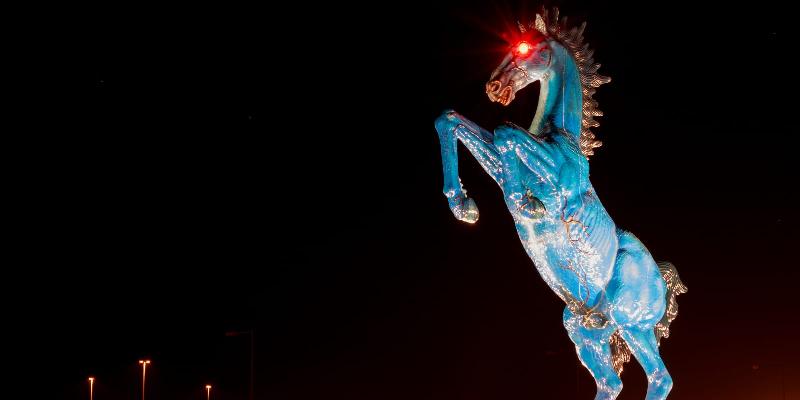 The infamous Denver International Airport horse statue story centers on this massive blue mustang with glowing red eyes.
The Artist and His Fateful Creation
Luis Jiménez was a celebrated Mexican-American artist whose work often challenged perceptions and celebrated Southwestern culture. When he took on the commission for the Denver airport, he intended for “Blue Mustang” to be a bold welcome to the Mile High City. He drew inspiration from the powerful steeds that roamed the frontier, but he infused the sculpture with his signature style: exaggerated features, a dynamic and almost violent energy, and a vibrant, electric-blue color that was impossible to ignore.
However, the creation process was arduous. For over a decade, Jiménez toiled in his Hondo, New Mexico, studio, meticulously crafting the three massive sections of the fiberglass horse. The sheer scale and complexity of the project led to numerous setbacks. The artist was a perfectionist, and the pressure to complete the long-overdue piece was immense. It was during this final push that the Denver International Airport horse statue story took its darkest turn. In 2006, while working on the sculpture, a large section of the horse’s torso broke free from a hoist, pinning the 65-year-old artist against a steel support beam. The massive weight of his own creation severed an artery in his leg, and tragically, Luis Jiménez bled to death on his studio floor.
The “Curse” of Blucifer is Born
Following the artist’s death, the sculpture, which was already controversial due to its demonic appearance and long delays, became shrouded in a new layer of infamy. It was seen as a cursed object, a monstrous creation that had killed its own master. Despite public outcry and petitions to have it removed, the artist’s family and estate insisted on completing his final work. With the help of Jiménez’s staff and family, the “Blue Mustang” was finally assembled and installed at DIA in 2008, two years after his death.
Its arrival was met with a storm of criticism. Many found its glowing red eyes—a tribute to Jiménez’s father, who ran a neon sign shop—and its aggressive, rearing posture to be terrifying, especially as the first and last sight for travelers. The name “Blucifer” quickly entered the local lexicon, a portmanteau of “Blue” and “Lucifer.” This chilling nickname perfectly captured the public’s perception of the statue. The tale of its creation adds a layer of depth, much like the denver airport horse story which has become a part of local lore. The statue became a focal point for the many conspiracy theories that surround Denver International Airport, with some claiming it represents one of the Four Horsemen of the Apocalypse.
What Does the Blue Mustang Symbolize?
Despite its sinister reputation, the intended symbolism of the “Blue Mustang” was far from evil. Luis Jiménez saw the horse as a powerful symbol of the American West. Its wild energy was meant to represent the spirit of the early frontier, and its vibrant color was a hallmark of his artistic style. The glowing red eyes were not meant to be demonic but were an homage to his personal history and the neon art that fascinated him. For Jiménez, the horse was a wild, powerful, and beautiful creature, a testament to the untamed nature that defines the region. However, the tragic circumstances of his death have permanently colored the public’s interpretation, forever intertwining the art with the Denver International Airport horse statue story of its creator’s demise.
Public Reception and Lasting Legacy
Over the years, the public’s relationship with “Blucifer” has evolved. While many still find it unsettling, a large portion of Denverites have embraced the statue as a quirky and unique part of the city’s identity. It has become an iconic, if unofficial, mascot. T-shirts, memes, and local art often feature the demonic blue horse, transforming it from a source of fear into a beloved local oddity. Visitors specifically seek it out, eager to see the infamous “cursed” statue for themselves and learn about its dark history.
The sculpture stands as a powerful, albeit tragic, monument to Luis Jiménez’s artistic vision. It is a work that demands a reaction, refusing to be passive background art. It sparks conversation, debate, and even fear, which is arguably a sign of its success as a provocative piece. The story of its creation is a poignant reminder of the passion and peril that can accompany artistic genius. The details of its journey are as compelling as the narrative behind the denver airport horse statue story, a piece of art forever linked to its maker.
The Denver International Airport horse statue story remains a captivating blend of artistic ambition, public controversy, and personal tragedy. “Blucifer” is more than just a sculpture; it is a piece of folklore, a landmark born from a brilliant mind and sealed by a fatal accident. Whether you see it as a terrifying demon or a misunderstood masterpiece, its powerful presence and dark history are undeniable. It serves as a permanent, glowing-eyed memorial to an artist who gave his life for his work, leaving the world with a final, unforgettable roar of creative energy. Similar to how the blue horse denver story captivates those who hear it, the tale of Blucifer will continue to haunt and fascinate travelers for generations to come.
Frequently Asked Questions (FAQ)
Why is the Denver airport horse blue?
The horse statue, officially named “Blue Mustang,” was created by artist Luis Jiménez. The vibrant blue color is a signature element of his artistic style, which utilized bright, eye-catching fiberglass to create dynamic and powerful sculptures. He intended for the color to be bold and representative of the wild spirit of the West.
Did the Denver airport horse kill its creator?
Tragically, yes. In 2006, artist Luis Jiménez was killed in his studio while working on the statue. A large piece of the 9,000-pound sculpture fell from a hoist and pinned him against a steel beam, severing an artery in his leg. This fatal accident is a major reason the statue is often considered “cursed.”
What are the conspiracy theories about the Denver airport horse?
The “Blue Mustang,” or “Blucifer,” is a central figure in many conspiracy theories surrounding the Denver International Airport. Some people believe its demonic appearance and glowing red eyes signify that it represents one of the Four Horsemen of the Apocalypse, tying into broader theories that the airport is a headquarters for a sinister secret society like the Illuminati or New World Order.
Why does the Denver horse statue have red eyes?
The glowing red eyes of the “Blue Mustang” were a personal tribute by the artist, Luis Jiménez, to his father. His father owned and operated a neon sign shop, and Jiménez incorporated neon lighting into many of his works as an homage to his upbringing and family history. They were not intended to be demonic.
Can you see the blue horse from the Denver airport?
Yes, the “Blue Mustang” is located in the median of Peña Boulevard, the main road leading to and from Denver International Airport. It is one of the first and last things travelers see when arriving or departing by car, making it a highly visible and prominent landmark.
