
Welcoming a feline companion into your home is an exciting experience, often accompanied by a flurry of questions about their care. While you might feel equipped with general knowledge about pet health, specific dietary choices, like the long-debated wet versus dry food for cats, can present a complex puzzle, especially when considering their dental and overall well-being. This decision isn’t a simple one with a single right answer, but understanding the nuances can help you make the best choice for your furry friend.
Cats possess a remarkable ability to command attention and affection, sometimes even mimicking human infant cries to elicit care. However, despite their captivating nature, felines have a significant physiological vulnerability: their kidneys. It’s a commonly held understanding among veterinarians that, given enough time, most cats will eventually face kidney-related issues. Kidney disease is a prevalent diagnosis in cats, particularly as they age, and its progression can be insidious because cats are adept at masking discomfort. Often, by the time diagnostic lab work reveals elevated kidney values, a substantial portion of kidney function has already been lost, making early intervention a challenge.
Supporting Feline Kidney and Dental Health
Recognizing the commonality and often delayed diagnosis of kidney disease prompts veterinarians to explore strategies for prevention and for extending the healthspan of a cat’s kidneys. The cornerstone of managing renal disease involves transitioning cats to specialized renal diets, which are typically formulated with reduced protein, sodium, and phosphorus, alongside an increased concentration of omega-3 fatty acids. A fundamental aspect of kidney disease management is emphasizing increased water intake. However, encouraging cats, who can be notoriously finicky about hydration, to drink more presents its own set of hurdles. For this reason, veterinarians often suggest water fountains or other running water features, hoping to stimulate drinking behavior. Adding a small amount of liquid from a tuna can to a cat’s food is another common recommendation.
The question of how wet versus dry food impacts feline dental health and kidney function is directly linked to this emphasis on hydration. Studies and veterinary theories suggest that incorporating canned food into a cat’s diet throughout its life, not just after a kidney disease diagnosis, may contribute to a longer lifespan for these vital organs.
The Role of Kibble in Cat Dental Health
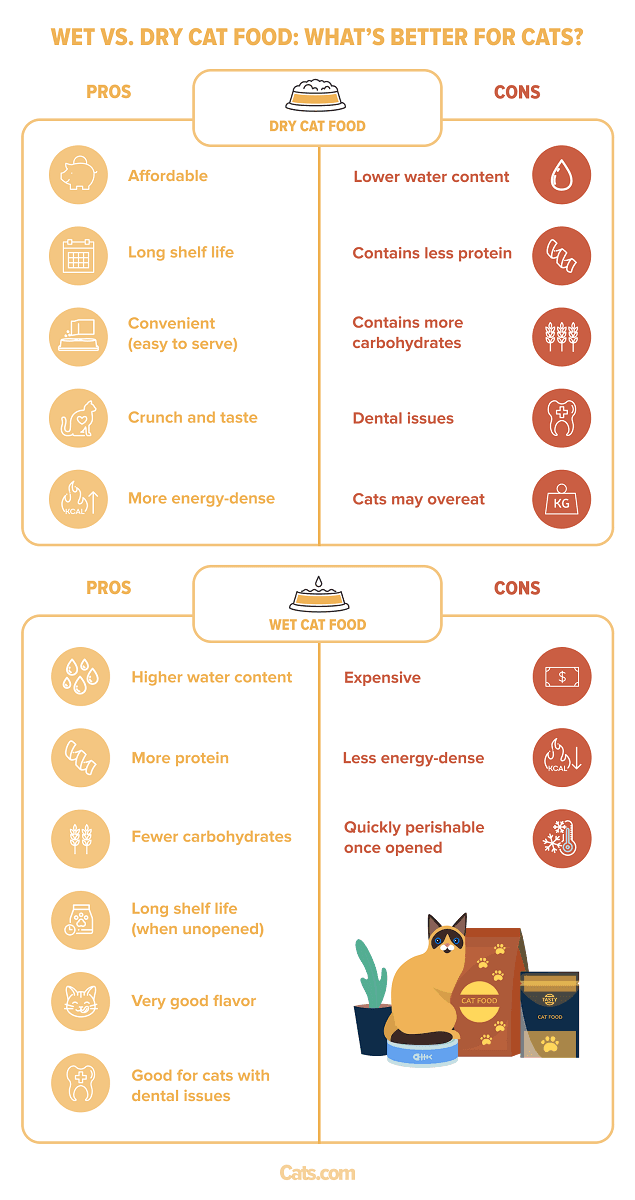
Dry kibble generally contains a higher carbohydrate content compared to wet food. As obligate carnivores, cats are not as efficient at metabolizing carbohydrates, and some nutritionists theorize that this higher carbohydrate load in dry food can contribute to feline obesity, a known risk factor for diabetes. It’s important to note that other factors, including genetics and lifestyle, also play significant roles in feline obesity. However, when it comes to dental health, kibble does offer certain advantages. Specifically, kibble diets formulated with dental health in mind have been shown in studies to significantly reduce tartar and gingivitis compared to diets consisting solely of wet food. While these specialized kibbles can benefit oral hygiene, it’s worth considering what cats are evolutionarily designed to eat: whole prey like mice, which involves shearing meat. These natural diets are not practical for modern domestic cats.
Making the Right Food Choice for Your Cat
The debate between wet and dry food for feline dental health doesn’t have a simple, universally correct answer. From a purely dental standpoint, kibble, especially formulations designed for oral care, is superior. However, a veterinarian’s role is to consider the patient’s overall health. Given the available treatment options, managing periodontal disease generally offers more avenues than treating advanced renal failure in cats.
If the goal is to maximize a cat’s overall health and longevity, a diet that incorporates a significant portion of wet food is likely the more beneficial choice. This doesn’t necessarily mean a 100% wet food diet, but increasing the proportion of wet food will boost water intake, which is crucial for kidney health. Ensuring your cat has access to multiple, appealing water sources, such as fountains, throughout the house is also highly recommended.
Incorporating Dental Care Beyond Diet
Even with a diet that includes wet food, cats who consume only canned food may not benefit from the plaque-removing action associated with crunching kibble. The ideal scenario, as envisioned by many veterinarians, involves a cat eating primarily wet food, supplemented with daily teeth brushing and the occasional use of cat dental treats.
It’s acknowledged that not all cats will tolerate daily teeth brushing. Many owners, like the author, have experienced feline resistance to this practice. If your cat is completely averse to having its teeth brushed, then regular professional dental cleanings by a veterinarian are essential. These cleanings, ideally performed under anesthesia, involve scaling, imaging, and polishing the teeth, and are crucial for maintaining oral health, regardless of at-home brushing efforts. Routine cleanings, supported by consistent brushing (daily or at least every other day), help manage plaque and calculus buildup between professional procedures, potentially minimizing the need for extractions.
Making informed decisions about your cat’s diet and integrating a consistent dental care routine are key to ensuring they lead a long, healthy, and happy life. For personalized advice regarding your cat’s specific dietary needs and dental health, consulting with veterinary professionals is always the best course of action.
