
For years, the Costco food court has been a culinary beacon, a place where hungry shoppers can refuel with surprisingly affordable and undeniably tasty options. At the heart of this beloved institution is the iconic $1.50 hot dog and soda combo. It’s more than just a meal; it’s a piece of Costco lore, a symbol of value that has captivated consumers and baffled business analysts alike. But how did this legendary deal come to be, and how does Costco continue to defy inflation to keep its price unchanged?
The story of the Costco hot dog is deeply intertwined with the company’s founding principles. In 1985, when the price was first set, founders Jim Sinegal and Jeffrey Brotman were driven by a mission to provide exceptional value to their members. They saw the hot dog and soda as a loss leader, a way to draw people into the store and reinforce the perception of Costco as a place where savings were paramount. It was a bold move, a commitment to customer loyalty that has paid dividends far beyond the direct profit margin of that specific combo.
 The iconic Costco .50 hot dog and soda combo, symbolizing value and customer loyalty.
The early days of the hot dog stand were simple. It was a way to offer a quick, convenient, and cheap bite to shoppers who were already spending significant time and money within the warehouse. The idea was to create an experience that enhanced the overall shopping trip, making it more pleasant and cost-effective. This philosophy of offering a superior product at an unparalleled price has been a cornerstone of Costco’s success.
The Mechanics Behind the Unchanging Price
The question on everyone’s mind is: how on earth does Costco still sell a hot dog and soda for $1.50 in today’s economic climate? The answer lies in a combination of brilliant vertical integration, immense purchasing power, and a steadfast commitment to the original vision.
Costco doesn’t just buy hot dogs; they have a hand in their creation. They established their own hot dog processing facility in Los Angeles in 1990, a move that gave them complete control over the quality and cost of their signature dogs. This facility, now expanded and also producing other food court staples, allows Costco to cut out middlemen and negotiate more favorable terms. They are not at the mercy of external suppliers’ price fluctuations in the same way other retailers might be.
Furthermore, the sheer volume of hot dogs Costco sells is staggering. We’re talking tens of millions of combos sold annually across its global locations. This massive scale translates into immense bargaining power with suppliers for all the ingredients – from the buns and soda syrup to the toppings. Costco can demand the best prices because they are such a colossal buyer.
The soda, too, is part of the strategic play. By providing a large, self-serve soda fountain, Costco keeps labor costs down and allows customers to customize their drink. The syrup concentrates are purchased in bulk, further driving down the per-unit cost. It’s a symbiotic relationship: the low price of the hot dog combo keeps customers coming back, and the high volume of sales allows Costco to maintain that low price.
Evolution of the Hot Dog and Beyond
While the price has remained static, the hot dog itself has seen some evolution. Initially, the hot dogs were a quarter-pounder. However, to maintain quality and value, Costco switched to a larger, 1/4 inch thicker “all-beef” frankfurter. This ensures that even with the unchanging price, the product remains substantial and satisfying. The accompanying soda also grew in size, from 12 ounces to a more generous 20 ounces.
The success of the hot dog combo paved the way for other beloved food court items. The Polish dog, the chicken bake, the Caesar salad, and the much-lauded pizza slices all adhere to the same ethos: great taste, high quality, and unbelievably low prices. These items are not just afterthoughts; they are integral to the Costco shopping experience, adding to the overall value proposition.
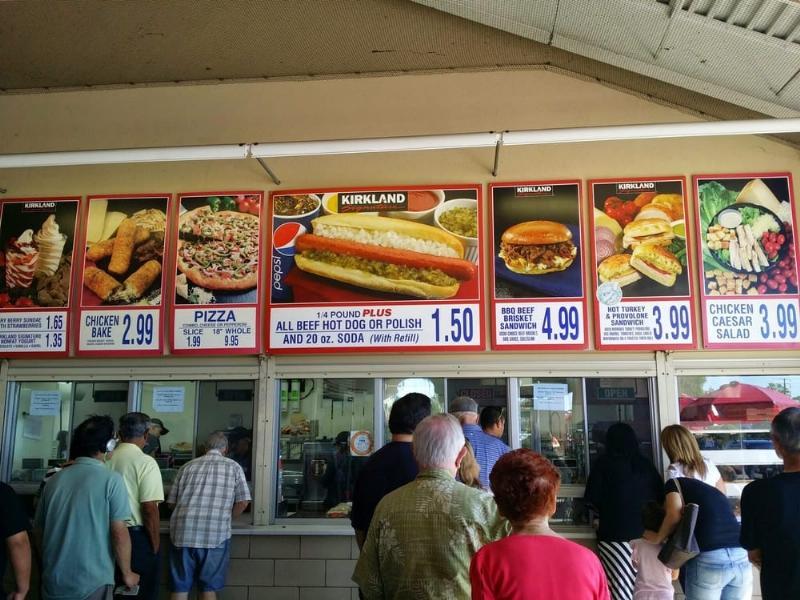 Shoppers enjoying a variety of affordable and delicious items at the Costco food court.
The Costco food court has become a destination in itself for many members. It’s a place where families can grab a quick and affordable lunch after a shopping trip, or where individuals can satisfy a craving without breaking the bank. The consistency of the offerings, regardless of the location, reinforces the trust members place in the Costco brand.
The $1.50 Hot Dog: A Case Study in Value
The $1.50 hot dog and soda combo is more than just a food item; it’s a masterclass in business strategy. It demonstrates the power of:
- Vertical Integration: Controlling the supply chain from production to sale.
- Economies of Scale: Leveraging massive purchasing volume for lower costs.
- Brand Loyalty: Using an exceptional value offer to build a devoted customer base.
- Customer Experience: Enhancing the overall shopping trip with affordable amenities.
It’s a testament to the foresight of Costco’s leadership that this simple combo has endured for decades, becoming a cultural touchstone. While other retailers grapple with rising costs and squeezed margins, the Costco hot dog stands as a delicious, edible reminder of a different business philosophy – one where customer value is not just a talking point, but the driving force behind every decision.
The story of the Costco $1.50 hot dog is a compelling narrative of how a commitment to core values, strategic investment, and an unwavering focus on the customer can create an enduring legacy. It proves that sometimes, the simplest offerings, executed with precision and dedication, can become the most powerful symbols of a brand’s identity. It’s a story that continues to be written, one delicious and affordable bite at a time.
Frequently Asked Questions About the Costco Hot Dog Story
Q1: When did the Costco hot dog combo first launch, and what was its original price?
The Costco hot dog and soda combo was introduced in 1985 at the price of $1.50. This price has remained the same for nearly four decades.
Q2: How does Costco manage to keep the hot dog price so low despite inflation?
Costco utilizes several strategies: vertical integration by owning its hot dog processing plant, immense purchasing power due to high sales volume, and a commitment to the hot dog as a loss leader to drive store traffic and reinforce its value proposition.
Q3: Is the Costco hot dog still made of 100% beef?
Yes, the Costco hot dog is an all-beef frankfurter. While the exact specifications have been refined over the years to ensure quality and value, it remains a premium all-beef hot dog.
Q4: Has the size of the hot dog or soda changed over time?
Yes, the hot dog has evolved to be a larger, more substantial all-beef frank. The accompanying soda size also increased from 12 ounces to a 20-ounce drink.
Q5: Why does Costco offer such a low-priced food item?
The food court, particularly the hot dog combo, serves as a loss leader. It’s a tool to attract members, enhance the shopping experience, and reinforce Costco’s brand image as a provider of exceptional value, encouraging more frequent visits and purchases.
Q6: Can non-Costco members purchase the hot dog combo?
In most locations, food court items are available to members only. However, some states have laws requiring access to pharmacy and food court services for non-members, so policies can vary. It’s always best to check with your local Costco.
