
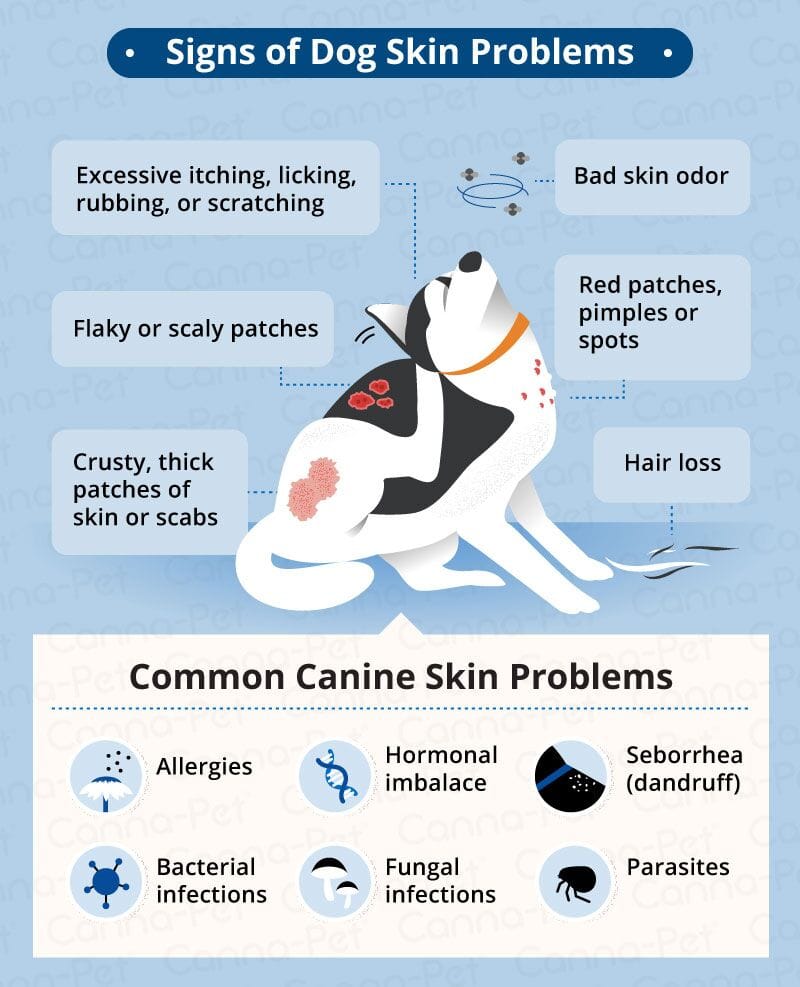
The skin is your dog’s largest organ and plays a crucial role in their overall health and well-being. Dog skin disorders are a frequent reason for veterinary visits, highlighting the importance of recognizing potential issues. Understanding common skin problems can help you identify when your canine companion might be experiencing a skin-related ailment.
Symptoms of Skin Problems in Dogs
A healthy dog’s skin should be soft, clear, and free from abnormalities. Look out for the following symptoms, which can indicate a skin problem:
- Scales or flakes
- Redness
- Hair loss
- Discoloration
- Unpleasant odor
- Excessive itching
- Greasiness
- Scabbing
- Bumps
- Oozing sores
10 Most Common Dog Skin Disorders
1. Allergies
Allergies are among the most prevalent skin conditions in dogs. These can be triggered by various factors, including fleas, specific food ingredients, or environmental allergens like pollen, grass, dust, and mold. It’s common for dogs to be allergic to a combination of these substances. When exposed to an allergen, a dog’s body releases histamine, leading to intense itching. Allergies can often be managed through medication or by identifying and avoiding the specific allergen. [cite:0, cite:1]
2. Parasites
External parasites are a significant cause of skin issues in dogs. The most common culprits include fleas, ticks, and mites. Fortunately, many parasitic skin problems can be prevented with high-quality preventative products. [cite:0, cite:2]
Fleas can infest various animal species, and a single flea can lay numerous eggs, rapidly spreading in the environment. Signs of fleas include the presence of adult fleas or “flea dirt,” which appears as small black specks in the fur. Some dogs exhibit extreme sensitivity to flea bites, resulting in severe itching, hair loss, and self-inflicted trauma from scratching.
Ticks attach to a dog and feed for several days. They can transmit various diseases, so prompt removal is essential. Ensure the entire tick, including its head, is removed.
Common mites affecting dogs include:
- Sarcoptes: These mites are highly contagious and cause hair loss and itching.
- Demodex: While normally present on the skin, Demodex mites can overgrow in immunocompromised dogs, leading to hair loss, particularly around the eyes and feet.
- Cheyletiella: Known as “walking dandruff,” these mites appear as small white flakes and may or may not cause itching.
3. Bacterial Skin Infections
Bacterial skin infections are a common disorder in dogs, often resulting from an overgrowth of naturally occurring skin bacteria. This overgrowth can happen when a dog’s immune system is compromised due to allergies or other underlying health issues. Symptoms include red, scaly patches, small red bumps or pustules, and moist, inflamed skin areas. Infections can also occur if non-native bacteria enter the skin through minor wounds. Treatment typically involves oral antibiotics or medicated shampoos.
4. Hot Spots
Hot spots are acutely inflamed, moist, red areas of skin that can develop rapidly. They are typically a consequence of an underlying allergy that causes intense itching. When a dog repeatedly rubs, scratches, licks, or chews at an area, it can lead to a hairless wound. Hot spots are often painful and sensitive to the touch. Treatment usually includes antibiotics and anti-itch medications, and over-the-counter sprays may provide relief.
5. Yeast Infections
Yeast skin infections are caused by an overgrowth of yeast organisms on the skin, leading to a distinct musky odor and itchiness. Chronic yeast infections can result in hyperpigmentation (darkening of the skin), particularly in the belly, groin, and armpit areas. Black debris may also accumulate at the nail beds. Antifungal medications, either oral or topical, are the standard treatment.
6. Ringworm
Despite its name, ringworm is a fungal infection, not caused by a worm. In dogs, it typically presents as a localized infection with hair loss and scaly skin, which may be itchy. Ringworm is zoonotic, meaning it can be transmitted to humans. Treatment involves topical and oral antifungal medications.
7. Dry Skin
Dry skin in dogs, often accompanied by flakiness (dander), can stem from various causes. While dry weather is a common factor, it can also indicate poor nutrition or an underlying health condition. Treatments can include moisturizing leave-on products or oral omega-3 fatty acid supplements to support skin health.
8. Alopecia
Alopecia, or hair loss, can be a symptom of numerous underlying conditions, including allergies, parasites, drug reactions, skin infections, genetic disorders, hypothyroidism, and Cushing’s disease. If hair loss occurs without clear signs of infection or parasites, your veterinarian may perform blood tests to check for underlying diseases.
Some breeds are prone to a genetic condition called alopecia X, characterized by hair loss without skin inflammation. Neutering male dogs may improve this condition in some cases, and melatonin can also be beneficial.
9. Skin Cancer
Skin cancer in dogs can manifest as hair loss, scabs, oozing lesions, or lumps. While some forms are obvious, others present more subtly. Any non-healing wounds or discolored areas on your dog’s skin warrant a veterinary examination. Diagnosis often involves a biopsy, and treatment may include surgery, radiation, or chemotherapy.
10. Autoimmune Disease
Autoimmune diseases occur when a dog’s immune system mistakenly attacks its own body tissues. These conditions are often inherited but can sometimes be triggered by drug reactions. Examples include pemphigus and lupus, which can cause crusting lesions and hair loss, particularly on the nose and face. Treatment typically involves immunosuppressive medications like prednisone or cyclosporine, with the specific approach depending on the diagnosed disease. Avoiding excessive sun exposure may also be recommended.
