
Understanding how to effectively train your avian companion is key to building a strong bond and ensuring a well-behaved bird. Among the various training methods, clicker training has emerged as a highly effective and positive reinforcement technique for birds. This method uses a distinct sound – the click – to communicate with your bird, marking the exact moment they perform a desired behavior. Unlike traditional training, clicker training focuses on rewarding good behavior, making the learning process enjoyable for both you and your feathered friend. This guide will delve into the intricacies of Clicker Training For Birds, covering everything from the basic principles to advanced techniques, ensuring you can confidently apply it to enhance your bird’s life and your relationship with them. We will explore the science behind positive reinforcement, how to choose and use a clicker, and specific commands you can teach, all while maintaining a fun and engaging approach.
The Science Behind Bird Clicker Training
Clicker training for birds is rooted in the principles of operant conditioning, a learning theory that explains how behaviors are influenced by their consequences. Specifically, it utilizes positive reinforcement, where a desirable behavior is encouraged by the addition of a pleasant stimulus, in this case, a treat or praise, immediately following the behavior. The clicker acts as a bridge, a marker signal that precisely indicates to the bird which action earned them the reward. This immediate feedback is crucial because birds, like many animals, have a short attention span. If the reward comes too late, they won’t associate it with the correct action.
The clicker itself is a small device that produces a consistent, sharp sound. This sound is neutral; it doesn’t inherently mean “good” or “bad” to the bird. It’s through a process called “charging the clicker” that the sound becomes associated with positive outcomes. By pairing the click with a high-value treat multiple times, the bird learns that the click predicts something good. Once the clicker is charged, you can begin using it to mark and reward specific behaviors. This method is highly effective because it’s clear, consistent, and avoids the confusion or fear that can sometimes accompany punishment-based training.
Getting Started with Bird Clicker Training
Embarking on your clicker training journey with your bird requires a few essential tools and a patient, consistent approach. The primary tool, of course, is the clicker itself. There are various types available, including traditional plastic clickers with a metal strip, quieter finger-clickers, and even apps that simulate the sound on your phone. The best clicker for you will depend on your bird’s sensitivity to sound and your personal preference.
1. Charging the Clicker
This initial step is fundamental. You need to teach your bird that the sound of the clicker predicts a reward.
- Choose a High-Value Treat: Select a treat your bird absolutely loves and doesn’t get at other times. This could be a tiny piece of fruit, a specific seed, or a special pellet. The treat should be small enough to be consumed quickly.
- Find a Quiet Environment: Minimize distractions. Choose a time when your bird is alert but not overly energetic.
- Click and Treat: Hold the clicker in one hand and the treats in the other. Click the clicker, and immediately give your bird a treat.
- Repeat: Do this for short sessions, about 5-10 minutes, several times a day for a few days. The goal is for the bird to hear the click and immediately look to you for a treat, or even anticipate it.
2. Marking and Rewarding Behavior
Once your bird understands the clicker’s meaning, you can start using it to reinforce desired behaviors.
- Identify a Target Behavior: This could be something as simple as looking at a target stick, stepping onto your finger, or a specific vocalization.
- Wait for the Behavior: Be patient and wait for your bird to offer the behavior, even if it’s just a slight inclination.
- Click the Moment it Happens: As soon as your bird performs the desired action, click the clicker.
- Reward Immediately: Follow the click with a treat and verbal praise.
- Start Small: Begin with approximations of the behavior. For instance, if you want your bird to step onto your finger, click and treat for just lifting a foot, then for touching your finger, and eventually for fully stepping onto it.
Consistency is paramount. Every time you see the desired behavior, click and treat. This clear communication helps your bird learn quickly and enthusiastically.
Essential Clicker Training Commands for Birds
The versatility of clicker training allows you to teach your bird a wide range of commands and behaviors, from basic husbandry to impressive tricks. Here are some foundational commands to get you started:
1. Target Training
Target training is often the first step in clicker training for birds. It involves teaching your bird to touch a target stick (a chopstick or a specially designed target stick) with its beak. This is invaluable for guiding your bird to specific locations, for husbandry behaviors, and for teaching more complex tricks.
- How to Teach:
- Present the target stick to your bird.
- When your bird shows any interest, even just looking at it, click.
- As they get closer, click for looking.
- Click and treat for touching the target with their beak.
- Gradually increase the distance they need to move to touch the target.
- Once they consistently touch the target, you can start moving the target to guide them to step onto your hand or into their cage.
2. Step-Up Command
This is a crucial command for safe handling and building trust. It teaches your bird to willingly step onto your finger or hand when asked.
- How to Teach:
- Offer your finger or a perch slightly below your bird’s feet.
- If your bird shifts their weight or lifts a foot, click and treat.
- As they become more comfortable, wait for them to actually place their foot on your finger. Click and treat enthusiastically.
- Use a verbal cue like “step up” just as they are about to step up.
- Gradually increase the duration they stay on your finger before rewarding.
3. Come When Called
Teaching your bird to come to you on command strengthens your bond and is essential for recall, especially if they are ever out of their cage.
- How to Teach:
- Start at a very close distance. Use a cheerful tone and perhaps hold a treat.
- When your bird takes a step towards you, click and treat.
- Gradually increase the distance and the number of steps required.
- Introduce the verbal cue “come” or their name just as they start moving towards you.
- Practice in different locations within the home to generalize the behavior.
4. Recall to a Specific Perch or Location
This is a variation of “come when called,” teaching your bird to go to a designated spot. This can be particularly useful for getting them back into their cage without a struggle.
- How to Teach:
- Place a distinct perch or a target in the desired location (e.g., inside their cage).
- Use your target stick or a visual cue to direct your bird towards the perch.
- Click and treat for any movement towards the perch.
- Click and reward when they land on or touch the perch.
- Add a verbal cue like “perch” or “home.”
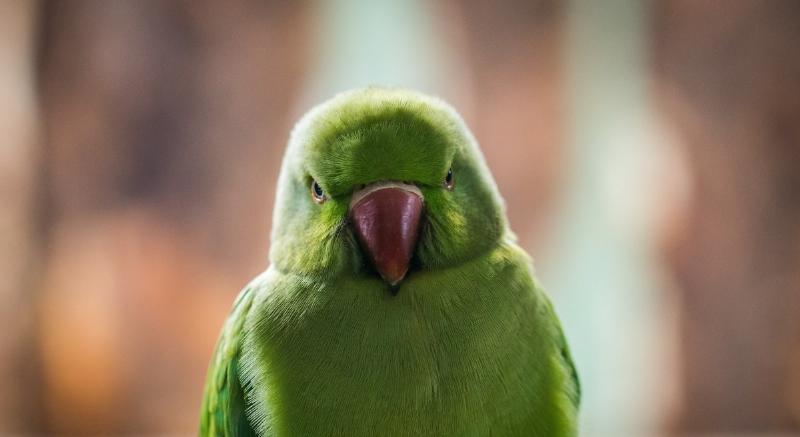 alt-text: Parrot happily interacting with a clicker trainer, learning new tricks with positive reinforcement and treats.
Advanced Clicker Training Techniques and Tips
As you and your bird become more proficient with basic commands, you can explore more advanced techniques and refine your training approach. These strategies can help overcome common challenges and make training even more effective.
1. Shaping Complex Behaviors
Shaping involves breaking down a complex behavior into a series of smaller, manageable steps. You reward successive approximations of the final desired behavior. For instance, teaching a bird to retrieve a small object might involve rewarding them for looking at the object, then for moving towards it, then for touching it, then for picking it up, and finally for bringing it to you. This requires keen observation and patience, rewarding even the tiniest steps in the right direction.
2. Luring vs. Capturing
- Luring: This involves using a treat or a target stick to guide your bird into a specific position or action. For example, you might lure a bird onto your hand by holding a treat slightly above and behind your hand.
- Capturing: This involves waiting for your bird to naturally offer a behavior and then clicking and rewarding it. For instance, if you want to teach your bird to bow its head, you would wait for it to happen spontaneously and then click and treat.
Both methods have their place. Luring is effective for teaching specific movements, while capturing is excellent for behaviors that happen randomly or for teaching natural movements.
3. Using a Target Stick for Distance Training
A target stick, as mentioned in target training, is incredibly useful for training at a distance. You can teach your bird to follow the target stick to move around their enclosure, to a new location, or even to a perch outside their cage. This is a safe way to encourage movement and exploration without direct physical prompting.
4. Addressing Common Training Challenges
- Bird Losing Interest: Keep training sessions short (5-10 minutes) and end on a positive note. Vary the rewards or try a different time of day. Ensure the treats are truly high-value.
- Bird Biting: Never punish biting. Instead, try to understand why the bird is biting (fear, overstimulation, territoriality). If biting occurs during training, calmly disengage and try again later. Ensure you are not pushing the bird too fast.
- Inconsistent Behavior: Ensure your cues are clear and consistent. Make sure you are clicking and rewarding at the precise moment the behavior occurs. If the behavior is too complex, break it down further.
5. Generalizing Behaviors
Once your bird reliably performs a behavior in one setting, practice it in different environments with varying levels of distraction. This helps the bird understand that the command applies everywhere, not just in your usual training spot. For example, if you teach “step up” in the living room, practice it in the kitchen, near other people, or with the TV on.
The Benefits of Clicker Training for Birds
The advantages of implementing clicker training extend far beyond simply teaching a few tricks. This positive reinforcement method fosters a deeper, more trusting relationship between you and your bird, while also enhancing their cognitive abilities and overall well-being.
One of the most significant benefits is the strengthening of the human-animal bond. By engaging in regular, positive training sessions, you build trust and mutual respect with your bird. They learn to associate you with positive experiences, making them more eager to interact with you. This consistent communication helps alleviate potential behavioral issues that stem from fear or misunderstanding.
Clicker training also enhances a bird’s cognitive skills. Learning new behaviors stimulates their minds, keeping them mentally agile and preventing boredom, which can often lead to destructive or undesirable behaviors. The problem-solving aspect of training encourages birds to think and strategize, contributing to their overall mental enrichment.
Furthermore, clicker training is a vital tool for husbandry and veterinary care. Teaching birds to voluntarily step onto a scale for weigh-ins, present a foot for examination, or tolerate wing or nail trims can significantly reduce stress during necessary health procedures. This cooperation makes veterinary visits and home grooming much easier and less traumatic for the bird.
Finally, clicker training promotes positive behavior modification. Instead of suppressing unwanted behaviors through punishment, which can damage trust and create fear, clicker training focuses on teaching alternative, desirable behaviors. This approach is not only more humane but also more effective in the long run, leading to a happier, well-adjusted pet.
Frequently Asked Questions about Bird Clicker Training
Q1: How young does a bird need to be to start clicker training?
A1: Birds can begin clicker training as soon as they are weaned and comfortable interacting with you. Even young chicks can learn the basic associations with the clicker. The key is to keep sessions short and fun.
Q2: What are the best treats for clicker training birds?
A2: High-value treats are essential. These should be small, easily digestible, and highly motivating for your specific bird. Common choices include small pieces of fruit (like apple or berries), favorite seeds (like sunflower or millet spray), or specialized bird treats. Always ensure treats are given in moderation as part of a balanced diet.
Q3: My bird seems scared of the clicker sound. What should I do?
A3: If your bird is startled by the clicker, try a quieter clicker, or even a pen click or a tongue click initially. You can also try covering the clicker with a cloth to muffle the sound. Ensure you are pairing the click with an immediate, highly desirable treat to build a positive association. Go slowly and don’t force interaction if the bird is fearful.
Q4: How long does it take to teach a bird a new command?
A4: The time it takes varies greatly depending on the bird, the complexity of the command, the consistency of training, and the quality of the reward. Some simple behaviors might be learned in a few sessions, while more complex tricks can take weeks or months of consistent practice. Patience is key.
Q5: Can clicker training be used for aggressive behaviors?
A5: Clicker training, as a positive reinforcement method, is excellent for redirecting and modifying behavior. While it’s not a direct solution for deep-seated aggression, it can be used to build trust, teach alternative behaviors, and manage situations that might trigger aggression. For significant behavioral issues, consulting a certified avian behaviorist is highly recommended.
Conclusion: Building a Brighter Future with Your Bird Through Training
Clicker training offers a powerful, positive, and rewarding avenue for enhancing the lives of both birds and their owners. By mastering the art of the clicker, you unlock a unique communication channel that fosters trust, deepens your bond, and enriches your bird’s life immeasurably. From teaching essential life skills like stepping up to intricate tricks that showcase your bird’s intelligence, the possibilities are vast and exciting. Remember that consistency, patience, and a focus on positive reinforcement are the cornerstones of successful training. Celebrate every small success, keep sessions engaging, and always prioritize your bird’s well-being and enjoyment. As you continue your training journey, you’ll discover not just a well-behaved companion, but a truly engaged and interactive partner. Embrace the “Dog Care Story” philosophy by investing in your bird’s understanding and happiness through effective and loving training methods.
