
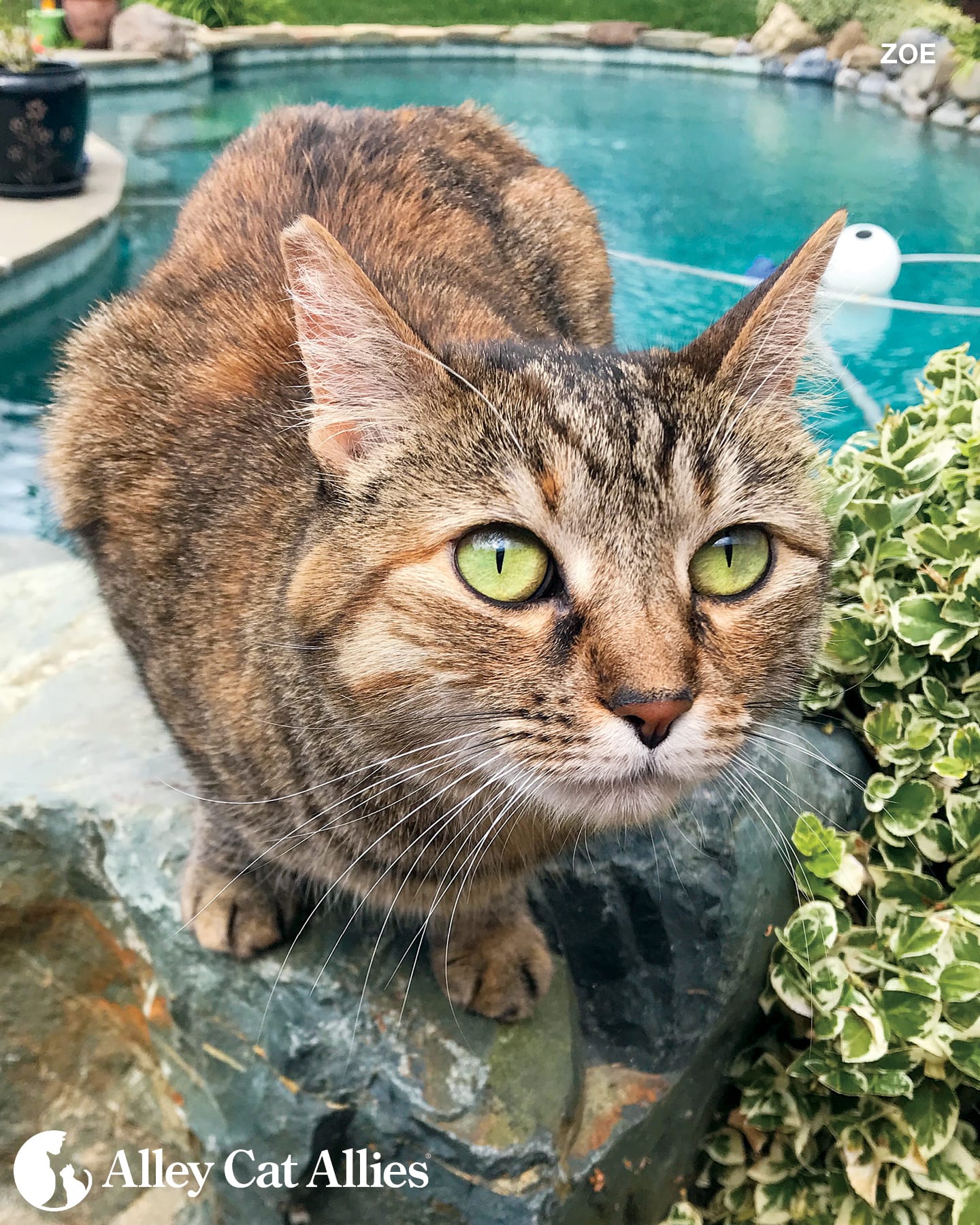
National Tabby Day is a special occasion dedicated to celebrating one of the most common and recognizable coat patterns in domestic cats. Often, when people picture a cat, it’s a tabby they envision, complete with its distinctive stripes. However, “tabby” isn’t a breed but rather a description of a coat pattern that encompasses a variety of markings and colors. From earthy browns and vibrant oranges to sleek silvers and soft buffs, tabbies showcase a stunning spectrum of hues. Even black cats can reveal hidden tabby stripes when sunlight catches their fur. Alley Cat Allies is celebrating this day by sharing educational insights into the fascinating world of tabby cats.
What Defines a Tabby Cat?
The term “tabby” refers to the most prevalent coat pattern found in domestic cats. Key characteristics commonly associated with tabbies include:
- An “M” shaped marking prominently displayed on their forehead.
- Stripes that extend across the cheeks and around the eyes.
- While often characterized by body stripes, the tabby pattern exhibits considerable variation.
The iconic “M” on a tabby’s forehead is a widely recognized feature, and numerous legends surround its origin. This coat pattern has deep roots, tracing back to the ancestor of modern domestic cats, Felis catus. Over generations, the ancestral stripes evolved, leading to the diverse range of patterns and markings seen today. The genes responsible for tabby coats are dominant, explaining their widespread presence among feline populations.
Exploring the Different Types of Tabby Patterns
While there are numerous variations, four primary tabby patterns are most commonly observed:
1. Classic Tabby
The classic tabby is distinguished by bold, swirling stripes on its sides, creating a marbled effect. This distinctive “bullseye” pattern is often considered a hallmark of this type.
2. Mackerel Tabby
Often considered the “true” classic tabby due to its prevalence, the mackerel tabby features narrow, parallel stripes running down its sides. A prominent, thicker stripe typically runs along the length of the cat’s back, with thinner stripes on the legs and tail.
3. Ticked Tabby
Ticked tabbies have individual hairs with bands of color, resulting in a salt-and-pepper or agouti appearance on their body, with minimal to no distinct body stripes. However, they usually retain faint striping on their face, legs, and tail. This pattern is less common among tabbies.
4. Spotted Tabby
Instead of stripes, spotted tabbies display distinct spots across their body. These spots can appear as broken stripes or as clearly defined markings. Like other tabby types, they typically have stripes on their face, legs, and tail.
Beyond these four main types, several other variations exist, often combining tabby markings with other color patterns:
Patched Tabbies
These cats are predominantly white with patches of color that contain tabby markings.
Tortoiseshell Tabby (Torbies)
When the mottled colors of a tortoiseshell cat—typically a mix of black, brown, and orange, or their diluted versions—are combined with tabby stripes, the result is a “torbie.”
Calico Tabby
Calico cats, known for their distinct patches of white, black, and orange (or diluted variations), can also exhibit tabby stripes within these colored areas.
Tortoiseshell Calico Tabby (Torbicos)
This rare and striking combination, affectionately known as a “torbico,” integrates tortoiseshell coloring, calico patches, and tabby striping into one unique coat.
The Importance of Identifying Tabby Patterns
Understanding these tabby patterns is more than just a collection of interesting facts; it can be crucial for practical purposes, particularly in identifying cats. Accurate descriptions of a cat’s coat pattern aid in their identification if they become lost or are found by animal shelters. Being able to communicate precise characteristics can significantly increase the chances of a lost cat being reunited with its owner.
For those needing to identify cats accurately, resources like Alley Cat Allies’ Cat Identification Guide offer comprehensive descriptions for various coat patterns, including all types of tabbies. Additionally, printable worksheets and poster guides are available to help record and recognize these features.
To all the beloved tabbies who enrich our lives with their presence, happy National Tabby Day!
