
We live in a world that demands instant reactions. A promotion is “good.” A missed flight is “bad.” We rush to label every event, placing it neatly into a box of fortune or misfortune. But what if our initial judgment is wrong? What if the fabric of life is far more complex and interconnected than we realize? An ancient Taoist parable, the Chinese Farmer And Horse Story, offers a profound perspective that challenges our need for certainty and provides a timeless guide to navigating the unpredictable currents of existence. This narrative isn’t just a simple tale; it’s a powerful lesson in wisdom, acceptance, and the hidden opportunities within every twist of fate. Much like other timeless tales, such as the compelling chinese story about horse, it reveals deep truths about the human condition.
The Timeless Parable of the Farmer and His Horse
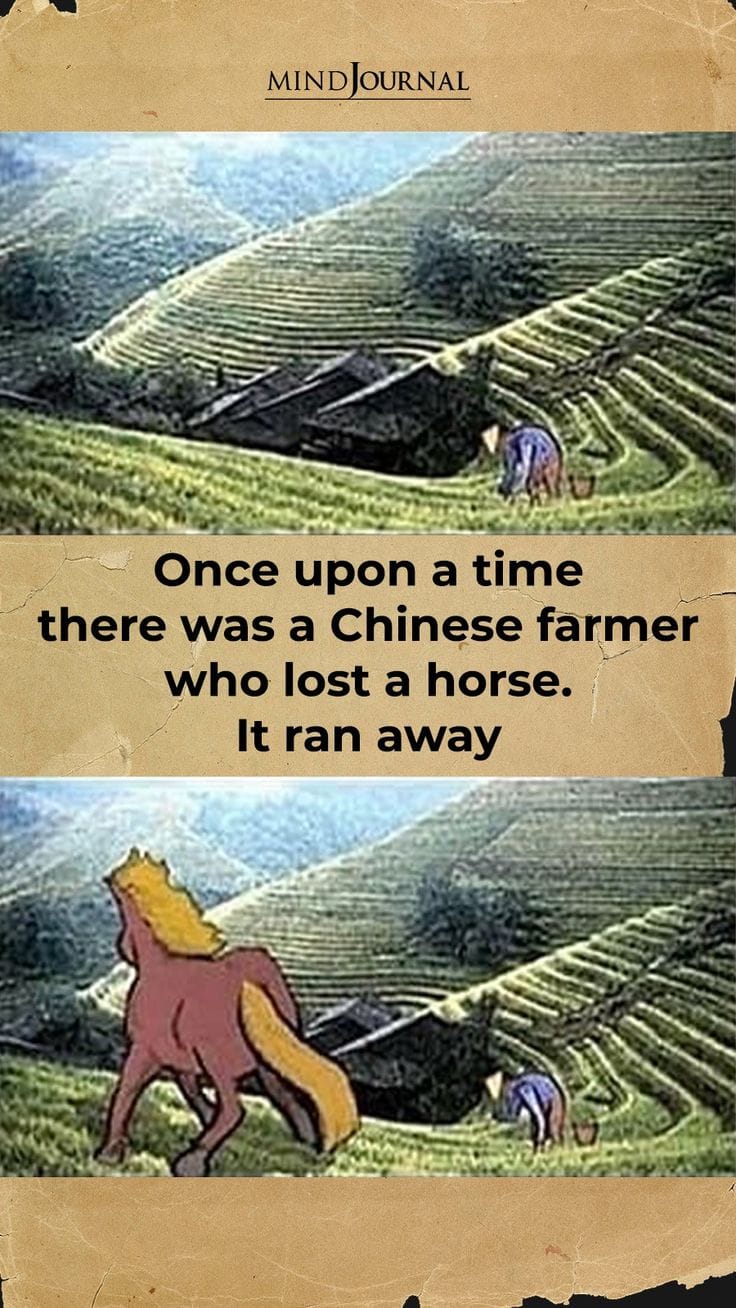
The story, often attributed to the Huainanzi, a 2nd-century BC Chinese text, unfolds in a small, rural village. It centers on an old farmer, known for his calm demeanor and his prized stallion.
One day, for no apparent reason, the horse bolts from its enclosure and disappears into the wild hills. The farmer’s neighbors quickly come to offer their sympathies. “What terrible luck!” they exclaim. “Your only horse is gone. This is a disaster.”
The farmer simply listens, nods, and replies with a question:
“Good luck, bad luck, who knows?”
The neighbors leave, puzzled by his strange response. A few weeks later, the unexpected happens. The farmer’s horse returns, and it’s not alone. It has led a magnificent herd of wild horses back to the farm. The neighbors, hearing the news, rush back, this time to congratulate him. “What incredible fortune!” they cheer. “You’ve gone from having no horse to having a whole herd. You are a rich man now!”
Again, the farmer remains unflustered. He looks at the new horses, then at his neighbors, and says:
“Good luck, bad luck, who knows?”
His strange detachment continues to bewilder everyone. The farmer’s son, eager to help with the new animals, begins the task of taming the wild horses. While attempting to ride one of the spirited stallions, he is thrown violently to the ground, and his leg is badly broken. The injury is severe, leaving him unable to walk properly. Once more, the villagers gather. “Oh, what a tragedy!” they lament. “Your son is injured, perhaps for life. This ‘fortune’ has brought you only sorrow.”
And for the third time, the farmer calmly responds:
“Good luck, bad luck, who knows?”
A short time later, the emperor’s army marches into the village. They are conscripting every able-bodied young man for a brutal war on a distant frontier, a war from which few are expected to return. They take the sons of all the farmer’s neighbors. But when they see the farmer’s son with his broken leg, they pass him by. He is spared from the conflict.
“Good Luck, Bad Luck, Who Knows?” The Core Meaning
The farmer’s recurring phrase is the heart of the story’s wisdom. It’s not a statement of pessimism or indifference but one of profound understanding. The chinese farmer and horse story teaches us that life is a continuous, unfolding process. An event that seems negative in the moment can be the direct cause of a positive outcome later, and vice versa.
The Wisdom of Non-Judgment
The central lesson is about withholding immediate judgment. Our perspective is limited; we see only a tiny fragment of a much larger picture. The farmer understands this. He knows that the chain of cause and effect is too intricate to be understood from a single vantage point. By refusing to label events, he frees himself from the emotional rollercoaster of joy and despair that his neighbors ride. This idea is explored in many parables, including the story of the farmer who lost his horse, which shares a similar core message.
Embracing Uncertainty and the Tao
This parable is a perfect illustration of Taoist philosophy. The “Tao” can be translated as “the Way” or “the Path”—the natural, underlying flow of the universe. The Tao is cyclical and balanced, containing both light and dark, fortune and misfortune (yin and yang). To live in accordance with the Tao is to accept this duality and not fight against the natural current of events. The farmer doesn’t resist reality; he observes it, allowing it to unfold without imposing his desires or fears upon it.
How the Chinese Farmer and Horse Story Applies to Your Life
While it’s an ancient tale, the wisdom of the chinese farmer and horse story is more relevant than ever in our fast-paced, high-pressure world. We can apply the farmer’s perspective to almost any area of modern life.
In Your Career
Imagine you are passed over for a promotion you desperately wanted. The initial reaction is disappointment—bad luck. But a few months later, the company restructures, and the entire department you would have led is eliminated. The “bad luck” of not getting the promotion saved you from being laid off. Or perhaps missing that promotion pushed you to seek other opportunities, leading you to a dream job you never would have discovered otherwise. The farmer’s wisdom encourages us to see setbacks not as final verdicts but as potential detours to new and unforeseen paths.
In Your Relationships
A painful breakup can feel like the end of the world. It’s an event we would universally label as “bad.” Yet, how many people look back years later and realize that the end of that relationship was necessary for their personal growth? It may have created the space for them to find a more compatible partner or to discover their own strength and independence. The story of the farmer and the horse reminds us that what feels like a loss today might be clearing the way for a greater gain tomorrow.
In Personal Setbacks
Facing a health issue or a financial struggle is undeniably difficult. The farmer’s perspective doesn’t ask us to deny the pain or challenge. Instead, it invites us to stay open to the possibility that good can emerge from the hardship. A health scare might lead to a complete lifestyle transformation, resulting in more vitality and appreciation for life than ever before. A financial loss could force a re-evaluation of one’s values, leading to a simpler, more meaningful existence.
The Psychological Power of the Farmer’s Perspective
Modern psychology has concepts that echo the ancient wisdom of this tale. The practice of cognitive reframing, a cornerstone of Cognitive Behavioral Therapy (CBT), involves changing your perspective on a situation to change your emotional response to it. The farmer is a master of reframing. He doesn’t see a runaway horse as a “disaster”; he sees it as simply “an event.”
This mindset cultivates immense resilience. By not getting swept away by immediate emotional reactions, the farmer conserves his energy and maintains his peace of mind. He remains centered and calm, regardless of external circumstances.
As Dr. Evelyn Reed, a cultural psychologist, might state, “The story of the farmer is a powerful tool for emotional regulation. It teaches us to pause before we react, to introduce a space between a stimulus and our response. In that space lies our power to choose a wiser, more balanced perspective.” This echoes the sentiment found in other tales of wisdom like the old man and his horse story.
Frequently Asked Questions (FAQ)
What is the main moral of the Chinese farmer story?
The main moral is that we should not be so quick to judge events as “good” or “bad.” Life is complex and interconnected, and what appears to be a misfortune may lead to good fortune, and vice versa. It teaches the wisdom of accepting uncertainty and embracing a broader perspective.
Who wrote the story of the farmer and his horse?
The story does not have a single author. It is an ancient Chinese parable, with one of its earliest known appearances in the Huainanzi, a collection of philosophical essays written in the 2nd century BC during the Han dynasty.
How is this story related to Taoism?
The story is a perfect embodiment of key Taoist principles. It illustrates the concept of the Tao (the natural flow of the universe), the duality of yin and yang (how opposites are interconnected), and the virtue of wu wei (effortless action, or allowing things to unfold naturally without resistance).
Can this parable promote inaction or passivity?
This is a common misconception. The story does not advocate for doing nothing. The farmer and his son still take action—they care for the horses, and the son tries to tame them. The wisdom lies not in inaction, but in detaching one’s emotional well-being from the unpredictable outcomes of those actions.
How can I apply this story to my daily life?
Start by practicing a pause. When something happens, whether seemingly good or bad, take a breath before labeling it. Gently remind yourself, “Good luck, bad luck, who knows?” This simple practice can help reduce anxiety, build emotional resilience, and foster a greater sense of peace with the unpredictable nature of life.
The Wisdom to Carry Forward
The chinese farmer and horse story has endured for millennia for a simple reason: it speaks to a fundamental truth of the human experience. Life is, and always will be, uncertain. We cannot control every outcome, nor can we predict the long-term consequences of any single event.
By embracing the farmer’s wisdom, we can learn to navigate life’s peaks and valleys with more grace and less anxiety. We can free ourselves from the burden of immediate judgment and find peace in the unfolding mystery of it all. The next time you face an unexpected turn of events, remember the old farmer, his horse, and the simple, profound question: “Good luck, bad luck, who knows?”
