
The Chartreux cat, with its distinctive blue-gray coat and gentle demeanor, is a breed steeped in French history and charm. Originally known as the “hospital cat” and prized for their hunting abilities, these felines have a unique appeal that has captivated cat lovers for centuries. This breed is characterized by its stunning blue-grey coat, intelligent personality, and a face that often appears to be smiling due to prominent whisker pads. Despite their historical significance, Chartreux cats remain relatively rare today, making them a sought-after companion for those seeking a devoted and sweet-natured pet.
Personality and Temperament
Chartreux cats are known for their affectionate and intelligent nature. They tend to form strong bonds with their families, often choosing a favorite individual to follow around the house. Their vocalizations are typically soft, with some individuals being notably quiet or even mute. This breed possesses a playful yet not overly hyperactive disposition, enjoying interactive toys and climbing structures. They are generally good with children and other pets, making them a suitable addition to various household types. Their intelligence also means they can be trained and enjoy mentally stimulating activities.
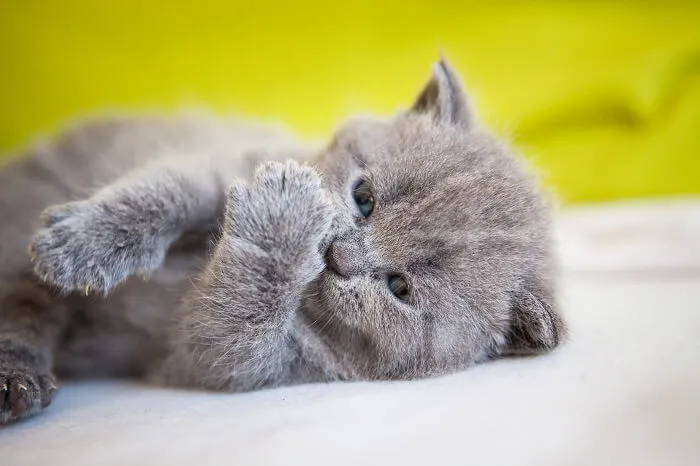 About the Chartreux Cat
Care
Nutrition
The Chartreux cat does not require a specialized diet. However, feeding a high-quality cat food that is rich in omega-3 fatty acids is recommended to maintain healthy skin and a lustrous coat. Ensuring a balanced diet appropriate for their age and activity level is crucial for their overall well-being.
Grooming
Chartreux cats boast a thick, soft double coat with a slightly woolly texture. Regular brushing, ideally a few times a week, is necessary to manage shedding, prevent matting, and reduce the occurrence of hairballs. This grooming routine also provides an opportunity for bonding between the cat and owner.
Exercise
While Chartreux cats enjoy playtime and the use of cat trees for climbing, they are not excessively energetic. Encouraging regular play sessions is important to prevent potential weight gain and maintain their physical health. Engaging them with interactive toys can satisfy their natural instincts and keep them mentally stimulated.
Health
Chartreux cats are generally a robust and healthy breed, with an average lifespan of 11 to 15 years. However, like all breeds, they can be predisposed to certain genetic health conditions. These may include patellar luxation (a dislocated kneecap), bladder stones, and polycystic kidney disease. Responsible breeding practices and regular veterinary check-ups can help in early detection and management of these potential issues.
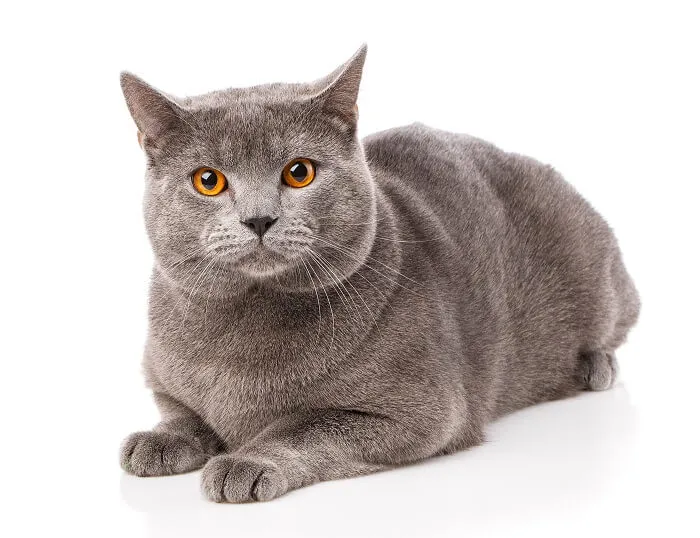 Chartreux Cat Care
History
The exact origins of the Chartreux cat are somewhat shrouded in legend. One popular tale suggests they are descendants of cats brought to France by Carthusian monks, though monastic records do not corroborate this. Another legend posits that they originated from feral mountain cats in Syria, introduced to France by Crusaders in the 13th century. The breed was officially described by French naturalist Buffon in the 18th century and was highly valued by farmers for its exceptional rat-catching skills.
The Chartreux breed faced near extinction during the World Wars. Their wild populations dwindled significantly by the end of World War II. However, European breeders collaborated to preserve the breed, crossbreeding them with Persian, British Shorthair, and Russian Blue cats to strengthen their lineage. The Chartreux made their debut in the United States in 1971 and were recognized for championship status by the Cat Fanciers Association in 1987. Today, all major cat fancy organizations acknowledge the Chartreux cat breed.
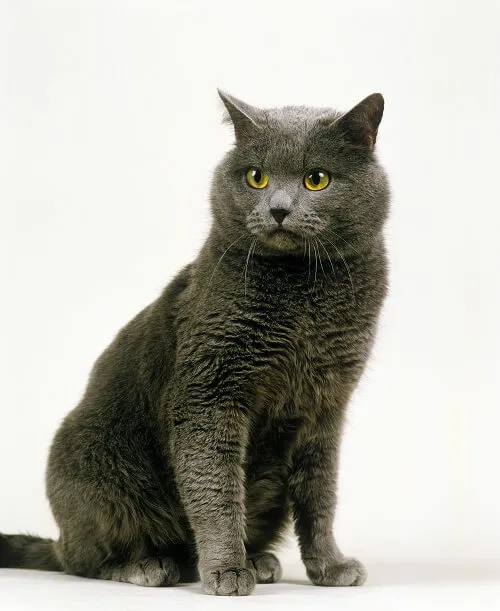 Chartreux Cat History
Did You Know?
- In France, pedigreed Chartreux cats are given names that encode their birth year, with all cats born in the same year sharing a common starting letter for their official names. This system rotates annually through the alphabet, excluding K, Q, W, X, Y, and Z.
- Although first officially documented in the 18th century, the Chartreux cat was mentioned as early as 1558 in a poem by Joachim du Bellay.
- Chartreux cats typically reach adulthood around age two, which is later than most domestic cat breeds that are considered mature by the end of their first year.
The Breed Standard
Body
Chartreux cats are medium to large in size, possessing cobby, muscular bodies with broad chests and necks. Their bodies are generally longer than they are tall, and adult males can weigh up to 18 pounds.
Head
They have rounded heads with muscular jaws and well-developed muzzles. Prominent whisker pads contribute to their characteristic “smiling” appearance.
Eyes
The eyes of a Chartreux are a striking feature, typically brilliant copper to orange in color, providing a beautiful contrast with their blue-gray coat.
Ears
Chartreux ears are well-proportioned, wider at the base, and rounded at the tips.
Legs & Paws
Their legs appear somewhat short and thin relative to their body size.
Tail
The tail is thick, muscular, and of average length, tapering slightly towards the end.
Coat
The Chartreux’s coat is a soft, dense double coat with a unique, woolly texture.
Color
The breed is exclusively recognized in various shades of blue-gray, ranging from pale, ashy tones to deep, dark slate.
Where to Find a Chartreux Cat or Kitten
While adoption is encouraged, finding a purebred Chartreux cat in shelters can be rare. Resources like Petfinder can help locate cats that are either confirmed Chartreux or resemble the breed. If purchasing from a breeder, it is advisable to conduct thorough research and contact local breeders for more information.
References:
- Chartreux Cat Breed Information
- World Cat Population by Country Statistics
