
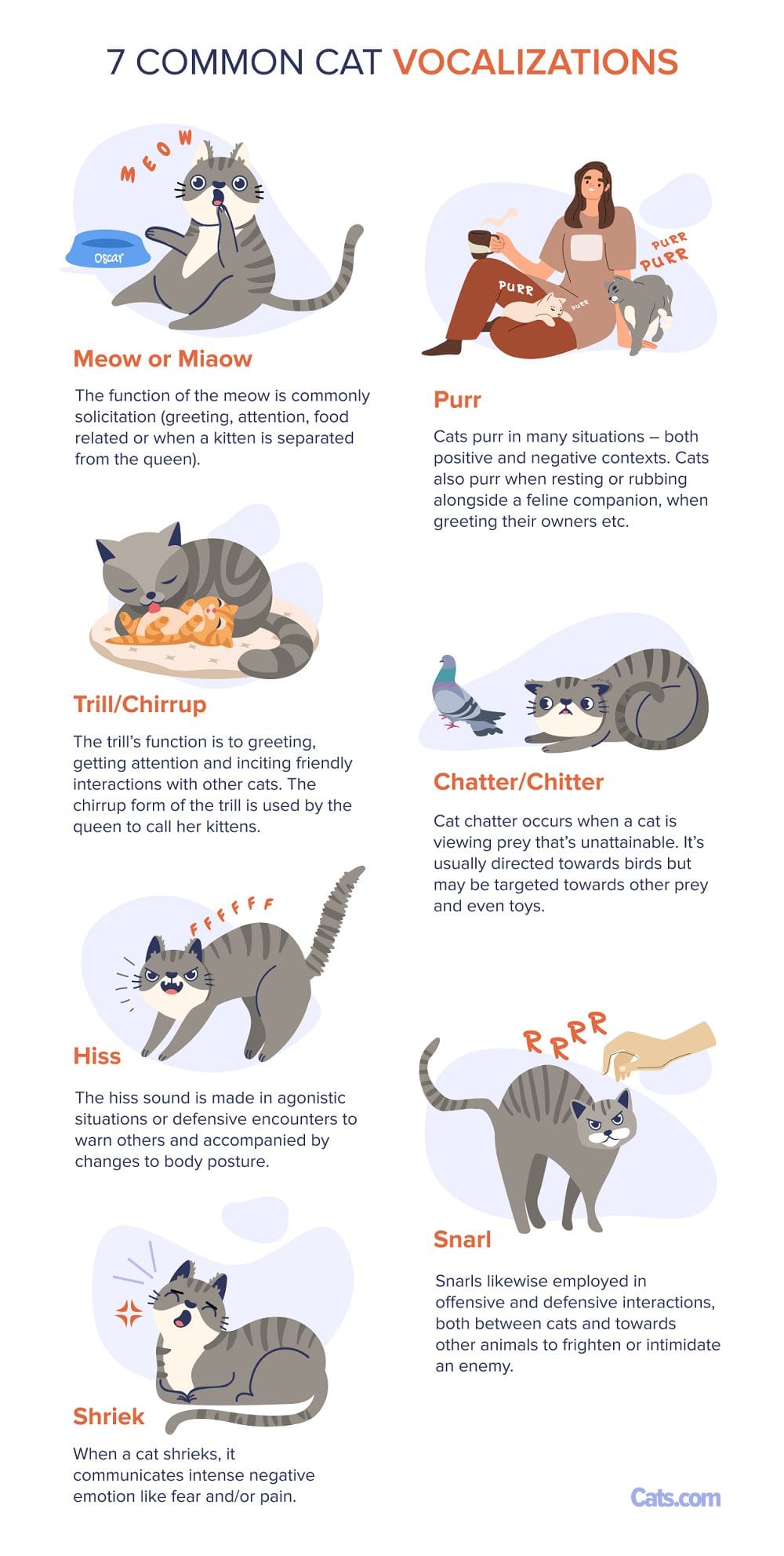
Cats communicate with humans through a variety of vocalizations, with the meow being their primary method. While adult cats typically do not meow at each other, they reserve this unique sound for their human companions. This feline “language” can express greetings, requests, and even distress. Understanding the nuances of your cat’s meows is crucial for building a strong bond and ensuring their well-being. This guide delves into the common reasons behind cat meows and offers practical advice for managing excessive vocalization, all while ensuring your cat’s needs are met and their health is prioritized.
Why Do Cats Meow?
Cats meow for a multitude of reasons, often directly related to their interaction with humans. Recognizing these common triggers can help you better interpret your feline friend’s needs:
- Greetings: Your cat might meow as a friendly hello when you arrive home, when they encounter you within the house, or simply when you speak to them.
- Seeking Attention: Cats are social creatures and often vocalize to solicit attention. They may desire petting, playtime, or simply want you to engage with them. Cats left alone for extended periods may exhibit more vocal behaviors to gain attention.
- Requesting Food: Meowing is a common tactic for cats around mealtimes. Some cats learn to meow whenever someone enters the kitchen, hoping for a treat, while others may meow to wake you up for breakfast or beg for human food.
- Access to Outdoors/Indoors: A cat’s primary way of communicating desires is through meowing. If your cat wants to go outside, they might meow at the door. Conversely, if they are outside and wish to come in, they will likely meow for you to let them back inside. Transitioning a cat from an indoor-outdoor lifestyle to an exclusively indoor one can result in a period of persistent meowing at doors and windows, which may last for weeks or even months.
- Disorientation in Elderly Cats: Senior cats experiencing cognitive dysfunction, similar to Alzheimer’s disease in humans, may meow due to disorientation. For further insights into behavioral changes in older cats, consult resources on common cat behavior issues in older cats.
- Mating Calls: Unspayed female cats will yowl to signal they are receptive to males, and males will yowl in an effort to gain access to females.
When to Consult a Veterinarian
A sudden increase in your cat’s meowing warrants a thorough veterinary examination. Medical conditions can cause discomfort, leading to increased vocalization. Issues such as overactive thyroid or kidney disease, which are common in aging cats, can also result in excessive meowing. Even if your cat has a history of vocalizing for food, it’s essential to rule out any underlying health problems.
Strategies for Managing Excessive Vocalization
Before attempting to curb your cat’s meowing, it’s crucial to identify the underlying cause. Observing the circumstances surrounding their vocalizations and noting what makes them stop can provide valuable clues. Maintaining a logbook may help in identifying patterns. Once you understand when your cat is most vocal, consider these strategies:
- Affectionate Greetings: If your cat meows simply to say hello, it might indicate a particularly social and happy feline. Accepting this as part of their personality is often the best approach.
- Attention-Seeking Meows: Train your cat that attention is only given when they are quiet. Avoid shouting or giving any form of attention, even negative, when they meow for it. Instead, wait for a moment of silence, then immediately provide the attention they desire. If they start meowing again, disengage and only return when they are quiet. Consistency is key for your cat to understand this new communication pattern. If loneliness is a factor due to long absences, consider arranging for a pet sitter to provide companionship and playtime during the day.
- Food-Related Meows: Do not feed your cat when they meow for food outside of designated mealtimes. Establishing a consistent feeding schedule will teach them that vocalizing for food at other times is unproductive. If this doesn’t curb the behavior, an automatic feeder that dispenses food at scheduled times can redirect their meowing towards the feeder rather than you. This is particularly effective for cats who wake their owners for early morning meals. If your cat is on a diet, discuss high-fiber food options or supplements with your veterinarian to help them feel fuller on a reduced intake. If weight gain isn’t a concern, leaving dry food out at all times can prevent hunger. Always consult your vet before implementing dietary changes.
- In-and-Out Requests: For cats who frequently meow to be let in or out, installing a cat door can be a convenient solution. However, the ASPCA recommends keeping cats exclusively indoors for their safety and health. If you are transitioning an outdoor-accustomed cat to an indoor-only life, expect a period of persistent meowing at doors and windows. Patience is required, and eventually, the cat will adjust to indoor living and reduce vocalizations once they realize they can no longer go outside. Alternatively, an outdoor cat enclosure can allow them to experience the outdoors safely.
- Heat Cycles in Unspayed Females: If your female cat is not spayed and meows excessively, she may be in heat. This period is characterized by increased affection, rubbing, purring, and vocalization, lasting four to ten days. Unspayed females will cycle every 18 to 24 days during the breeding season. Spaying is the most effective way to reduce heat-related meowing.
- Hormonal Responses in Unneutered Males: Unneutered male cats may meow relentlessly if they detect a female cat in heat. Neutering is the most effective solution to reduce this type of vocalization, provided you cannot completely block their ability to detect females in heat.
- Elderly Cat Vocalizations: If your elderly cat has recently become more vocal, it’s essential to have them evaluated by a veterinarian for medical conditions, sensory deficits, or cognitive dysfunction. Medication may help alleviate any discomfort.
What NOT to Do
- Do not ignore your cat’s meows: Unless you are certain they are demanding something, always assume there might be an underlying issue, such as an empty water bowl, a dirty litter box, or being accidentally locked in a room. Ensure all their basic needs are met before dismissing their vocalizations.
- Do not punish your cat: Scolding or hitting your cat for meowing excessively is counterproductive. While it might temporarily stop the behavior, it’s unlikely to have a lasting positive effect and could lead to fear and anxiety, potentially damaging your relationship.
