
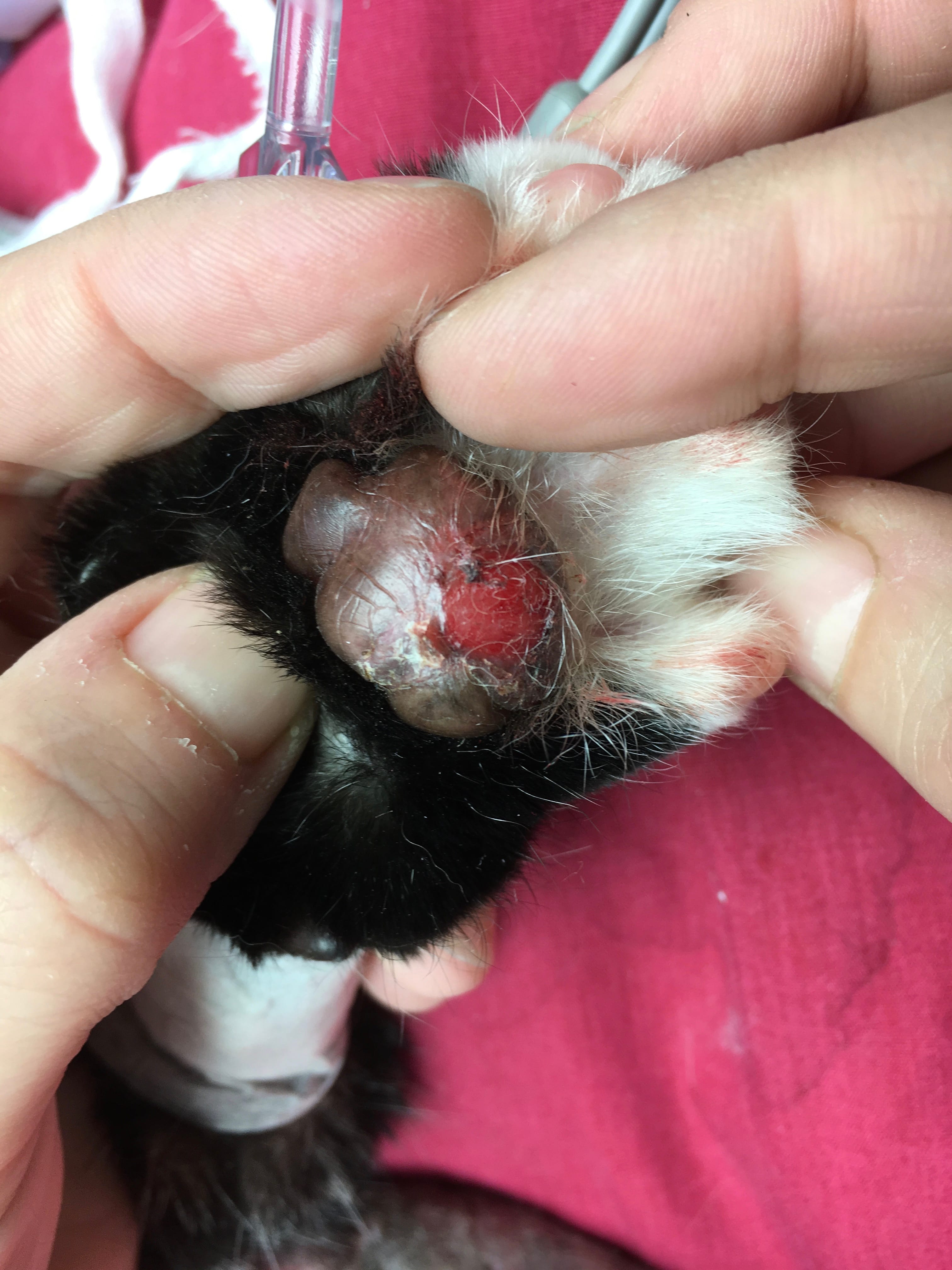
If you’ve discovered your cat has a swollen leg or paw, or even if all four of their limbs are affected, it’s natural to feel concerned and wonder about potential injuries. This comprehensive guide will explore the various reasons behind swollen paws and legs in cats, how veterinarians diagnose these conditions, and the available treatment options.
Immediate Actions for Swollen Paws and Legs
Your cat’s overall well-being is the primary concern. If any of the following emergency signs are present, seek immediate veterinary attention:
- Severe swelling
- Swelling affecting all legs or paws
- Your cat is exhibiting significant pain (hiding, vocalizing, aggression, reluctance to be touched)
- There’s clear evidence of major trauma, such as being hit by a car, attacked by another animal, or an obvious broken bone or dislocated joint
- Visible signs of serious injury, like bleeding or limb dragging
- Accompanying worrisome symptoms such as difficulty breathing, disorientation, weakness, or extreme lethargy
Conversely, if the swelling is mild and doesn’t significantly impact your cat’s mobility, energy levels, comfort, or appetite, it may not be an immediate emergency. Exercise caution when examining your cat, as touching the swollen area could cause pain. If the swelling is minor and your cat appears otherwise healthy, you can monitor them for a day or two to see if it resolves on its own. However, if there’s no improvement, schedule a veterinary appointment. In the interim, keep your cat indoors, encourage rest, and monitor them closely for any worsening symptoms.
Common Causes of Swollen Paws and Legs in Cats
Swollen paws and legs in cats can stem from a wide array of causes, which can be broadly categorized to help pinpoint the most likely culprits.
Whole-Body Issues (Affecting All Legs/Paws)
When all of a cat’s legs or paws are swollen, a systemic health problem is often the underlying cause:
- Heart Disease: Compromised heart function can impede normal blood flow, leading to fluid leakage from blood vessels into surrounding tissues.
- Liver Disease: The liver produces albumin, a crucial protein that helps retain fluid within blood vessels. Advanced liver disease can result in low albumin levels and subsequent swelling.
- Kidney Disease: Cats suffering from kidney disease may lose albumin through their urine, increasing the likelihood of fluid escaping blood vessels and accumulating in tissues.
- Systemic Infections: Bacterial, viral, fungal, or other infections can cause inflammation of blood vessels, making them leaky and leading to swelling. Swollen lymph nodes can also be a response to infection.
- Toxins and Certain Medications: Ingesting toxins like acetaminophen or certain prescribed drugs can lead to swelling through various mechanisms, including liver damage or blood vessel inflammation.
- Allergic Reactions and Autoimmune Diseases: These conditions can increase the permeability of blood vessels, resulting in fluid buildup and swelling.
Localized Issues (Affecting One or Two Legs/Paws)
Swelling localized to one or two limbs typically indicates a problem specific to that area:
- Injury: Wounds, embedded foreign objects, sprains, strains, fractures, hematomas, tendonitis, and dislocations can all trigger inflammation, bleeding, or infection, causing localized swelling.
- Arthritis: Inflammation associated with arthritis can lead to an overproduction of joint fluid and bony growths, making joints appear enlarged.
- Abscess: Bite wounds sustained during fights frequently become infected, forming painful swellings known as abscesses.
- Injection Reaction: Swelling at the injection site is a common, minor reaction following vaccinations or other injections, often administered on the legs.
- Insect Bites or Stings / Snake Bites: These can induce inflammation and make blood vessels leaky, potentially leading to swelling. Secondary infections can also occur.
- Vascular or Lymphatic Obstruction: Tumors or constrictive bands (like a rubber band) around a limb can impede blood or lymph flow, increasing pressure and causing fluid leakage.
- Tumors: Both benign and malignant growths on the legs or paws can cause visible swelling and may become inflamed or infect.
Issues Primarily Affecting Paw Pads or Toes
When swelling is concentrated in the paw pads or toes, consider these possibilities:
- Plasma Cell Pododermatitis: Also known as “pillow foot,” this immune-mediated disease causes swelling, and sometimes discoloration or ulceration, of the paw pads.
- Calicivirus Infection: This viral infection can cause ulcers, including on the paw pads, which may become swollen, especially if a secondary bacterial infection develops.
- Eosinophilic Granuloma Complex: This inflammatory condition can manifest as raised, pink skin lesions that may affect the foot pads, though other areas like the lips and thighs are more common.
- Lung-Digit Syndrome: In rare cases, lung cancer can metastasize to a cat’s toes, leading to swelling.
Veterinary Diagnosis of Swollen Cat Paws and Legs
A veterinarian will begin by gathering detailed information about your cat’s condition, including:
- The duration and onset of the swelling
- Any changes observed over time
- The presence of other symptoms
A thorough physical examination will follow to identify potential clues. Depending on the suspected cause, diagnostic tests may be recommended, such as:
- Complete blood count (CBC)
- Blood chemistry panel
- Urinalysis
- Tests for infectious diseases (e.g., FeLV, FIV)
- X-rays
- Tissue biopsies
Veterinary Treatment for Swollen Legs and Paws
Treatment strategies are tailored to the specific underlying cause. Common therapeutic approaches include:
- Antimicrobials: Antibiotics for bacterial infections.
- Immunomodulatory Medications: Drugs like doxycycline, corticosteroids, or others to manage immune-mediated conditions such as plasma cell pododermatitis or eosinophilic granuloma complex.
- Pain Management: Medications to alleviate discomfort.
- Diuretics: To help reduce fluid accumulation in tissues.
- Surgery: To drain abscesses, repair injuries, or remove tumors.
- Supportive Care: General care to aid recovery.
By collaborating closely with your veterinarian, you can determine the most effective treatment plan to help your feline companion recover and regain full use of their paws and legs.
