
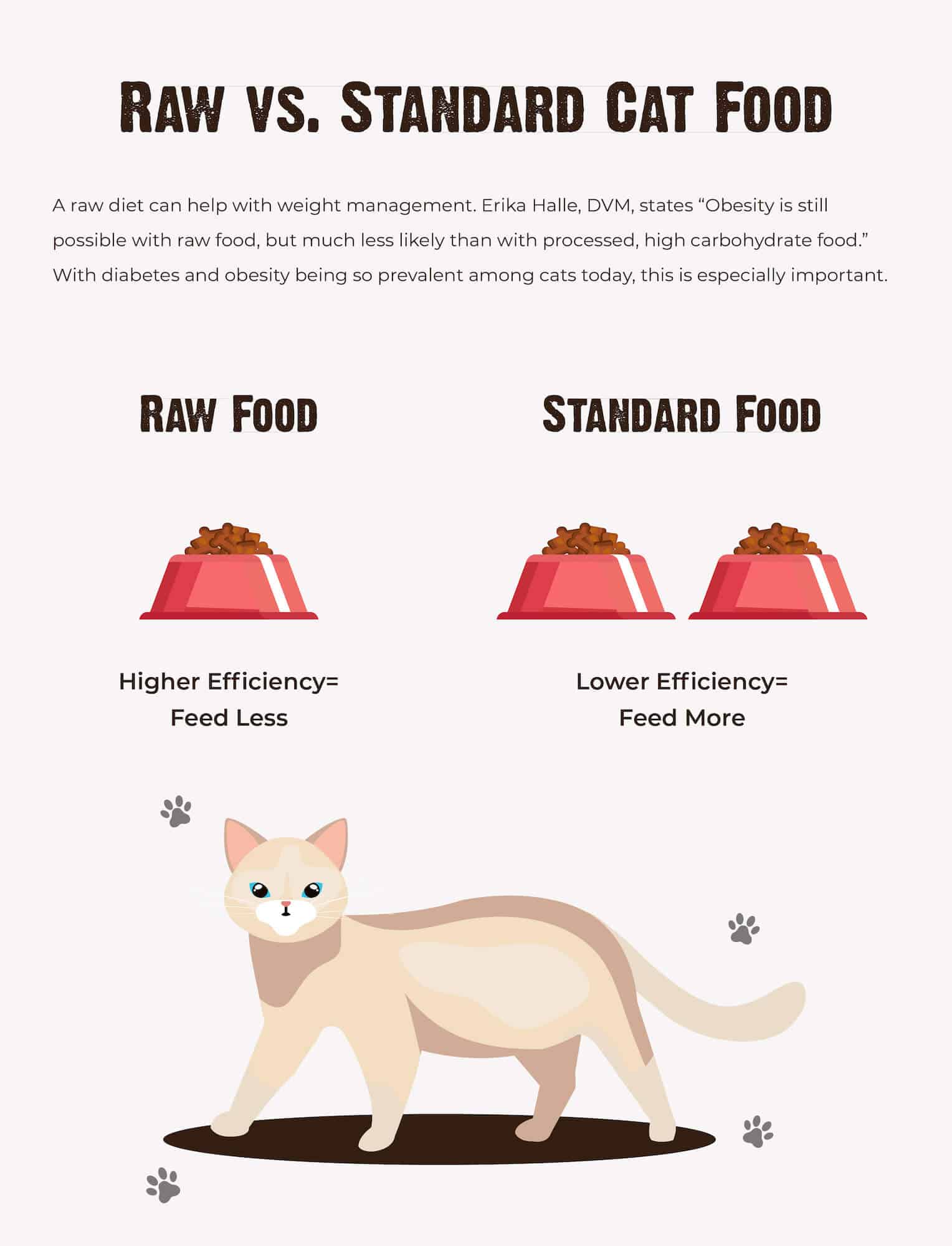
Bringing a new cat into your home is an exciting time, and choosing the right food is a crucial part of ensuring their health and happiness. One diet option that sparks considerable debate among cat owners is feeding raw food. While your cat’s wild ancestors thrived on raw diets, the question remains: is it the best choice for our domestic feline companions today? This article delves into the pros and cons of raw cat food, helping you make an informed decision for your cat’s nutritional well-being.
What Exactly Is Raw Cat Food?
Raw cat food, in its simplest definition, is unprocessed food made from uncooked ingredients. Cats are obligate carnivores, meaning their unique nutritional requirements are best met by a diet primarily composed of animal tissue. Raw cat food aims to mimic this natural diet by featuring uncooked meat, fish, and internal organs prominently in their ingredient lists. To provide essential calcium and phosphorus, ground bone is often included. Additionally, vitamin and mineral supplements, along with other ingredients, are added to create a complete and balanced diet, preventing nutritional deficiencies.
Cats have a higher protein requirement than many other animals, utilizing protein as their main energy source instead of carbohydrates. They also rely on specific amino acids, such as taurine, as well as arachidonic acid, vitamin A, vitamin D, and various B vitamins, to be present in sufficient quantities within their diet.
Commercial Raw Cat Food vs. Homemade Raw Food
Raw cat food options range widely, from meticulously prepared homemade meals to commercially available products. Some cat parents opt to create raw meals at home, while others prefer the convenience of commercially produced raw cat food, which typically comes in frozen or freeze-dried formulas. You might also find premixes containing vegetables, vitamins, and minerals that you can add raw meat to, or even ready-made raw diets from local butchers.
Homemade Raw Cat Food
Preparing your cat’s food at home offers the ultimate control over ingredients, but it’s more complex than simply feeding raw meat. Cats require a precise balance of amino acids, fats, vitamins, and minerals to thrive. These essential nutrients are best obtained from a combination of meat, internal organs, vitamin and mineral supplements, and other carefully proportioned ingredients.
Compounding the challenge, numerous studies indicate that finding nutritionally complete and balanced recipes for homemade pet foods online or in print is exceedingly difficult. Even if you find a well-formulated recipe, like one developed by a veterinary nutritionist to meet your cat’s specific needs, adhering to it consistently can be a hurdle. Research from 2014 revealed that many owners who prepared their pets’ meals at home eventually deviated from the original recipes, potentially leading to long-term nutritional deficiencies or excesses.
Commercial Raw Cat Food
Commercially prepared raw cat foods significantly reduce the guesswork involved in feeding a raw diet. Reputable manufacturers adhere to the guidelines established by the Association of American Feed Control Officials (AAFCO). When selecting a commercial raw cat food, look for an AAFCO statement of nutritional adequacy on the label, which will typically state:
- “Brand X Cat Food is formulated to meet the nutritional levels established by the AAFCO Cat Food Nutrient Profiles for adult maintenance, growth and reproduction, or all life stages.”
- Or, “Animal feeding tests using AAFCO procedures substantiate that Brand X Cat Food provides complete and balanced nutrition for adult maintenance, growth and reproduction, or all life stages.”
Any cat food, whether raw or processed, that meets AAFCO standards can provide your cat with the fundamental elements of good feline nutrition.
Raw Cat Food Diets and the BARF Diet
The term “BARF” is sometimes used to describe a type of raw cat food, standing for either “biologically appropriate raw foods” or “bones and raw foods.” Proponents of the BARF diet often emphasize the inclusion of raw bone and internal organs, rather than just adding raw meat to other components to create a balanced meal. The advantages and disadvantages of BARF and non-BARF raw cat foods are generally comparable.
Is Raw Cat Food Superior to Other Cat Food Options?
Nutritionally inadequate cat foods are unfortunately common, affecting both processed options (canned, dry) and raw diets. Many of the purported benefits of feeding cats a raw diet can often be achieved by simply switching to a higher-quality, more biologically appropriate commercial cat food. Consider these factors:
Water Content
Cats are naturally adapted to obtain a significant portion of their water intake directly from their food. While dry cat foods are very low in moisture, canned cat foods can provide an amount of water comparable to, or even greater than, that found in raw cat food diets.
High-Quality Ingredients and Digestibility
Both raw and cooked foods can be produced with varying levels of ingredient quality. “Raw” does not automatically equate to “high quality” or “high digestibility.” In fact, cooking can enhance the nutritional value of certain foods. For instance, many raw seafood varieties contain thiaminase, an enzyme that breaks down thiamine. Cats consuming a diet predominantly of raw seafood are at risk for thiamine deficiency, which can manifest as poor appetite, seizures, and even death. Cooking effectively neutralizes thiaminase, rendering these seafood options safe for feline consumption.
Nutritional Value
There is currently no scientific evidence demonstrating that raw cat food diets offer superior nutrition compared to other types of cat food. While a high-quality raw diet would undoubtedly be nutritionally superior to a low-quality processed food, similar benefits can be achieved by transitioning to a high-quality canned cat food, for example.
Safety Concerns Associated with Raw Cat Food
While some raw cat food diets may offer excellent nutrition, they are not without significant drawbacks. Studies indicate that commercially prepared raw pet foods exhibit higher levels of contamination with potential pathogens like Salmonella, Listeria, and E. Coli when compared to conventional pet foods.
The situation for homemade raw diets is no better. USDA estimates suggest that approximately a quarter of raw chicken parts handled in human food production facilities are contaminated with Salmonella and/or Campylobacter bacteria. Furthermore, parasites such as Toxoplasma gondii can also be transmitted through raw cat foods.
While healthy adult cats may possess some innate resistance to foodborne pathogens, documented cases of cats developing severe illnesses, and even succumbing to diseases contracted from raw cat food, do exist. Humans living with cats that consume raw food can also be exposed to these pathogens through handling contaminated food or through contact with pathogens in the cat’s feces. The risks associated with raw foods are most pronounced for individuals and pets who are very young, elderly, or immunocompromised.
Ensuring Safety When Preparing Raw Cat Food
If you are convinced that a raw cat food diet is the right choice for you and your cat, it is imperative to protect all members of your household by strictly adhering to the U.S. Food and Drug Administration’s guidelines for preventing infections associated with handling these products:
- Hand Hygiene: Thoroughly wash your hands with soap and water for at least 20 seconds after handling raw pet food and after touching any surfaces or objects that have come into contact with it. Contaminated surfaces can include countertops, the interior of refrigerators and microwaves, kitchen utensils, pet feeding bowls, and cutting boards.
- Thorough Cleaning and Disinfection: Clean and disinfect all surfaces and objects that come into contact with raw pet food. Initially, wash with hot, soapy water, followed by a disinfectant. A solution of 1 tablespoon of bleach per quart (4 cups) of water is an effective disinfectant. For larger quantities, mix ¼ cup bleach with 1 gallon (16 cups) of water. Items can also be run through a dishwasher after each use for cleaning and disinfection.
- Proper Thawing: Freeze raw meat and poultry products until ready for use. Thaw them in the refrigerator or microwave, never on the countertop or in the sink.
- Careful Handling: Handle raw and frozen meat and poultry products with care. Avoid rinsing raw meat, poultry, fish, and seafood, as bacteria in the raw juices can splash and spread to other foods and surfaces.
- Food Separation: Keep raw food separate from all other foods.
- Prompt Refrigeration or Disposal: Immediately cover and refrigerate any uneaten pet food, or safely dispose of leftovers.
- Cooking for Homemade Meals: If using raw ingredients to prepare your own cooked pet food, ensure all food is cooked to the appropriate internal temperature, as verified by a food thermometer. Thorough cooking is essential to kill harmful bacteria like Salmonella and Listeria monocytogenes.
- Limit Pet Licking: Avoid kissing your pet around the mouth and refrain from letting your pet lick your face, especially immediately after they have finished eating raw food.
- Post-Pet Contact Hygiene: Wash your hands thoroughly after touching or being licked by your pet. If your pet gives you a “kiss,” be sure to wash your face as well.
By diligently following these safety protocols, you can significantly reduce the risks associated with feeding raw food to your feline companion.
