
Tired of the litter box drama? Many cat parents dream of the day their feline friend masters the human toilet. While it sounds like a myth, cat potty training is achievable with patience, consistency, and the right approach. This guide will walk you through the process, turning your kitty from a litter box lover to a toilet-using whiz. We’ll explore how to cat potty train, focusing on making the transition smooth and stress-free for both you and your beloved pet.
The Journey to a Toilet-Trained Cat
Transitioning your cat to a human toilet involves a gradual acclimatization process. It’s crucial to understand that not all cats will take to this change, and forcing the issue can lead to stress and behavioral problems. However, for those cats that are amenable, this journey can be incredibly rewarding. We’ll cover everything from understanding your cat’s readiness to the final flush.
Is Your Cat Ready for Toilet Training?
Before you even think about starting, assess your cat’s personality and habits. Ideal candidates are typically:
- Confident and Curious: Cats that are naturally adventurous and less fearful of new things tend to adapt better.
- Already Litter Box Savvy: Your cat should be consistently using their litter box without accidents.
- Physically Able: Kittens and elderly cats, or those with mobility issues, may find this process too challenging.
If your cat displays extreme skittishness or anxiety, it might be best to stick with traditional litter box methods. Remember, a happy cat is the ultimate goal, whether they use a toilet or not.
Gathering Your Supplies
You won’t need much, but the right tools make a difference. You’ll need:
- A sturdy training seat: These are designed to fit over your toilet bowl and mimic a litter box.
- Flushable cat litter: Essential for the transition, as you’ll eventually be flushing it.
- Treats and praise: Positive reinforcement is key to success.
The Gradual Transition: A Step-by-Step Approach
The core of successful cat potty training lies in patience and incremental changes. Rushing the process is the quickest way to derail your efforts.
Step 1: Move the Litter Box
Start by placing your cat’s current litter box right next to the toilet. This helps them associate the bathroom with elimination. Let them get comfortable with this new location for a few days.
Step 2: Elevate the Litter Box
Gradually raise the litter box until it’s level with the toilet seat. You can use sturdy stacks of newspapers, magazines, or books. Ensure the setup is stable to prevent any scares for your cat. This step accustoms them to jumping up to eliminate.
Step 3: Introduce the Training Seat
Once your cat is comfortable using the elevated litter box, replace it with a special cat toilet training seat. Fill this seat with flushable litter. Place it directly on the toilet rim, under the toilet seat. At this stage, do you have to potty train cats by making it seem like a natural progression? Yes, by keeping the process consistent.
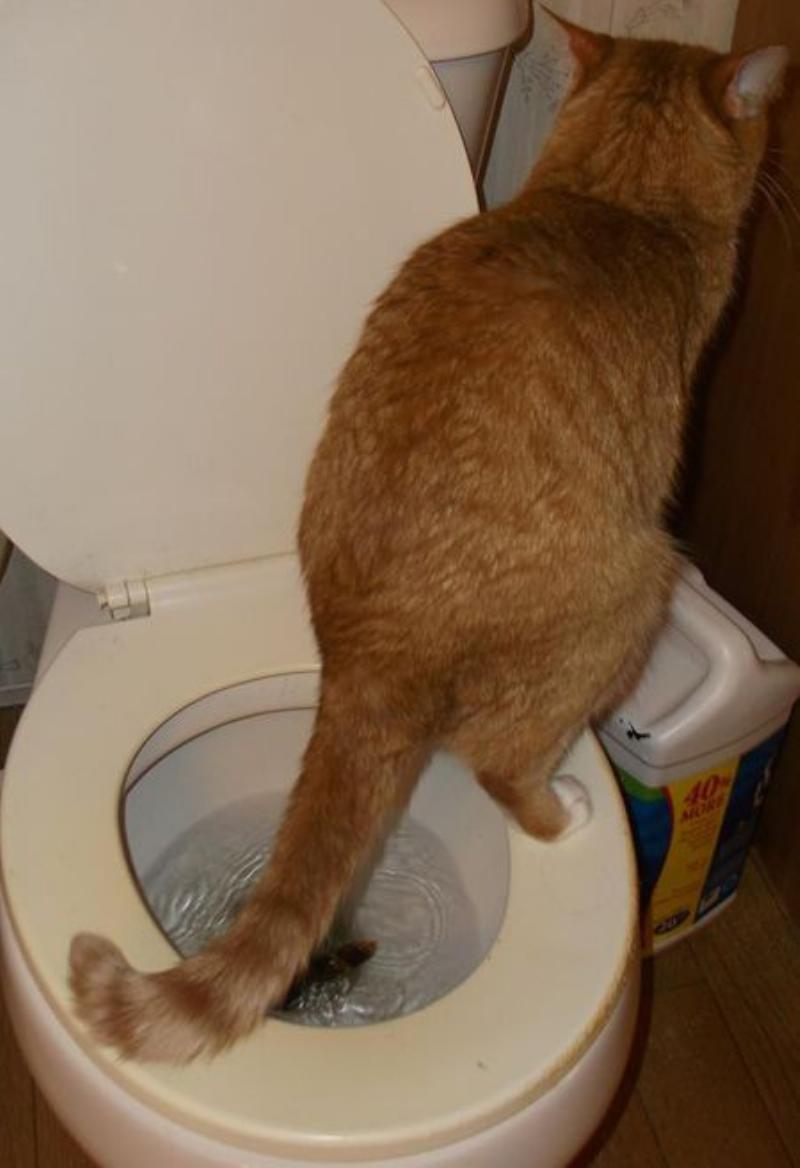 Cat using a special training seat on a toilet bowl, filled with flushable litter
Step 4: Gradually Reduce Litter
This is where the magic starts to happen. Over the next few weeks, slowly reduce the amount of litter in the training seat. Most training seats have concentric rings that you can remove. Begin by removing the innermost ring, creating a small hole. Your cat will naturally aim for the litter, and some waste will start falling into the toilet.
Continue removing rings one by one as your cat adjusts. The goal is to have them balancing on the seat and aiming for the water. This phase is critical for potty train cats use toilet successfully.
Step 5: Remove the Training Seat
Once your cat is consistently using the training seat with minimal litter and seems comfortable balancing on the toilet rim, you can remove the seat entirely. At this point, your cat should be independently using the toilet. You can potty train cat toilet without the seat by offering verbal praise and occasional treats when they use the toilet.
Troubleshooting Common Issues
Even with the best intentions, challenges can arise. Here’s how to handle them:
Accidents Outside the Toilet
- What to do: If your cat has an accident, don’t scold them. Clean the area thoroughly with an enzymatic cleaner to eliminate odors that might attract them back. Reassess the previous step. Did you move too quickly? Go back to a more comfortable stage for your cat.
- Example: Your cat misses the toilet and urinates on the floor. This might indicate they are not yet comfortable with the hole size or the lack of litter. Consider reintroducing a ring or more litter.
Refusal to Use the Training Seat
- What to do: This often stems from fear or discomfort. Ensure the seat is stable and clean. Try using a different type of flushable litter. Go back a step and reinforce positive associations with the bathroom area.
- Expert Tip: Dr. Emily Carter, a renowned feline behaviorist, suggests, “Cats thrive on routine and predictability. Any sudden or drastic change can cause anxiety. Slow and steady wins the race in cat potty training.”
The “Flush” Factor
Some cats are fascinated by the flush, while others are terrified.
- For scared cats: Avoid flushing while they are in the bathroom. Flush only after they have left. Gradually introduce the sound of flushing from a distance, rewarding calm behavior.
- For fascinated cats: Supervise them. While it’s cute, allowing them to play with the flush can lead to a compulsion or the cat accidentally flushing themselves in.
The Benefits of a Toilet-Trained Cat
Beyond the obvious appeal of a litter-free home, there are other advantages:
- Reduced Odor: Say goodbye to litter box smells.
- Cost Savings: No more spending money on litter.
- Convenience: Less cleaning and maintenance for you.
- A Unique Bond: Successfully training your cat in this way can strengthen your bond and showcase your understanding of their capabilities.
Embracing the Change with Dog Care Story
The journey to cat potty training in toilet is a testament to the incredible adaptability of our feline companions. At Dog Care Story, we celebrate every step of the pet parenting journey, understanding that training is a form of communication and connection. If you’re embarking on this adventure, remember patience and positive reinforcement are your best allies. Should you find this particular training method too challenging for your pet, explore our resources on effective litter box management. For those who succeed, enjoy the newfound cleanliness and the unique accomplishment of having a toilet-trained cat!
Frequently Asked Questions About Cat Toilet Training
Q1: How long does cat potty training take?
A: The duration varies greatly, typically ranging from a few weeks to several months. Patience is key.
Q2: Can all cats be trained to use the toilet?
A: Not all cats are suited for toilet training. Factors like age, temperament, and physical ability play a role. It’s important to respect your cat’s individual limits.
Q3: What if my cat starts having accidents again after being trained?
A: This often indicates stress or a physical issue. Rule out any medical problems with a vet visit, and then revisit the training steps, going back to a point where your cat was comfortable.
Q4: Is flushable litter really safe for my plumbing?
A: While designed to break down, excessive use of flushable litter can still cause clogs in older plumbing systems. Monitor your pipes and consider flushing smaller amounts of waste.
Q5: Should I leave the toilet seat up or down?
A: Most cats prefer to have the toilet seat down for stability when they are learning. Once proficient, they may adapt to either, but a down seat provides a more secure platform.
Q6: Is it cruel to litter train my cat to use the toilet?
A: If done gradually and with positive reinforcement, it is not cruel. The key is to ensure your cat is comfortable and not stressed by the process. If your cat shows signs of distress, it’s better to revert to a litter box.
The endeavor to do you have to potty train cats is a significant one, but with the right guidance and a deep understanding of your cat’s needs, it’s a goal well within reach for many.
