
Does your feline friend have a habit of meowing incessantly at doors, demanding to be let in or out? This common cat behavior can be frustrating for owners, but understanding the reasons behind it is the first step to finding a solution. This guide, drawing on expert advice, will walk you through effective strategies to curb this vocal habit and foster a more peaceful home environment for both you and your cat.
Cats, unlike dogs and many other animals, primarily reserve their meows for communicating with humans. When your cat meows at a door, they are attempting to convey a specific desire. This could be anything from a simple request to explore a new area to a plea for attention or sustenance. By recognizing these vocalizations as a form of communication, you can begin to address the underlying needs driving the behavior.
Understanding Your Cat’s Meowing at Doors
Cats are inherently curious and possess a strong desire to explore their surroundings. When a cat repeatedly meows at a door, it often stems from this innate curiosity, a desire to investigate what lies beyond the threshold. They might be signaling boredom, seeking interaction, or alerting you to a need, such as hunger. Recognizing these signals is key to establishing a harmonious relationship and effectively managing their meowing.
Proven Strategies to Stop Cat Meowing at Doors
If your cat’s meowing has become overwhelming, several proven methods can help. Consistency and patience are crucial when implementing these techniques.
1. Avoid Negative Reinforcement
It might be tempting to react negatively to persistent meowing, but actions like clapping, shouting, or physically moving your cat can be counterproductive. Such responses can instill fear and damage the bond between you and your pet, without addressing the root cause of the meowing. Instead of stopping the behavior, it may simply teach your cat to be afraid of you, and they won’t learn from the negative reaction.
2. Employ Distraction Techniques
A highly effective strategy is to proactively distract your cat when they begin to meow at the door. Engaging them with a favorite toy, especially a wand toy like those from Go Cat, can redirect their energy and attention. Play with them until they are tired, which is particularly beneficial for energetic kittens. For nighttime meowing, initiating playtime earlier in the evening can help tire them out before bedtime. Interactive play is essential for indoor cats to expend energy they would otherwise use for hunting.
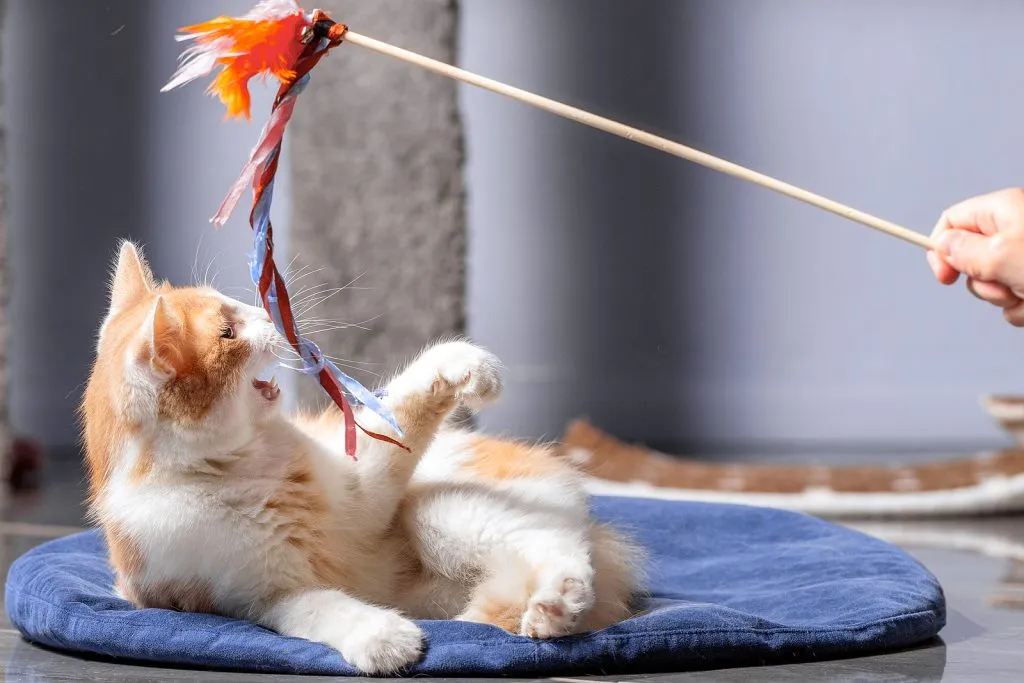 A fluffy red and white cat is lying on the mat and playing with a toy on a stick. Indoor cat, close-up, blurred backgroundwebkatrin/Bigstock
See your cat heading toward the door to do some meowing? Proactively distract them with a toy.
3. Create a Safe Outdoor Enclosure (Catio)
For cats who crave outdoor stimulation, consider creating a “catio” or cat patio. This enclosed outdoor space, such as a screened-in balcony, allows your cat to experience the outdoors safely. Enhance this space with a water fountain, climbing structures, and cat grass. A catio can satisfy their instinctual need to explore and observe, reducing the urge to meow at doors for access. You can find ready-made kits from Cat Fence In to help you build one.
[The Purrgola4. Consider a Motion-Activated Air Device (Last Resort)
As a final option, a motion-activated air can that emits a short, harmless burst of air can deter cats from a specific area. While effective, this method is a negative response and doesn’t address the underlying reasons for the meowing. It should be used cautiously and only if other methods have failed, particularly if your cat is persistent in a specific spot and not easily distracted.
What NOT To Do
It’s crucial to reiterate that negative reactions, such as shouting or clapping, should be avoided. These responses do not solve the core issue and can harm your relationship with your cat.
Helping Your Cat Adjust to Closed Doors
Teaching your cat to be comfortable with closed doors involves positive reinforcement and gradual desensitization.
1. Positive Reinforcement and Desensitization
- Distraction: When you need to close a door, redirect your cat’s attention with toys or treats.
- Gradual Introduction: Start by closing doors for brief intervals, rewarding calm behavior. Slowly increase the duration as your cat becomes more at ease.
- Positive Association: Link the act of closing the door with positive experiences, like offering a treat immediately after.
- Avoid Punishment: Never punish your cat for meowing or scratching at doors, as this can exacerbate anxiety.
Focus on positive reinforcement and gradual desensitization.
2. Environmental Enrichment and Comfort
- Safe Spaces: Designate areas where your cat feels secure and can retreat.
- Comfortable Environment: Ensure your cat has a comfortable bed, scratching posts, and engaging toys.
- Variety: Rotate toys regularly to maintain their interest and prevent boredom.
- Consider a Cat Door: If feasible, installing a cat door allows for independent movement between areas.
3. Understanding and Patience
- Accept Feline Behavior: Understand that cats can be sensitive to environmental changes and are territorial.
- Be Patient: Allow your cat ample time to adjust. Consistent application of positive techniques is key.
- Consult a Professional: If the meowing is excessive or causes distress, seek advice from a veterinarian or a certified feline behaviorist.
By implementing these strategies, you can help your cat feel more secure and less anxious about closed doors, leading to a quieter and more peaceful coexistence.
When Meowing Persists
If your cat continues to meow excessively, or if the behavior seems indicative of an underlying issue, professional assistance is recommended. Consulting your veterinarian can help rule out any medical conditions, while a cat behaviorist can offer tailored strategies. Remember, patience and understanding are paramount. Your cat’s meows are their way of communicating, and with consistent effort, you can achieve a balance that meets both your cat’s needs and your desire for a tranquil home.
Jenna Cheal, Ph.D. is an experimental psychologist specializing in cat behavior. She leverages her expertise in behavioral analysis to offer practical solutions for various cat-related issues. Jenna, also known as The Cat Psychologist, resides in Toronto with her two cats, Andes and Bolivar. You can follow her on Twitter or like her page on Facebook.
Explore the Modern Cat E-Store for a wide selection of cat toys, fountains, and more!
