
Understanding your cat’s behavior is essential for a strong bond and providing optimal care. Cats exhibit a range of actions, from napping and grooming to more perplexing behaviors like knocking things over or bringing you “gifts.” This guide, with insights from the MedVet team, decodes these common feline actions, helping you better understand your enigmatic companion.
Physical Behaviors in Cats
Napping: Conserving Energy Like Ancestors
Domestic cats, despite no longer needing to hunt for survival, retain behaviors influenced by their ancestors. Frequent napping is one such trait, driven by a genetic inclination to conserve energy. Cats possess a slightly higher basal body temperature than humans and are naturally drawn to warm spots for sleep. This explains why they often seek out sunbeams or cozy, warm surfaces for their slumber.
Eating Grass: More Than Just a Snack
The act of cats nibbling on grass has several explanations. For some, it serves as a natural laxative, aiding digestion and the elimination of hairballs. For others, it might simply be an enjoyable snack or a way to satisfy their natural instinct to chew. Grass can also provide essential nutrients that may be deficient in their regular diet. However, it is crucial to ensure that any grass accessible to your cat is free from pesticides or harmful chemicals, as these substances can be toxic to felines.
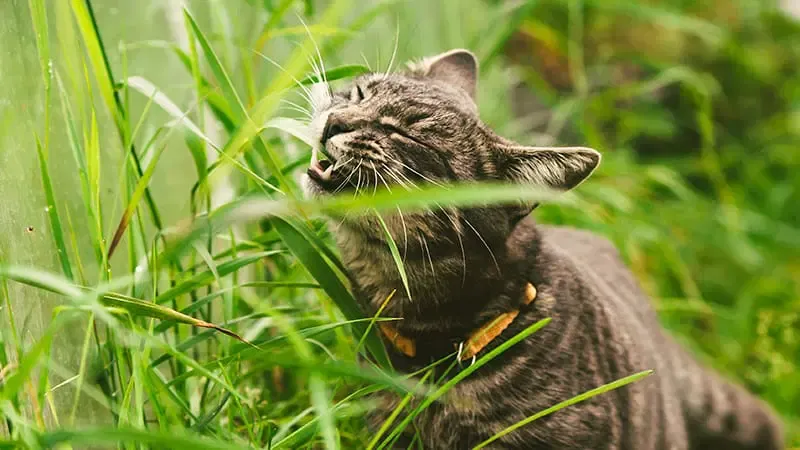 Common Cat Behaviors – Eating Grass
Attacking People or Other Pets: Understanding Aggression
Aggression in cats can be triggered by various factors, including anxiety or fear, territorial instincts, or a feeling of being threatened. Establishing a safe and stimulating environment, coupled with positive reinforcement training techniques, can significantly help in mitigating aggressive tendencies in cats.
Knocking Things Over: Curiosity and Play
Cats possess an innate curiosity about their surroundings, often engaging in exploratory behaviors by using their paws to interact with objects. This leads to behaviors like “batting” or pushing items. When an object moves or rolls in response to their touch, cats may perceive it as prey attempting to escape, thereby triggering their hunting instinct. This playful interaction allows them to satisfy their natural hunting drives and provides essential mental and physical stimulation.
Bringing Items to You: A Sign of Affection
The innate hunting instinct in cats can sometimes lead them to present their human families with prey, such as dead birds, rodents, or insects. This behavior is a way for cats to express affection and consider their human companions as part of their social group or “pack.” By offering these items, cats are demonstrating their desire to contribute to the group’s well-being and ensure everyone is adequately provisioned. Early kittenhood experiences, where mothers provided food and hunting lessons, may also influence this behavior.
Urinating Outside the Litter Box: Addressing Stress and Medical Issues
Urinating outside the designated litter box, particularly on beds, can be a distressing behavior for cat owners. This action can be a response to stress or a dislike of the litter box itself. Ensuring the litter box is consistently clean and providing multiple litter boxes in various locations can help alleviate stress-related issues.
It is also vital to consider that medical conditions can cause inappropriate urination. Conditions like urethral obstruction, a life-threatening blockage in the lower urinary tract, are often treated by veterinary professionals. This blockage can be caused by urethral plugs, stones, tumors, or strictures. Signs such as increased vocalization during urination, frequent trips to the litter box, straining to urinate, or excessive licking of the hind end may indicate an underlying medical problem. Consulting your veterinarian is crucial to rule out any health concerns.
Scratching: Essential for Claw Health and Marking
Scratching is a natural and necessary behavior for cats. It plays a crucial role in maintaining claw health by removing the old outer sheath and keeping them sharp. Furthermore, scratching allows cats to stretch their muscles, promoting flexibility. It also serves as a method of territorial marking, as cats deposit both visual and scent marks through the specialized glands in their paws.
To redirect scratching away from furniture and other household items, providing appropriate scratching posts or boards is essential. These should be stable, tall enough for a full stretch, and covered in materials that mimic natural textures like tree bark or sisal rope. Placing these posts near areas your cat frequently scratches can effectively guide their behavior. Regular nail trims can also help manage the damage caused by scratching.
Zooming: Releasing Pent-Up Energy
The phenomenon known as “zoomies” describes sudden, energetic sprints around the house, often accompanied by playful antics. This behavior is entirely normal and serves as an outlet for cats to release excess energy. To channel this energy constructively, interactive playtime with toys that simulate prey, such as feather wands or laser pointers, is highly recommended. Engaging in regular play sessions can help your cat expend energy, provide mental stimulation, and reduce the frequency and intensity of zoomies.
Self-Care Behaviors in Cats
Grooming and Licking: Cleanliness and Affection
Cats are meticulous groomers, maintaining their cleanliness and reducing the need for human intervention with bathing and grooming. They also lick their owners as a sign of affection and to strengthen their bond. Normally, ingested hair from grooming is passed without issue. However, excessive grooming can signal stress or underlying medical conditions, potentially leading to a buildup of hair in the gastrointestinal tract, commonly known as a hairball. When a hairball accumulates sufficient bile, it triggers a regurgitation response. The distinctive gagging, hacking, or retching sounds often resulting in vomiting are unmistakable. If these episodes are prolonged or accompanied by a loss of appetite, lethargy, constipation, or diarrhea, a hairball could be causing a life-threatening blockage. In such cases, immediate veterinary attention is necessary.
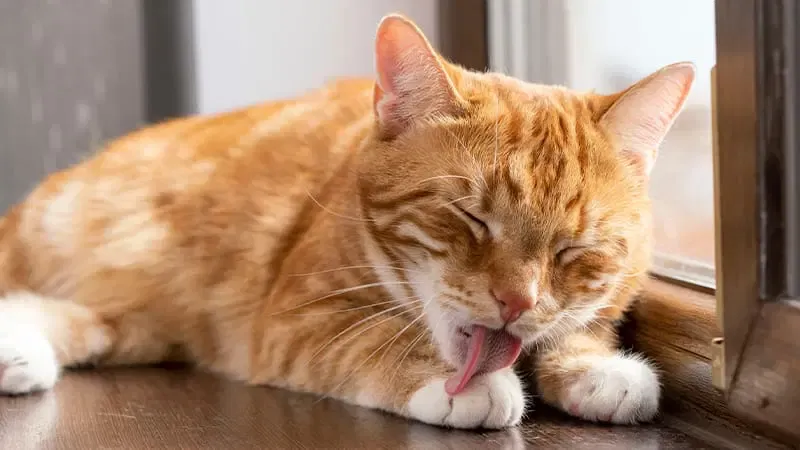 Common Cat Behaviors – Grooming
Vocal Behaviors in Cats
Purring, Meowing, and Hissing: Communicating Needs and Emotions
Vocalizations are a primary means by which cats communicate their needs and emotional states. They possess a diverse repertoire of sounds, ranging from meows and hisses to growls, purrs, and chirps. Meowing is often directed at humans as a form of communication, while hissing and growling typically signal fear or aggression. Purring is generally associated with contentment but can also indicate pain or stress. Comprehending these vocal cues is key to effectively responding to your cat’s needs.
Night Squalling: Mating Instincts and Attention Seeking
Cats often vocalize loudly at night due to their natural mating instincts. During their heat cycle (estrus), females call out to attract potential mates, resulting in persistent and loud vocalizations.
Night squalling can also be a learned behavior, as cats may realize their vocalizations elicit attention and care from their owners, such as receiving a snack or petting. This can lead to a habit of squalling to get desired outcomes. To minimize night squalling, keeping cats indoors can reduce their exposure to potential mates. Creating a calm sleeping environment with a nightlight and calming scents like lavender may also promote more restful sleep for both the cat and owner.
However, medical conditions can also be a cause of nighttime vocalization. Older cats experiencing diminished vision or hearing may vocalize at night seeking reassurance. Furthermore, health issues such as hyperthyroidism, hypertension, hypokalemia, thiamine deficiency, or intracranial masses can also lead to increased nighttime vocalization. If you suspect a medical reason for your cat’s night squalling, consult your veterinarian.
Body Language Behaviors in Cats
Kneading: Comfort and Affection
Kneading, characterized by the rhythmic pushing of paws against a soft surface, is a common feline behavior. It signifies contentment, relaxation, and originates from kittenhood when this action stimulated milk flow from their mother. It can also be an expression of affection and a form of territorial marking through the scent glands in their paws.
Head Bunting and Rubbing: Marking Territory and Showing Love
When your cat rubs its head against you or objects, it’s a dual action of affection and territorial marking. Cats possess scent glands on their heads, and by head bunting or rubbing, they deposit their scent, claiming ownership and expressing fondness.
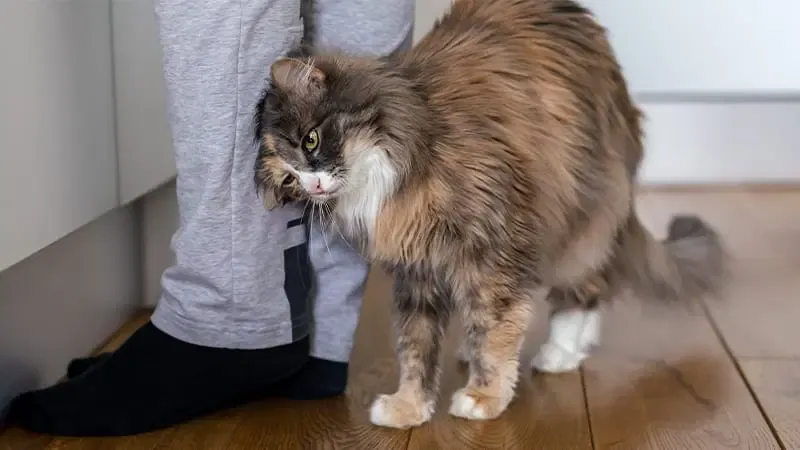 Common Cat Behaviors – Rubbing
Ear and Tail Movement: Mood Indicators
A cat’s ears are highly expressive, offering valuable insights into their mood and intentions. Forward-pointing ears typically indicate attentiveness and curiosity, suggesting the cat is focused on something or preparing to pounce. Conversely, flattened or backward-pointing ears can signal fear, aggression, or discomfort. The tail also serves as a communication tool, conveying a range of emotions. A relaxed, gently swaying tail suggests contentment, while an upright, puffed-up tail signifies aggression or fear. A flicking or twitching tail may indicate excitement or anticipation.
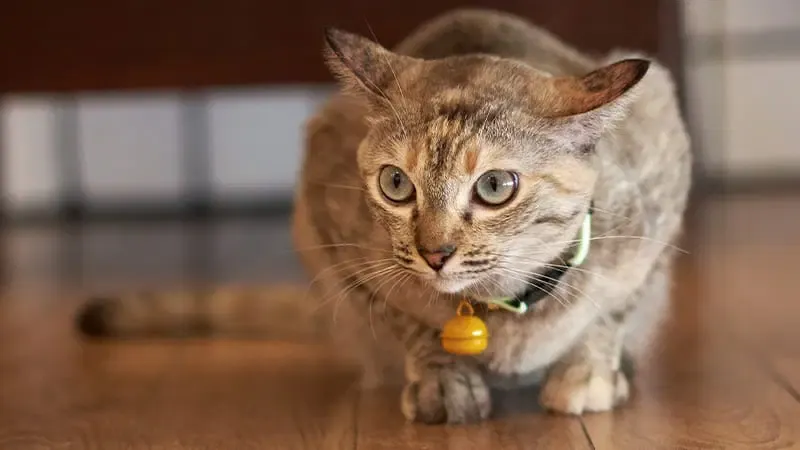 Common Cat Behaviors – Ear and Tail Movement
Knowing When Your Cat is in Pain: Recognizing Subtle Signs
Cats are adept at masking pain, making it challenging to recognize when they are suffering. Changes in behavior, such as inappropriate toileting, aggression, self-mutilation, or other uncharacteristic actions, can be indicators of pain. If you suspect your cat is in pain, contacting your veterinarian is essential.
Understanding your cat’s diverse behaviors is fundamental to fostering a strong and harmonious relationship. By deciphering their actions, you can better address their needs, provide appropriate care, and cultivate a nurturing environment. Remember that each cat is unique, and their behaviors may vary. Closely observing their body language, vocalizations, and overall demeanor offers valuable insights into their emotional state and well-being. Embrace the journey of understanding and connecting with your feline friend!
Discover exceptional emergency and specialty veterinary care at a MedVet near you.
