
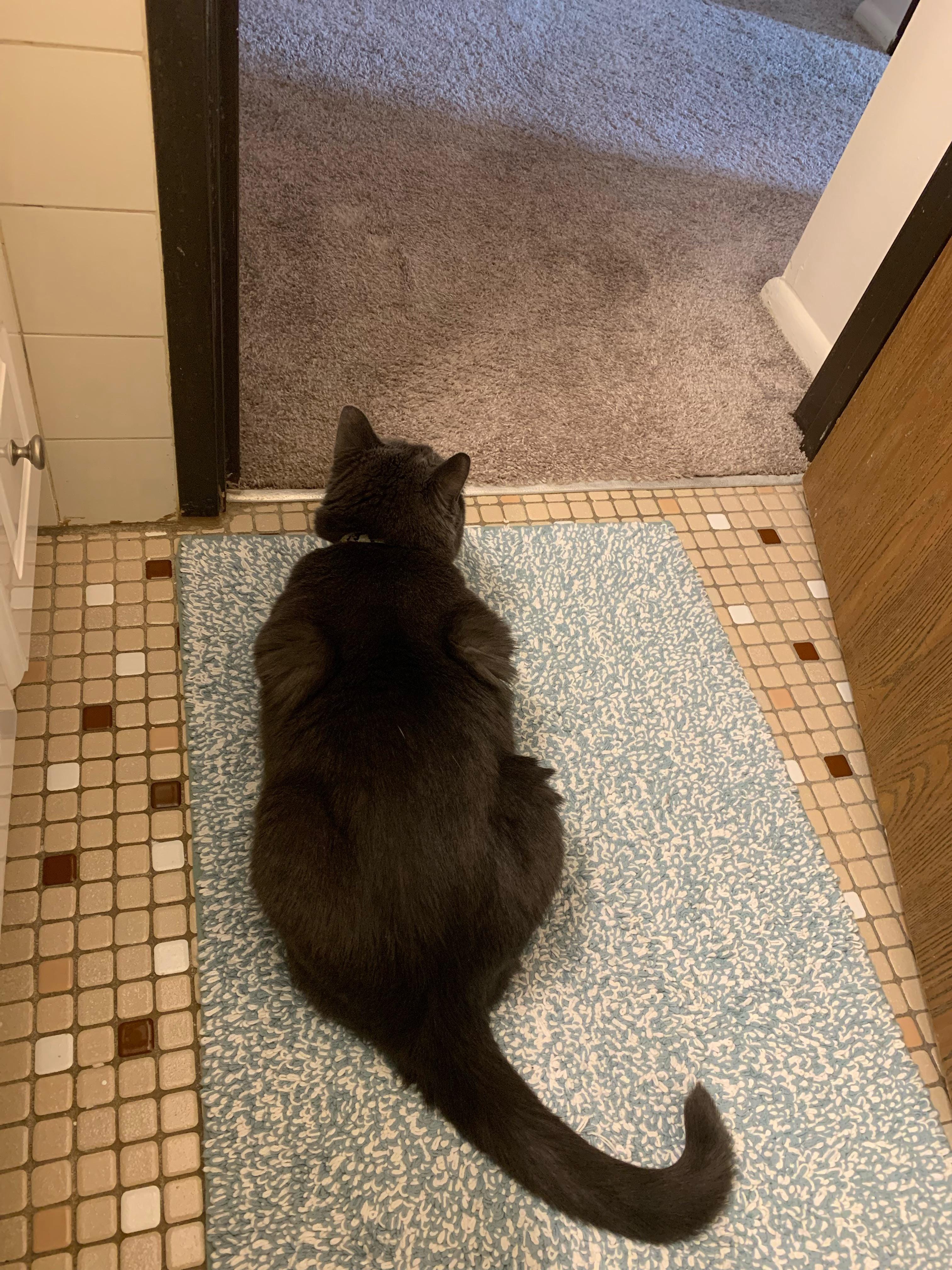
It’s a common scenario for cat owners: you head into the bathroom for a moment of privacy, only to find your feline friend right behind you, observing your every move. This behavior, often referred to as “guarding,” might seem peculiar, but it’s a normal protective instinct in cats and can be a sign of their affection for you. While it can feel a bit intrusive, understanding the underlying reasons can help you appreciate your cat’s unique way of showing they care.
Key Takeaways
- Guarding is a normal, protective behavior often stemming from affection.
- It can sometimes indicate separation anxiety or overprotectiveness.
- If guarding escalates to unhealthy levels, consult your veterinarian.
This “always-on” companionship, especially in the bathroom, is more common than you might think. Let’s delve into the various reasons behind this intriguing feline behavior and what it signifies about your bond with your cat.
What Is ‘Guarding’?
Guarding in cats is a normal protective behavior, often expressed through affection, purring, kneading, head-butting, and licking. It’s your cat’s way of looking out for you, especially in perceived vulnerable situations.
1. Your Cat Loves You
Despite their often independent demeanor, cats deeply care for their owners. Guarding you is one of the ways they express this love. Your cat might sense potential threats in certain areas of the house or during specific activities, prompting them to stay by your side. This could mean you have company on the toilet or in the shower!
Consider the bathroom from your cat’s perspective: it’s a place with unfamiliar smells and sudden noises like running water and flushing. These elements, combined with the act of closing a door, might make your cat feel you are vulnerable and need protection. They may worry you could disappear down the drain or be in danger while you’re occupied. While affection is a primary driver, your cat’s bathroom visits might also serve other purposes.
2. Your Cat Has Separation Anxiety
If your cat experiences stress when separated from you, they might become overly clingy, seeking your protection. A closed door can heighten their anxiety, leading them to persistently try and join you. This clinginess, while seemingly affectionate, can be a concern as it points to underlying fear and stress that isn’t beneficial for your cat’s well-being. If you suspect your cat is suffering from separation anxiety, seeking advice from your veterinarian is recommended.
3. Your Cat Loves To Play
To your cat, the bathroom can be an exciting playground filled with tempting items like toilet paper, towels, and dripping faucets. Your presence adds to the entertainment, especially if they receive attention while engaging in their playful antics.
4. Your Bathroom Is a Great Place for a Snooze
The bathroom, with its potentially warmer temperature and your presence, can serve as an appealing sanctuary for your cat. Sinks and tubs can become cozy napping spots while you’re showering.
5. Your Cat Loves Attention
Cats, on their terms, enjoy attention. A captive audience in the bathroom offers a unique opportunity for undivided attention. Your cat quickly learns that certain behaviors, like staring or sitting on you, elicit a response, reinforcing these actions. This can lead to them becoming a regular bathroom companion.
6. Your Cat Is Curious
Cats are naturally curious creatures, and the bathroom, with its array of intriguing smells and sounds, is no exception. This curiosity is vital for their survival as both predators and prey. They need to be aware of their surroundings, and your disappearance into a room filled with novel stimuli naturally sparks their interest. They want to investigate and ensure nothing exciting is happening without them.
7. Your Cat Is Territorial
Territoriality is inherent in cats. They are motivated to protect their environment to ensure their safety and access to resources like food. The bathroom is part of their perceived territory, and having the door closed can be unwelcome. Ideally, cats prefer all doors to be open at all times.
8. Your Cat Likes Routine
Familiarity and routine are important to cats. Since visiting the bathroom is part of your daily schedule, your cat may have incorporated it into their own routine. They might associate your bathroom visit with subsequent activities like breakfast, quickly learning that these actions lead to positive outcomes like attention and food.
Should You Discourage Guarding Behavior?
While it’s heartwarming to feel loved by your cat, never having personal space can be challenging. Some cats may exhibit extreme guarding behavior, becoming overprotective and potentially aggressive towards others who approach you. It’s advisable to address guarding behavior if:
- You find it overwhelming.
- Your cat displays aggression.
- Your cat appears anxious or stressed.
If you’re comfortable with the attention and your cat seems content, you can enjoy the unique bond. However, if you wish to regain some privacy, there are steps you can take.
How Can You Discourage Guarding Behavior?
To encourage your cat to spend less time in the bathroom with you, try ignoring them when they follow you in. Reducing the attention your cat receives in the bathroom can make it a less rewarding place to be, especially if you provide ample positive attention in other areas of the house.
Your veterinarian can rule out any underlying health issues contributing to stress or aggression and offer guidance on managing and discouraging this behavior. Strategies may include establishing consistent routines and introducing aids like pheromone sprays or, in some cases, anxiety medication.
Final Thoughts
The most probable reason your cat accompanies you to the bathroom is a simple expression of love and a desire to protect you. This guarding behavior is common and generally benign. While the specific allure of bathrooms remains a mystery, affection is consistently at the top of the list of reasons. So, the next time your cat observes you in the bathroom, take comfort in knowing it’s likely their quirky, endearing way of saying, “I love you.”
For most cat owners, uninterrupted bathroom trips might be a thing of the past. Ironically, cats themselves value privacy when using their litter box, highlighting a humorous double standard in the feline world!
Also Read: How Do Cats Know To Use A Litter Box?
Frequently Asked Questions
How do you tell if your cat is protective of you?
Signs your cat is protective include clinginess, flattened ears, dilated pupils, hissing, growling, bared teeth, an arched back, a puffed-up coat, and tail thrashing.
How can you tell if your cat has imprinted on you?
If your cat has imprinted on you, they will likely exhibit strong signs of attachment, such as following you everywhere, sitting on your lap, kneading, purring in your presence, head-butting, rubbing against you, rolling over to show their belly, and checking on you while you sleep.
Why shouldn’t cats follow you to the bathroom?
Generally, it’s fine to let your cat follow you to the bathroom if they simply want to show affection. However, if you find the attention overwhelming, or if your cat displays signs of separation anxiety or overprotectiveness, you may need to discourage the behavior. It’s also crucial to keep them away if you are using cleaning products.
Do cats know when you’re sleeping?
While we can’t be certain if cats understand sleep like humans do, they are aware of our bedtime routines and that we are less responsive when asleep. However, this awareness doesn’t always translate to respecting our sleep.
Why does my cat guard me when I pee?
Some cats exhibit clingy behavior and follow their owners everywhere, including into the restroom, as a way of showing affection and protectiveness.
