
Caring for your feline friend’s dental health might seem daunting, but when it comes to cleaning a cat’s teeth, it’s often more manageable than you think. With the right knowledge and approach, you can effectively contribute to your cat’s overall well-being. This guide will walk you through proven methods for maintaining your cat’s oral hygiene.
Do Regular Cat Biscuits Clean Teeth?
A common question among cat owners is whether the crunchy texture of normal cat biscuits effectively cleans their teeth. While cats do engage in impressive crunching when eating kibble, our observations at the clinic show no significant difference in dental cleanliness between cats fed soft food versus those on standard dry biscuits. Therefore, relying solely on regular biscuits for dental hygiene is not sufficient.
Effective Methods for Keeping Cats’ Teeth Clean
Several strategies have proven effective in maintaining dental health for cats. However, it’s crucial to consult with a veterinarian before implementing any new dental care routine, especially if your cat is experiencing dental pain, as certain methods could exacerbate discomfort and lead to malnutrition.
The Benefits of Raw Bones
While the idea of a cat chewing on a bone might seem unusual, it can be an effective way to clean their teeth. Cats can be persuaded to chew on bones if there’s a tasty reward involved.
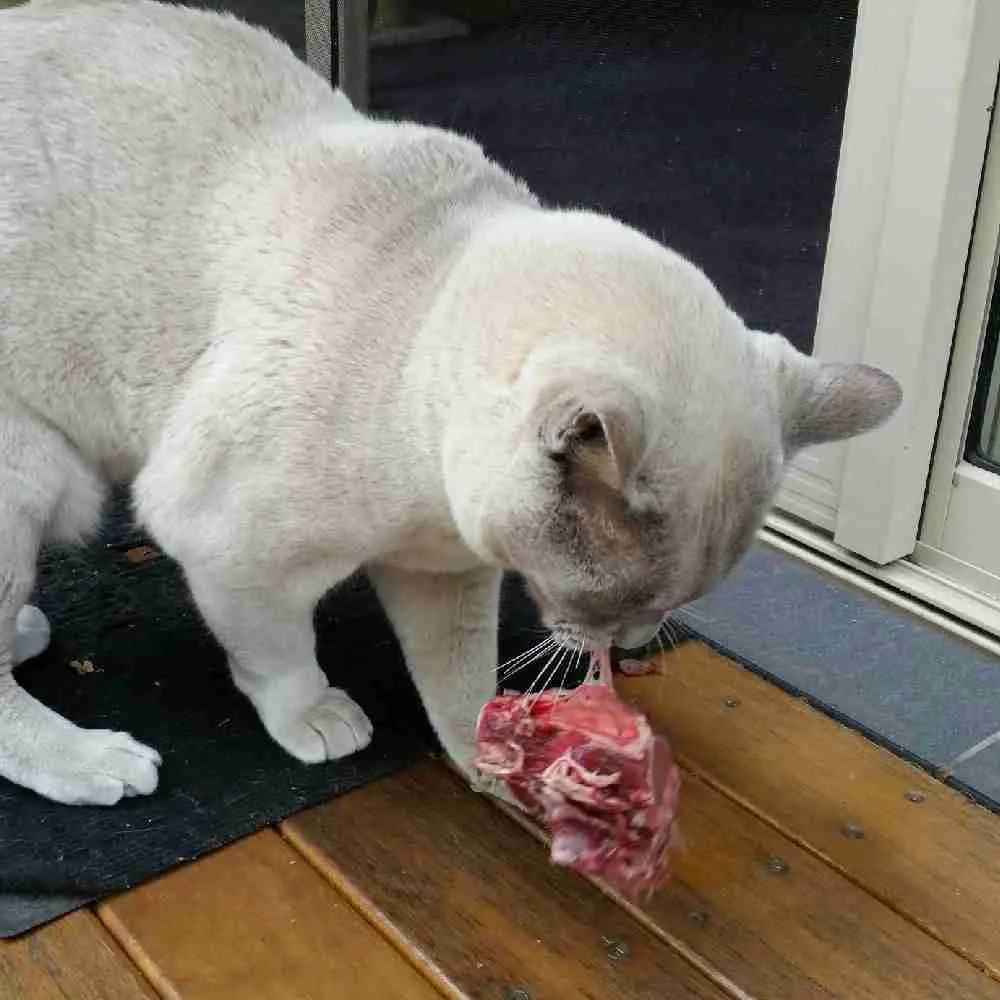 A cat happily chewing on a kangaroo bone Yuki, a cat who enjoys kangaroo bones.
For instance, chicken necks, readily available at most chicken shops, serve as an excellent, practical alternative to feeding whole prey. Introducing kittens to this diet early on is typically easier than converting adult cats to such a different food source. For guidance on transitioning adult cats to chicken necks, further advice can be found here. It’s important to note that feeding raw chicken necks carries its own set of risks and requires a careful consideration of pros and cons alongside your personal preferences.
Tooth Brushing: An Option to Consider
Although not all cats readily accept tooth brushing, it remains a highly effective method for maintaining oral hygiene. If you have a cat that tolerates it, or are willing to try, incorporating toothbrushing into their routine can be very beneficial. However, as dietary methods often prove successful, we will focus on those.
The Efficacy of Dental Diets
Dental diets for cats offer a significant advantage, with some formulations capable of completely preventing periodontal disease in many felines. This effectiveness is likely due to the simpler dental structure of a cat’s mouth compared to dogs.
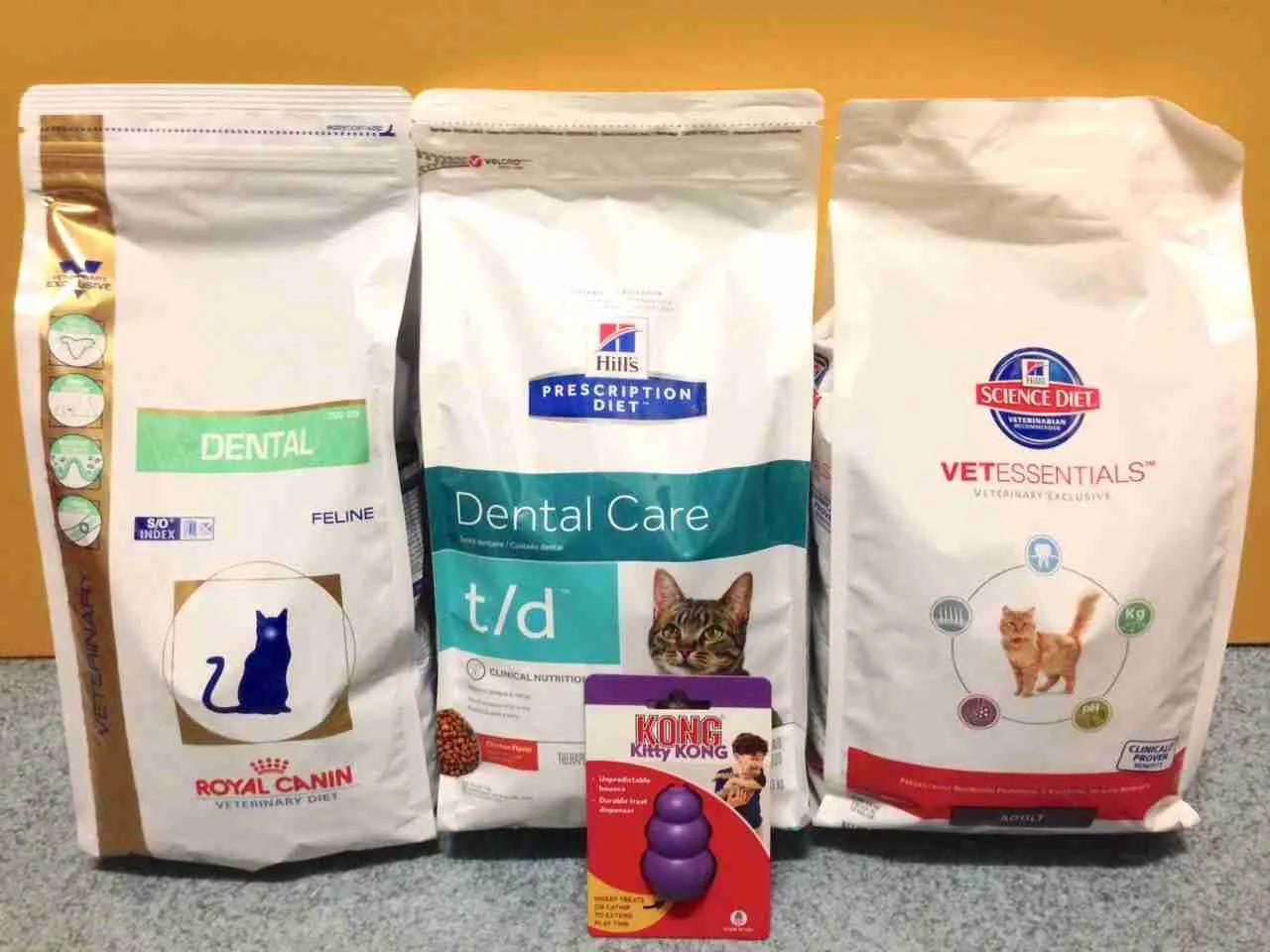 Various cat dental food options on display
Furthermore, cats often take a liking to dental biscuits, especially when introduced gradually. Mixing new dental foods with their current food can encourage acceptance, and many cats eventually prefer the dental formula.
We recognize four primary cat dental diets. Three of these—Hills Vet Essentials, Hills Oral Care, and Royal Canin Dental Support—are recommended to constitute nearly 100% of a cat’s diet for maximum benefit. For example, a cat fed 50% Hills Oral Care may show no gingivitis, though tartar buildup could still be present.
Hills t/d stands out as an excellent veterinary prescription dental diet. It is the only option we endorse if owners wish to supplement with other foods.
Additional Dental Care Strategies
For a comprehensive understanding of dental care planning, you can refer to our companion article on dog dental care.
Remember, professional advice is always available. Our goal is to intervene before gum recession or tooth damage occurs. Depending on the situation, we may recommend at-home care strategies or professional ultrasonic scaling and polishing.
Dental disease in cats can lead to significant and often unnoticed pain. For senior cats managing other health issues, dental problems can be particularly detrimental, potentially causing them to stop eating when nutrition is most critical.
By Andrew Spanner BVSc(Hons) MVetStud, a veterinarian in Adelaide, Australia. You can meet his team here.
