
If your feline friend has a tendency to bite, whether it’s a sudden, unexpected nip or a gentle nibble during petting, it can be concerning. While a cat’s bite can be painful, these actions often stem from specific reasons or misdirected behaviors. By learning to recognize the signs and understanding the underlying causes, you can effectively manage and prevent your cat from biting. This guide delves into the common reasons behind cat bites and provides practical solutions for a more harmonious relationship with your pet.
 Black and white photo of a tabby cat biting a person
Common Reasons for Cat Bites
Why Does My Cat Hug My Arm and Bite Me?
This behavior, often described as “hugging” an arm or leg before biting, is a classic predatory move seen in cats. When hunting larger prey, cats instinctively grasp their quarry with their front paws and deliver a bite, often accompanied by a “bunny kick” with their hind legs. If your cat exhibits this with you, they are likely redirecting their natural hunting instincts onto you. To counter this, engage your cat with appropriate toys designed for this purpose, such as a kicker toy, allowing them to safely direct their energy.
Why Does My Cat Bite Me and Then Lick Me?
A sequence of licking followed by biting, or vice versa, frequently indicates that your cat is overstimulated. Licking is a natural bonding behavior for cats, helping them to share scents and feel secure. However, when combined with biting, it suggests they might be overly excited or in a playful mood. Redirecting this excitement towards interactive toys or, if the biting persists, giving your cat some space to calm down can be effective strategies. You can learn more about the nuances of feline licking by exploring why your cat licks you.
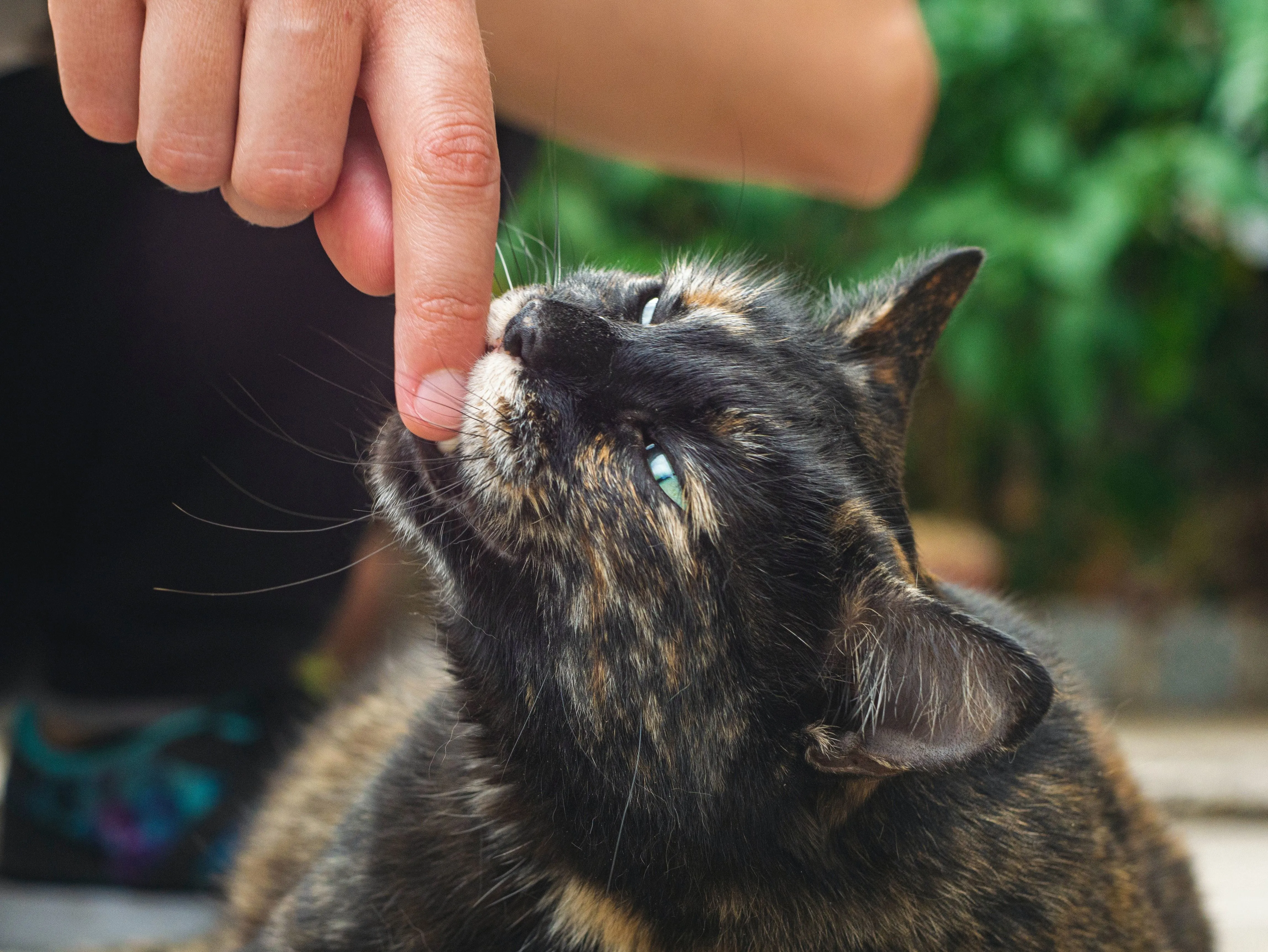 A tortoiseshell cat biting someone
Why Does My Cat Bite Me But Not My Partner?
The reason behind this selective biting often depends on the specific trigger. If the biting is a defensive response due to fear, it’s possible your cat perceives one person as more threatening. This could be due to unfamiliarity or a past negative experience. When fearful and unable to escape, a cat may resort to biting as a last defense, usually preceded by clear body language indicating their distress.
If overstimulation is the cause, several factors might contribute to the difference:
- Increased Interaction: One person may interact more frequently with the cat.
- Encouraging Play: Playful interactions, such as using fingers as toys, might have inadvertently encouraged biting.
- Reactiveness: A stronger reaction from one person when bitten can further excite the cat.
- Movement: Fidgety movements, like wiggling fingers or toes, can be more provocative to a cat than someone sitting still.
What to Do When Your Cat Bites You
When bitten by your cat, it’s crucial to remain calm and handle the situation appropriately:
- Remain Still and Calm: Sudden movements or loud noises can escalate your cat’s fear, stress, or excitement, potentially leading to repeat bites.
- Safely Exit the Situation: Allow your cat space to calm down. If they wish to retreat or hide, let them.
- Clean the Wound: If your cat’s teeth have broken the skin, wash the wound thoroughly with soap and warm water. Gently pat it dry and apply a clean dressing. Seek medical attention if the wound shows signs of infection or does not heal properly. For guidance on treating animal bites, consult NHS advice on animal bites.
- Identify the Cause: Try to determine the reason behind the bite. Were there warning signs of fear or stress? Was the cat overexcited by petting or play? Understanding the cause is key to prevention.
- Consult Professionals: If biting is a new or persistent behavior, consult your veterinarian to rule out any underlying medical conditions or pain. If no medical issue is found, consider seeking advice from a qualified cat behaviorist, such as those registered with the Animal Behaviour and Training Council, for tailored strategies.
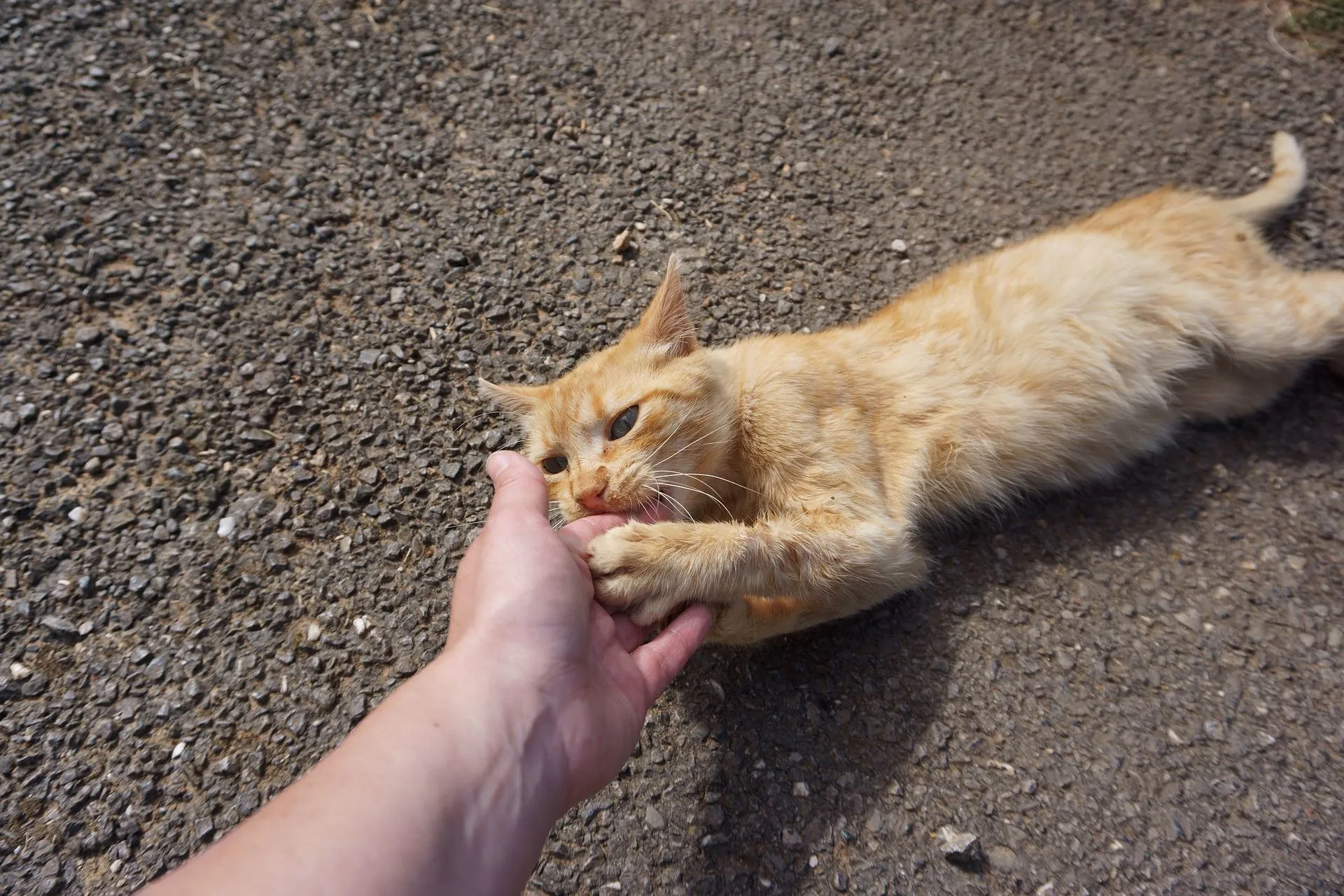 A ginger tabby cat lying on the ground and grabbing a person
How to Prevent Your Cat from Biting
Addressing biting behavior requires understanding whether your cat is acting out of fear, stress, or overstimulation.
If Your Cat Is Scared or Stressed…
- Provide Hiding Spots: Cats feel secure when they have safe places to retreat. Ensure there are ample quiet, private areas, including elevated spots that offer a vantage point. Cardboard boxes, empty drawers, and spaces under furniture are excellent options.
- Respect Their Space: While the instinct is to comfort a distressed cat, most prefer to be left alone when scared. Give them space, and they will approach you when ready for interaction.
- Create a Calming Environment: Ensure easy access to essentials like food, water, litter boxes, and scratching posts. Minimize loud noises and disruptions. Consider using a FELIWAY® diffuser, which emits calming feline pheromones. More information on FELIWAY® can be found here. For further strategies to reduce stress, explore 5 tips for reducing your cat’s stress.
- Investigate the Cause: If you suspect fear or stress, consult your veterinarian to rule out medical causes. If your cat is healthy, identify and address environmental factors contributing to their unhappiness. A cat behaviorist can provide specialized support.
If Your Cat Is Overstimulated…
- Offer Appropriate Toys: Provide a variety of toys, such as wand toys, kicker toys, catnip-filled items, and ping pong balls, to redirect predatory urges. Puzzle feeders can also make meal times an engaging hunting experience. Discover how to encourage your cat to play.
- Keep Play and Petting Sessions Brief: Many cats appreciate short, frequent sessions of play and affection. Pay attention to your cat’s cues and disengage when they show signs of becoming overexcited.
- Pet Appropriately: Avoid rubbing the belly, as many cats dislike this, even if they roll over. It’s often best to interact at their level or when they are elevated. Begin with gentle strokes on the head, chin, and cheeks to gauge their preference. Learn how to pet a cat effectively.
For additional guidance on managing aggressive behaviors in cats, refer to cat behaviour resources.
