
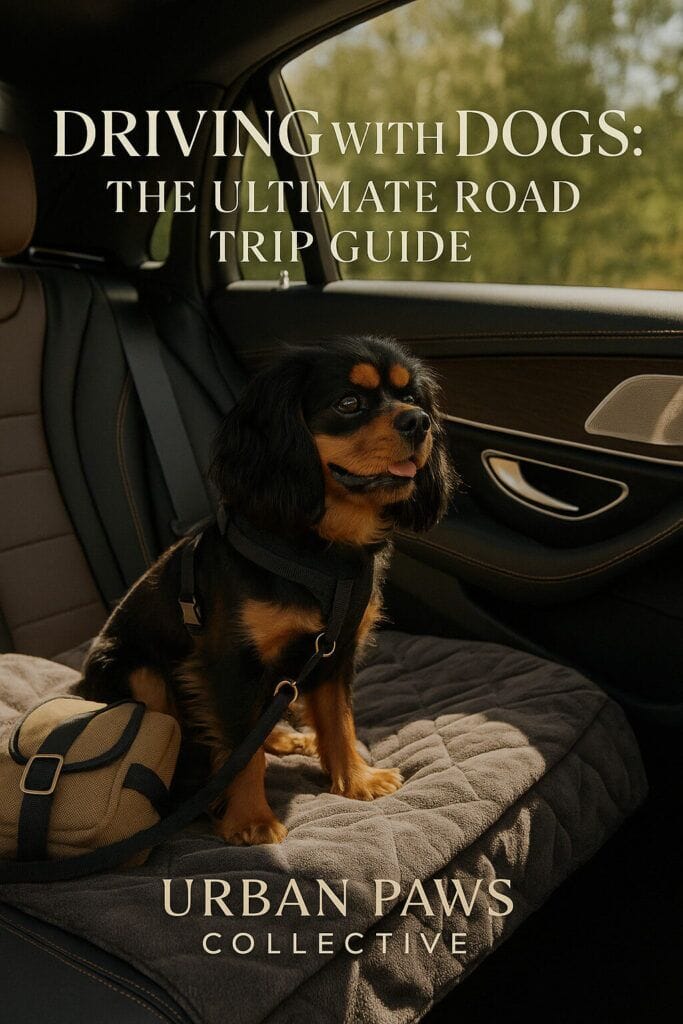
Embarking on a long-distance journey with your canine companion can be a rewarding experience, but it also presents unique challenges. Ensuring your dog remains calm, fed, watered, and comfortable throughout the trip requires careful planning. Beyond comfort, a paramount concern for pet owners is safety. Standard car safety features are engineered for human anatomy and posture, leaving dogs vulnerable to severe injuries, including head, neck, and back trauma, in the event of an accident. Dr. Michael Lund of the ASPCA emphasizes this risk.
Furthermore, unrestrained dogs pose a significant danger to human passengers during sudden stops, swerves, or collisions. Melanie Monteiro, a dog safety coach and author of “The Safe Dog Handbook,” highlights the alarming physics involved: “In the event of a crash at 50 mph, a 10-pound, unrestrained dog generates 500 pounds of projectile force.” She further elaborates, “In a 30-mph crash, an 80-pound dog would become a 2,400-pound flying projectile.” This underscores the critical need for appropriate canine travel solutions. This is where products like a dog seat belt, a secure dog kennel, and a specialized dog car seat become invaluable. This guide will delve into crucial information about these products and offer tips for selecting the safest options for your dog’s car travel needs.
How Effective Are Dog Seat Belts?
Dog car seat belts are designed to connect a full-body dog harness to a strap equipped with a buckle that integrates with your vehicle’s standard seat belt system, according to Dr. Lund. In the event of an accident or abrupt deceleration, the harness is intended to distribute the pulling force across your dog’s chest and back, thereby minimizing stress on the neck.
Dr. Lund suggests that dog seat belts are particularly beneficial for larger breeds. When using them, it’s essential that the straps connecting to the dog’s harness allow for a comfortable range of motion while being short enough to prevent the dog from impacting the front seats during a collision.
Understanding Dog Car Seats
While dog seat belt harnesses are an excellent choice for larger dogs, dog car seats offer an ideal solution for small to medium-sized breeds, as noted by Dr. Lund. These seats are often designed to function as comfortable resting spots, secured by the vehicle’s seat belt much like a child’s car seat. Crucially, they should also incorporate a full-body harness to restrict excessive movement during sudden stops or changes in speed.
The Case for Crating Your Dog During Travel
“The primary objective is to ensure the animal remains safely within the vehicle, but preventing internal trauma is equally important,” states Dr. Lund. He identifies crating your dog during car travel as the most effective method to achieve this. Crates also significantly reduce the risk of your dog distracting the driver and, in severe accidents, mitigate the chance of the dog panicking and fleeing the scene, which could lead to getting lost or being struck by another vehicle.
“Kenneled dogs involved in high-speed car accidents have a higher likelihood of surviving with fewer injuries,” Dr. Lund adds. However, a potential drawback is that the dog is not directly secured, meaning they could still sustain injuries from impacting the crate itself.
Selecting the Right Dog Car Seat or Seat Belt
“It’s about finding the optimal solution that suits your dog, your family, and your vehicle,” advises Monteiro. “Similar to children, the safest position for a dog is secured in the backseat. However, if your backseat is occupied by human passengers, there are now excellent options available for the cargo area.”
Monteiro strongly recommends consulting the Center for Pet Safety for their crash-test results of various pet restraints. This resource can guide you in identifying the safest dog car seat or dog seat belt for your furry friend. They rigorously test a wide array of travel harnesses, carriers, and crates using specialized crash-test-dummy dogs. Products that meet their stringent standards are marked with the “Center for Pet Safety Certified” logo.
Additional Dog Car Safety Practices
Monteiro issues a stern warning: “Never leave your dog alone in the car, even with the windows cracked. Even on a mild day with temperatures around 72 degrees Fahrenheit, your car’s interior can reach over 40 degrees higher in less than an hour. Extreme cold can also be hazardous. The risk is simply not worth it.”
Distractions represent another significant concern, according to Monteiro. While restraints are highly effective in preventing your dog from roaming the vehicle or jumping onto your lap, drivers must also exercise self-discipline by maintaining focus on the road rather than their pet.
Monteiro also advocates for maintaining a canine safety kit in your car whenever your dog is present. This kit should include essentials such as a blanket or towel, a spare dog collar and leash, dog poop bags, water and a dish, dog toys, dog treats, an extra meal, and a dog first aid kit. “This helps you be prepared for a change of plans, an unexpected problem or a spontaneous adventure.”
