
Have you ever looked at your dog and wished they possessed a little more courage? Maybe they cower at the vacuum cleaner, bark incessantly at strangers, or freeze up in new situations. It’s a common desire among dog owners to see their furry friends tackle the world with confidence. This guide is dedicated to transforming that wish into reality. We’re diving deep into the world of fearless dog training, exploring how to build unwavering bravery in your canine companion and strengthen the unique bond you share. Prepare to embark on a journey that will not only shape your dog’s behavior but also deepen your understanding and connection with them.
The Root of Fear: Understanding Canine Anxiety
Before we can build courage, we must first understand what fuels fear in dogs. It’s rarely a simple matter of “stubbornness.” Canine anxiety and fear are complex responses, often stemming from a variety of factors:
- Lack of Socialization: Puppies who aren’t exposed to a wide range of sights, sounds, people, and other animals during their critical developmental periods (roughly 3-16 weeks) can grow up fearful of the unknown. It’s like growing up in a bubble – anything outside it becomes a potential threat.
- Negative Experiences: A traumatic event, such as being attacked by another dog, a loud, unexpected noise, or rough handling, can leave lasting psychological scars. Even a seemingly minor incident can be terrifying from a dog’s perspective.
- Genetics and Breed Predispositions: Some breeds are naturally more prone to nervousness or sensitivity due to their genetic makeup. While training can help, understanding these predispositions is crucial.
- Medical Conditions: Pain or illness can make a dog more irritable, anxious, and fearful. A sudden change in behavior could indicate an underlying health issue.
- Inconsistent Handling: When a dog doesn’t know what to expect from their environment or their owners, it can lead to a general sense of unease and anxiety.
It’s vital to remember that fear is a survival instinct. Our goal in fearless dog training isn’t to eliminate fear entirely – that’s neither possible nor desirable. Instead, we aim to build resilience and teach our dogs how to cope with challenging situations, turning potential panic into manageable concern.
Building Blocks of Bravery: Core Principles in Fearless Dog Training
Fearless dog training is not about forcing your dog into terrifying situations. It’s a gradual, positive process that builds confidence from the ground up. Here are the foundational principles:
- Positive Reinforcement is Key: This is non-negotiable. Rewarding desired behaviors – like approaching a scary object, remaining calm in a noisy environment, or interacting politely with a stranger – with treats, praise, or play is the most effective and humane way to build confidence. Punishment, on the other hand, will only increase fear and anxiety.
- Gradual Desensitization and Counter-Conditioning: This is the cornerstone of overcoming specific fears.
- Desensitization involves exposing your dog to a trigger at a very low intensity, where they don’t react fearfully.
- Counter-conditioning involves pairing that low-intensity trigger with something highly positive (like a super tasty treat). The goal is to change your dog’s emotional response from fear to anticipation and happiness. For example, if your dog fears the vacuum, you might start by having the vacuum off in a distant room while giving treats. Gradually, you’d move it closer, then turn it on for very brief periods at a low setting, always ensuring your dog is comfortable and receiving rewards.
- Management is Crucial: While you’re working on training, it’s essential to manage your dog’s environment to prevent them from being overwhelmed by their fears. This might mean avoiding busy parks during peak hours, creating a safe space for them during thunderstorms, or asking guests to approach your dog calmly. Preventing fearful reactions is as important as teaching them to cope.
- Set Your Dog Up for Success: Start small and increase the difficulty very slowly. Success breeds confidence. If a training session goes poorly, you’ve likely moved too fast. Reassess and go back a step.
- Understand Canine Body Language: Learning to read your dog’s subtle stress signals (lip licking, yawning when not tired, whale eye, tucked tail, flattened ears) is paramount. Recognizing these early allows you to intervene before your dog becomes overwhelmed.
- Consistency is King: Everyone in the household needs to be on the same page with training methods and management strategies. Inconsistency will confuse your dog and hinder progress.
Practical Strategies for a Fearless Canine
Let’s get practical. How can you actively cultivate a more courageous dog?
1. The Power of Play and Enrichment
Play isn’t just fun; it’s a powerful confidence builder.
- Interactive Games: Games like fetch, tug-of-war (with rules!), and hide-and-seek encourage problem-solving, boost confidence, and strengthen your bond.
- Puzzle Toys: Food-dispensing toys and snuffle mats challenge your dog mentally, promoting independent problem-solving and reducing frustration.
- Nose Work: Engaging your dog’s natural scenting abilities is incredibly rewarding and confidence-building. Start by hiding treats around the house or yard and encouraging them to find them.
2. Socialization: Quality Over Quantity
If you have a puppy, proper socialization is non-negotiable. For adult dogs, carefully controlled positive exposures are key.
- Controlled Introductions: Meet calm, well-behaved dogs in neutral territory. Keep initial greetings short and positive.
- Exposure to New Environments: Visit different places – a quiet cafe patio, a less crowded park, a friend’s house. Always ensure your dog feels safe and has an escape route if needed.
- Novelty Encounters: Introduce them to different surfaces (grass, gravel, pavement), objects (umbrellas, bicycles), and sounds (gradually introducing traffic noise, distant sirens) at a distance where they remain comfortable.
3. Counter-Conditioning Specific Phobias
This is where the magic of changing emotional responses happens.
- Fear of Loud Noises (Thunderstorms, Fireworks): Play recordings of storm sounds at a very low volume while your dog eats their favorite meal or plays an engaging game. Gradually increase the volume over many sessions, always pairing it with positive experiences. For actual storms, create a safe den, use calming music, and reward calm behavior.
- Fear of Strangers: Ask friends to help by tossing high-value treats towards your dog without making eye contact or attempting to pet them, especially during the initial stages. The stranger should be a source of good things, not an intrusion.
- Fear of Specific Objects (e.g., Hats, Umbrellas): Leave these objects visible but inactive in the environment. Reward your dog for simply being in the same room. Then, introduce gentle movement of the object while giving treats.
4. Building Confidence Through Training Cues
Teaching new skills is a fantastic way to boost a dog’s self-esteem.
- Obedience Basics: A solid “sit,” “stay,” “come,” and “down” builds communication and mutual understanding.
- Trick Training: Teaching fun tricks like “shake,” “roll over,” or “play dead” provides mental stimulation and reinforces the positive reward cycle.
- Canine Sports: Agility, nose work, or obedience trials can be excellent confidence boosters for dogs and owners who want to take their training to the next level.
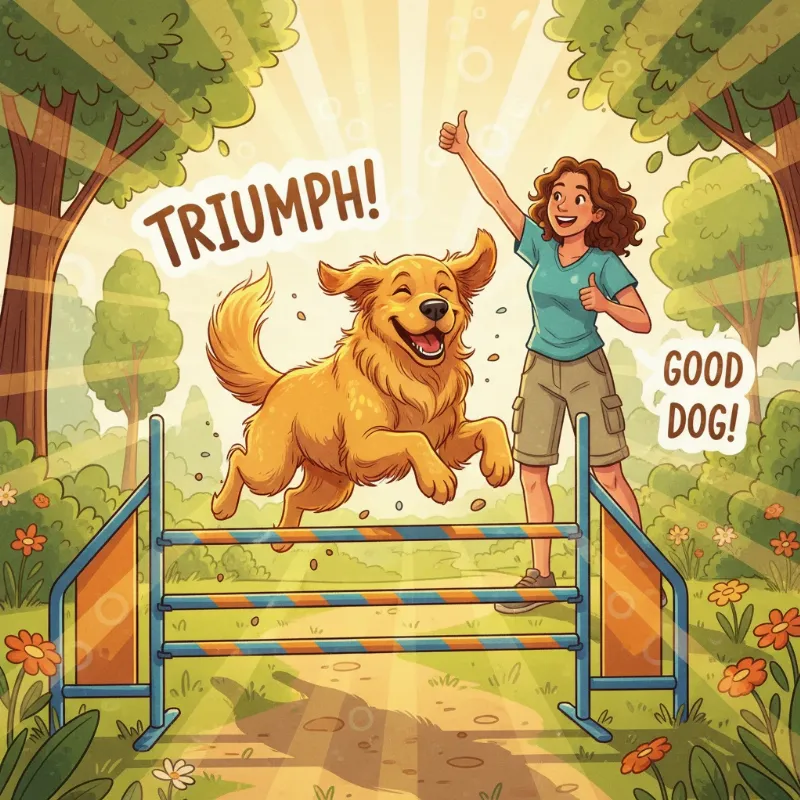 A happy, confident dog performing an agility jump with its owner, showcasing the results of fearless training and a strong bond.
When to Seek Professional Help
While many fear-based behaviors can be managed and improved with dedicated training, some situations warrant professional intervention. You should consider consulting a certified professional dog trainer (CPDT-KA or CPDT-KSA) or a veterinary behaviorist if:
- Your dog’s fear is severe and significantly impacting their quality of life.
- There is a risk of aggression (growling, snapping, biting).
- You are feeling overwhelmed or are not seeing progress.
- You suspect an underlying medical issue is contributing to the fear.
A professional can help diagnose the root cause of the fear, develop a tailored training plan, and provide guidance and support throughout the process. They can also help you understand if medication might be a beneficial adjunct to training for severe anxiety.
The Journey of a Fearless Dog
Cultivating a fearless dog is a marathon, not a sprint. It requires patience, consistency, empathy, and a deep commitment to understanding your dog’s individual needs. Celebrate every small victory – the wag of a tail in a previously feared situation, the relaxed sigh after a noise, the curious sniff of a new object. Each step forward, no matter how small, is a testament to your dedication and the incredible resilience of your canine companion. By embracing the principles of positive reinforcement, desensitization, and building a foundation of trust, you can help your dog shed their anxieties and step into a world where they feel safe, confident, and truly fearless. This journey is not just about training a dog; it’s about building an unshakeable partnership, one courageous step at a time.
