
Is your beloved canine companion suffering from relentless itching and discomfort? Allergies are a prevalent issue among dogs, significantly impacting their quality of life. Thankfully, veterinary medicine has evolved, offering a wider array of effective Canine Allergy Medicine beyond traditional remedies like Benadryl and prednisone. Newer, targeted medications such as Apoquel® and Cytopoint® can now provide rapid and lasting relief, transforming your dog’s well-being. This comprehensive guide explores the various types of canine allergies, their symptoms, diagnosis, and a detailed look at 10 solutions, including modern prescription options and supportive therapies, to help calm your dog’s itch.
Understanding Canine Allergies: Types and Causes
Before delving into treatment, it’s crucial to understand the different types of allergies that affect dogs. Canine allergies typically fall into three main categories, each with distinct triggers but often presenting similar symptoms.
Environmental Allergies (Atopic Dermatitis)
Environmental allergies, also known as seasonal allergies or atopy, are a common cause of discomfort for dogs. These reactions are triggered by airborne substances in your dog’s surroundings. Common environmental allergens include:
- Tree, weed, and grass pollens
- Dust mites
- Mold and mildew
Dogs can experience symptoms seasonally when specific pollen counts are high, or year-round if they are allergic to multiple pollens or indoor allergens like dust mites.
Food Allergies (Cutaneous Adverse Food Reactions)
Food allergies occur when a dog’s immune system identifies certain food ingredients as allergens. Unlike food sensitivities, which cause digestive upset, true food allergies typically manifest as skin issues. The most frequent culprits include common proteins such as beef, chicken, lamb, and wheat. Dogs usually develop allergies to foods they have consumed consistently over months or even years, rather than to new diets.
Flea Allergies (Flea Allergy Dermatitis or FAD)
Flea allergy dermatitis (FAD) is not an allergy to the fleas themselves, but rather to proteins found in flea saliva. This means that even a single flea bite can trigger an intense allergic reaction in a susceptible dog, leading to severe itching and irritation. Effective flea prevention is therefore paramount for dogs with this condition, and for general well-being. You might find useful information on [homeopathic flea treatment for dogs](https://dogcarestory.com/homeopathic-flea-treatment-for-dogs/) and [home remedies for flea bites on dogs](https://dogcarestory.com/home-remedies-for-flea-bites-on-dogs/) to complement conventional prevention strategies.
It’s important to note that a dog may suffer from one, two, or even all three types of allergies simultaneously. The cumulative effect of these allergies often necessitates a multi-modal approach involving a combination of canine allergy medicine, dietary adjustments, and environmental management strategies. There is rarely a single “magic bullet” for all cases.
Recognizing the Symptoms of Skin Allergies in Dogs
Regardless of the underlying cause (food, flea, or environmental), canine allergies often manifest with similar and distressing symptoms. These signs can significantly diminish your dog’s quality of life, leading to constant discomfort. Common symptoms of allergies in dogs include:
- Itchy ears: Often prone to recurrent infections.
- Licking or gnawing: Obsessive licking or chewing at feet and legs, indicative of itchy paws.
- Incessant scratching: Frequent scratching of the armpits, belly, face, or base of the tail.
- Red, irritated skin: Often leading to secondary yeast or bacterial infections (pyoderma).
- Rubbing: Repeatedly attempting to rub the face or body against the floor or furniture.
- Hair loss: Patches of hair loss due to excessive scratching and licking.
- Secondary skin problems: Including hot spots, interdigital cysts, or furunculosis.
- Respiratory symptoms: Less commonly, a dry cough or other breathing issues can occur.
- Gastrointestinal upset: Vomiting or diarrhea are occasionally seen with food allergies.
Dogs experiencing moderate to severe allergies are often caught in a cycle of scratching, licking, and battling chronic infections. This persistent discomfort can overshadow their ability to enjoy simple daily pleasures. If you observe any of these symptoms in your dog, prompt veterinary attention is essential to determine the best course of action and initiate appropriate canine allergy medicine.
 Senior dog rubbing face with paws (a sign of allergies) and lying in green grass and dandelions*A senior dog rubbing its face with its paws, a common sign of canine allergies, while lying in green grass and dandelions.*
Diagnosing Canine Allergies
Diagnosing allergies in dogs typically involves a thorough history, physical examination, and assessment of the dog’s response to various treatments. There isn’t one definitive test that can instantly confirm all types of allergies.
During your vet visit, expect a series of questions about your dog’s diet, flea prevention regimen, the onset and nature of symptoms, and any seasonal patterns. The veterinarian will meticulously examine your dog’s skin, looking for signs of secondary infections, inflammation, and affected areas.
While allergy testing is available for dogs, its primary purpose is to identify specific environmental allergens for immunotherapy (allergy shots), not to diagnose the presence of allergies themselves. Furthermore, allergy testing is only accurate for environmental triggers, not food allergies. Diagnosing food allergies requires a carefully conducted food trial.
How Allergies Occur in Dogs
Understanding the underlying mechanism of canine allergies helps in appreciating how different medications work. In dogs, immune system cells called mast cells are highly concentrated in the skin, including the ears. Unlike humans, where allergies often affect the respiratory tract, dogs primarily experience skin and ear symptoms. Environmental allergens tend to penetrate a compromised skin barrier, initiating the allergic cascade.
Mast cells contain tiny granules filled with active substances, most notably histamine. When an allergen is detected, mast cells degranulate, releasing histamine and other immune molecules into the surrounding tissue. This triggers a chain of events that recruits other immune cells and culminates in the visible and palpable symptoms of an allergic reaction. This process highlights why targeting histamine or other immune signals is central to many canine allergy medicine strategies.
Top 10 Canine Allergy Medicine & Supportive Solutions
Fortunately, dog owners today have numerous options to help manage their pet’s allergies. These range from readily available over-the-counter products to advanced prescription medications and supportive therapies.
1. Antihistamines (e.g., Benadryl, Zyrtec)
Antihistamines such as diphenhydramine (Benadryl®), cetirizine (Zyrtec®), and hydroxyzine are often the first line of defense considered by owners due to their accessibility. These medications work by blocking histamine from binding to cell receptors, thereby preventing its effects.
To be most effective, antihistamines are best administered before an allergy flare-up begins, ideally two weeks prior to the expected start of seasonal allergies. This prophylactic approach can help mitigate milder symptoms. However, once a significant allergic reaction is in full swing, antihistamines are generally less effective because histamine has already bound to receptors and initiated the inflammatory response.
It is crucial to only use antihistamines that do not contain decongestants or other active ingredients, as some, like pseudoephedrine, can be harmful to dogs. While generally safe and inexpensive for mild environmental allergies, antihistamines are often insufficient as a sole canine allergy medicine for moderate to severe cases and typically need to be combined with other treatments.
2. Apoquel (oclacitinib)
Apoquel (oclacitinib), approved by the FDA in 2013, revolutionized the treatment of canine allergies. It functions by inhibiting specific Janus kinase (JAK) enzymes (JAK1 and JAK3), which are vital in transmitting the “itch and inflammation signal” within the immune system. This targeted action leads to a rapid reduction in itching and inflammation for allergic dogs.
Many dogs respond very quickly to Apoquel, experiencing significant relief from chronic allergies. The typical dosing regimen involves twice-daily administration for the first two weeks, followed by once-daily maintenance. If your dog’s itching returns when transitioning to once-daily dosing, consult your veterinarian.
While Apoquel is highly effective, potential side effects such as vomiting and diarrhea are rare. Because it modulates the immune system, there were initial concerns about a potential link to cancer. However, recent studies have been reassuring, showing no significant difference in cancer occurrence or lifespan between allergic dogs treated with Apoquel and those who weren’t. Despite this, the product insert still advises caution in dogs with a history of cancer, recommending a careful weighing of risks and benefits. Apoquel is approved for dogs over one year of age.
A significant advantage of Apoquel is its compatibility with many other medications, including Benadryl, Cytopoint, NSAIDs, antibiotics, and supplements. However, it should be used cautiously with other immunosuppressants like steroids or cyclosporine due to limited data on combined use. Apoquel has become a veterinarian favorite for its rapid efficacy and minimal side effects, dramatically improving the quality of life for many allergic dogs.
 A dog before and after allergy treatment. The "before" picture shows a dog with inflamed, red skin. The "after" picture shows the same dog with significantly improved skin health, less redness, and a calmer demeanor.*This dog’s skin, initially red and inflamed from chronic allergies, shows marked improvement after treatment with canine allergy medicine and antibiotics.*
3. Zenrelia (ilunocitinib)
Zenrelia™ (ilunocitinib), a newer JAK inhibitor approved in 2024, expands the options for canine allergy medicine. It inhibits JAK1, JAK2, and TYK2 enzymes, working to decrease inflammation and itching. Some veterinarians report Zenrelia’s effectiveness in dogs who haven’t responded well to Apoquel or Cytopoint.
Zenrelia is administered once daily for the duration of treatment. Studies comparing it to Apoquel showed comparable efficacy in the first 14 days, but Zenrelia maintained better efficacy when Apoquel’s dose was reduced to once daily. Like Apoquel, it’s approved for dogs over 12 months of age.
Common side effects include gastrointestinal upset (vomiting and diarrhea). As an immune system modulator, there’s a theoretical increased risk of infections and, in some clinical studies, benign or malignant tumors were noted, though a direct causal link is not established.
Zenrelia carries a significant black box warning regarding vaccine-induced disease and inadequate immune response to vaccines. It recommends discontinuing the medication for an extended period around vaccination. While a subsequent study on healthy, previously vaccinated puppies showed no adverse response, the warning remains. Owners should have a thorough discussion with their veterinarian to weigh the risks and benefits of Zenrelia for their dog’s specific situation.
4. Cytopoint (lokivetmab)
Cytopoint (lokivetmab) represents another advanced development in canine allergy medicine. This unique treatment is an injectable antibody that targets and neutralizes interleukin-31 (IL-31), a key chemical signal responsible for triggering the sensation of itch. By blocking IL-31, Cytopoint effectively disrupts the itch cycle.
Administered as an injection at your veterinarian’s office every one to two months, Cytopoint is an excellent option for dogs who are difficult to pill. It typically starts working within one to two days and provides relief for four to eight weeks. Its highly specific action minimizes immune system suppression, making it a safer choice for dogs with underlying medical conditions. Side effects are generally mild, including occasional discomfort at the injection site, lethargy, or gastrointestinal upset. Cytopoint has no known drug interactions and can be safely used with other medications.
One limitation is that Cytopoint primarily targets the “itch feeling” and may be less effective than steroids or Apoquel at reducing signs of allergy-related inflammation, such as severe skin redness or ear canal swelling. However, for long-term itch control, its safety and convenience make it a valuable tool.
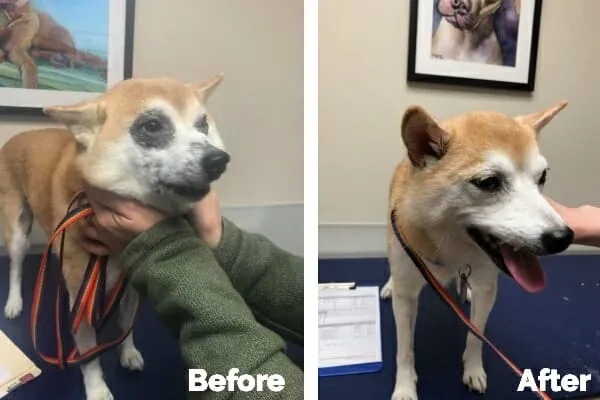 A Shiba Inu dog with allergies, showing a dark ring around its eye from irritation, before and after receiving Cytopoint. The "after" photo shows the dog with bright, happy eyes and significant relief from allergy symptoms.*Before and after photos of a Shiba Inu, Ruby, illustrating the dramatic improvement in allergy symptoms and overall comfort after receiving Cytopoint injections.*
5. Steroids for Allergies (e.g., Prednisone, Dexamethasone)
Steroids, including prednisone, dexamethasone, and methylprednisolone, are potent anti-inflammatory agents available in various forms like oral liquids, tablets, topical creams, and injectables. They work by broadly suppressing immune system cells and chemical signals, leading to a dramatic reduction in inflammation and itching. For rapid relief, steroids often work “like magic.” Vets sometimes use a short “crisis buster” course (e.g., 2-3 days of oral prednisone) to quickly alleviate severe itching while other long-term treatments take effect.
Steroids are also particularly beneficial for severe ear infections accompanying allergies, as their anti-inflammatory action can reduce ear canal swelling, allowing other medications to penetrate effectively.
However, steroids come with a significant downside due to their common and potentially disturbing side effects, especially with long-term use. These include increased thirst, ravenous appetite, frequent urination, panting, muscle wasting, and an elevated risk of urinary tract, fungal, and bacterial infections. Chronic steroid use can also induce iatrogenic Cushing’s disease. Unlike oral steroids, where dosing can be adjusted, long-lasting injectable steroids cannot be removed once administered, meaning you must wait for their effects to wear off if undesirable side effects occur. For conditions causing stomach upset, you should be mindful of potential interactions; see [prescription medication for diarrhea in dogs](https://dogcarestory.com/prescription-medication-for-diarrhea-in-dogs/) and [best anti diarrhea medicine for dogs](https://dogcarestory.com/best-anti-diarrhea-medicine-for-dogs/) for related information.
While inexpensive and highly effective for environmental allergies, steroids are generally not recommended for long-term use as canine allergy medicine due to their systemic impact on the dog’s body.
 Beagle drinking lots of water from bowl to show how steroids as an allergy medicine for dogs can cause increased thirst*A Beagle dog drinking a large amount of water, illustrating a common side effect of steroid use as a canine allergy medicine: increased thirst.*
6. Allergy Shots (Immunotherapy): The Gold Standard for Environmental Allergies
For environmental allergies, immunotherapy, often referred to as “allergy shots,” is considered the gold standard. This treatment involves gradually exposing the dog’s immune system to increasing doses of specific allergens until the immune system no longer overreacts. The specific allergens are identified through skin or blood allergy testing, and a custom-made serum is formulated for each dog.
Immunotherapy is administered as injections under the skin every one to three weeks or sublingually (under the tongue) every 12 hours. A major benefit is that it targets the specific allergens triggering the reaction, rather than broadly suppressing the immune system. Between 50% and 80% of dogs show significant improvement in allergy symptoms within a year of starting treatment.
The main downsides include the lengthy treatment process (6-12 months to reach full efficacy) and the need for continued therapy, often for life, to maintain control. While effective, dogs may still require additional canine allergy medicine to manage acute flare-ups, especially during the initial treatment phase. There is a low risk of a serious allergic reaction, as the treatment stimulates the immune system.
7. Atopica (cyclosporine)
Cyclosporine (Atopica®) works by selectively blocking the activation of T cells, a type of white blood cell involved in immune responses, and reducing the release of pro-inflammatory chemicals. This helps to lessen allergy symptoms mediated by the immune system’s reaction to allergens.
Atopica can be effective for the long-term management of allergic dogs, sometimes even as a sole treatment. However, it takes approximately six to eight weeks to see the full effects, meaning other canine allergy medicine may be needed in the interim.
Side effects can be a concern, with up to 30% of dogs experiencing vomiting and diarrhea in the first 7-10 days. Other potential issues include gum overgrowth (gingival hyperplasia) and immunosuppression, which could increase susceptibility to infections (e.g., urinary tract infections) and theoretically, cancer. Due to its potential side effects and the emergence of newer, more targeted therapies like Apoquel and Cytopoint, Atopica has become less common as a first-line allergy medication.
8. Dietary Changes for Food Allergies
For dogs with suspected food allergies, a carefully executed food trial is the definitive diagnostic and management tool. This involves feeding your dog an exclusively hypoallergenic diet for 6-12 weeks, ensuring no other foods or treats are consumed. If symptoms improve and then return upon reintroducing the old diet or specific allergens, a food allergy is confirmed.
Hypoallergenic diets typically fall into two categories:
- Novel protein diets: These contain a protein source (e.g., kangaroo, duck, venison) that your dog has never eaten before, minimizing the chance of an allergic reaction.
- Hydrolyzed protein diets: The proteins in these diets are broken down into such small fragments that the immune system is unlikely to recognize them as allergens.
It is crucial to use veterinary prescription diets for food trials, as over-the-counter “hypoallergenic” diets can be prone to cross-contamination during manufacturing, rendering the trial ineffective. Prescription diets are produced on dedicated lines to prevent such contamination.
Food trials require strict adherence, as even small amounts of an allergen (e.g., table scraps, flavored medications) can invalidate the results. While challenging and potentially expensive, eliminating allergens from the diet is the most effective long-term strategy for managing food allergies in dogs, far surpassing the efficacy of other canine allergy medicine for this specific type of allergy.
9. Essential Fatty Acids (Omega-3s)
Essential fatty acids, particularly EPA/DHA (Omega-3s), serve as a valuable supportive therapy for dogs with allergies. They help reduce inflammatory signals throughout the body and improve the integrity of the skin barrier, making it more resilient to allergen penetration.
Omega-3 fatty acid supplements, available in oils or capsules, can be added to your dog’s food. While not sufficient as a standalone canine allergy medicine, they can significantly reduce the need for other medications, especially steroids or antihistamines, when used in conjunction with a comprehensive treatment plan. It may take up to two months to observe the full benefits, but these supplements are generally safe and relatively inexpensive.
10. Additional Strategies to Reduce Allergy Symptoms
Beyond direct canine allergy medicine, several supportive strategies can work synergistically to minimize allergy symptoms and improve your dog’s comfort.
- Flea Prevention: For flea-allergic dogs, rigorous year-round flea prevention is non-negotiable. Even a single bite can trigger a severe flare-up. Oral or topical products are available, and combination products can offer protection against other parasites.
- Medicated Shampoos and Wipes: Regular bathing with medicated shampoos (e.g., antifungal, antibacterial) can treat secondary infections and wash away environmental allergens from the coat. A contact time of 10-15 minutes is usually recommended. Simply wiping paws and body with a wet cloth after outdoor excursions can also help remove allergens.
- Vacuuming and Washing Pet Beds: Dust mites are common allergens. Routine vacuuming and washing dog bedding in hot water can significantly reduce their presence in the home environment.
- Topical Products for Skin Barrier Health: Products containing ingredients like colloidal oatmeal, ceramides, or phytosphingosines can help restore and maintain a healthy skin barrier, making it more difficult for environmental allergens to enter the body.
These additional strategies, while not standalone solutions, play a crucial role in a holistic allergy management plan. Every little bit of effort helps in decreasing the overall allergic load on your dog.
Partnering with Your Veterinarian for Optimal Care
Navigating the complexities of canine allergies and selecting the best canine allergy medicine requires a close partnership with your veterinarian. They can help devise a customized treatment plan that suits your dog’s specific needs, your lifestyle, and your financial considerations. Don’t hesitate to discuss any concerns or ask for alternative options if a proposed plan isn’t feasible. Your vet is your greatest ally in this journey.
It’s important to remember that treating canine allergies often involves a process of trial and error. What works today might need adjustments as seasons change or your dog’s health evolves. As soon as you notice allergy symptoms worsening, take prompt action. This could mean scheduling a vet appointment, intensifying your bathing routine, or restarting a prescribed medication. Early intervention helps regain control of the itching, and your beloved canine companion will undoubtedly thank you for the relief.
