
The idea of a cat using a human toilet might seem like a far-fetched dream for many pet owners, conjuring images of perfectly poised felines eliminating without a litter box in sight. But is it actually possible to train your cat to use the toilet? The short answer is yes, for some cats, it is achievable with patience, consistency, and the right approach. This guide will delve into the nuances of toilet training cats, exploring the methods, potential benefits, and crucial considerations to ensure a successful and stress-free experience for both you and your feline companion. We’ll cover everything from understanding your cat’s natural instincts to troubleshooting common issues, helping you determine if this is the right training goal for your household.
Understanding Your Cat’s Instincts and Toilet Training
Cats are naturally inclined to bury their waste, a behavior rooted in their wild ancestors’ need to conceal their presence from predators and mark their territory discreetly. Litter boxes mimic this instinct by providing a substrate they can dig and cover. Toilet training, therefore, goes against this deeply ingrained behavior, which is why it requires a gradual and thoughtful process. It’s not simply about teaching them where to go, but about re-shaping their instinctual need to dig and cover. Understanding this fundamental aspect is key to approaching the training with realistic expectations and a method that respects your cat’s nature.
The Litter Box Transition
The journey to toilet training typically begins with modifying the existing litter box setup. The primary goal is to incrementally move the litter box closer to the toilet and then gradually elevate it.
- Step 1: Relocation: Begin by placing your cat’s litter box right next to the toilet. Ensure your cat is comfortable using it in this new location for at least a week before proceeding. This step helps them associate the toilet area with elimination.
- Step 2: Elevation: Once your cat is accustomed to the litter box beside the toilet, start raising it. Use sturdy, stable objects like stacks of newspapers, magazines, or wooden blocks to gradually increase the height of the litter box over several days or weeks. Each increment should be small, just enough for your cat to comfortably jump onto. The ultimate goal is to have the litter box level with the toilet seat. This gradual elevation helps your cat adjust to the higher perch.
Introducing the Toilet Seat
After successfully elevating the litter box, the next phase involves transitioning your cat to eliminate directly on the toilet. Specialized training kits are often used at this stage.
- Step 3: The Training Kit: These kits typically consist of a series of rings that fit inside the toilet bowl, under the seat. You start with a full ring filled with litter, placed on the toilet bowl. Your cat will use this as they would their regular litter box, but now it’s positioned over the water.
- Step 4: Gradual Ring Removal: Over time, you’ll remove the inner rings one by one. Each ring removed creates a larger hole in the center, gradually encouraging your cat to aim for the water while still having a litter-covered surface to stand on. This process must be slow; if your cat shows signs of distress or has accidents, revert to the previous step for a while.
The Final Stage: No Litter
The final and most challenging stage is eliminating the litter entirely.
- Step 5: Reduced Litter: Once your cat is comfortable with the larger holes and is primarily using the water, begin to reduce the amount of litter in the training ring.
- Step 6: Complete Removal: Eventually, you will remove the entire training system. At this point, your cat should be accustomed to balancing on the toilet seat and eliminating directly into the water. This requires significant adaptation and may not be suitable for all cats. The success here relies heavily on the cat’s agility and confidence.
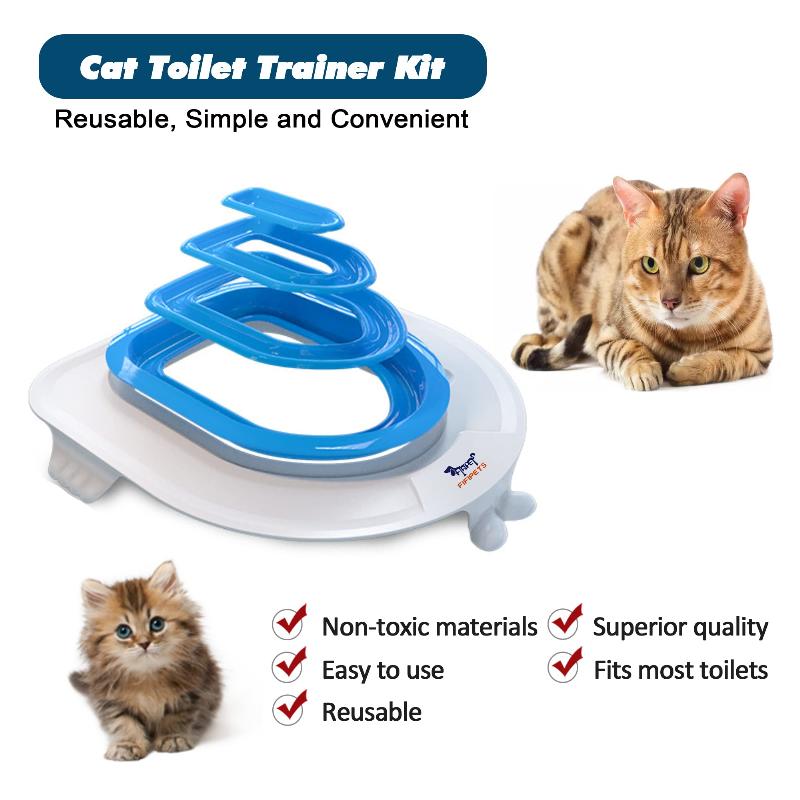 alt text showing a cat using a toilet training kit with rings
Benefits of Toilet Training Your Cat
The prospect of a litter-box-free home is alluring, and there are indeed several advantages to successfully toilet training a cat:
- Cleanliness: Eliminates the daily scooping and smell associated with litter boxes. No more litter tracked around the house!
- Cost Savings: Reduces ongoing expenses for litter and litter boxes.
- Space Saving: Frees up space typically occupied by litter boxes.
- Convenience: Simplifies waste disposal.
Potential Challenges and Considerations
Despite the attractive benefits, toilet training a cat is not without its hurdles. It’s crucial to be aware of these potential challenges:
- Natural Instincts: As mentioned, burying waste is a strong instinct. Some cats may never adapt to the idea of not covering their mess, leading to frustration for both cat and owner.
- Health Monitoring: It can be more difficult to monitor your cat’s urine and feces for signs of illness when they are eliminated directly into the toilet water. Litter boxes allow for easier visual inspection of waste.
- Accidents: Accidents can happen, especially during the training process. These can lead to your cat developing aversions to the toilet or even seeking alternative, inappropriate elimination spots.
- Accessibility: Kittens, elderly cats, or those with physical disabilities (like arthritis) may find it difficult or impossible to jump onto the toilet seat and maintain balance.
- Multiple Cats: Training multiple cats simultaneously can be extremely challenging. Each cat learns at a different pace, and competition or refusal to share the toilet can arise. If you have more than one cat, you might need multiple training setups or decide that toilet training isn’t feasible.
- Travel and Boarding: A toilet-trained cat may struggle when boarded or staying in a new environment where a litter box is provided, potentially leading to accidents or behavioral issues.
When Toilet Training Might Not Be Right for Your Cat
Some cats are simply not suited for toilet training. Consider these factors:
- Fearful or Anxious Cats: Cats that are easily stressed, fearful of new things, or have a history of anxiety may find the training process too overwhelming.
- Very Young or Old Cats: Kittens lack the coordination and experience, while senior cats might have mobility issues.
- Physically Impaired Cats: Cats with joint problems, balance issues, or other physical limitations will likely struggle.
- Cats with Medical Conditions: Any cat with urinary or digestive health issues might benefit more from the easy monitoring a litter box provides.
- Your Own Patience Level: This training requires significant time, patience, and dedication. If you’re easily frustrated or don’t have the time to commit, it might be best to stick with a litter box.
If you’re considering toilet training, it’s often recommended to consult with your veterinarian or a professional cat behaviorist. They can offer personalized advice based on your cat’s individual temperament and health.
Alternative Solutions for Litter Box Issues
If toilet training seems too daunting or isn’t working out, there are many ways to manage litter box issues effectively:
- Self-Cleaning Litter Boxes: These automated boxes scoop waste, reducing odor and the frequency of manual cleaning.
- Odor-Control Litters and Boxes: Many products are designed to neutralize odors and keep the litter box area fresher.
- Regular Cleaning Schedule: Consistent scooping (at least twice daily) and full litter changes are crucial for maintaining a clean and appealing litter box.
- Strategic Placement: Placing litter boxes in quiet, accessible, and low-traffic areas can encourage use.
- Litter Box Size and Type: Ensure the box is large enough for your cat to turn around comfortably, and consider covered vs. uncovered options based on your cat’s preference.
Ultimately, the goal is a happy and healthy cat. While toilet training can be a rewarding achievement for some, a well-maintained litter box system remains the most natural and often the easiest solution for most feline companions. For those pursuing this unique training, remember that consistency and understanding your cat’s individual needs are paramount. If the process becomes too stressful for your pet, it’s always best to revert to a traditional litter box setup. The bond you share with your cat is far more important than mastering the toilet.
